


 Milka Logo PNG
The Milka logo symbolizes softness and tenderness, highlighting the brand’s famous milk chocolate. It emphasizes the company’s commitment to making high-quality chocolate using the finest ingredients. The logo represents the warmth and comfort Milka aims to bring to every home, highlighting its unique taste and long-standing traditions. It also symbolizes the joy and pleasure of sharing chocolate with loved ones.
In 1825, Philipp Suchard opened his chocolate shop in Switzerland, laying the groundwork for Milka, a global brand owned by Mondelez International. Known for its creamy flavor and distinct purple packaging, Milka has become a symbol of quality chocolate.
The brand Milka was born in 1901 by combining the German word “milch” (milk) with “cacao.” This chocolate was special because it used Alpine milk, giving it a unique, creamy taste.
Milka gained popularity quickly after its launch. By the 1920s, its purple packaging helped it stand out. Throughout the years, Milka expanded its offerings with new flavors and types of chocolate to keep up with consumer preferences.
The 1970s to the 1990s were crucial for Milka, during which it grew significantly through mergers and acquisitions. The merger with Tobler to create Interfood, followed by Jacobs Suchard’s purchase and, eventually, Kraft Foods’ (now Mondelez International) acquisition, established Milka’s global presence.
The 2000s and 2010s were marked by innovation and impactful advertising featuring the iconic purple cow, which forged a deeper bond with consumers. Milka introduced new products, including filled chocolates, cookies, and crackers, helping it stay ahead in the market.
Now, Milka is sold in over 40 countries and is a leading European and American chocolate brand. Its commitment to sustainability and ethical sourcing is evident through its partnership with the Cocoa Life program, which supports cocoa farmers and their communities.
Meaning and History
What is Milka?
Milka is a well-known milk chocolate brand recognized for its unique flavor and smooth texture. The chocolate’s distinctive purple packaging and image of an Alpine cow highlight its Swiss origins. Milka offers a variety of chocolate bars, candies, and other sweets conveniently divided into small squares for easy consumption.
1901 – 1903

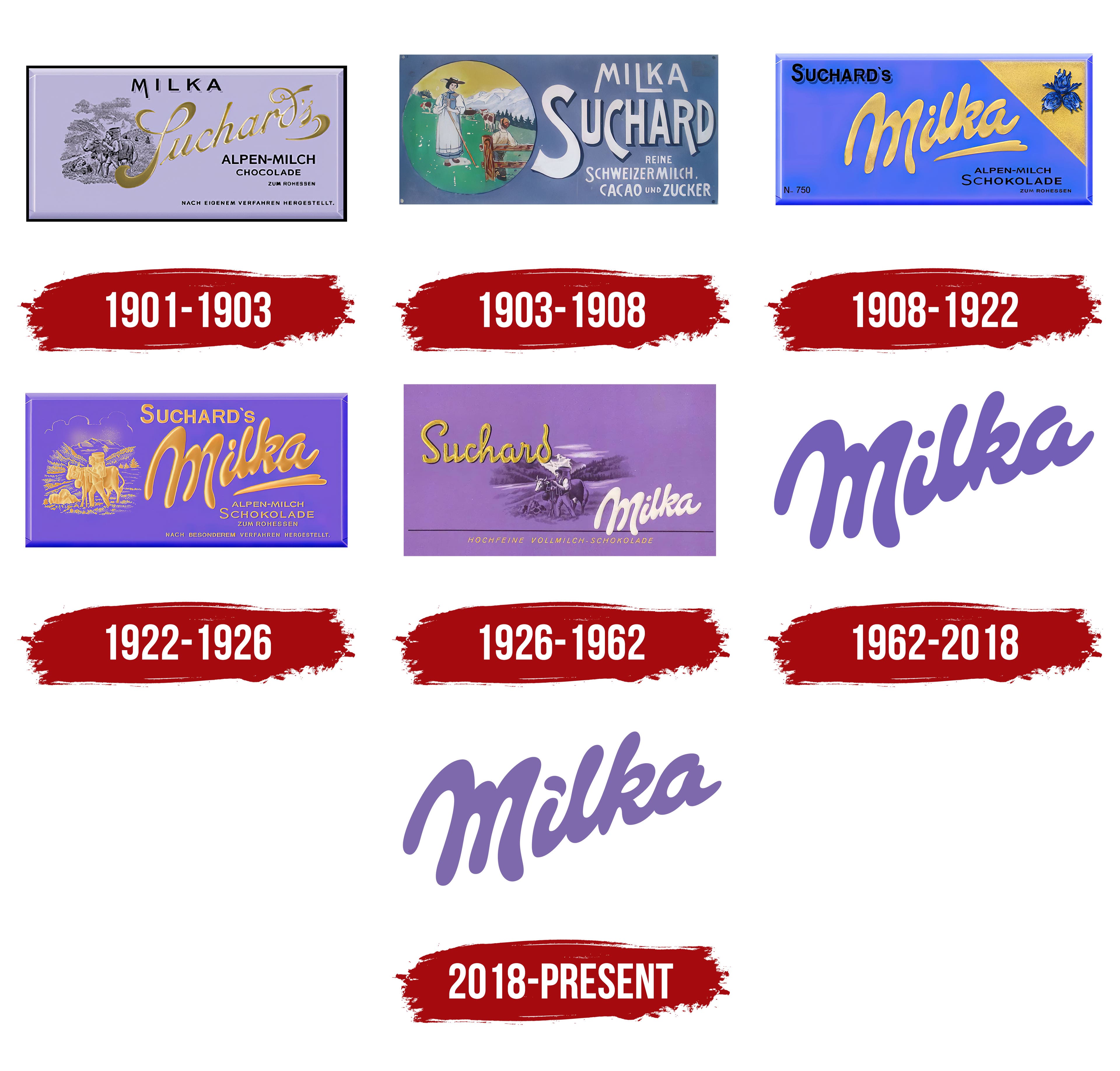
Between 1901 and 1903, Milka established a marketing strategy that still influences the brand today. The first logo displayed a chocolate bar wrapped in lilac-colored paper, which became a key part of its visual identity.
Adding milk to the chocolate enhanced its taste and gave the brand’s symbolism new meaning. This change created an image of a cow in the green Alpine meadows, representing purity, naturalness, and high-quality milk. The choice of lilac, lavender, and purple for the wrapper colors was deliberate, reflecting the hues of the blooming Alps and underscoring the product’s natural and eco-friendly attributes.
Images of a shepherd leading a cow to pasture highlighted the unique, high-quality milk from Alpine meadows, where cows eat flowers and herbs that enhance its flavor. The name “Milka,” displayed at the top of the chocolate bar, combines the German words for milk (“Milch”) and cocoa (“Kakao”), emphasizing its main ingredients and creamy taste.
The brand started with the original name “Suchard,” after the founder’s surname. The brand used this name for its first products and highlighted it in gold to signify the chocolate’s premium quality and distinctiveness. The founders thoughtfully chose every aspect of Milka’s design and name from the start, reflecting a clear, purposeful concept.
1903 – 1908

At the beginning of the 20th century, the brand’s emblem was vibrant and colorful, a true work of art that captured the era’s spirit and traditions. The design emphasized naturalness and simplicity. It featured a scene in an Alpine village with a milkmaid and a young shepherd boy, set against a backdrop of cows grazing peacefully. The image was chosen to evoke a cozy, warm atmosphere and highlight a connection to nature and traditional production methods.
The chocolate wrapper’s text highlights the health benefits of its ingredients, stating that the chocolate is made only from Alpine milk, cocoa, and sugar. This reflects the brand’s commitment to natural ingredients and high-quality standards. The white wrapper lettering underscores the milk’s purity and naturalness, which are key to the chocolate’s distinctive taste.
1908 – 1922

In 1908, the chocolate brand Milka was launched, marking a significant moment for the company. The name appears in golden letters at the center of the logo, reflecting the brand’s commitment to quality and uniqueness. The gold color of the ‘Milka’ inscription suggests luxury and high status, emphasizing the product’s premium quality.
The founder’s last name, Suchard, appears subtly in the top left corner of the wrapper, acknowledging his role in creating the chocolate and underscoring the brand’s rich history and heritage. The “Suchard’s” mark reminds consumers of Milka’s origins and distinct recipe.
The wrapper features golden design elements, including a corner with three Alpine rose buds, symbolizing purity, beauty, and innocence, and aligning with Milka’s brand values. The Alpine rose also signals the chocolate’s natural ingredients: cocoa, milk, and sugar, free from artificial additives. The flower also emphasizes the exceptional taste of the Alpine milk used in the chocolate.
1922 – 1926

The Milka logo was redesigned in the early 20th century with gold elements on a lilac background. This design highlights the brand’s long-standing heritage while signaling its growth and prosperity. Gold against lilac emphasizes luxury and high quality, making Milka appear superior.
The chosen colors and style reflect Milka’s advantage over other chocolates by emphasizing its natural ingredients and unique qualities. Milka chocolates stand out for their exceptional quality, made with only natural ingredients like Alpine milk and cocoa. The logo’s golden design visually represents this commitment to quality.
The slogan “Milka the finest chocolate, fit for kings” accurately reflects the brand’s commitment to high standards and perfection in every chocolate. A history of innovation and tradition supports this.
1926 – 1962

To showcase its rich history, the brand owner highlighted the Suchard surname in gold on the logo. Gold represents quality and luxury, aligning with the brand’s prestigious history spanning over a century. The founder’s surname and the brand name are equally prominent, suggesting their shared importance to the brand’s heritage.
The logo cleverly positions the original chocolate name on the left and the modern name on the right, creating a visual timeline that traces the product’s evolution. This design captures the brand’s historical significance and popularity among chocolate enthusiasts.
The logo centers on a shepherd and cows, with the Alps in the background. These images underline the high-quality, natural milk used in the chocolates. The white Milka inscription below this scene highlights the chocolate’s creamy, delicate flavor and rich milk content.
1962 – 2018

In the mid-20th century, the Milka chocolate logo shifted to a simpler, cleaner style that embraced minimalism. This change created a more concise logo with only the lilac Milka inscription, making the brand’s visual identity clearer and more distinctive. The Milka inscription and its unique color were also trademarked during this time.
Lilac carries deep symbolism, associated with calm, relaxation, and dreaming, and aligns well with Milka’s brand image. The brand advertises its chocolate as a treat and an invitation to take a break, relax, and savor the moment, turning chocolate into an enjoyable personal ritual.
Additionally, the lilac color distinguishes Milka from competitors, who use traditional brown and dark shades in their packaging. This unique color choice draws consumers’ attention on store shelves and strengthens the brand’s recognizability and memorability.
2018 – today

The Milka brand recently updated its emblem, making thoughtful changes to better reflect its values. The logo now features a lighter shade, suggesting the chocolate’s delicate, light qualities. This new color emphasizes the chocolate’s soft texture and rich flavor, enhancing the comfort of each piece.
The logo now works well with the slogan “Tenderness Inside,” which captures the essence of Milka’s chocolate. This phrase highlights the emotional and sensory experience of each bite. The updated logo and slogan signal Milka’s commitment to offering chocolate as a treat.
Font and Colors
The Milka logo features a custom, smooth, elegant font that captures the brand’s essence and reflects the tenderness and sweetness of its chocolate. It resembles fonts like Notera 2 Black or Genty Regular, but it has been uniquely adjusted to give it a gentle, distinctive, and easily recognizable appearance.
The logo’s color theme centers on a soft lilac paired with white. This color complements the brand and underscores its commitment to consumer taste. The lilac hue is subtle yet luxurious, helping it stand out while remaining balanced. This color enhances the logo’s appeal and conveys the chocolate’s high quality and delicious character.
Milka’s packaging prominently uses lilac, which underscores the brand’s identity. This consistent use of lilac in Milka’s branding materials strengthens the link between the color and the brand, helping Milka products stand out on store shelves. This consistent use of color builds strong brand recognition and helps Milka maintain a significant presence in the competitive confectionery market.
FAQ
What does the name Milka chocolate mean?
The name “Milka” combines the words “milk” and “cocoa,” the chocolate’s main ingredients. “Milch” is the German word for milk, and “Kakao” means cocoa. These ingredients make Milka chocolate creamy and flavorful.
Milk makes chocolate smooth and sweet, while cocoa adds the rich, chocolatey flavor people love. Cocoa also offers health benefits, such as antioxidants. The name “Milka” reflects the brand’s focus on quality and on using pure ingredients. It promises customers a great chocolate experience with a perfect blend of milk and cocoa. The name is also easy to say and remember, which has helped make the brand popular worldwide.
What is the mascot of Milka?
Lila, a friendly Simmental cow, is Milka’s well-known mascot. She wasn’t chosen by chance; she symbolizes what Milka stands for, including the high-quality milk used in their chocolate. Simmental cows are known for their gentle nature and excellent milk, which aligns with Milka’s focus on top-notch ingredients.
Having Lila as the mascot does a lot for Milka. She represents the clean, natural milk that is crucial to Milka chocolate’s creaminess and taste. Lila also makes the brand more welcoming. Her image helps Milka reach out in a friendly way, making it feel open to people of all ages. Often shown with beautiful alpine backgrounds, Lila reinforces the link between Milka chocolate and its pure, natural ingredients. Lila got an update to keep her looking fresh while keeping her classic charm.
Who is Milka named after?
Milka Chocolate is named after Milka Trnina, a famous Croatian opera singer. Her singing was so beautiful it captivated people worldwide. The founder of Milka Chocolate was a big fan. He loved her performances so much that he went to her concerts wherever she performed.
He was so impressed by her talent and the beauty of her voice that he named his chocolate “Milka” after her. This shows how much he admired her and wanted his chocolate to reflect the qualities she represented: elegance and excellence. The name “Milka” gives the chocolate brand a special story, connecting it to a legacy of beauty and talent.
Why is Milka purple?
Milka chose purple for its packaging to stand out in a busy market. Purple is often linked to royalty, luxury, and uniqueness. Milka wanted to show that its chocolate is a treat, a special, high-quality experience.
The company also added a cow to the design, first in black and white and then in purple, which has become a key part of Milka’s look. It was a smart way to show the quality and purity of the milk in their chocolate. The cow, representing milk, and the purple color make Milka easy to recognize and set it apart from other chocolates. The purple color makes Milka stand out and adds to the feeling of indulgence, comfort, and pleasure that people love about the chocolate.