


 Mirinda Logo PNG
The Mirinda logo symbolizes the natural composition of the drinks produced by this Spanish company. The connection to nature can be traced at every level, from refreshing colors to metaphorical images. The emblem evokes juicy fruits, exotic tropics, and fun holidays. Pleasure abounds!
Pascual launched Mirinda in Spain in 1959. The drink appeared in a country with a strong citrus culture, so orange and lemon flavors were natural starting points. Its name came from Esperanto and translates as “admirable” or “wonderful.” Early bottles were large one-liter formats, aimed at family consumption.
The European soft drink market grew after the war, as consumers sought fruit-flavored alternatives to colas. In that segment, Mirinda competed with Fanta. Coca-Cola entered Germany in the early 1940s and spread across Europe in the 1950s. Mirinda built its place through Spanish origin, accessible pricing, and fruit-based positioning.
In 1970, PepsiCo acquired the brand and gained global distribution rights. The purchase gave Pepsi a fruit soda line for competition with Fanta in international markets. After the deal, Mirinda expanded through Europe, Asia, the Middle East, and Latin America, with recipes and flavors adapted to local tastes. Licensed partners often produced the drink through regional bottling plants.
Before the acquisition, Mirinda had already re-entered the Philippine market in the mid-1960s, competing with Royal Tru-Orange. Its 1978 “Sunshine Drink” campaign tied the brand to the image of a real orange. In the 1990s, orange became the main global flavor. South Korea began licensed production in 1972 through Hanmi Foods, later under Lotte Chilsung Beverage, until 2022. In late 2003, Mirinda entered US stores in bilingual packaging. Still, since 2005, many US flavors have been moved under the Tropicana Twister Soda brand. In Brazil, the 1996 launch ended in 1998, with Sukita taking priority.
Meaning and History

Mirinda is a very active, upbeat brand. Over its 50-year history, its visual identity has changed many times. However, once established, successful associations, such as a circle, carried over from one logo to the next.
What is Mirinda?
This soft drink brand is known for its bold fruit flavors and vibrant, humorous character. The beverage comes in a variety of flavors tailored to regional preferences worldwide: classic orange, exotic tropical fruits, strawberry, and grape. The drink’s uniqueness lies in its intense flavor, bright color, and high carbonation, which create an explosive effect when the bottle is opened. In Asia and the Middle East, this drink has become part of youth culture and a symbol of fun, gaining special popularity.
1959 – 1970
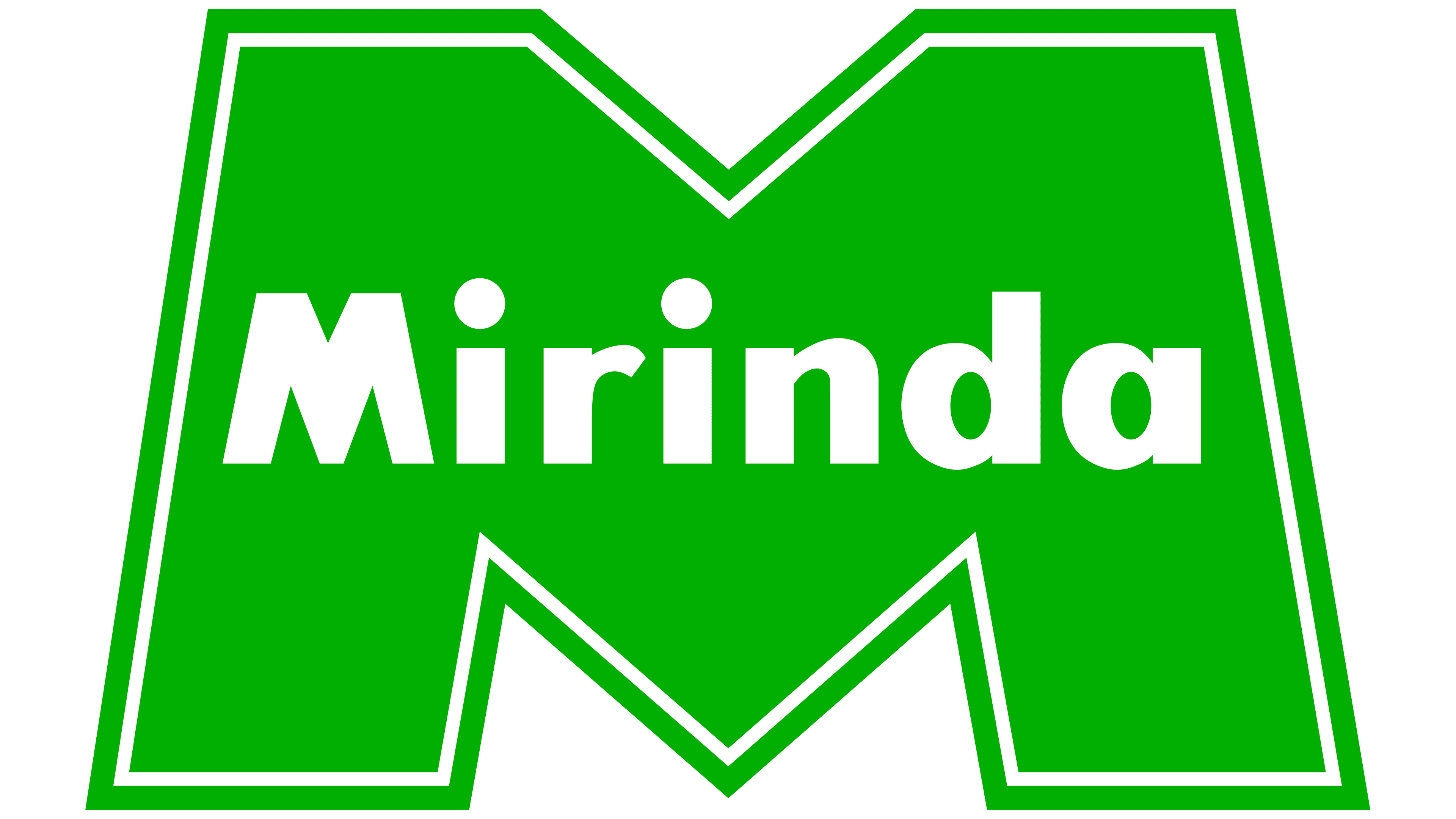
The sign under which soda is known in Spain is a large, light-green letter M with the brand name inscribed on it.
The drink’s creator, who loved the artificial international language Esperanto, used it as the name. Mirinda translates as “wonderful!” The word was meant to tell everyone who saw the lemonade that it tasted delicious and delightful.
The abundance of green suggested naturalness and freshness. However, the icon generally did not indicate what the bottle contained.
1970 – 1986

In 1970, PepsiCo bought the rights to Mirinda. The company developed the brand in its own way and changed the visual identity to begin distributing lemonade in other countries.
The new logo is clearer: an orange image with the name overlaid. Even to an inexperienced person, it is clear what the drink is made of.
Overlaying the inscription on the picture made the logo more compact. Drawing the central vertical line made the two halves symmetrical, creating a sense of harmony and completeness.
Placing the name above the fruit emphasized the brand.
The entire logo had a double border: white and green. This united the composition into one whole. The white color spoke of naturalness and freshness. The final green stroke indicated botanicals and health benefits.
1986 – 1992

The drink is presented on the world market. To show openness and a willingness to enter new countries, the logo was slightly changed, and the dense double edging was removed. This leaves the orange and the inscription bare, making them accessible, friendly, and their own.
The fruit is depicted more schematically. The yellow circle resembles the sun and shows a juicy, summery, sweet taste. It represents the brand’s popularity, which rises in new markets like the sun.
Three green leaves complement the idea of Mirinda’s worldwide presence, with their tips pointing in different directions.
A circle of leaves is like a bomb that explodes with taste. The inscription’s white background conveys cleanliness and safety.
1992 – 1995

The orange theme continues in this time’s emblem. The presentation uses both an orange background and an orange fruit. The overflow of colors, along with warm shades of yellow and orange, highlights the drink’s rich flavor.
A series of lines runs obliquely across the background. They resemble a musical row flying up. Mirinda likes music that invigorates and improves its mood.
The brand name is aligned with the lines and tends to rise. It shows the brand’s active development and its rise to new heights. The word “orange” is in the title. In some countries, the drink is presented only as an orange.
At the top, the leaves are depicted as three lime halves. Mirinda’s taste has notes of this fruit that complement and set off the sweet orange.
1995 – 2001

All borders of the logo disappear again. The new visual sign appears to come from the user’s picture. Juice splashes from a round orange slice to the sides, filling the air with a fresh, sweet aroma. The picture suggests that Mirinda is made with natural juice.
The inscription is also placed obliquely, and above the letter “I,” instead of a dot, two green leaves with drops of cold water are shown. They exude coolness and freshness.
2001 – 2004

The logo’s orange background is back. On it is a fruit that closely resembles a natural image. The diffuse yellow color around the orange creates a frosty effect on the glass bottle when it is taken out of the refrigerator. It conveys a cool feeling on a hot day. It makes you want to buy a drink right away.
Warm orange colors attract attention and evoke sweetness and richness.
2004

The orange image was removed from the logo to focus on adding natural juices to drinks. In the visual sign, juice drops scatter from the name in different directions. However, the logo did not catch on, as it evoked associations more with a dirty blot than with a carbonated drink.
2004 – 2012

The 2004 emblem was another attempt to move away from the orange theme. In this sign, the circle represents the globe, with the sun rising against a background of green leaves. The image showed Mirinda’s ubiquity.
Green, three-dimensional letters with white borders evoked dice cubes.
2012 – 2017

The logo returned to the citrus theme, but without a direct hint of orange. Its layout is original and different from everyone else’s. Behind the name, a semicircle of fruit, with visible slices, peeks out from below. It is grapefruit, tangerine, orange, or lemon. The lobules lack clear borders, with white space between them. And above the name, squeezed juice splashes.
Neatly rounded drops and rounded letter corners hint at the fruit’s shape, embodying Mirinda’s pleasant taste.
2017 – today

The last logo is verbal. It is rendered in pure green, with letters in different sizes. They bounce like gas bubbles in a bottle of Mirinda. The inscription is placed obliquely from bottom to top, which supports the soda theme and the gas rising from the bottom of the can.
The logo still conveys a positive mood and a drive for leadership. But moves away from the orange theme. The brand offers 12 flavors, and orange is just one.
2023 – today

Mirinda is revolutionizing the world with an innovative rebrand and global slogan, saluting and welcoming the next wave of creative trailblazers. These audacious individuals dare to present their distinct thoughts and manifest their authentic selves, offline and online.
Simultaneously with the launch of the #NoFlavourLikeYourFlavour campaign, Mirinda has unveiled a vibrant new look called “Making an M-pact”. The revamped Mirinda emblem, the result of aepsiCo Design and Innovation’s creative process, now shines with a more vivid green, sharper corners, and sleeker lines for added prominence. The recognizable ‘M’ of Mirinda serves as a stage for creativity, featuring playful color schemes, spinning orbs, effervescent bubbles, and vivid fruit drawings that bring the brand to life and evoke a sense of refreshment and vitality.
The logo now appears in a brighter green, with sharper corners and cleaner lines, and prominently features the letter ‘M’. It’s part of the brand’s new slogan, ‘Making an M-pact,’ intended to ignite creativity. Interestingly, the dot on the “i” has shifted to the first letter rather than the second, a subtle change meant to draw attention to the ‘M’ in the logo. It’s a clever design twist, though it’s unclear how effective it would be in fulfilling Mirinda’s hope of inspiring creativity and ‘make an M-pact.’
Font and Colors
The logo’s main shades are orange and green. These colors represent life, taste, warm sun, bright tropical fruits, freshness, and fun.
The modern logo’s font resembles a processed “Comixed RP Bold Regular.” Sharp, angular letters in it, like pricks of gas bubbles.