


 Modelo Logo PNG
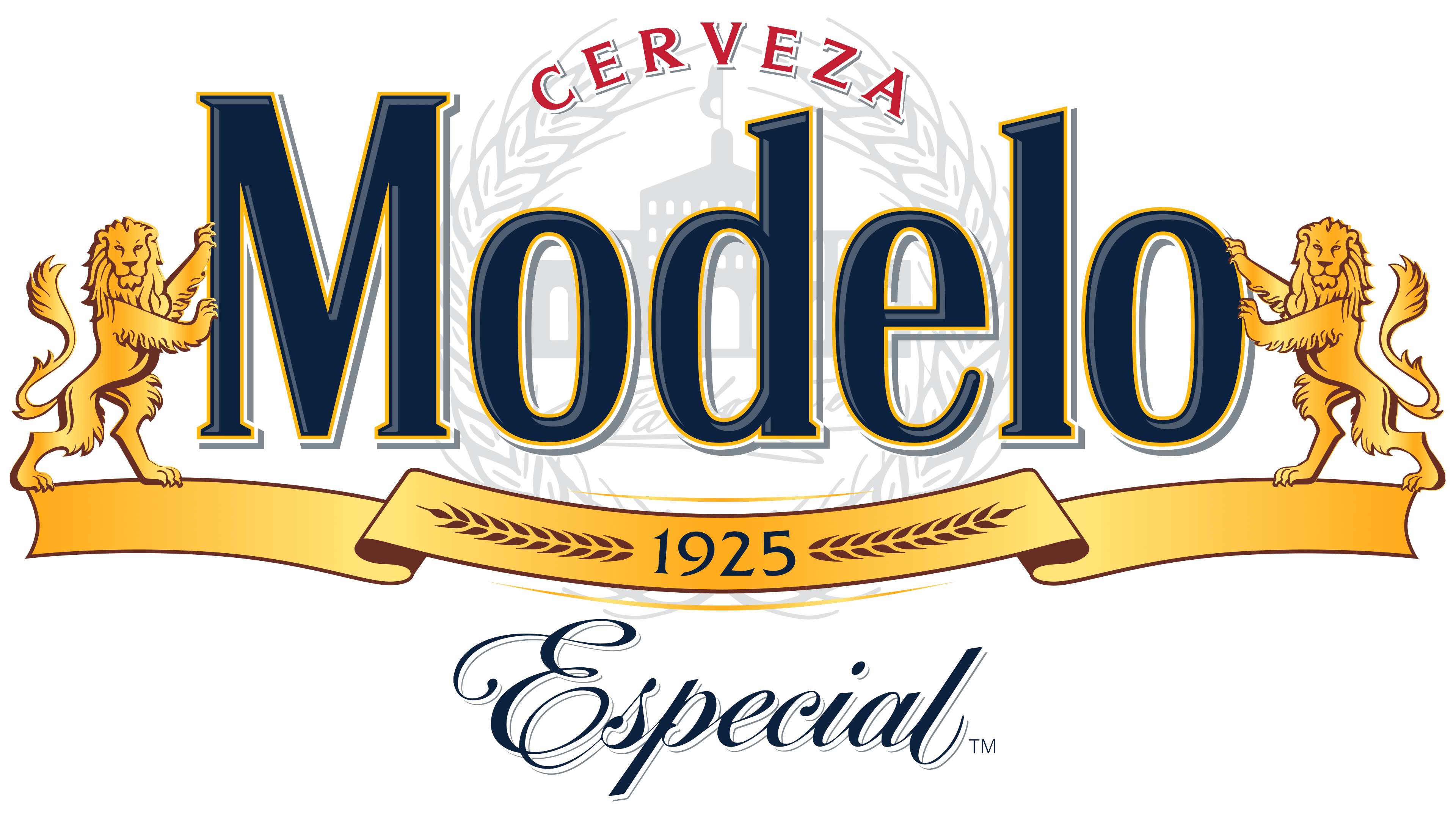
The Modelo logo occupies a large portion of the label for a beer brand because it features many drawings and inscriptions. A wreath of spikelets symbolizes the product’s natural composition, and two heraldic lions indicate the uniqueness of the refreshing drink. The noble dark blue color, combined with gold, emphasizes the beer’s special origin.
Modelo began in Mexico City in 1925, when Spanish immigrants led by Braulio Iriarte opened Cervecería Modelo. One of the key figures was Pablo Díez Fernández, who had built capital through bakery and yeast businesses after arriving in Mexico in 1905. He became general director in 1930 and majority shareholder in 1936.
From the start, the brewery produced Modelo, Negra Modelo, and Corona. By 1928, sales reached 8 million bottles. Under Díez Fernández, expansion was funded without loans or outside investors. The group absorbed Victoria in 1935, then Estrella and Pacífico in 1954.
Modelo spent heavily on advertising, outpacing rivals Cervecería Cuauhtémoc and Cervecería Moctezuma. By 1956, it accounted for 31.6% of Mexico’s beer production and became the country’s leading brewer. New plants opened in Ciudad Obregón, Guadalajara, and Torreón from 1960 to 1966. In 1971, Antonino Fernández Rodríguez took over and trained Mexican engineers to replace the original German brewers.
Corona Extra entered the U.S. market in 1979 and, by 1997, passed Heineken as America’s top imported beer. That same year, Anheuser-Busch bought a 50.2% stake in Grupo Modelo but did not gain voting control. In 2004, Modelo and Constellation Brands formed Crown Imports for U.S. distribution. AB InBev later moved to buy Grupo Modelo for $20.1 billion, but U.S. regulators forced a split. In 2013, Constellation bought Modelo’s U.S. business and perpetual U.S. rights to Corona and Modelo for $4.75 billion, while AB InBev took the rest of the company.
Meaning and History
Modelo Especial Lager embodies the experience of world-famous German brewers, even though it was invented by a Mexican company. The first word in the brand name is translated from Spanish as “example” or “model,” and the second emphasizes the refreshing drink’s uniqueness. The bottles the beer is in look just as unique. Transparent glass containers have a unique shape: their lower part resembles a jar, and at the top is a thickened neck sealed with gold foil.
Such bottles are characteristic of all Modelo versions. The only difference is in the design: the Especial is dominated by light tones, while the Negra is all dark. As far as is known, the lager’s visual identity was last changed in 2016, three years after Constellation Brands, Inc., America’s largest beer importer, bought the brand.
What is Modelo?
Modelo is one of the export brands from Grupo Modelo. It sells several beer varieties with different flavors: Modelo Light pale lager, Especial honey-orange, Negra caramel, and Reserva German pilsner. They are made from hops, cereals, roasted malt, and water.
The new owner decided to stick to a single style to achieve visual harmony between different variants of Modelo drinks. At the same time, he retained elements of the old design because the love of tradition reflects the brand’s integrity and historical heritage.
The iconic Modelo logo is featured on bottle labels, painted on cans, and engraved on souvenir glasses. It differs slightly by beer type, though the structure is generally the same. The most famous is the version created for the Especial lager because it is much lighter than the Negra.
In the center is the blue word “Modelo,” which consists of elongated oval letters. The vertical strokes “M,” “d,” and “l” have wide serifs. Each glyph is outlined in yellow and padded with dashed gray shadows. The brand name is flanked by heraldic lions with golden manes, one on the right and one on the left. They stand on a long ribbon bearing the inscription “1925” and decorated with barley spikelets.
Two more spikes are depicted in the background as a wreath surrounding the building with a flag. This is probably the brewery where Modelo products are made. Beneath it is an element that often goes unnoticed, obscured by blue lettering. We are talking about the signature of Pablo Diez, one of the co-founders of the Mexican company Grupo Modelo. None of the listed logo elements is the main one, so they are painted in light gray.
Above is the red word “CERVEZA” (“beer” in Spanish), curved in the shape of an arch. It is set in capital letters with short serifs and appears three-dimensional due to the white and gray outlines. The blue “Especial” is written at the very bottom of the logo. To represent the variety of lager, the designers used a calligraphic cursive font with decorative swirls at the capital “E” and dots at the ends of the lowercase “s” and “c.”
Barley stalks are a traditional symbol of brewing. There are only four of them on the Modelo emblem: two each on the ribbon and in the background. This suggests that the beer manufacturer pays close attention to ingredient selection and relies on quality and naturalness. But lions are not a frequent element of the brewing company’s identity, although they are common in heraldry. Two proud predators adorn the label of the lager at once, as if hinting at its special origin and royal status. By the way, the lions on the right and left of the inscription resemble those on the coat of arms of Mexico City, where the headquarters of the Modelo brand is based.
Font and Colors
The label on the beer bottles looks spectacular, thanks to carefully chosen typography. The logo’s designers used a unique font for each word. For “Modelo,” a high-contrast geometric antiqua similar to FontSite Inc’s Concept Medium Condensed, or a modification of the Margon 430 Bold from ParaType. For “CERVEZA,” a typeface with sharp serifs. For “Especial,” a font that mimics calligraphic handwriting.
All inscriptions and graphic elements are painted in different colors: dark blue, red, light gray, white, brown, and gold in different shades. Of course, the yellow gradient is the most iconic, associated with mature barley and pale lager.