


 Motorola Logo PNG
Motorola’s iconic logo symbolizes the relentless evolution, leadership, and ambition that define the company as an electronics innovator. The logo’s modernist design reflects its creativity, not only in its original artwork but also in the latest technology used in its products.
Meaning and History
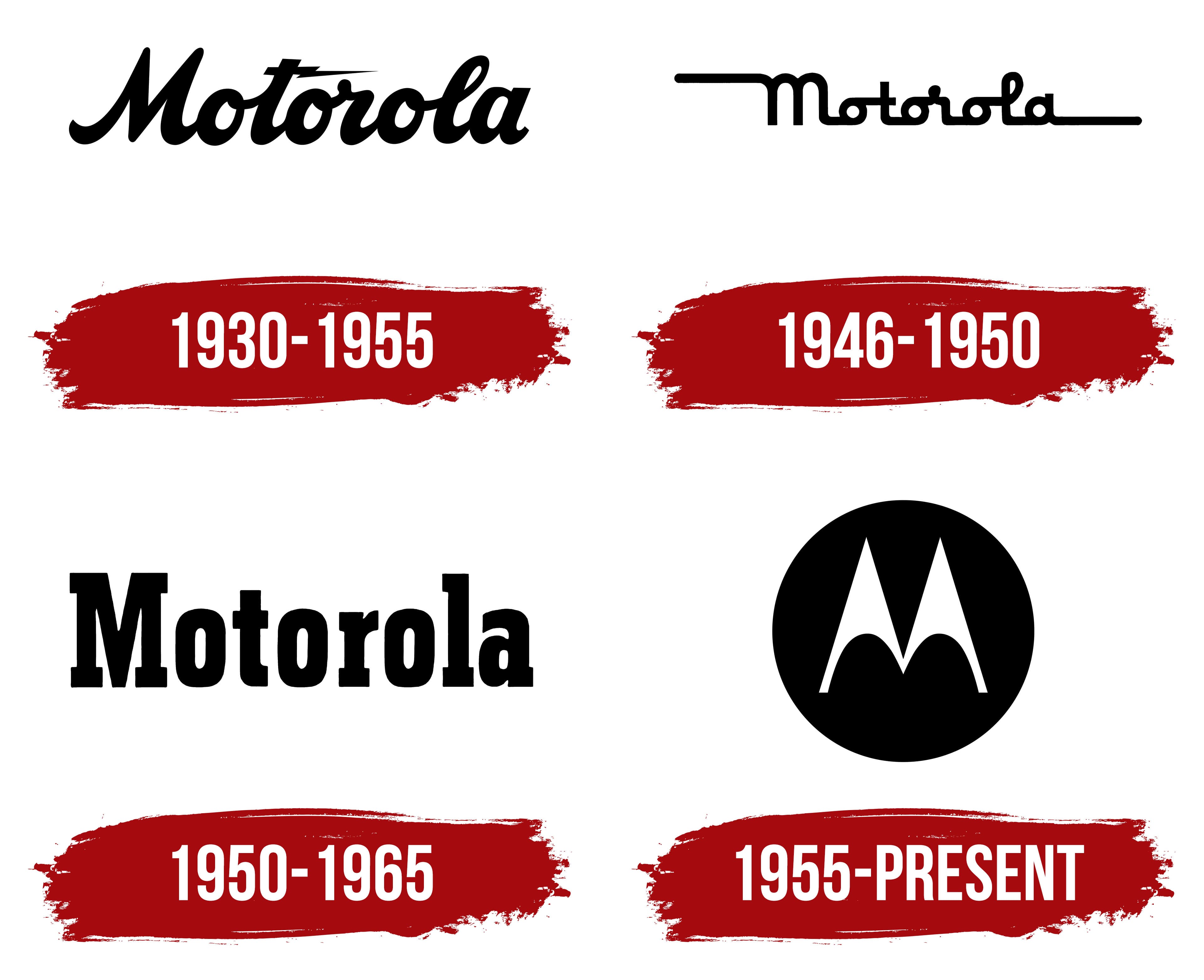
Although Motorola was founded in 1928, it took a few years to get its famous name. Two brothers named Galvin founded it, and it was named after them: Galvin Manufacturing Corporation. But in 1930, one of them decided to create a new brand of car radios. He registered it as “Motorola,” combining two parts in a coined word: “motor” (a hint of a motor car) and “ola.” The last three letters pay tribute to the fashion for names ending the same way, like “Crayola” or “Moviola.” In this case, the inspiration was the Victrola trademark, which produced cars with a turntable and a horn.
Because radios were so popular, the neologism “Motorola” stuck as the company’s official name. The period after World War II proved highly successful for the communications equipment manufacturer, which developed new technologies and supplied communication devices for NASA space programs. He adopted his iconic logo, the letter “M.”
Before that, Motorola used other brand names, mostly inscriptions without decorative elements. But the last emblem, designed in 1955, proved most important. It remained in use until the company split into two parts. Post-2011, Motorola Mobility LLC and Motorola Solutions, Inc. inherited the symbol “M” from their predecessor.
Throughout the 20th century, the Motorola logo has become a mark of quality. One day, a Japanese customer refused the semiconductors he had ordered simply because they bore a very pale, indistinct “M”. The manufacturer had to replace the batch because the chips had a clear logo.
As far as is known, the company once considered redesigning and abandoning the 1950s logo. This happened in the late 1990s: Motorola executives even called in a specialist to evaluate an already prepared alternative. Contrary to expectations, he dissuaded them from changing the emblem, saying cell phones seemed outdated not because of the “M” symbol, but because of their clumsy exterior.
What is Motorola?
The American company Motorola was once a telecommunications service provider. It also developed and sold wireless network equipment. It was founded in 1928 and operated until early 2011, when it was split into two unrelated entities: Motorola Mobility LLC and Motorola Solutions, Inc.
1930 – 1955
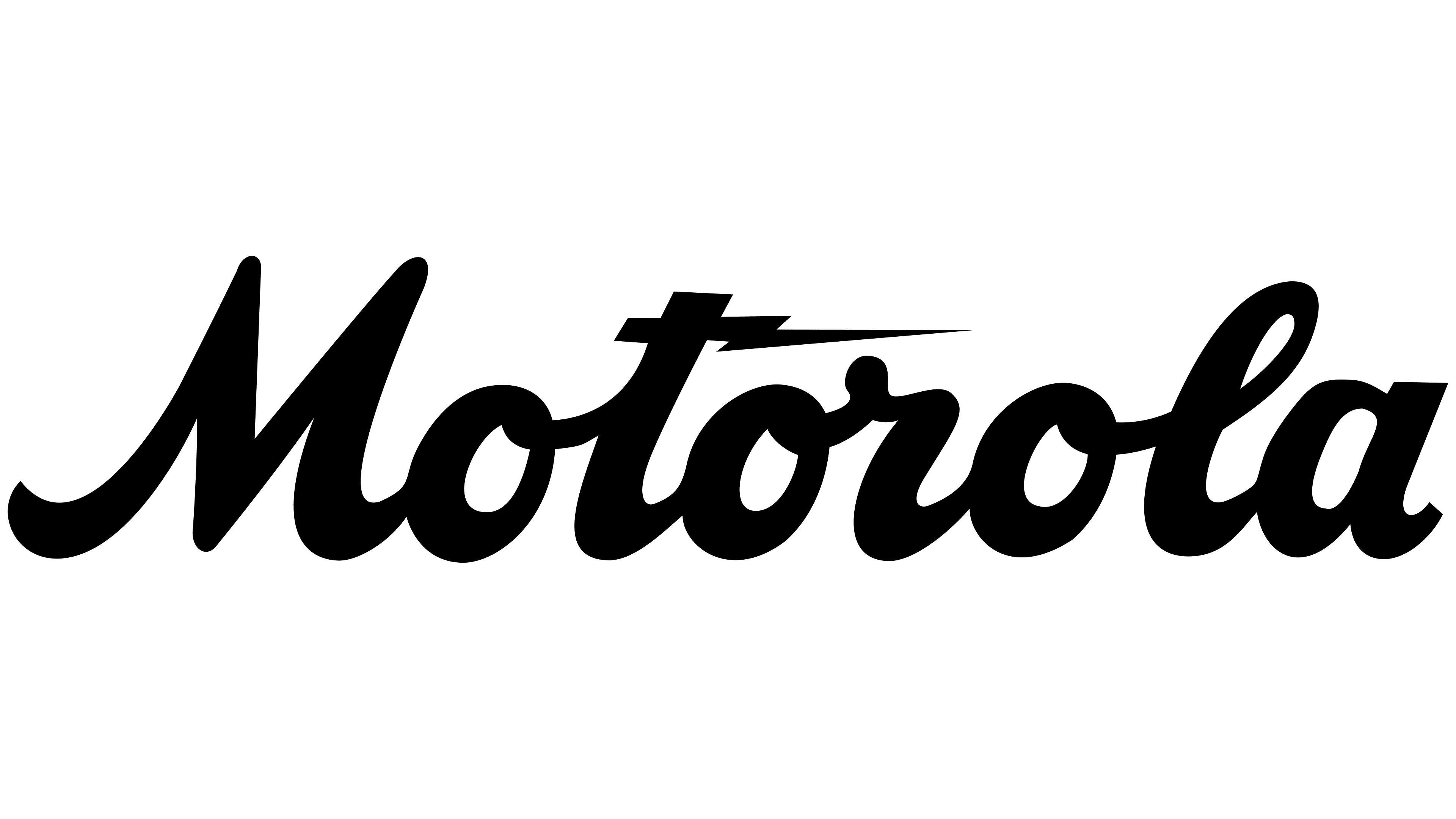
The famous Motorola name appeared in 1930; before that, it was known as the Galvin Manufacturing Corporation. The rebranding came with a logo update: the designers developed a wordmark using a handwriting-imitating typeface. The letters were bold but graceful. A slight rightward tilt and the high contrast between the main and secondary stroke thicknesses created this impression. The glyphs were interconnected; the font felt coherent. The horizontal line at the lowercase “t” was shaped like a lightning bolt, hinting at the lightning-fast signal transmission through communication equipment.
1946 – 1950
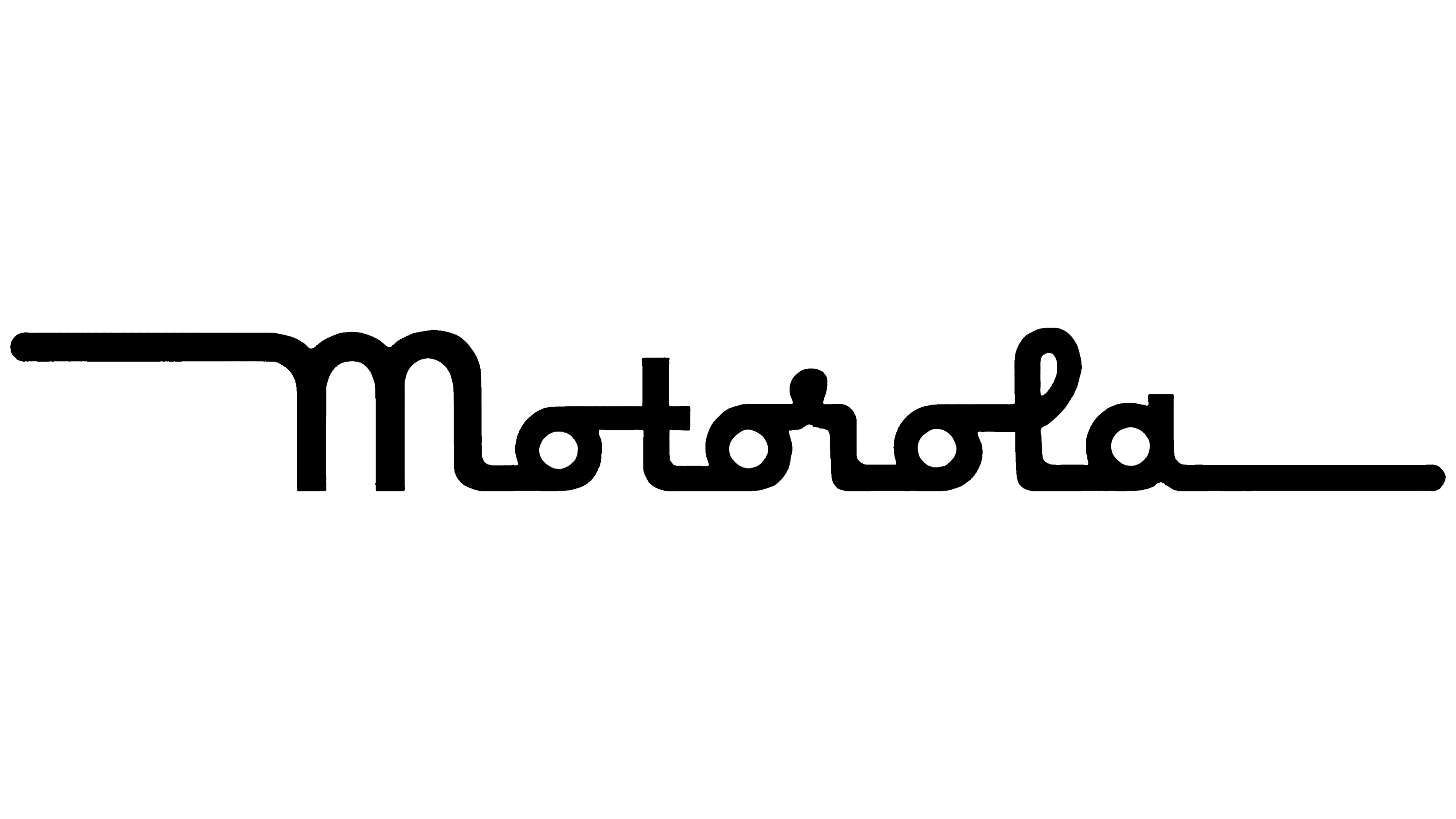
In 1946, another version of the “Motorola” lettering was created. The font was still cursive but looked unnatural because the letters were vertically aligned. The connections between glyphs became horizontal, which was also atypical for a calligraphic typeface. Yet the designers achieved visual harmony by making the three “o” s and the “a” perfectly round. This created an interesting effect because vowels alternated with consonants in the company name. In addition, the word was balanced by two long horizontal lines: one started at the top corner of the “M” and ran to the left, and the second was a continuation of the tail of the “a” and ran to the right.
1950 – 1965
Motorola introduced a new lettered logo in the mid-20th century. It used a typeface roughly similar to Dharma Type’s Rama Slab E Bold: a bold serif with short rectangular serifs. Apparently, the designers made the text compact because the protruding part of the “r” was truncated. The lower curve of the “t” also looked shortened.
1955 – today
In 1955, a significant event in Motorola’s history occurred: Thomas Miller designed the M-shaped emblem, which Motorola used for decades. This rebranding proved very useful because, in the post-war period, the communications equipment manufacturer introduced its first TV set and began opening factories abroad. Under these circumstances, he needed a new corporate identity suited to international markets.
The logo for Motorola was designed by African-American Thomas Miller, who, because of racism, worked behind the scenes for a long time until Morton Goldsholl Associates hired him. The designer depicted two elements as triangles with oval recesses at the bottom. They resembled the pointed tips of fountain pen nibs and, when combined, formed the letter “M.” At first, they were placed inside ellipses and squares, but in 1965 a permanent configuration appeared: a white stylized “M” in a black circle.
The famous Motorola symbol has two unofficial names: “Bat Wing” and “Emsignia.” It somewhat resembles a bat’s wings, perhaps because of its pointed shape. The triangular vertices form an abstract “M” that reflects mid-20th-century modernist graphics. They also demonstrate the equipment manufacturer’s leadership and its drive to reach new heights.
Font and Colors

In June 1955, Motorola introduced a new corporate font, Univers Com 93 Extended Extra Black Oblique, along with the Bat Wing logo. However, it wasn’t used in developing the M-shaped symbol; the emblem was formed solely from geometric shapes.
Earlier, the company used several wordmarks, including two in imitation handwriting and one in bold letters with short rectangular serifs. Yet the latest version, without inscriptions, became the most popular. But the palette has always been stable because, for decades, only two colors mattered: black and white.