


 Movistar Logo PNG
Movistar introduced its iconic logo in 2004 after a name change. The latest version, adapted to modern requirements, became a bright, simple, and understandable emotional symbol of modernity, executed in a minimalist style.
Movistar’s story is tied to Telefónica, founded in 1924 in Madrid with support from ITT and the Spanish government. For decades, it operated as a state monopoly in fixed telephony, before a gradual privatization that began in 1987 and concluded by the mid-1990s.
Mobile services emerged in the early 1990s under MoviLine, based on the TACS standard. In 1995, Telefónica launched Movistar with a GSM network, marking a shift to digital mobile communication. The same year, Vodafone España entered the market, introducing direct competition.
During the 1990s, Telefónica expanded across Latin America through privatizations, acquiring stakes in CTC Chile in 1990, Telecom Argentina in 1991, and Telesp in 1998, for a total of $4.97 billion. Operations ran under different brand names, creating fragmentation.
In 2004, Telefónica unified its mobile assets under the Movistar brand across Spain and multiple Latin American markets, replacing local brands and standardizing its identity for tens of millions of users.
In 2005, Telefónica expanded further by acquiring O2 for £17.7 billion, gaining access to the UK, Germany, and Ireland while keeping O2 as a separate brand.
In 2010, Telefónica acquired full control of Vivo from Portugal Telecom for €7.5 billion, strengthening its position in Brazil.
The company also entered the media sector in 2014 with Movistar+, formed by integrating Canal+ España’s assets, and secured rights to broadcast La Liga and the UEFA Champions League.
From 2012 onward, financial pressure and market competition led to asset sales. In 2019, Telefónica sold its Central American operations to Millicom. In 2020, Telefónica exited the UK market by merging O2 with Virgin Media.
Meaning and History
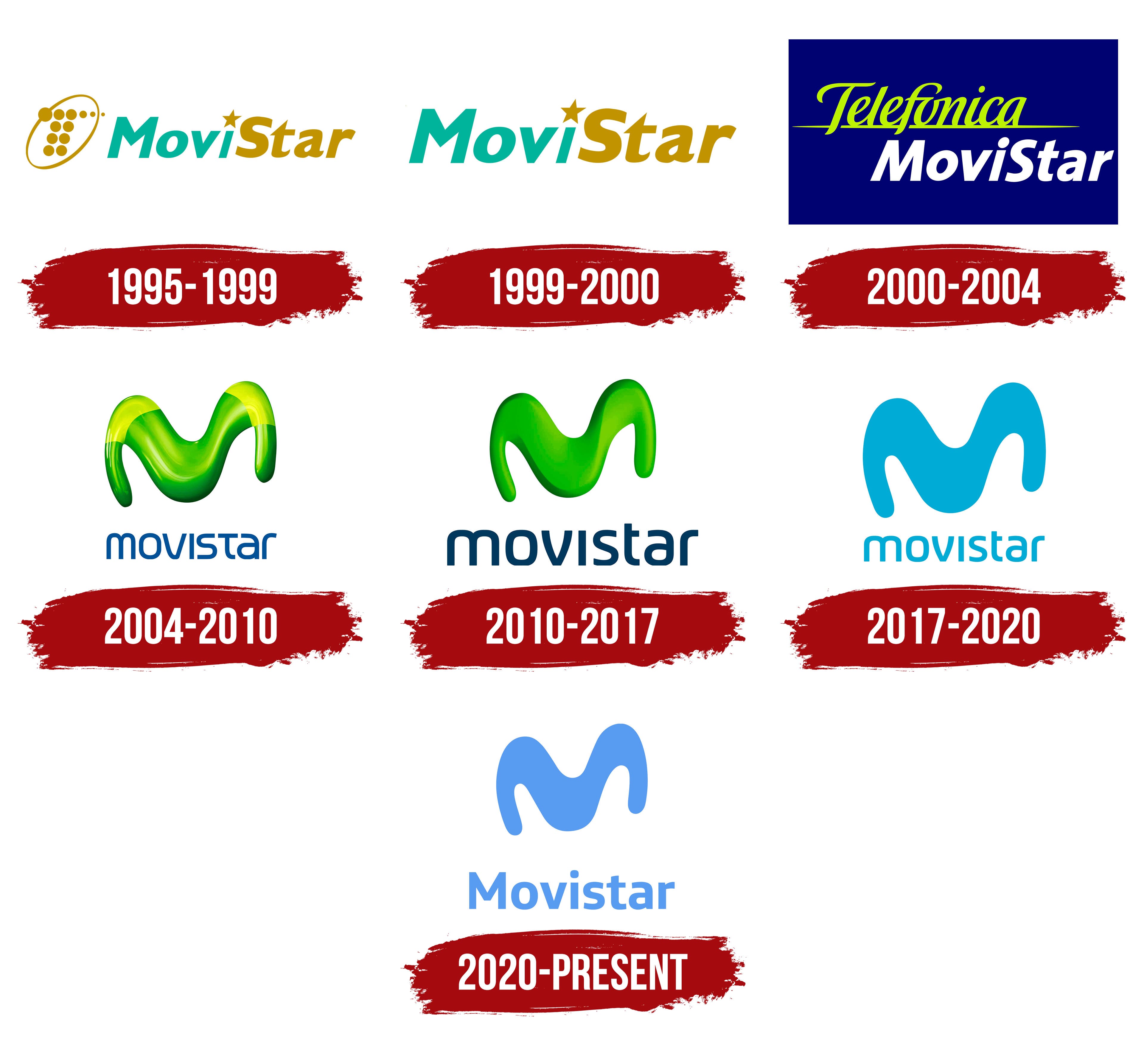
The prototype of the famous Movistar graphic sign was created in 2004. Before that, the company used simple emblems, leaving no noticeable mark on its history.
What is Movistar?
Movistar is a Spanish telecommunications operator owned by Telefónica. It provides landline, broadband, and mobile services in Spain and Latin American countries. The company has been around since 1995 and adopted its current name in 2005.
1995 – 1999

Initially, the telecommunications company was called “MoviStar”. Its debut logo reflected this spelling, with a capital “M” and “S”. Interestingly, the designers split the word, making the first half (Movi) blue-green and the second (Star) yellow-orange. To add dynamism, they replaced the dot over the “i” with a small five-pointed star. The inscription uses an italic, sans-serif font.
To the left, the developers placed the letter “T,” consisting of 12 dots of different diameters. A slanted oval line outlines it. This tribute honors the Spanish company Telefónica, which owns Movistar.
1999 – 2000

In 1998, designers simplified the logo by removing the stylized letter “T.” This decision allowed them to increase the size of the word “MoviStar” and emphasize it. Other details remained unchanged.
2000 – 2004

At the turn of the millennium, the brand was renamed “Telefonica MoviStar”. This was reflected in its logo, which is completely different from the previous two versions. The inscription “Telefonica” sits at the top, underscored by an elegant yellow-green line. The font mimics handwritten text. Below the line, the word “MoviStar” appears in white; the brand star over the letter “i” is replaced with a regular dot. The overall background is a dark blue rectangle.
2004 – 2010
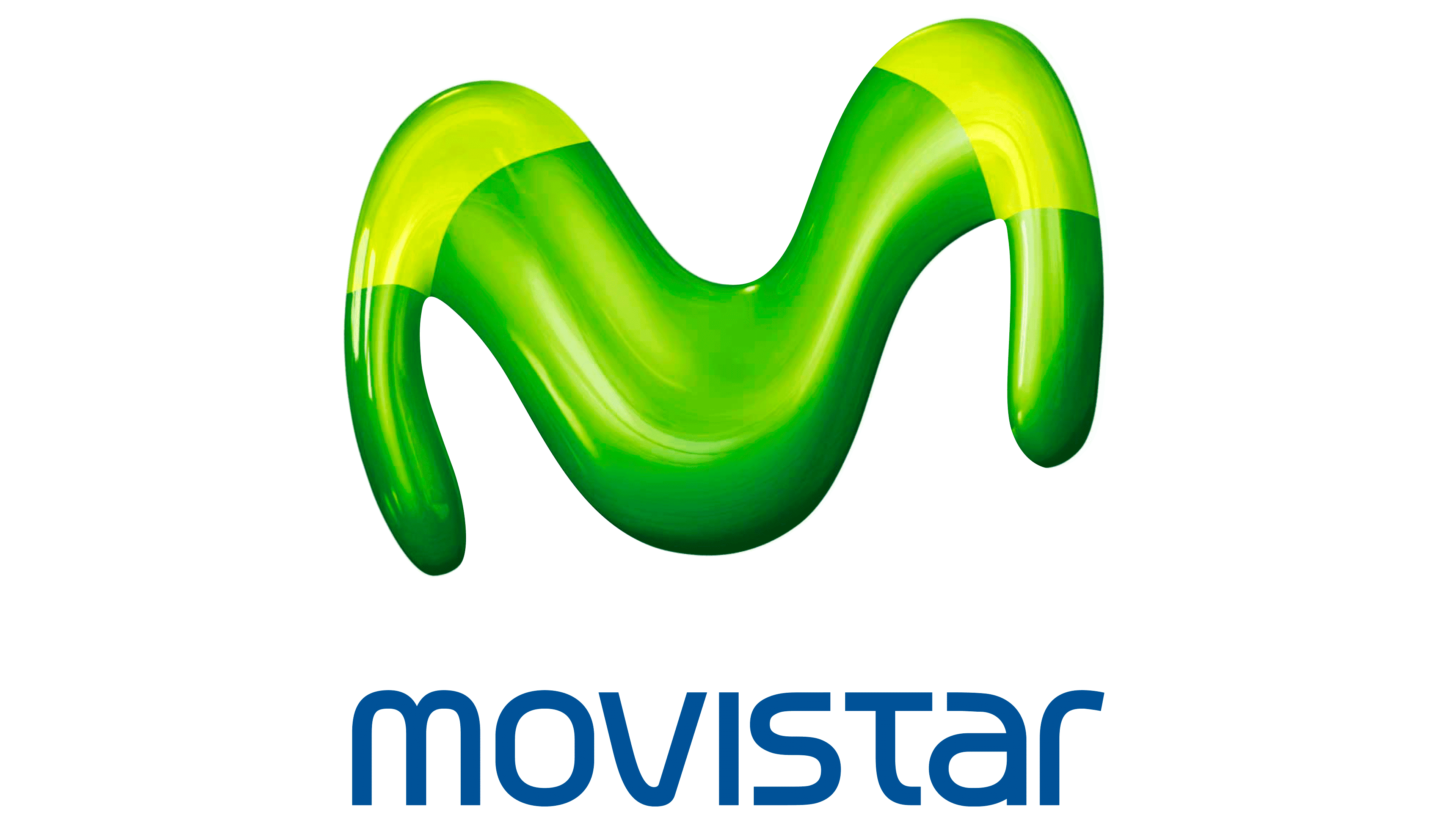
In 2004, the company was renamed Movistar. Immediately after the name change, it underwent a major redesign. That’s when the recognizable ” M” figure appeared, becoming a cult element of the brand’s visual identity. It looks like an uneven yellow-green wave. Because shadows and highlights create a 3D effect, the figure seems plastic. The inscription font also changed. The characters in the word “Movistar” are round and lowercase, except for “t,” which looks like a capital letter.
2010 – 2017

In 2010, the creators simplified the design while retaining the original concept. Bright spots disappeared, and some dark ones were removed. Now, the graphic sign, shaped like the letter “M,” doesn’t seem as “slippery” as before. Despite this, the volume remained, as the artists intended.
2017 – 2020

In 2017, the international branding agency Lambie-Nairn developed a new visual style. Experts adapted the logo for the digital world to position Movistar as a bright, modern company. They redesigned the letter “M” to be flat, removing the signature 3D effect. They also changed the color palette, completely abandoning the gradient green.
2020 – today

In June 2020, the company introduced a new logo. As before, it has a vertical configuration. At the top is a stylized, wave-shaped letter “M”. Designers retained its plasticity, expressed through serrations, bends, and curves. Below is the word “Movistar”. The developers capitalized the first letter “M” and used the Telefónica Headline font for the inscription. This bold grotesque belongs to the Spanish company Telefónica, which owns the Movistar brand and all its assets.
The font has several similar analogs: Core Sans NR 65 Bold from S-Core or Yorkten Demi from Insigne Design. But in the logo, the letter “t” has a small diagonal cut at the top. The color also changed: after the rebranding, it became darker and more saturated.
Font and Colors
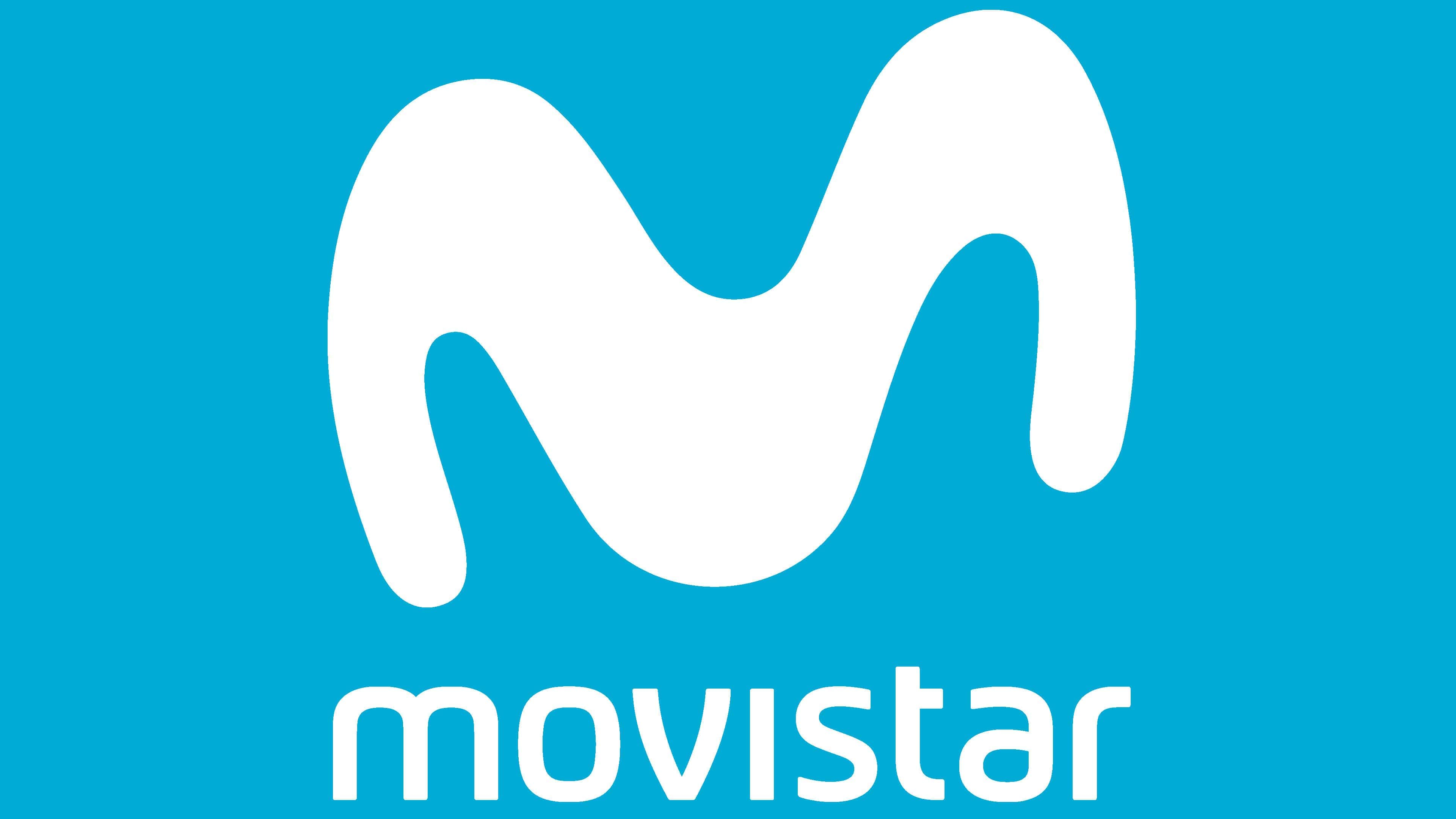
The Movistar brand mark is a capital “M” representing the telecommunications company. Essentially, it’s a long, uneven strip that widens at the bends. The geometric figure has no angles, giving it a plastic, dynamic look. Since 2017, “M” has become two-dimensional: Lambie-Nairn simplified it, removing the 3D effect to make the design easier to understand and align with a fashionable minimalist style.

The emblem is now light blue. According to creative director Tim Simmons, the chosen shade expresses more emotion. The figure shaped like the letter “M” remains the same. The word Movistar hasn’t changed either. Here, it plays a secondary role, with the main emphasis on the “M.”