


 Nashville Predators Logo PNG
The Nashville Predators’ American hockey club logo features an animal as a heraldic symbol. The silhouette of a saber-toothed tiger’s face symbolizes the team’s tactics and purposeful aspirations.
In January 1997, a group led by Craig Leipold submitted an NHL expansion bid for Nashville. When commissioner Gary Bettman visited the city, thousands of fans gathered outside the arena. In June 1997, the NHL granted conditional franchises to Nashville, Columbus, Atlanta, and Minneapolis. Nashville had to sell 12,000 season tickets by March 31, 1998, and was the only city with a completed arena.
On September 25, 1997, Leipold and club president Jack Diller unveiled the logo, a saber-toothed cat. The image referred to a fossil found in Nashville in 1971 during construction of the First American National Bank. Fans later voted on the team name, with Predators selected on November 13, 1997. The city covered 31.5% of the $80 million expansion fee.
David Poile became the first general manager, and Barry Trotz was named head coach. The team debuted on October 10, 1998, losing 0:1 to the Florida Panthers, and secured its first win three days later against the Carolina Hurricanes. The team spent its first season outside playoff contention.
Progress followed through drafting. The team selected David Legwand in 1998 and Shea Weber in 2003. In 2003–04, the team reached the playoffs for the first time but lost to the Detroit Red Wings. In 2008, ownership shifted to Predators Holdings LLC amid relocation concerns.
In 2016, the team traded Shea Weber to the Montreal Canadiens for P. K. Subban. The 2016–17 season became a breakthrough, with wins over the Chicago Blackhawks, St. Louis Blues, and Anaheim Ducks, leading to a Stanley Cup Final appearance against the Pittsburgh Penguins, which ended 4:2. In 2017–18, the team won the Presidents’ Trophy but exited the playoffs early in the following seasons.
Meaning and History
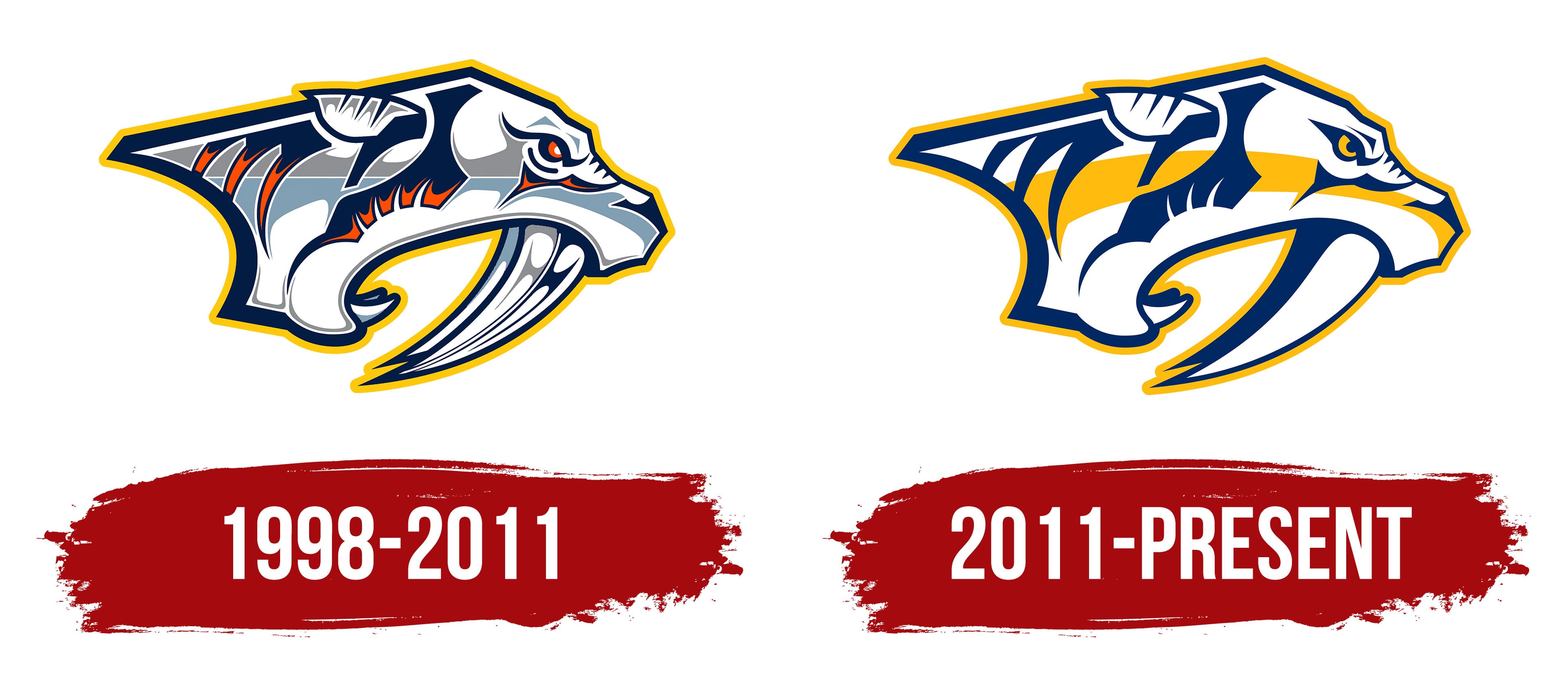
The Nashville hockey players’ unique logo appeared even before the team was formed. Initially, the choice was between country music symbolism, closely associated with the region, and a fang in the city. In 1971, during construction work, builders unearthed a prehistoric cave.
While laying the foundation for one of the buildings, they dug up a bone and a fang. After examination, it was found that both fragments belonged to a saber-toothed tiger: a paw and a nine-inch-long tooth. The animal lived in these parts about 80,000 years ago.
The athletes decided to take the image of the predatory animal as the basis for the emblem:
- It is the main attraction in Nashville and is directly connected to the club’s founding.
- It is distinguished by a fierce nature, wild character, swiftness, physical endurance, and readiness to attack.
- It looks impressive, so it looks good on hockey paraphernalia.
The most curious thing about the Nashville Predators’ emblem is that it predates the team. After receiving the franchise in 1997, management immediately introduced a logo unusual for hockey symbolism. Against an ice-themed backdrop, a six-color tiger with a sharp fang stood out. However, at the owners’ insistence, it remained on the logo.
As for the text (the club name), the team offered residents a choice. Soon, the club received almost 75 variants, and the team voted on three: Attack, Fury, and Ice Tigers. Fans liked one, hockey players another, and the owners the third. Ultimately, Craig Leipold proposed a fourth option, and no one objected. Thus, the inscription “Predators” appeared on the paraphernalia.
The franchise has had only two logos: the debut and the modified one. The local design studio JDK Design created the first version. It created the image, look, and color palette.
What is the Nashville Predators?
The Nashville Predators are an NHL hockey team. Founded in 1998, it has played in the Western Conference ever since. The team’s name honors the saber-toothed tigers that once inhabited modern-day Tennessee. The team plays its home games at the Bridgestone Arena, one of the loudest NHL arenas, and has repeatedly made the playoffs. In 2017, they reached the Stanley Cup Final, and in 2018, they set the NHL regular-season points record.
1998 – 2011

The first emblem was visually complex because of its many colors. It depicted the head of an ancient saber-toothed tiger in profile, with an open mouth from which protruded powerful, sharp, long fangs. The animal’s ears are pressed, eyes narrowed, withers straightened, and directed forward. The animal is rendered in claw-like strokes and strict lines. The head has a double outline, blue and yellow.
2011 – today
After the redesign, the logo’s color palette was simplified: instead of six colors, the artists left only three. They also added more detail to the pupil: the eye became clearer, more precise, and better expressed. They also removed many small details, making the hockey symbolism easier to recognize.
Font and Colors

The logo focuses on the graphic element, which is directly connected to Nashville’s history and reflects its heritage. During the construction of one of the city’s most grandiose architectural objects (UBS Tower), a working crew discovered the skeleton of an unknown animal. It turned out to be a saber-toothed tiger named Smilodon Floridius, which lived on Earth about 80,000-11,500 years ago, before the start of the Anthropocene era. Because the club’s name resonated with the predator theme, we chose this image to convey aggression, fear, and memorability.

The Interdiction font, designed by Daniel Zadorozny, was used in the early versions of the textual sign. However, since the inscription was illegible, the team changed the font in 2011. The balanced ratio of curves and decorative elements now looks harmonious with the main emblem. All letters are uppercase and chopped.
The debut logo consisted of six colors: red, white, yellow, blue, silver, and dark gray. In the current version, only three colors remain from the 2011 redesign. These are mustard (#ffb915), white (#ffffff), and dark blue (#011840).