


 Nippon Paint Logo PNG
The Nippon Paint logo fully reflects the enterprise’s scale and is a significant event in the brand’s history. Its peculiarity is that it is presented in two versions. The company uses both the old corporate version and the new corporate badge, which appeared after a merger with a large firm. The use of 2 options demonstrates respect for the traditions of the Nippon Paint main holding and positive changes resulting from the capital pooling with the fairly successful Bee Chemical brand. Both badges symbolize the Japanese manufacturer’s incredible power, high quality, and important contribution to the global market.
Nippon Paint began with an unusual task rather than ordinary paint production. In 1878, Japanese student Jujiro Motegi was asked by his older brother Haruta to create a non-toxic face powder, since many women in Japan still used lead-based cosmetics. By 1881, Motegi had learned to produce zinc oxide, a safer white powder.
On March 14, 1881, Komyosha was founded in Tokyo as Japan’s first maker of Western-style paints. Motegi worked with Haruta and chief engineer Heikichi Nakagawa, moving from zinc pigments to drying oils and then full paint coatings. Early customers included the Japanese Navy, which needed paint for ship hulls. A new Tokyo plant opened in 1896, and by 1898, the company was making complete coating systems.
In 1914, Nippon Paint began expanding abroad through contacts in China, India, and South Asia. The company took the name Nippon Paint Co., Ltd. in 1927 and moved its head office to Osaka in 1931. During the 1930s, it developed synthetic resin paints, followed in the 1950s by alkyd resin coatings used in housing and commercial interiors.
A major international phase began in 1962 with Wuthelam Holdings in Singapore and the creation of NIPSEA Group. Expansion followed in Singapore, Thailand, Malaysia, the U.S., and China. AkzoNobel and its Dulux brand remained key competitors. In 2014, the company became Nippon Paint Holdings and consolidated Asian operations. Later deals included DuluxGroup in 2019, Cromology in 2022, and AOC LLC, announced in March 2025.
Meaning and History
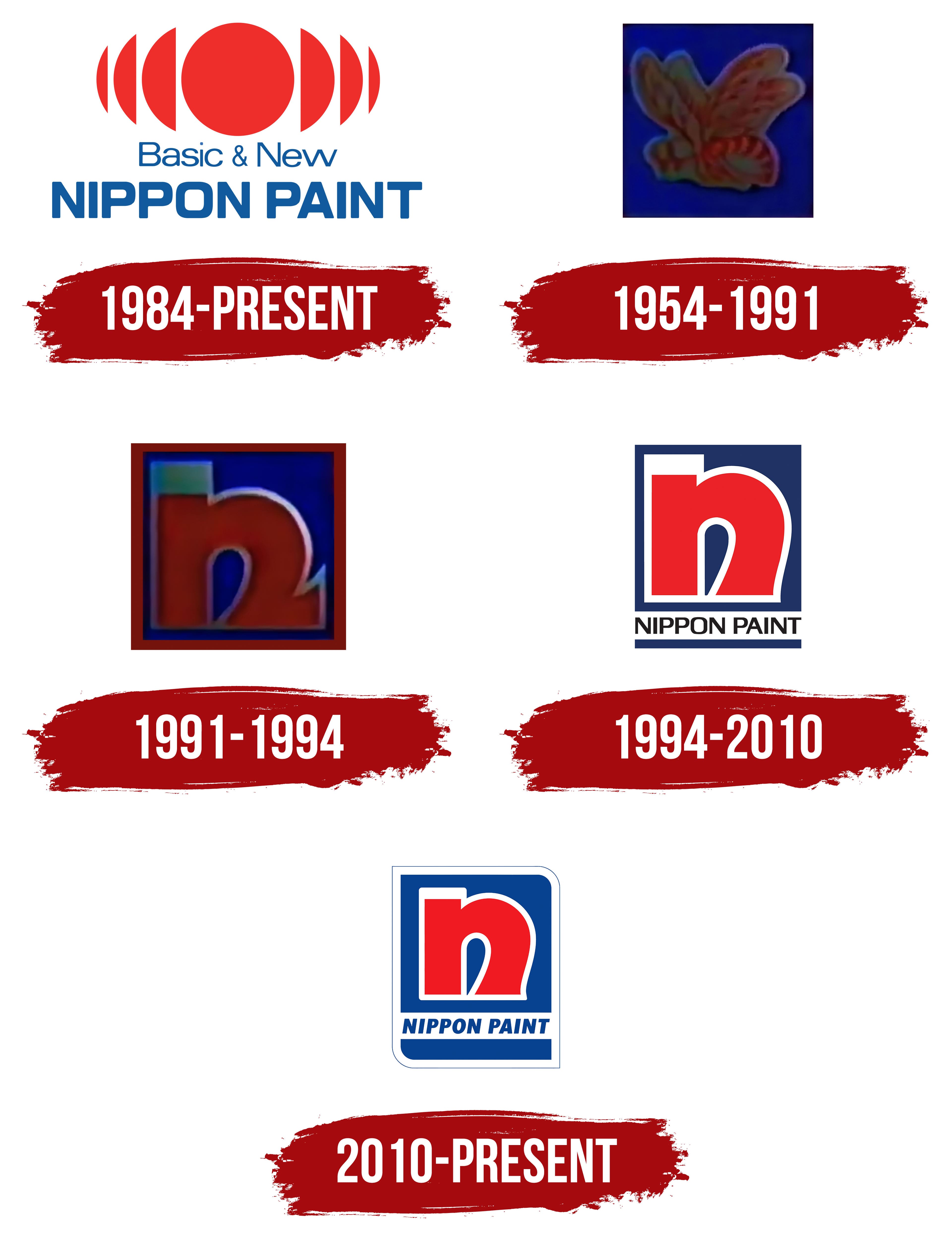
Modern Nippon Paint uses two logo variants simultaneously. One of them was created when the holding was founded and served as a badge reminiscent of Japanese symbolism. It clearly conveyed the company’s strong national standing and the scale of its production. The second option is a picture in which all elements focus directly on the company. Generally, the brand’s essence is best expressed in the first and second options.
What is Nippon Paint?
Nippon Paint is a well-known Japanese manufacturer of paints and varnishes. Among them are paints, fine chemicals, and special substances for coatings. Products are made not only in Japan but also in other countries. Nippon Paint has branches in more than 20 countries. A wide network of overseas affiliates generates an annual income of about 535 billion yen.
1893 – 1984
The prerequisites for becoming a major manufacturer of paints and varnishes in Japan were already in place by 1881. This year, the company’s founder, Jujiro Motegi, launched Komyosha. But after some time, the company expanded and changed its name to Nippon Paint Manufacturing. In 1893, it was already an established brand, which gradually improved its production. In 1927, it reached a new level and adopted the name still used today: Nippon Paint.
1984 – today
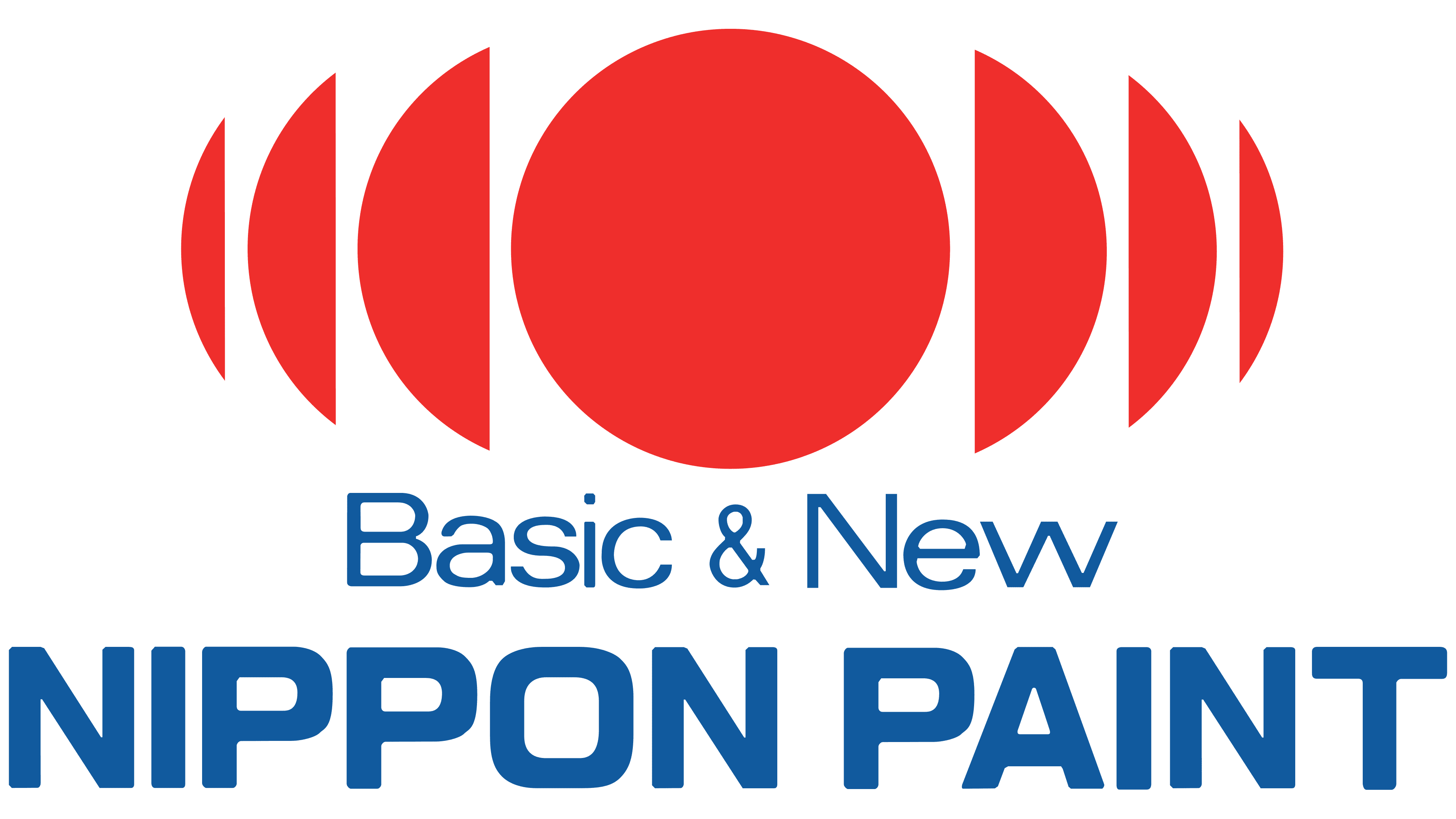
The famous company received its first official logo only in 1984. It was a direct reflection of Nippon Paint’s origins. This was manifested in the choice of a central thematic element: an image resembling the one on the Japanese flag. It was based on a bright red circle symbolizing the sun. It is presented in an unusual form.
Looking at the picture, it seems there are several more of the same drawings behind it, but a part of them is hidden behind the main element. This can be called a real mirror-reflection effect. It can be interpreted as an extension of the scope of activity. In the center is the country’s symbol, and the remaining parts show branches.
At the bottom were two-level inscriptions reading “Basic & New” and “Nippon Paint”. They are written in a plain, sans-serif font. The top mark looks more subtle, while the bottom one is confident and massive. For the inscriptions, a light blue hue was chosen to convey reliability and trust.
1954 – 1991

In 1954, an incredibly significant event for the enterprise took place. Nippon Paint formed a joint holding company with Bee Chemical. The arrival of a new member prompted the introduction of an updated emblem. It was a beautiful picture in the form of a square, inside of which there was a rather realistic image of a bee.
The image of the insect focused on the company Bee Chemical, which held a 50% share. Yellow was used to decorate the bee. The square itself was painted in a rich blue hue, demonstrating responsibility, security, and confidence. In general, the picture emphasized Bee Chemical’s participation and its positive impact on the holding.
1991 – 1994

During this period, the company adopted a new logo, based on the stylized letter n. He imagined the prototype of the modern emblem and demonstrated the company’s desire for renewal. The visual concept in this version involved placing a massive letter “n” in the center of the picture. The imposing forms symbolized the company’s confidence, success, and firmness in the market.
The presence of a small original serif also confirmed the brand’s tribute to its past. Additional characteristics were manifested in the choice of colors. Red symbolizes energy and strength, white represents openness to new solutions, and blue represents reliability.
1994 – 2010

In 1994, a more accurate and stylish version of the logo was adopted. The letter n was still used as the basis, but the concept has generally changed. In the wordmark, the designers removed the serifs to make the logo more modern and added the Nippon Paint inscription at the bottom. The new wordmark was designed in straight, even letters in a capital case.
The combination of these elements looked very harmonious and perfectly emphasized the company’s prestige. During this period, it had already entered the world market and won the trust of millions of foreign customers. The company’s credibility was also emphasized by using blue as a background. Red and white were still used in the letter’s design.
2010 – today

The current Nippon Paint logo was created in 2010. The designers used the previous version as a base but made some interesting changes. The font used to design the company name has become smoother and softer. In addition, the italic format has been added. The new design can be interpreted as a course toward development, active growth, and progressiveness. Another important change was the addition of white outlines. As a result, the logo has become more attractive and expressive.
Font and Colors
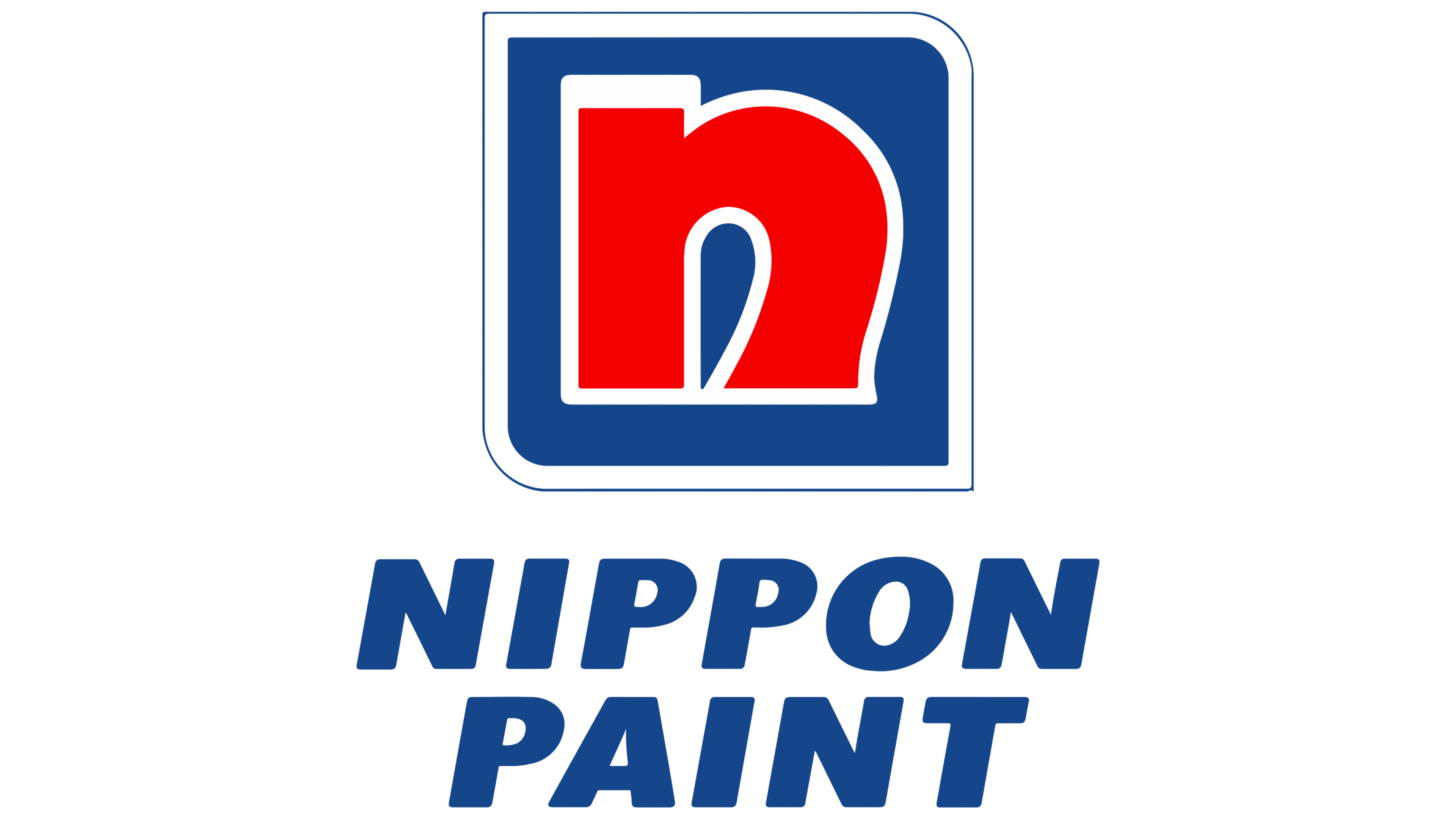
Nippon Paint is currently using a beautiful, vibrant logo with all the details perfectly balanced. The inscription and the stylized letter n are set in a stylish, soft font with smooth curves and cuts. It also lacks traditional serifs. This style demonstrates innovation, dynamism, and development. The continuation of this thematic line is reflected directly in the colors.
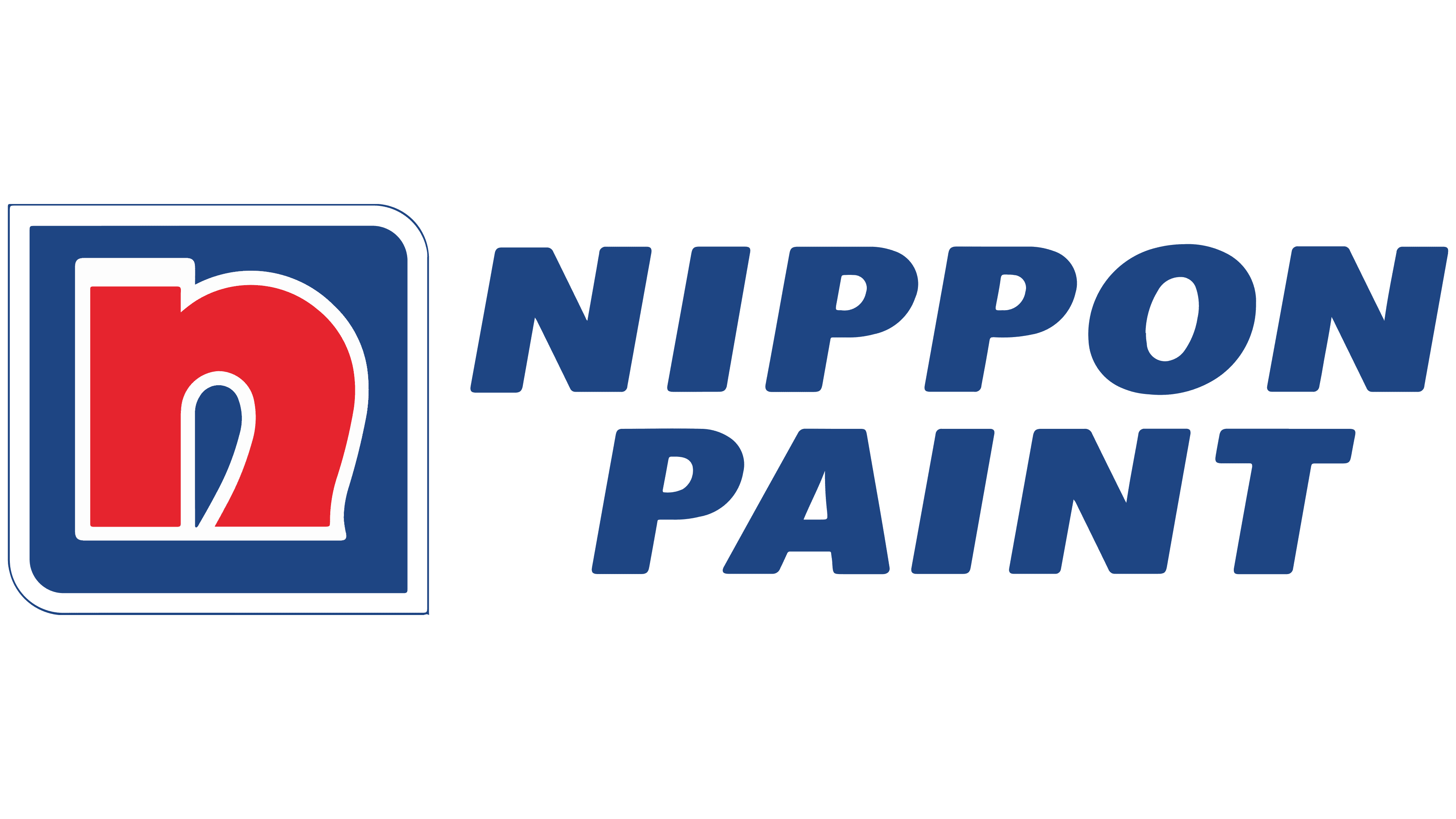
The main element is painted in a rich red hue, and neutral white is used for its outlines. In the context of visual identity, this combination means a balance of energy and measured growth. The color scheme also includes blue. It is a symbol of reliability, safety, and high quality, the basic principles that guide Nippon Paint in its activities.