


 Old Spice Logo PNG
The Old Spice logo featuring a sailing ship refers to the era of sea voyages and long-distance trade routes, when spices were brought from exotic lands. It preserves the brand’s connection to its origins, traditionally associated with masculine fragrances and a spirit of adventure.
In 1934, William Lightfoot Schultz founded Shulton Inc. in New Jersey, producing soap and toiletries with minimal resources. Early sales reached $165,000. A turning point came in 1937, following a suggestion from Bullock’s buyer, Harry Schwimmer, who saw potential in colonial-themed products inspired by Colonial Williamsburg.
That year, Early American Old Spice launched as a women’s fragrance line with soap, powder, and bath salts. Packaging referenced 18th-century glass, while the name drew on maritime trade and personal associations. Despite a limited Christmas release, sales reached $77,000, and stock sold out quickly.
In 1938, Shulton introduced a men’s line with shaving soap and aftershave. Nautical imagery, including ships like Grand Turk and Friendship, became a core motif. The men’s segment soon overtook the original female line and defined the brand’s direction.
World War II accelerated growth as Old Spice included products in military kits. Returning soldiers sustained demand from the 1940s through the 1960s. In 1970, American Cyanamid acquired Shulton, expanding the range.
In June 1990, Procter & Gamble purchased Old Spice for $300 million. At that time, the brand struggled with an aging image, while Unilever promoted Axe toward younger consumers. P&G updated its packaging and added deodorants, body wash, and hair products, including High Endurance, which are distributed in schools.
In 2010, Wieden+Kennedy launched “The Man Your Man Could Smell Like” with Isaiah Mustafa. The campaign targeted female buyers and drove rapid growth. By May, Red Zone Body Wash sales rose 60%, reaching 125% by July. The ad later received the Grand Prix at Cannes and a Primetime Emmy.
Meaning and History
In its early years, Shulton Inc. produced women’s perfumes inspired by a potpourri of scents the founder’s mother used. The company named its product Early American Old Spice. Then, building on its success, it released a male counterpart to the same fragrance. The line also featured aftershave lotion and shaving soap.
For these, the company first used a nautical theme, depicting a sailing ship on the label, which subsequently became the prototype for all other emblems. Initially, the ships “Friendship” and “Grand Turk” were featured; the list was later expanded. Many famous long-distance ships have graced the emblem, including Hamilton, United States, Sooloo, Maria Teresa, John Wesley, Java, Recovery, Birmingham, Constitution, Propontis, Salem, Star of the West, and others.
The sailing ships perfectly fit into the men’s cosmetic line and resonate well with its name. In the past, ships transported spices from distant countries, and sailors were seen as the most masculine because they had to overcome many challenges. Thus, the maritime theme, inspired by aromatic spices, became the basis for Old Spice’s logos. Because only the very wealthy could afford spices, the line was considered luxurious.
What is Old Spice?
This Procter & Gamble brand evolved from a traditional men’s fragrance into a major player in men’s grooming, known for bold scents and vibrant style. The range includes body washes, shampoos, styling products, and signature deodorants and antiperspirants, each with a unique fragrance from the classic Original to the distinctive Bearglove and Wolfthorn. The brand’s uniqueness lies in combining memorable marketing with effective personal care products. It appeals to young consumers who prefer daring scents and those who appreciate the brand’s iconic fragrances.
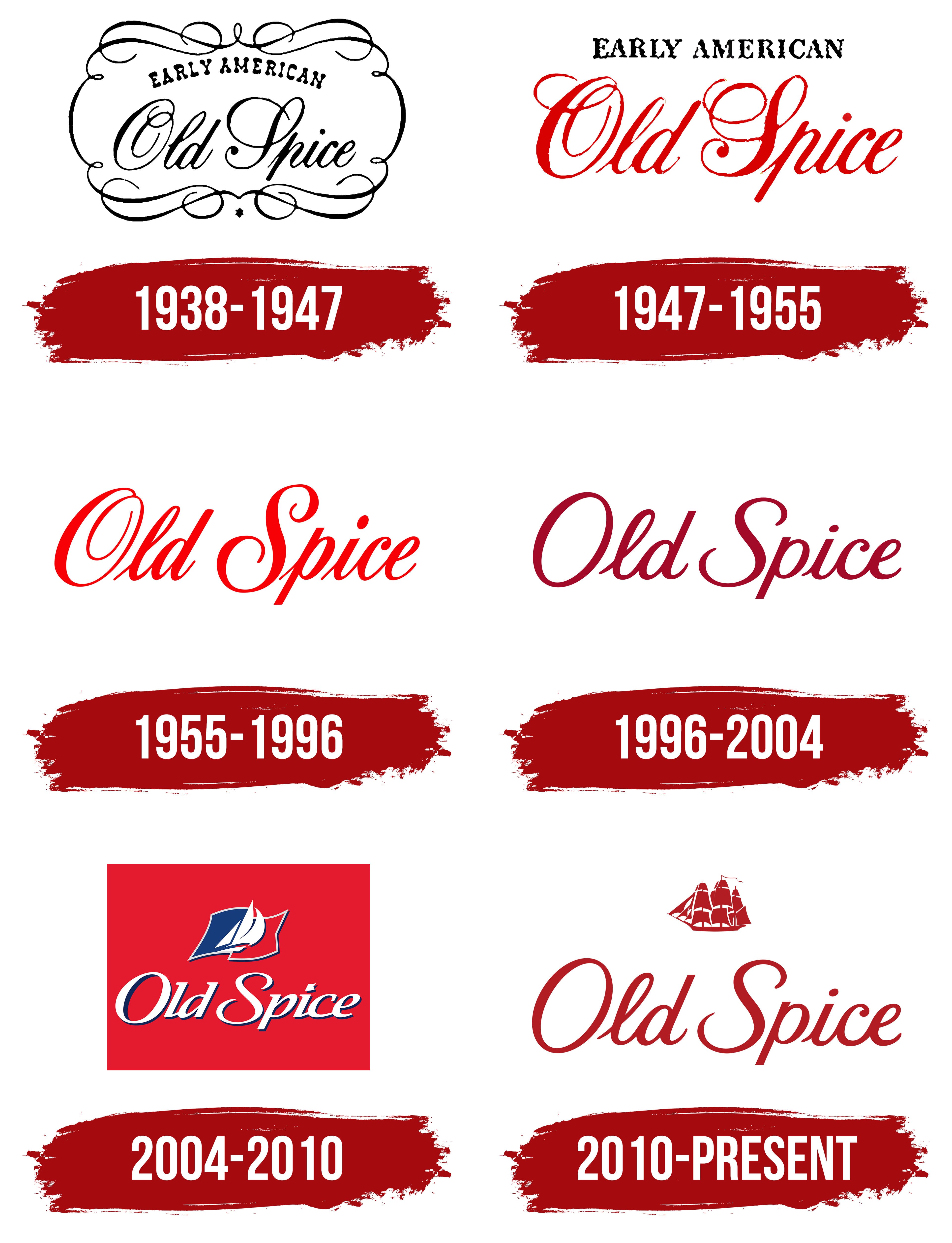
1938 – 1947
1947 – 1955
1955 – 1996
1996 – 2004
2004 – 2010
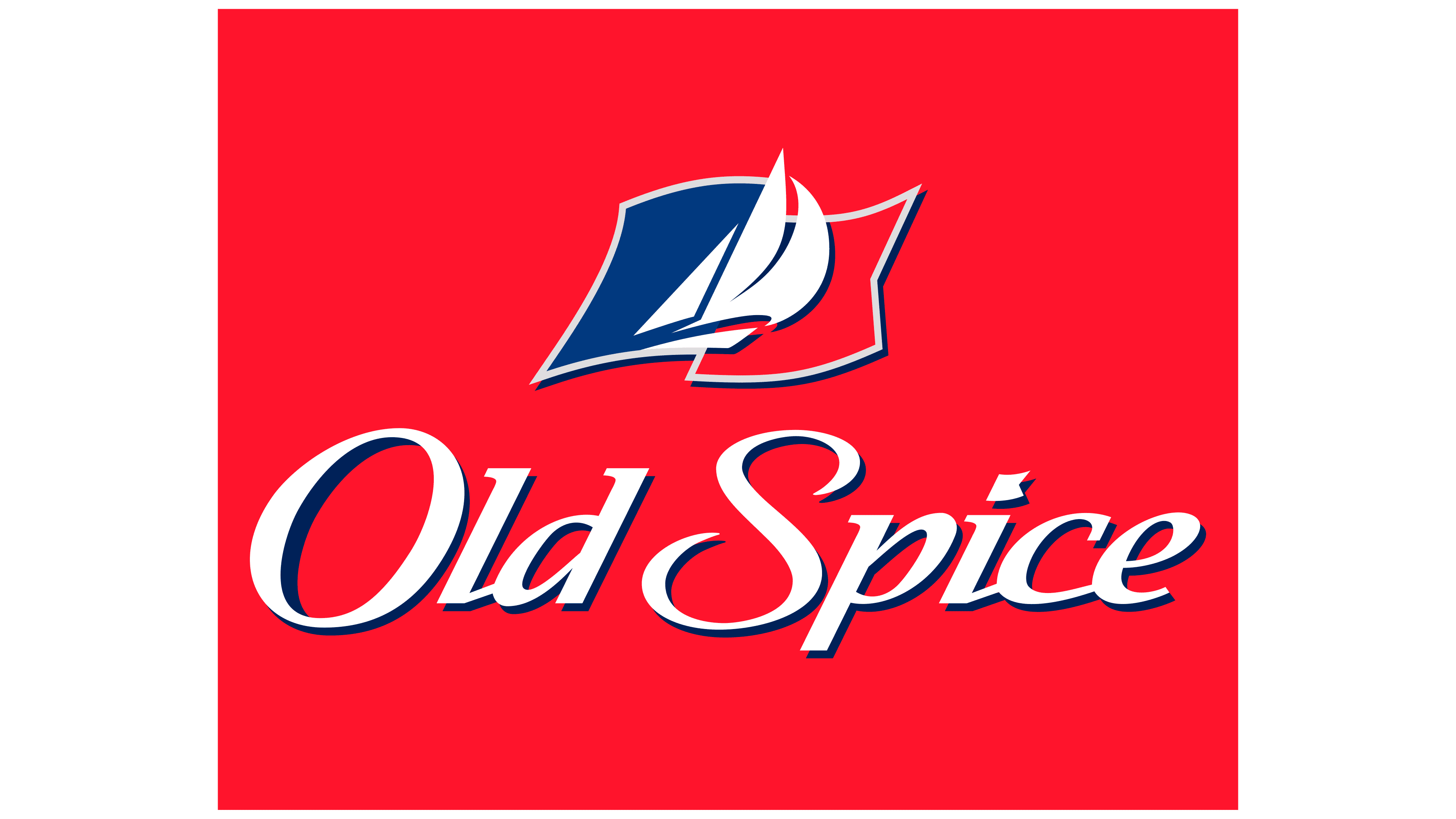
2010 – today
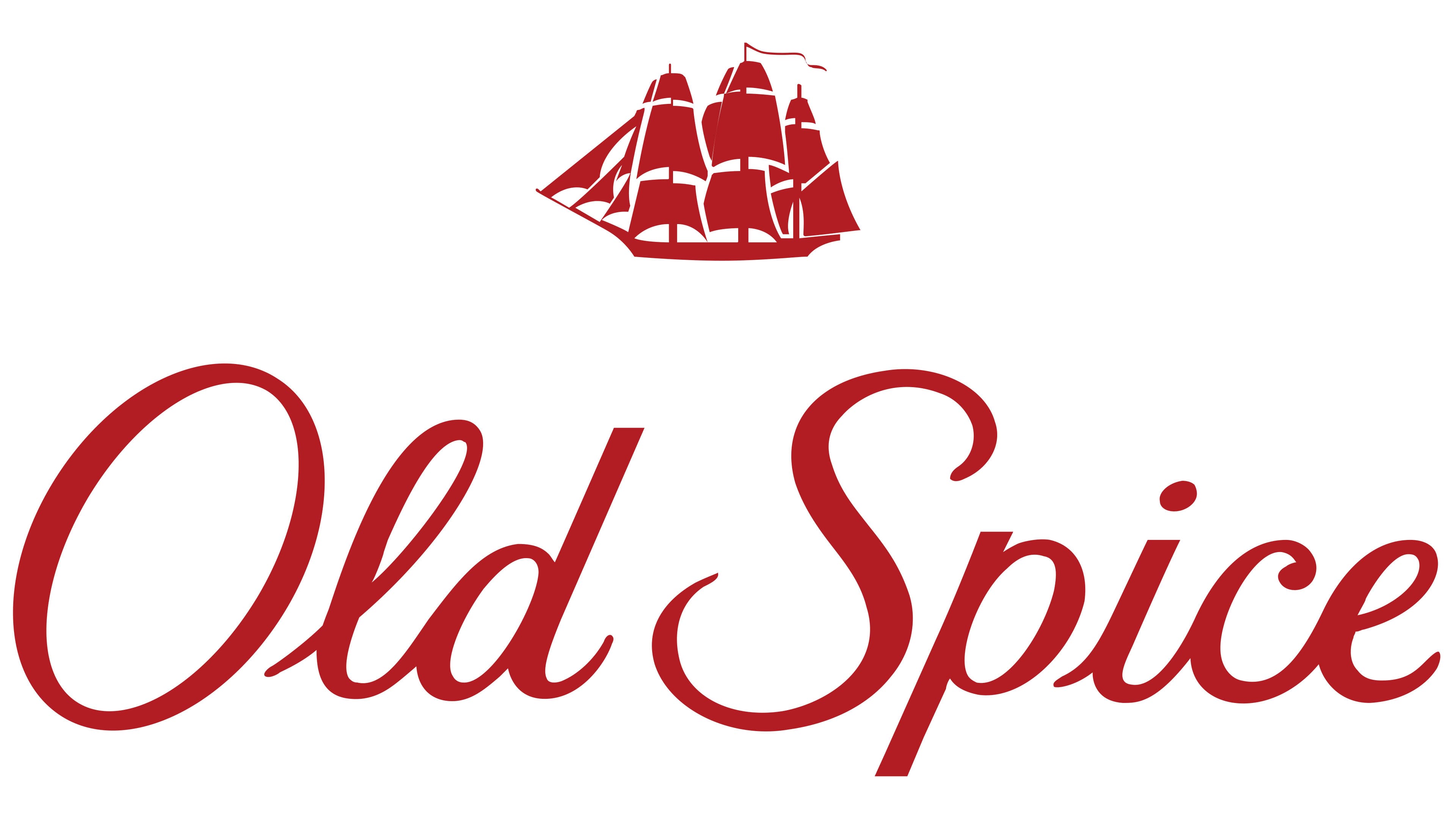
Font and Colors
The logo features a sailing ship that delivered spices from exotic countries. It has three tall masts and a thin fluttering flag. Below is the phrase “Old Spice.” The size ratio has changed over time. Sometimes, the ship was tiny, and the name was large. The ship sits at the junction of the two words, positioned over the “d” and “S.” The inscription is in an old style and complemented by neat roundings.
The name on the emblem imitates calligraphic handwriting. It is executed in an italic, semi-closed handwritten font. The letters have a streamlined, elegant shape. The modern corporate palette is dark red and white; the old one is blue and white.