


 Optus Logo PNG
The Optus logo conveys joy and vitality. The company strives to create a comfortable environment for customer communication. The emblem promises great deals and modern technologies that make communication easy and affordable.
Optus began outside conventional telecom. In 1981, the Australian government established AUSSAT Pty Limited as the country’s first national satellite system, serving remote regions where cable networks were uneconomic. AUSSAT chose the Hughes 376 satellite design in 1982. A1 launched in August 1985, followed by A2 and A3, covering Australia and Pacific islands for television, phone links, military, and civil use.
The system was costly and loss-making, while Telecom Australia (later Telstra) still dominated the market. The government sold AUSSAT together with a telecom license. On November 19, 1991, Optus Communications received Australia’s second telecom license, ending Telecom Australia’s monopoly. The consortium included Mayne Nickless, AMP Society, Cable & Wireless, and BellSouth, and pledged to invest A$4 billion over eight years.
Commercial service began on January 31, 1992. Optus first challenged Telstra with cheaper long-distance calls, using the “1” prefix before area codes. The 1992 “Yes” campaign positioned Optus around choice and lower prices. In 1993, the company launched its mobile network. Cable & Wireless bought BellSouth’s stake in 1997. In 1998, the company became Cable & Wireless Optus and listed on the Australian Stock Exchange.
Singtel acquired Cable & Wireless Optus in 2001 for A$14 billion and renamed it Singtel Optus Pty Limited. Optus then expanded through deals: UEComm in 2004, Alphawest in 2005, and full control of Virgin Mobile Australia in 2006. In 2022, a data breach affected about 10 million customers. In 2024, Singtel discussed selling a 20% stake in Optus to Brookfield, but no agreement was reached.
Meaning and History
The Australian leader in integrated telecommunications has changed its style many times to keep up with the latest trends. Moreover, the logo update came with a complete rebrand: for example, it abandoned its traditional symbol in 1999 and adopted a cheerful, friendly design in 2013.
However, the biggest change came in 2016 when the company decided to adapt to the Netflix generation. To achieve this, she had to develop a new business model that went beyond the usual telecommunications services framework and confirm her status as a digital entertainment provider. During that period, she launched the Optus Sport channel and introduced her set-top box, YesTV. In this case, the emblem change should have symbolized a desire for the future.
What is Optus?
Optus is an Australian telecommunications company founded in 1991. Since its inception, it has become the country’s second-largest wireless operator, with over 10.5 million subscribers. It is now a subsidiary of Singtel.
1991 – 1999
The brand emerged in the 1990s to replace AUSSAT and offered international telephony services. It had a corresponding logo: three half-rings perpendicular to the fourth half-ring encircling an invisible circle. This image illustrates the connection between cities around the planet. The word “OPTUS” was placed under the geometric pattern, and below it was “communications.” The designers played on the contrast of uppercase and lowercase letters.
1997 – 1999

In the late 1990s, the word “Yes” became an integral part of Optus’s corporate identity. It was perceived as an exclamation of a satisfied customer who had found what they were looking for. The logo featured “Yes” in italics, enclosed in single quotes. Below it was a symbol consisting of half rings. The bottom reserved space was for the brand name.
1999 – 2013
At the turn of the millennium, the word “yes” turned dark blue, and “OPTUS” became bold. The developers have removed the geometric sign, deeming it unnecessary, as the range of services has long since gone beyond international telephone communications.
2005 – 2013
In 2005, the designers placed the company symbol inside a yellow rectangle. This was intended to showcase the brand’s friendly nature and its focus on the digital entertainment industry.
2013 – 2016
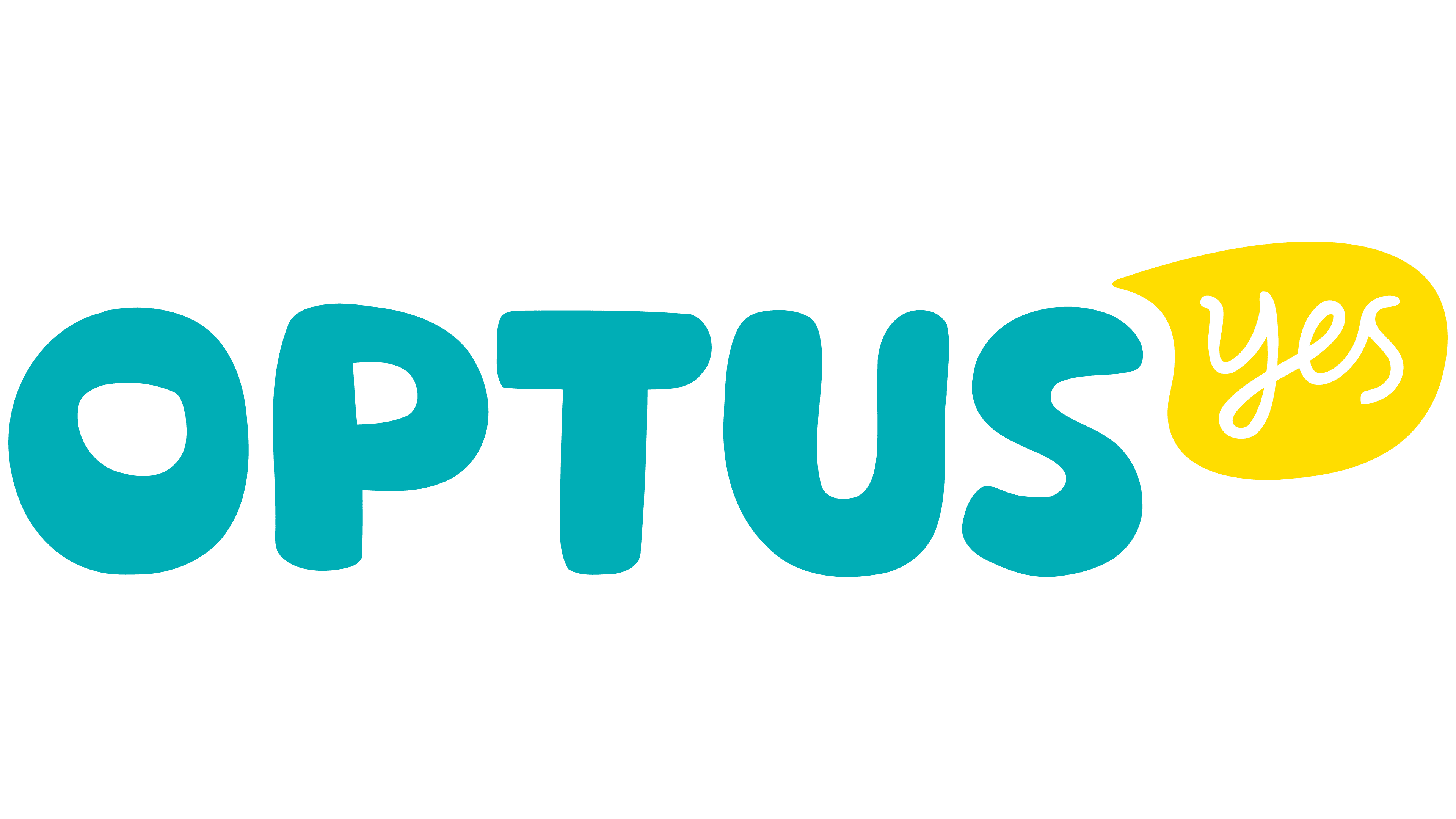
Optus executives turned to the Sydney-based Australian agency Re to improve the design. Experts helped the telecommunications firm complete a restructuring as part of a new customer declaration, known as the “Declaration Yes.” This meant “Yes” remained the brand’s primary feature. The emblem was written in calligraphic letters in a yellow speech bubble. By the way, the company’s new character, Olly, also had a speech-bubble shape and was bright yellow.
The word “OPTUS” has changed markedly. The developers chose a bubble font, in contrast to the cool, structured design of yesteryear. The blue-green color emphasized the style’s informality.
2016 – today
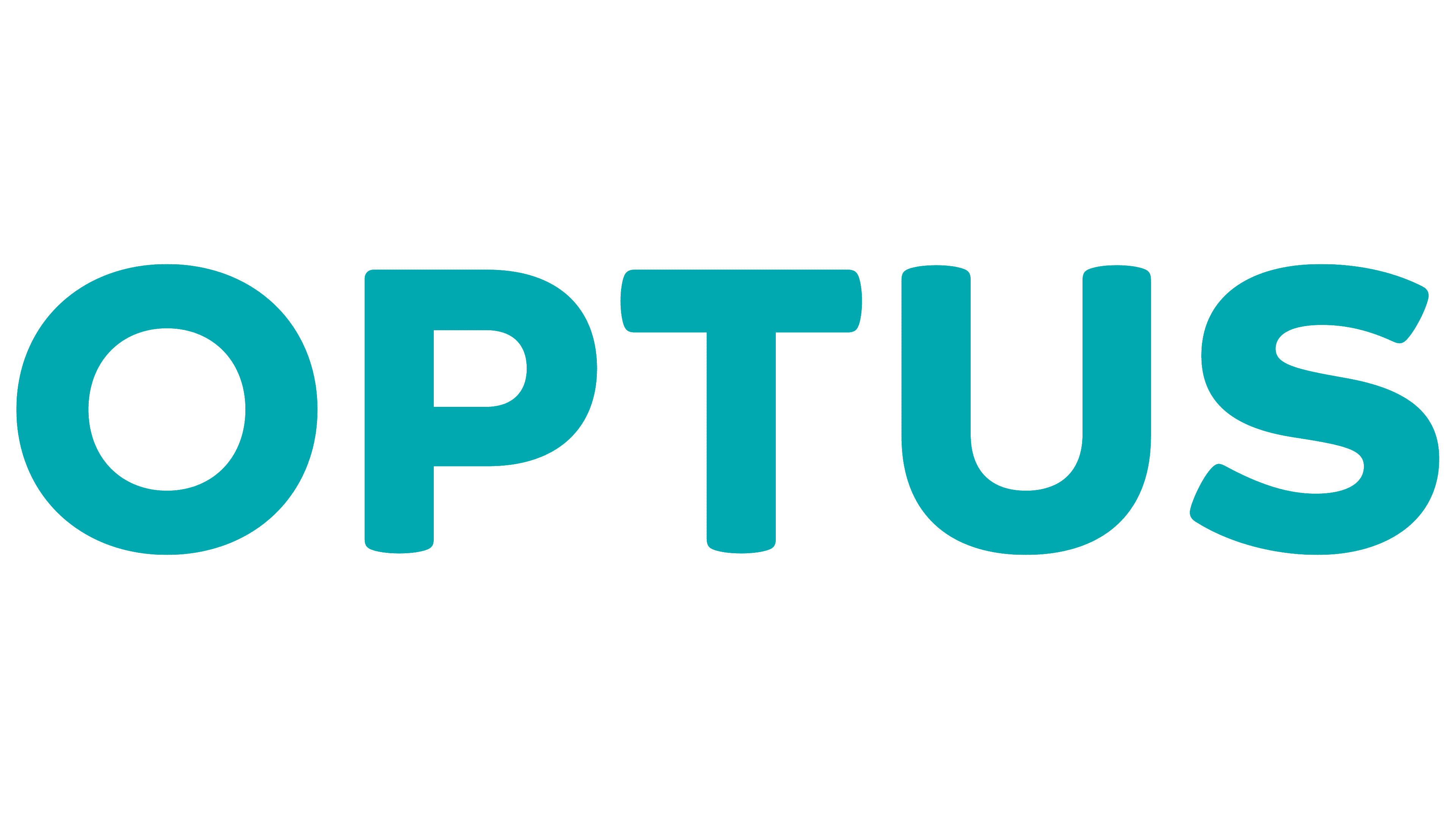
The company again entrusted the next transformation of the brand name to the agency Re. The redesign marked a transition to a new level of continuous development in the digital world. The word “Yes” took on a different meaning: the brand owners abandoned the “Declaration Yes” in favor of the concept of “Yes Moments.” Ultimately, they removed this detail from the main logo, leaving only the brand name.
The developers have retained the blue-green color and uppercase letters. The font was changed: it took on a sharper shape, though the corners remained rounded. There is also a yellow OPTUS variant that compensates for the missing bright dialogue bubble. The yellow word “Yes” is used separately from the name. It features a new design inspired by Mariko Elliott’s calligraphy.
Font and Colors

In 2016, the traditional logo disintegrated. The brand features two distinct signs, each with its own design and meaning. The blue-green inscription “OPTUS” conveys friendliness and fun, and the word “Yes” reflects the client’s enthusiastic reaction to the media content.
The main logo uses a custom typeface designed specifically for Optus. It looks like a Taro Extra Bold with rounded corners.
The “Yes” font is semi-connected because the first letter is separated from the second. Australian designer Dave Foster created the Foster Type studio. He came up with thousands of Yes versions, wrote them down on 100 sheets of paper, and then chose 115 to present. After the analysis, everyone agreed to leave the base style unchanged.
Two colors can identify the brand: aquamarine (#39A8AF) and yellow (#FECD03). This vibrant palette was chosen specifically to showcase the entertaining nature of Optus’ services.