


 Orange Logo PNG
The Orange logo represents a special environment of open, lively communication. The Operator undertakes to provide quality services to all customers, including warmth, friendliness, and a wealth of useful information.
Meaning and History
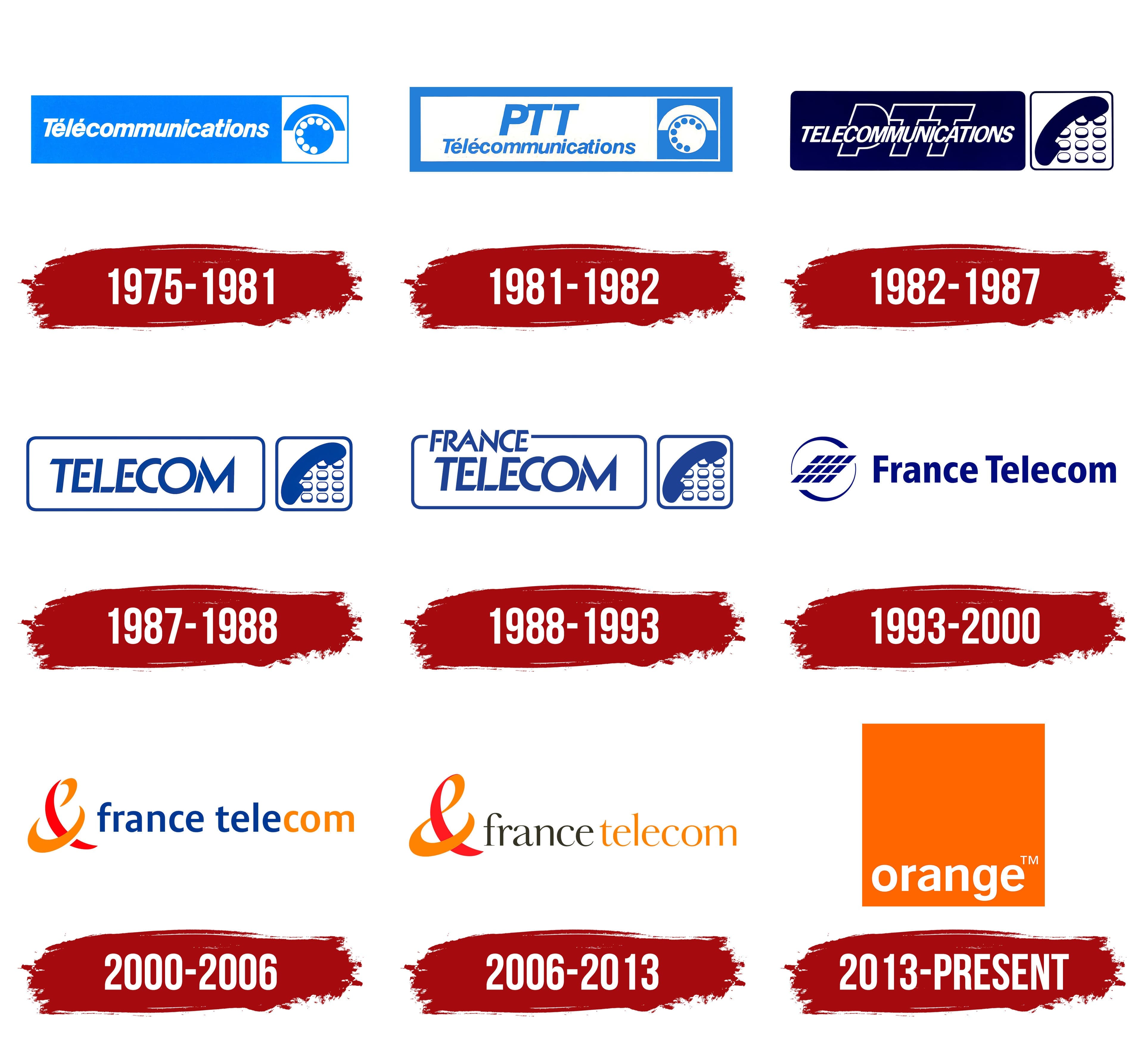
The corporation dates its history to the early days of 1988. At that time, it was called France Télécom SA and was associated with the state postal administration unit, Télégraphes et Téléphones. Two years later, the telecommunications provider acquired autonomy, and eight years later, it was privatized, with the government retaining 27 percent of the shares.
The Orange brand launched in the UK in 1994 and represented Orange Personal Communications Services Ltd., formerly known as Microtel. It then changed owners frequently until France Télécom SA acquired it. This happened in 2000, and in 2006, the parent company rebranded as Orange SA to consolidate all its products under a single brand. At the same time, they developed the famous orange square logo, replacing the wordmark.
1975 – 1981
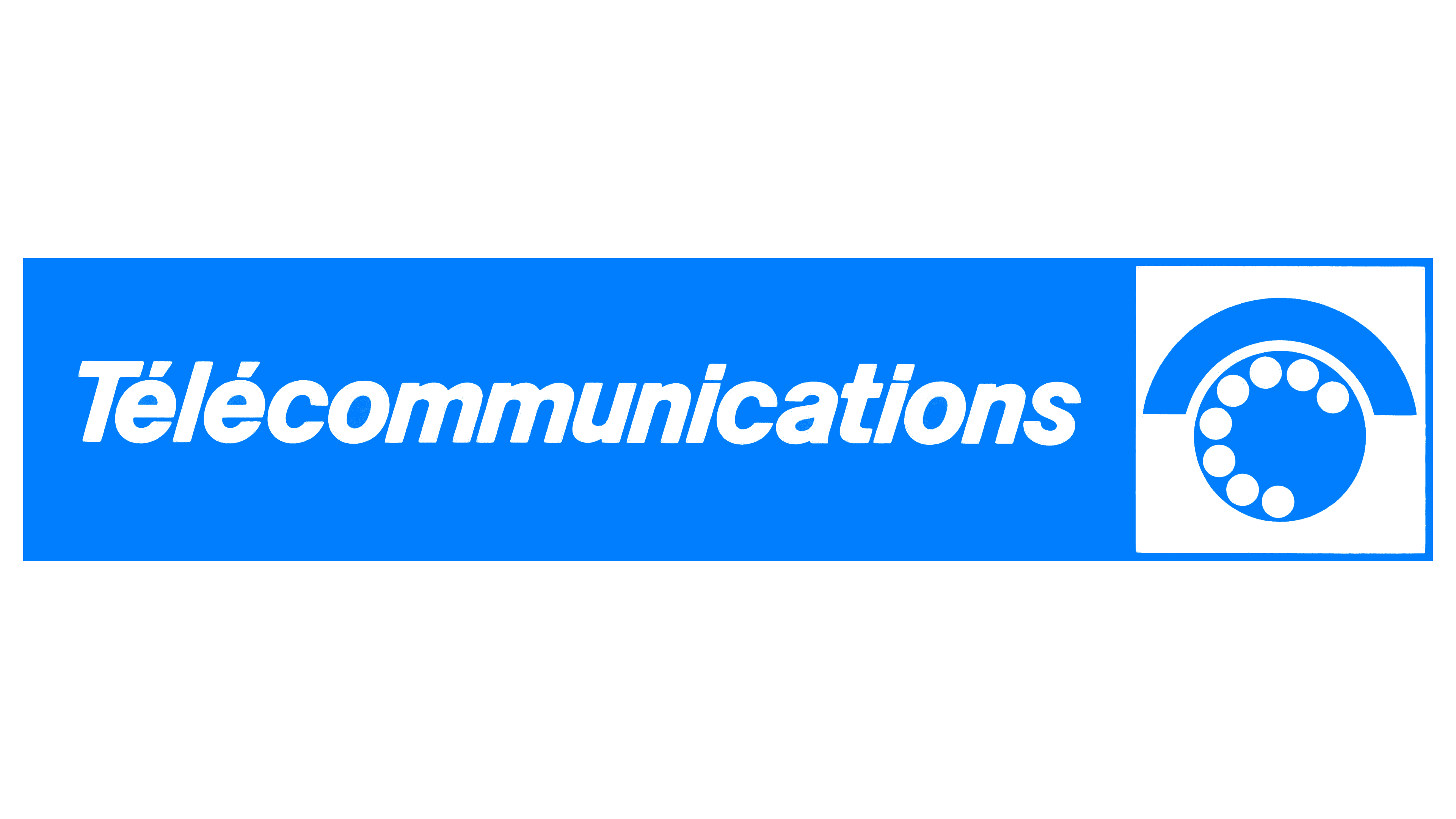
In the 1970s and 1980s. France Télécom did not exist. The telecommunications industry was beginning to develop in France, represented by the General Direction of Telecommunications. Its logo featured “Télécommunications” in white inside a blue rectangle (left) and a blue telephone in a white square (right). Moreover, the telephone was shown schematically: one large circle, a rotary dial, eight small circles, numbers, a long arc, and a tube.
1981 – 1982
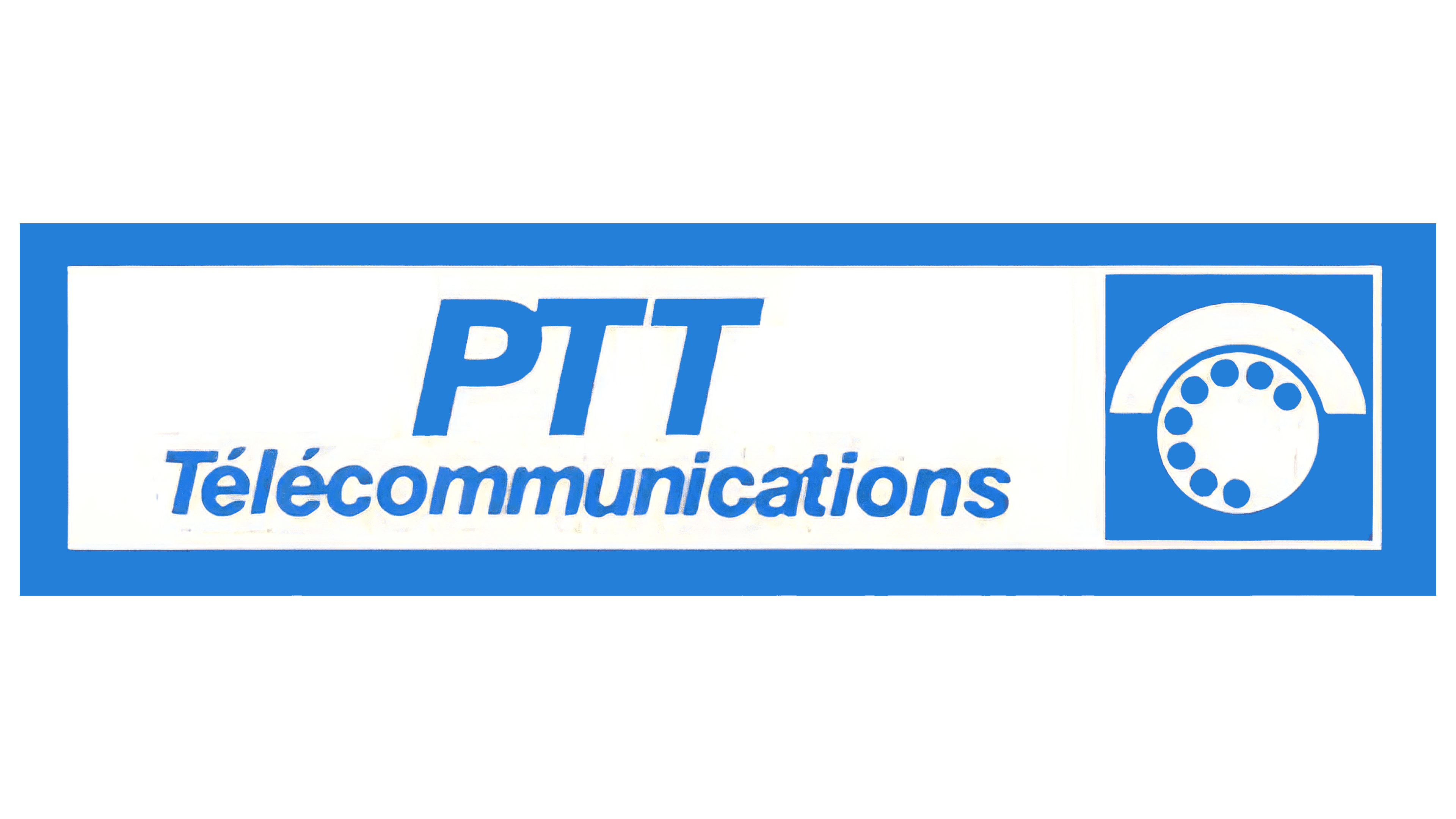
In 1981, the logo’s proportions changed to accommodate the addition of the abbreviation “PTT” to the word “Télécommunications.” It was written in italics and appeared at the top of the line.
1982 – 1987
With the proliferation of push-button telephones, the design was changed to feature an image of eleven buttons and a telephone receiver in a white square. In addition, the modernization affected the inscriptions: the abbreviation became the background for the word “TELECOMMUNICATIONS,” which was moved to uppercase and centered. Instead of light blue, it used dark blue. A wide indent formed between the rectangle and the square, allowing both shapes’ corners to be rounded.
1987 – 1988
Shortly before the change in legal status, the organization updated its logo to make it more straightforward. To do this, the designers removed the abbreviation “PTT” and shortened “TELECOMMUNICATIONS” to “TELECOM.” The interior of the quadrangles was painted white, and all elements were repainted light blue.
1988 – 1993
In 1988, the most important event in the history of France Télécom SA took place: the company was founded as Postes, Télégraphes et Téléphones. At the same time, it adopted its first name and logo, which were very similar to those of its predecessor. The developers added the word “FRANCE” above “TELECOM,” which required breaking the rectangle’s frame integrity.
1993 – 2000
Three years after gaining autonomy, the telecommunications service provider renewed its wordmark. Its name began to be written on one line, and all letters except the initial ones were converted to lowercase. The emblem appeared on the left: one large parallelogram, made of twelve small parallelograms, encircled by two half rings. All elements were dark blue.
2000 – 2006

In 2000, the company entered into a deal with Vodafone to acquire the Orange brand. This step pushed her to change her identity. As a result, the logo began to look like a lowercase “france telecom” lettering with a stylized “&” symbol on the left. Moreover, the second word was divided into two parts using a color palette: blue “tele” plus orange “com.”
2006 – 2013
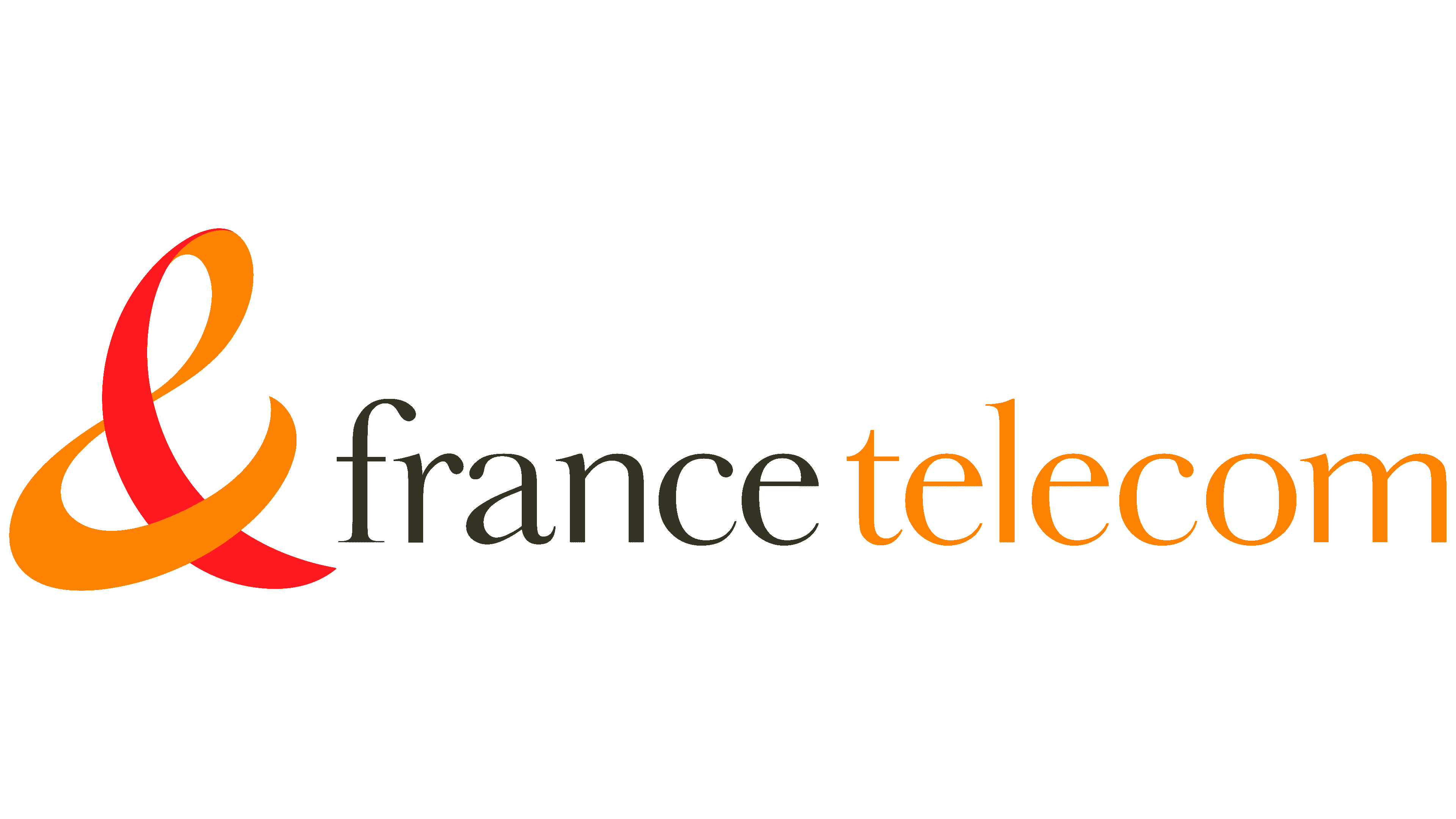
In 2006, designers used a thin serif typeface with contrasting stroke weight. The spacing between words has decreased, while “france” is black and “telecom” is completely orange. The ampersand has become a curved red-orange ribbon.
2013 – today
In mid-summer 2013, France Télécom SA was renamed Orange SA. Its logo looks like a simple orange square with white “orange” lettering at the bottom. The only additional element is the trademark mark to the right of the word.
Font and Colors

At first glance, the telecommunications corporation’s emblem seems contradictory because the square does not resemble the orange it is associated with. But it symbolizes a close connection, with each corner representing a service or subsidiary. In other words, it represents the integrity of everything the company does.
The developers have slightly changed the Helvetica Neue font to make the lettering unique and memorable. All letters are lowercase, streamlined, and sans serif. The main color corresponds to the name Orange. The full logo appears on the square, while the wordmark is left white.