


 Overwatch Logo PNG
The Overwatch logo, from a 2016 shooter developed in the United States, features robotic elements. The symbol is iconic and is often seen as a combination of the two letters in the name, a stylized peace sign, a gamer’s greeting, or a Spartan shield.
Overwatch grew out of Titan, a large MMO Blizzard Entertainment started in 2007 after World of Warcraft’s success. The project ran for seven years, involved over 140 developers, and cost more than $80 million. In May 2013, Blizzard halted it, publicly confirming the decision in September 2014 after internal struggles to define its scope.
About 40 developers, led by Jeff Kaplan and Chris Metzen, stayed to build a new game. They shifted toward a team-based shooter influenced by Team Fortress 2 and MOBA structure, reusing parts of Titan such as early character concepts and maps.
On November 7, 2014, Overwatch debuted at BlizzCon with 14 playable heroes. The closed beta started in October 2015, and by May 2016, the open beta had drawn 9.7 million players. The full release followed on May 24, 2016, for PlayStation 4, Xbox One, and Windows.
The game generated over $1 billion in revenue in 2016 and reached 35 million players by October 2017. In South Korea, it overtook League of Legends in internet cafés. In November 2016, Blizzard announced the Overwatch League, which launched in 2018 with 12 teams and major sponsors.
Blizzard revealed Overwatch 2 on November 1, 2019, and released it on October 4, 2022, as a free-to-play title with a battle pass model. Blizzard lost access to China after ending its deal with NetEase. In 2024, the league was restructured, and in February 2026, the game returned to its original name, Overwatch.
Meaning and History
The video game first appeared in a beta version and was tested at BlizzCon from 2014 to 2016. It was then released across several platforms: Xbox One, PlayStation 4, and Windows. In 2019, it was released on Nintendo Switch. The game is multiplayer, and it supports keyboard, mouse, or gamepad input.
The interaction between participants is structured as battles, so many characters are involved in the storyline’s development. Each gamer can choose from more than twenty characters. They are divided into two groups of six. The computer game features a robotic element that significantly influences its logo.
What is Overwatch?
It is an esports discipline: a first-person team shooter in which players not only fight each other but also perform specific tasks. The game features various locations and characters. Blizzard Entertainment released the first version in 2016.
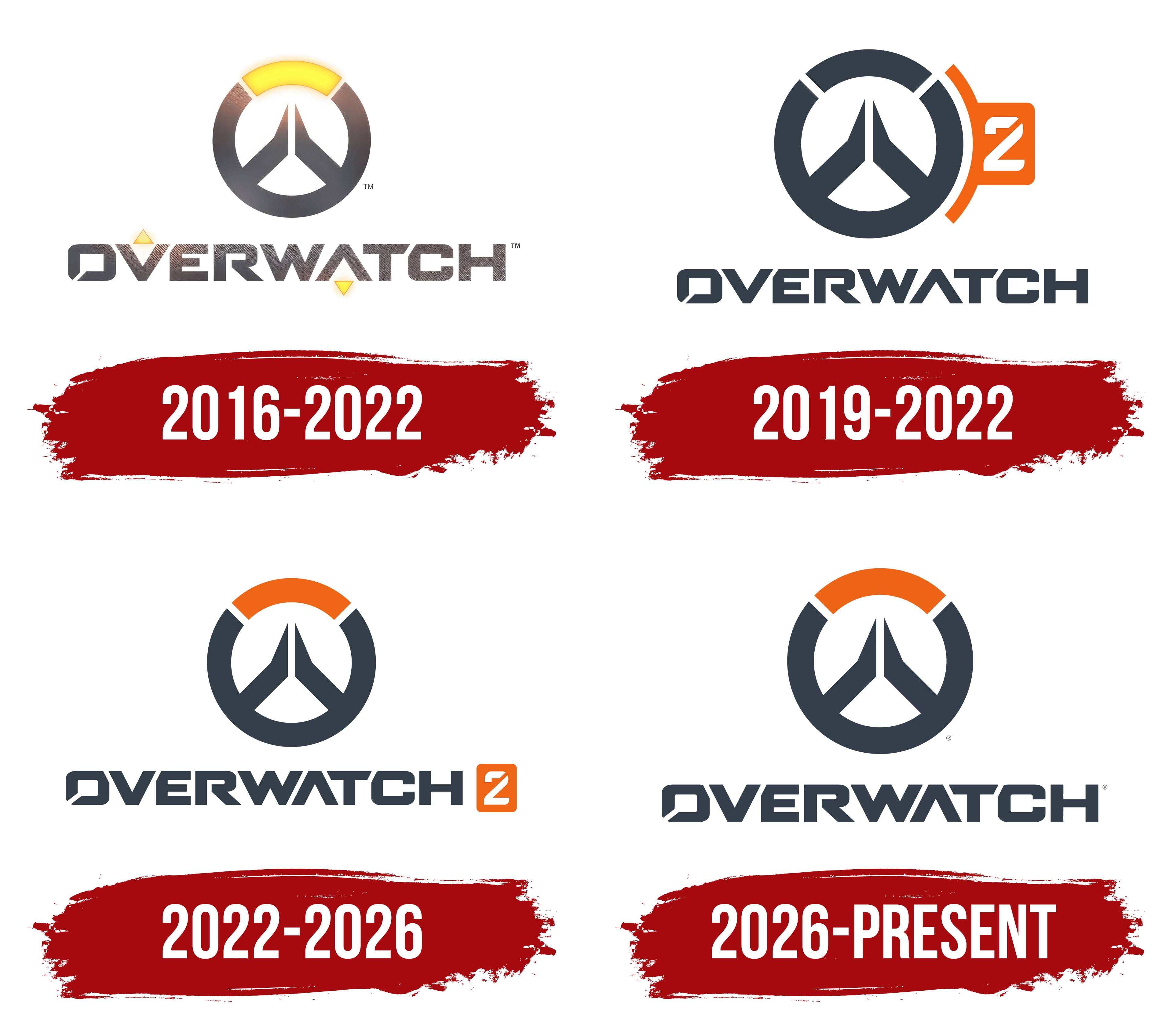
2016 – 2022 (Overwatch)

The Overwatch name connects Blizzard Entertainment’s game to an international organization within its fictional world. In military usage, “overwatch” means observing enemy activity and providing cover for an allied unit. In the story, the organization brings together soldiers, scientists, adventurers, and heroes with extraordinary abilities to restore peace during a global crisis. It later disbands, but the need for its help remains. The circular emblem represents both the game and this alliance of protectors, making it part of the narrative.
The name came from Titan, Blizzard’s canceled multiplayer project. Some of its ideas and artwork became the foundation for the team-based shooter. According to Jeff Kaplan, an organization called Overwatch performed policing duties within Titan’s world. During naming discussions, employees voted on suggestions posted on a board, and Overwatch won. When producer Matt Hawley insisted on replacing the new shooter’s placeholder presentation title before showing it to the team, Kaplan returned to the name his colleagues had already favored.
The game’s artists envisioned a bright future populated by heroes from different cultures. They retained the exaggerated proportions and stylized forms associated with Blizzard games. The team developed several lettering options before settling on an angular design. The sketches later appeared in The Art of Overwatch, published by Dark Horse in 2017. The public first encountered the new universe on November 7, 2014, when Chris Metzen introduced it at BlizzCon. The Overwatch title appeared at the end of the first trailer.
The original emblem is built around a thick ring. Two diagonal gaps separate the upper arc from the lower portion. Inside, symmetrical pointed shapes rise from the lower sides, divided by a narrow vertical slit. In the first game’s dimensional version, the lower portion has a metallic surface with gray and dark areas, highlights, and fine texture. The upper arc glows golden yellow. The combination of cool metal and warm light continues in the lettering beneath the circle.
Heavy uppercase sans-serif OVERWATCH lettering forms a wide horizontal line. Thick strokes, clipped corners, and occasional curves define the letters. The “O” resembles a rounded rectangle, with a diagonal cut opening its interior toward the lower-left edge. Two slanted strokes form the “A,” while the middle bar of the “E” is shorter than the others. Two gold triangles complement the lettering. One points upward above the “V,” and the other points downward below the “A.” Together with the cuts, they give the title the appearance of technical markings.
Several logo versions were used after the game’s release on May 24, 2016. Flat versions with uniform fills accompanied the metallic treatment. Blizzard’s BlizzCon 2017 asset collection included a complete gray logo under the filename OW_Logo_Full_Gray. Dimensional and flat versions coexisted, preserving the ring, interior shapes, and lettering arrangement. Their differences were in texture and color.
Trademark protection efforts began before the public unveiling. On April 1, 2014, Blizzard filed a U.S. application for OVERWATCH covering computer games and related devices. The application covered the name regardless of typeface or color treatment. In early 2015, examination of one application was temporarily suspended because of a conflicting application from Innovis Labs for a paintball and airsoft product with the same name. Blizzard’s game retained Overwatch.
2019 – 2022 (pre-release Overwatch 2)
The numeral “2” became the main color accent in the sequel’s emblem, unveiled at BlizzCon on November 1, 2019. The announcement promised an expanded story and cooperative missions against computer-controlled enemies. Adding a number to the existing circular symbol preserved the connection to the first game.
An orange arc appeared along the right side of the circle, widening at its midpoint into a rectangular panel containing a white “2.” A diagonal slit cut through the numeral’s upper curve, echoing the cut in the title’s “O.” The number beside the circle identified the sequel when the symbol appeared alone. In the full version, OVERWATCH ran beneath it.
The ring and pointed interior shapes used a flat dark gray fill. The metallic texture and glow disappeared, along with the gold triangles near the “V” and “A.” Orange now highlighted the sequel designation rather than the ring’s upper section. At the same time, the circular emblem’s structure remained unchanged.
2022 – 2026 (Overwatch 2)
By Overwatch 2’s release on October 4, 2022, the sequel number had joined the title on a single line. The “2” moved from the circular emblem to the right edge of OVERWATCH, inside a separate upright orange panel with rounded corners. The arc around the ring disappeared, and orange returned to its upper section.
The number remained beside the wordmark across different arrangements. In the stacked version, the circle sat above the title. In the horizontal version, the name and numeral formed an extended line. Blizzard prepared primary and secondary options for light and dark backgrounds.
Overwatch 2’s colors and typography provided the foundation for the Overwatch World Cup 2023 identity. Shelly Amin and Sean Ngo worked on the tournament branding under creative director Jens Sjöberg, with Alyssa Homan as senior project manager. The team created wordmarks for 43 countries and regions. Participant names and the tournament title received separate treatments that built on the game’s typography.
2026 – today (Overwatch)
The return to Overwatch in 2026 reflected Blizzard’s plans to develop the existing game through regular updates. At the Overwatch Spotlight presentation on February 4, the company announced that it was dropping the “2.” Aaron Keller explained that the change reflected a revised outlook for the project’s future. The number encouraged expectations of Overwatch 3, while the team intended to keep working on the current game. The renaming accompanied the start of the yearlong story arc, The Reign of Talon.
The orange panel containing the “2” was removed from the logo. The dark OVERWATCH wordmark, circular emblem, and orange upper arc remained. The original name returned in the flat style of the Overwatch 2 era. The metallic texture, golden glow, dimensional highlights, and triangles near the “V” and “A” remained features of the original version.
Font and Colors
The full logo consists of two parts: a graphic and text. Both are presented in a combination of dark silver and orange colors. The emblem itself is a wide-open circle (interrupted at the top in two places), within which two symmetrically placed “bars” do not intersect.
Developers have invested a lot of meaning in the emblem, so they did not provide a precise explanation. As a result, each user sees something different, depending on the chosen strategy and character. Yes, their relationships are close because people interpret the Overwatch sign differently.
- Version 1: These are the letters “O” and “W” put together. They are part of the video game’s name and are formed from the words “Over” and “Watch.”
- Version 2: The emblem visually resembles the Pacific Ocean, the universal peace sign. This reflects the team’s original mission: to counter conflict and maintain peace.
- Version 3: The emblem depicts two hands folded in prayer (possibly for peace), and the golden upper part represents the rising sun, casting a ray of hope and illuminating the surrounding space.
- Version 4: It shows two gamers high-fiving, signifying modern greetings and collaboration, since Overwatch is a team game.
- Version 5: The emblem represents a heraldic roundel, similar to a round Spartan shield, since the multiplayer genre is associated with military battles. The inner element resembles the Greek letter lambda, equivalent to the letter “L.” It refers to the name of the place where Sparta once stood, Lacedaemon (or Laconia). Moreover, the letter “C” in the word “Sparta” is written in ancient Greek as “Σ” (sigma). In its inverted form, it closely resembles the roundel’s center.
The computer game also features another symbolic element: a flag. It is based on the logo, placed on a blue background. The official game trailer introduced the flag.

The Overwatch logo’s text is set in a custom font, visually reminiscent of the inscriptions on the emblems of Namco, Triforce, Nintendo, and Sega systems. The differences are minimal.
The most characteristic sign is the letter “A.” It is positioned as a symbol of victory: an upside-down “V” (from the word “Victoria”). “O” is depicted not as a circle but as a half-square with an open bottom line on the left side. The “R” has an internal space, and the “E” has a shortened central bar. Moreover, some letters clearly have their top corners cut off.