


 Pearl Jam Logo PNG
Pearl Jam’s logo draws attention with its softness and smooth lines, then pierces the heart with the heat, uniqueness, and truthfulness of its songs. The emblem is like a sound wave running across the screen. The symbol evokes the cult status of the 90s.
Pearl Jam began in Seattle in 1990 after Mother Love Bone broke up following the death of singer Andrew Wood. Stone Gossard and Jeff Ament recorded demos and sent them out while looking for a vocalist. One tape reached Eddie Vedder, then a little-known musician in San Diego, who added vocals and sent it back. Gossard and Ament invited him to Seattle, where Mike McCready and drummer Dave Krusen joined the early lineup.
The band first performed as Mookie Blaylock, named after the NBA player, but changed its name to Pearl Jam before officially releasing its debut material. In 1991, the group signed with Epic Records and released Ten in August. The album built momentum slowly through radio play and concerts, with Alive, Even Flow, and Black becoming key tracks. Ten later sold about 13 million copies in the United States.
Pearl Jam rose alongside Nirvana, whose Nevermind came out around the same time, making Seattle the center of the grunge era. In 1993, Vs. sold more than 950,000 copies in its first U.S. week, setting a record for that period. Vitalogy followed in 1994, first released on vinyl during a tense period within the band and across the music industry.
In 1994, Pearl Jam challenged Ticketmaster over service fees and market control, even trying to tour through alternative venues. Later albums included No Code, Yield, and Binaural. At the same time, the 2000 Roskilde tragedy, where nine people died during the band’s set, halted touring for a time. Pearl Jam returned with Pearl Jam in 2006, Backspacer in 2009, Lightning Bolt in 2013, and Gigaton in 2020. The group was inducted into the Rock and Roll Hall of Fame in 2017.
Meaning and History
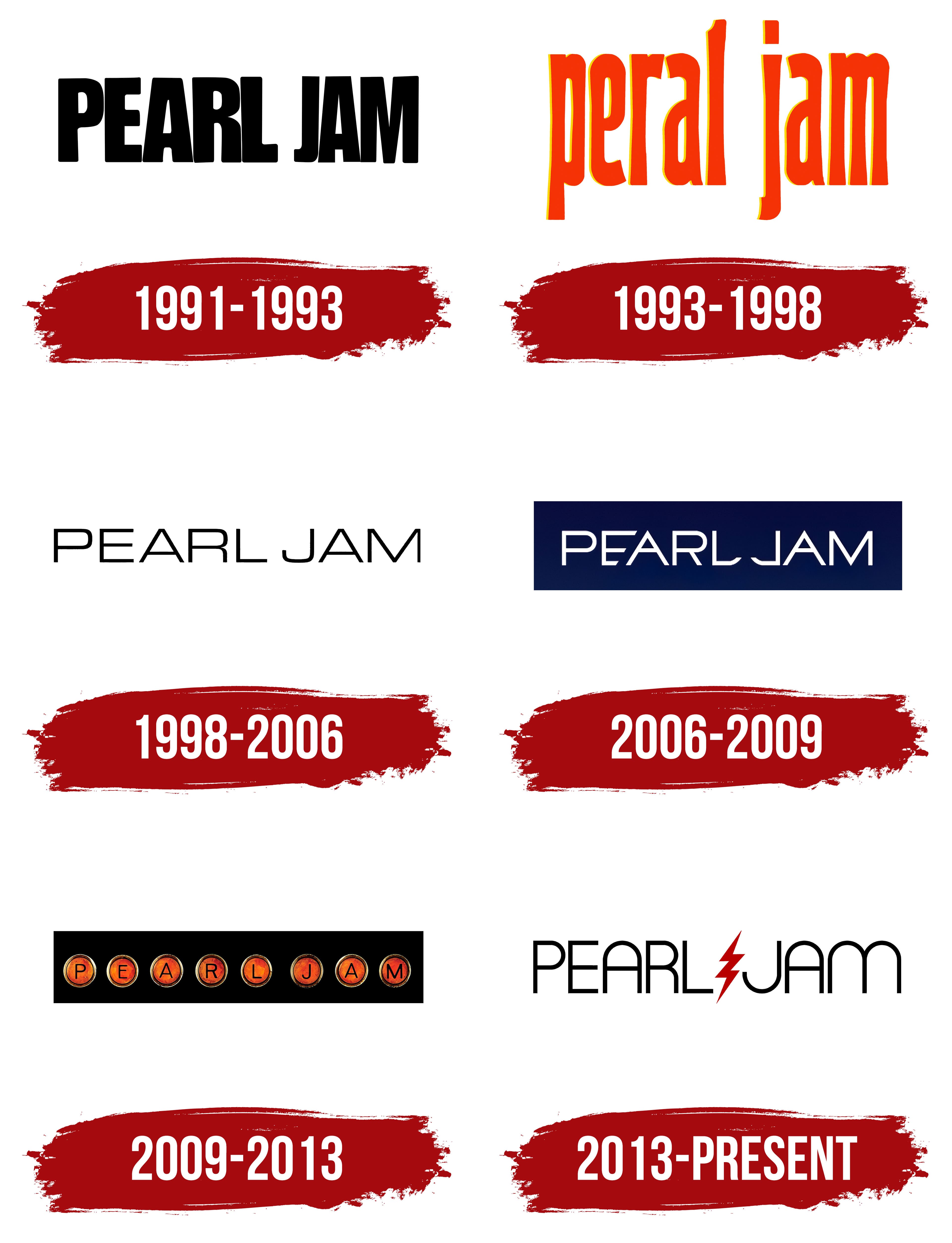
The musicians started playing together long before the name and emblem PJ appeared. In 1987, they adopted the name Mother Love Bone and became popular under it. However, the band’s true birth took place in the early 90s, when Eddie Vedder replaced the deceased Andrew Wood. The musicians changed their name to Mookie Blaylock and later, under Epic Records’ influence, to Pearl Jam. That’s when the ensemble’s first logo appeared.
The band’s emblem has changed several times, but has always included the group’s name. The reason for rebranding often depended on the upcoming album’s design. Often, an image was placed alongside the wordmark. The most famous is a child’s drawing of a male figure with arms raised, as if trying to frighten viewers. Guitarist Jeff Ament conceived the drawing for the band’s first single. According to the artist’s idea, the little man is trying to embrace the sky. Other known images include a wing and a skull in a crown.
What is Pearl Jam?
A rock quintet playing grunge is one of the genre’s key five. Grammy nominations accompanied the musicians’ creativity, growing geometrically from the first album until the single “Spin the Black Circle” finally received the well-deserved statuette. The band has five American Music Awards and ranks 207th on Rolling Stone’s list of the 500 Greatest Albums Ever.
1991 – 1993
The first logo has smooth, tapered, black capital letters.
The group was named after vocalist Eddie Vedder’s grandmother. Adding “Jam” underscores collective improvisation and aptly describes the creative process of making music. In jest, Vedder explained the name by saying that his great-grandmother knew how to cook a special narcotic jam from a cactus containing psychedelics.
However, some fans say the name connects to a slang term meaning “sperm.” This choice emphasizes a desire to shock society and disregard moral norms and traditions.
1993 – 1998

For the second album, the band changed its logo to a bright red inscription to convey the text’s expressiveness. The album’s songs touch on burning social issues, including child abuse, the proliferation of weapons, and police brutality. The emblem lacks capital letters, symbolizing understanding and compassion for human suffering.
The songs were so fiery that the album received a platinum certificate in the first week of sales.
1998 – 2006

The emblem of light, thin capital letters adorned the cover of the fifth album, “Yield.” The symbols conveyed simplicity and ease of sound, which the musicians aspired to. The slender glyphs embody structured, comprehensible songs with a positive, calm view of the world.
2006 – 2009

For the 8th album, eponymous with the group’s name, a symbol was created in which the letters are closely located, leading to E’s transformation. This method suggests that people influence one another. Society often hurts and maims, leading to the emergence of criminals, drug addicts, and terrorists.
The emphasis on L and J, written in mirror image, hints at the album’s label, J Records. The letters resemble scythes, symbolizing radical problem-solving and cleansing from negativity and evil.
2009 – 2013
The pearl-embossed emblem appeared on the cover of the album “Backspacer.” Tom Tomorrow designed the artwork. Round spheres, in which the letters of the band’s name are inscribed, embody the album’s songs. Each track is like a pearl, crafted by the band members and distinguished by its uniqueness and splendid sound. Together, the beads form an unforgettable necklace for the album, which many critics have called Pearl Jam’s best.
2013 – today

The group’s modern symbol first appeared on the 10th album, “Lightning Bolt.” The image corresponds to the name. A red lightning bolt is placed between the two parts of the group’s name, reminiscent of the Flash’s emblem. The inscription’s free and soft lines convey the psychedelic blues’ rhythm. The lightning bolt embodies invigorating guitar parts and militant words in some compositions.
Font and Colors
Red and black are the primary shades in PJ’s emblems. The colors convey stability and expressiveness. The band has played for over 30 years, and throughout this time, their songs have been full of fire and lively rhythms.
The font matches the album’s name, “Circula Light”. The letters are like bent rods, from which smooth semicircular symbols have been formed. When lightning strikes, their twisted springs will fly away, disrupting stability and tranquility.