


 Persil Logo PNG
The Persil logo demonstrates active action against stains and dirt. This is because it strongly adheres to foreign compounds. The emblem symbolizes universality. The tool works equally well with white and colored linen.
In 1876, in Aachen, Friedrich Karl Henkel founded a company focused on sodium silicate-based detergents. At the time, laundry required manual scrubbing and sun bleaching, a labor-intensive process common across households.
On June 6, 1907, Persil debuted in an ad in Düsseldorfer Zeitung. Its name combines perborate and silicate, reflecting a formula that releases active oxygen during washing. The product removed stains without scrubbing and eliminated the need for outdoor bleaching. By 1912, Persil accounted for about 40 percent of Henkel’s production.
In 1909, Joseph Crosfield and Sons acquired the rights to Persil in the UK and several territories. They began producing it in Warrington as “The Amazing Oxygen Washer.” In 1919, the company became part of Lever Brothers, which later merged into Unilever, creating two parallel versions of Persil in different markets.
In 1922, Kurt Heiligenstaedt designed the “White Lady” image, which became the brand’s long-term symbol across Germany. During World War II, Persil production was halted, and after the war, most available stock sold out quickly.
In 1959, Henkel launched Persil 59, Germany’s first synthetic universal detergent, and supported it with print, radio, and television campaigns. By the late 1960s and 1970s, the brand faced competition from Tide and Ariel, both from Procter & Gamble, prompting the introduction of enzyme-based formulas and washing machine products.
In 2007, Henkel marked 100 years of Persil with a global rebranding. In 2015, Persil ProClean entered the US via Walmart. In 2016, Henkel acquired Sun Products and replaced Wisk with Persil.
Meaning and History
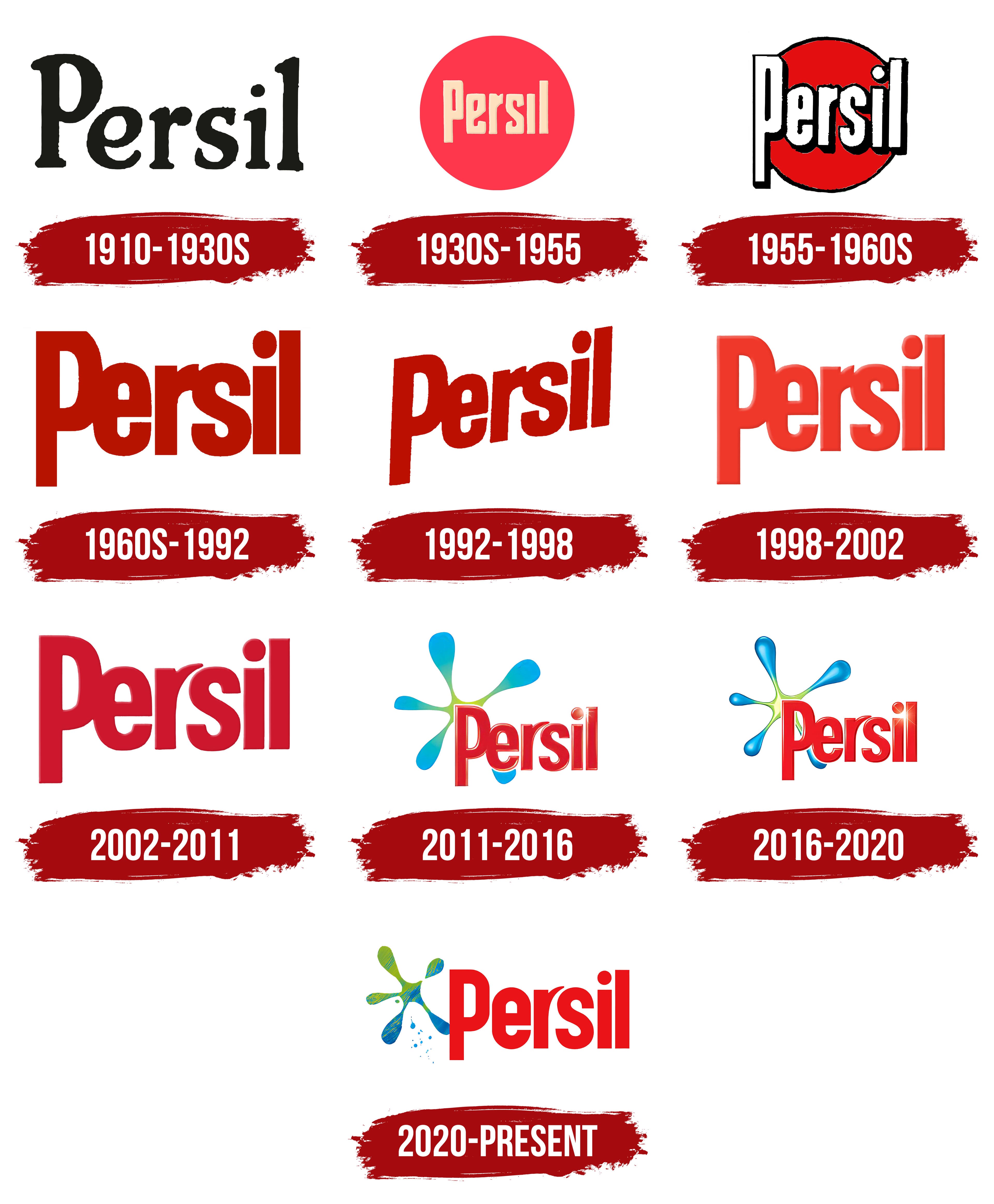
The series’ launch almost immediately made its trademark recognizable, as crushed soap had been used for washing up to that point. This tool contains special ingredients that “push” dirt from the inside. These main components formed the basis for the brand name incorporated into the logo. It is sodium perborate and sodium silicate: per + sil. Over the years, there have been 10 types of emblems (distributor: Unilever).
What is Persil?
Persil is a German brand of cleaning products. Henkel launched it in 1907 as a laundry detergent. Henkel now owns the brand, and Unilever has the right to sell the product in New Zealand, Australia, China, France, Ireland, the United Kingdom, and almost all of Latin America.
the 1910s – 1930s

The debut logo was simple black lettering on a white background. The letters were in a rounded serif font.
the 1930s – 1955
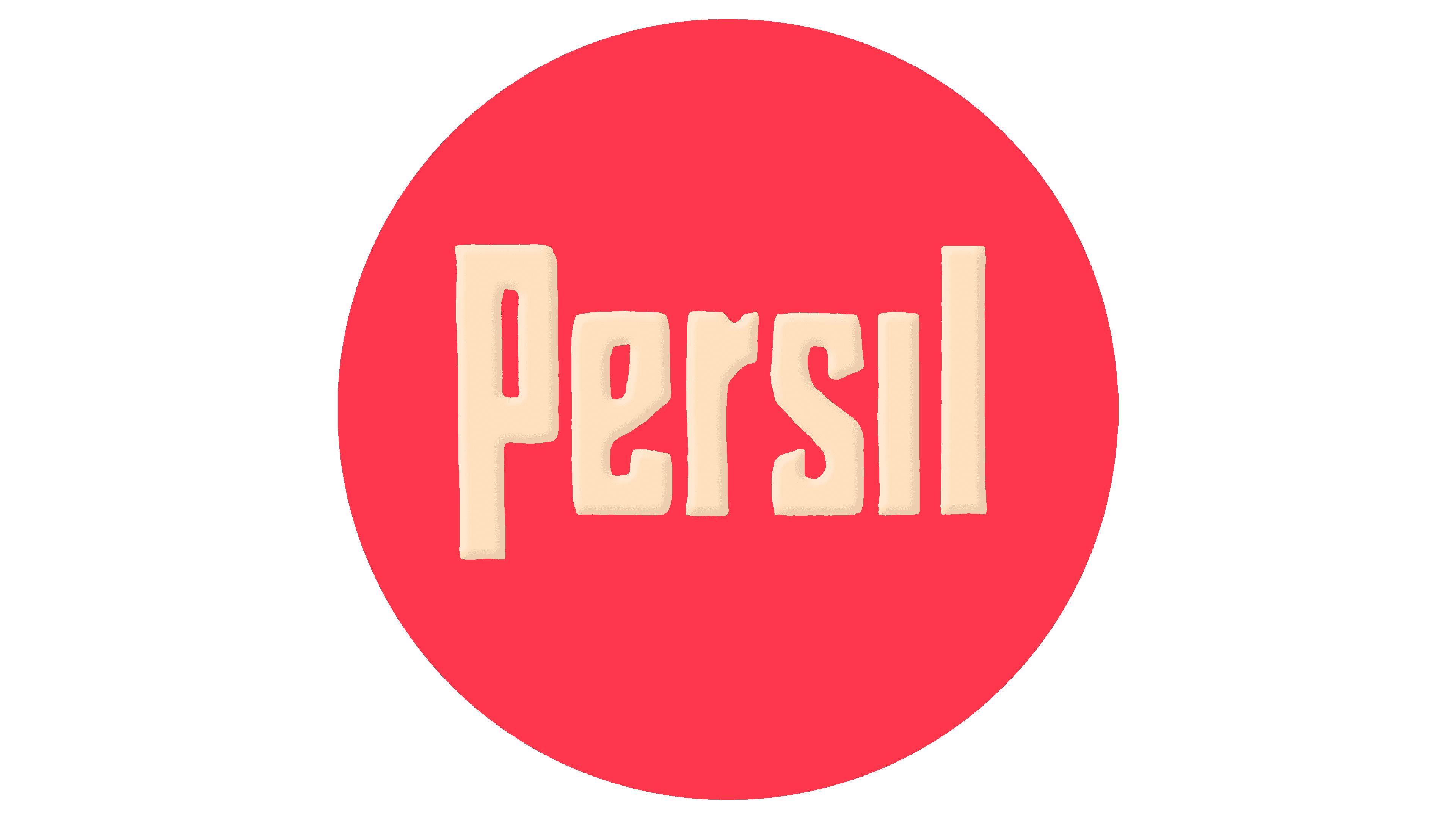
During this period, a red circle appeared, with the line’s name written in grotesque white characters.
1955 – the 1960s
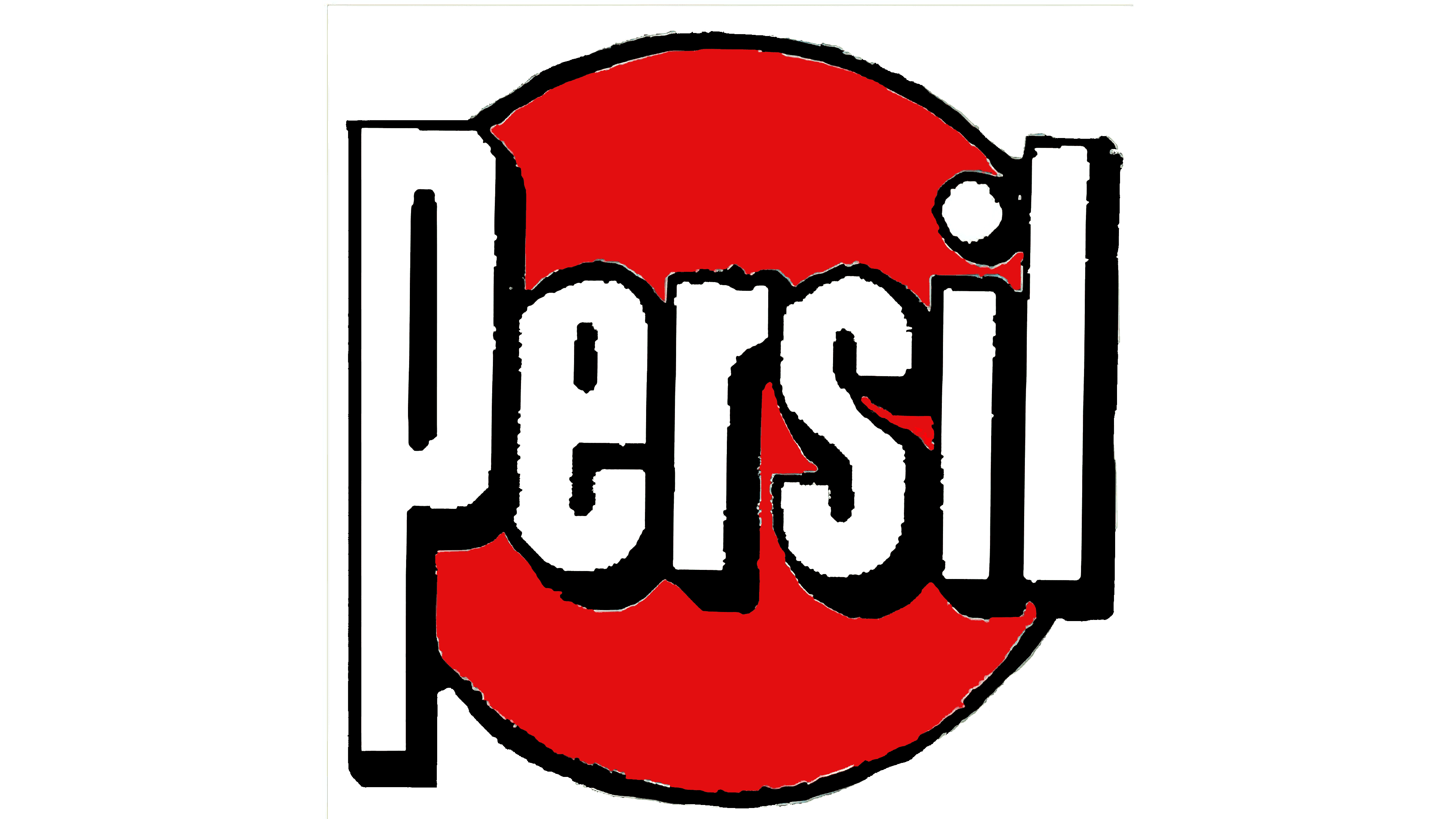
The word “Persil” expanded beyond the circle. A green background appears.
the 1960s – 1992

The designers removed the circle and changed the lettering color. Since then, it has become red.
1992 – 1998
The brand name was placed diagonally from bottom to top.
1998 – 2002
A new version was approved: a horizontal arrangement of the word “Persil” in muted red.
2002 – 2011
The developers changed the shape of the letter “r,” separating it from the “s.”
2011 – 2016
During this period, the brand name featured a 3D look and a blue-green spot.
2016 – 2020
Between the “i” and “l,” we increased the glare and made the spot more voluminous by adding contours, a gradient, and shadows.
2020 – today
The designers reduced the spot and moved it to the left. In the word “Persil,” all the letters were separated and then reassembled into a simple spelling reminiscent of the 2002 format.
Font and Colors
From the 1960s to 2002, the name combined the letters “P,” “e,” “r,” and “s.” Since 2002, only the first two characters have a bunched-up look. Now they are written separately.
The typeface has hardly changed: the logo text is a chopped version with an elongated “P” leg. In another emblem, the marks are wide and even, with connections between letters. In most variants, the color is kept red. Then blue and green were added.