


 Planned Parenthood Logo PNG
The organization’s visual identity is based on its core principles: trust and support. This perfectly reflects the current Planned Parenthood logo. It uses a soft, flowing typeface to convey kindness, comfort, reliability, a friendly attitude, and an appropriate color scheme. It consists of two shades and is most often used in the design of emblems for medical institutions. They symbolize a high degree of responsibility, calmness, and reliability. In general, the concept provides for an original layout, part of which is a stylized graphic symbol.
Planned Parenthood traces its history to October 16, 1916, when nurse and activist Margaret Sanger opened the first birth control clinic in the United States in Brownsville, Brooklyn. The clinic lasted only nine days before police shut it down under the Comstock laws. Still, the arrest brought public attention to contraception and women’s health. In 1917, Sanger began publishing Birth Control Review.
In 1921, Sanger founded the American Birth Control League, followed in 1923 by the Birth Control Clinical Research Bureau in New York. Her legacy later became controversial because she shared some views associated with the eugenics movement, including ideas about limiting births among poor communities. Planned Parenthood later reassessed this part of its history.
In 1939, the League and the clinical bureau merged into the Birth Control Federation of America. In 1942, it became Planned Parenthood Federation of America, shifting the language from “birth control” to family planning. In 1952, Sanger helped create the International Planned Parenthood Federation. In 1960, the FDA approved Enovid, the first hormonal birth control pill, after research Sanger had helped support.
After Roe v. Wade in 1973, Planned Parenthood expanded abortion services. It became one of the largest providers in the United States, alongside the National Abortion Federation and Federally Qualified Health Centers. Title X funding from 1970 made the organization a recurring political target. In 2015, the Center for Medical Progress videos led to congressional investigations, and in 2019, Planned Parenthood left Title X. In 2020, its New York branch removed Sanger’s name from a clinic.
Meaning and History
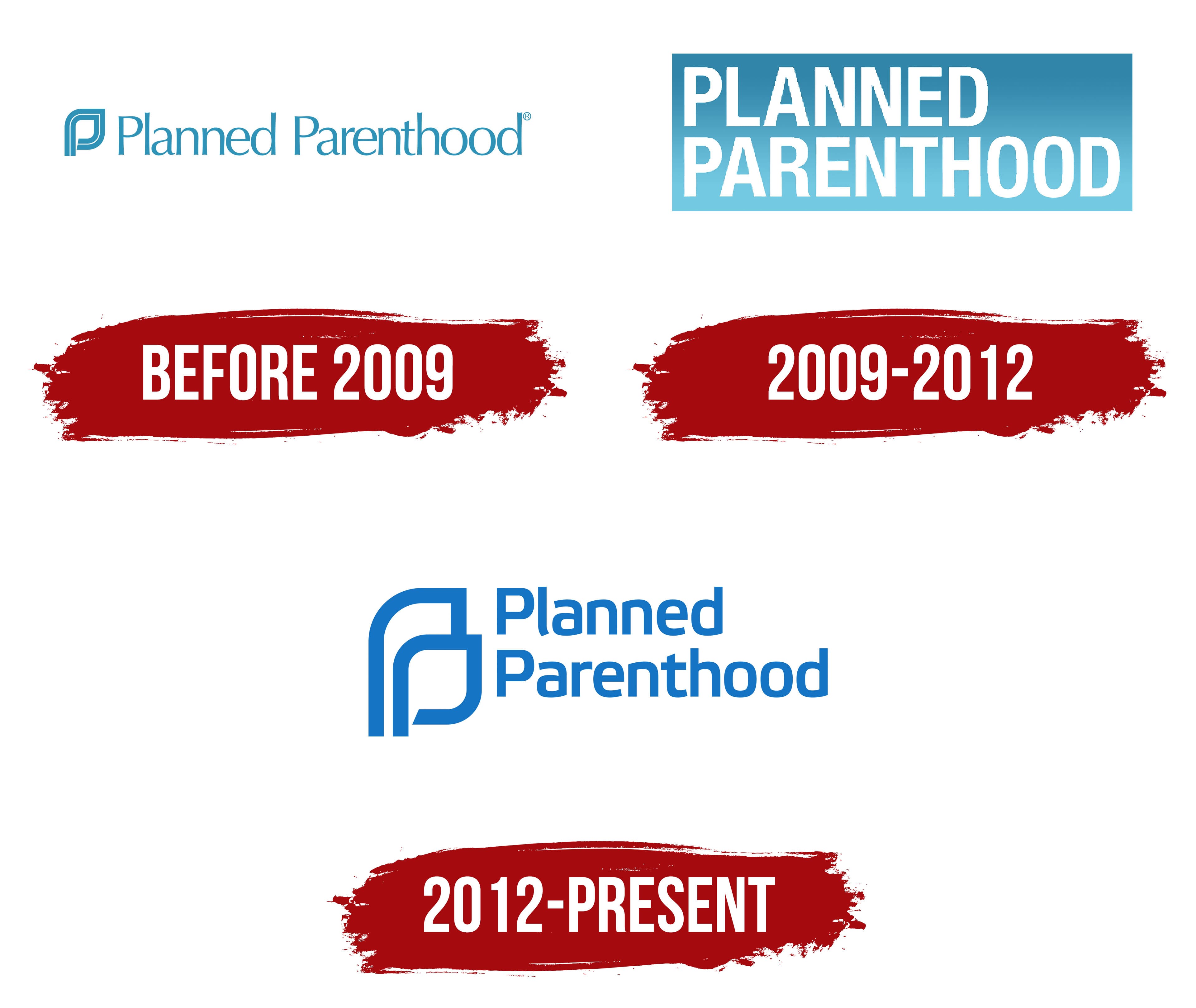
The company’s professional identity is effectively conveyed by a simple, stylish logo that signals reliability and a sense of security. To achieve this effect, the designers used a confident flowing typeface, a stylized figure, and a light base color scheme to showcase the organization’s trustworthiness. All elements are in harmony with one another, demonstrating the smoothness of processes at Planned Parenthood.
What is Planned Parenthood?
Planned Parenthood is an international nonprofit organization that provides a range of reproductive health services. Among them are clinical breast examinations, pregnancy consultations, prenatal care, infection testing, various types of contraception, etc. In addition, the organization participates in reproductive health research and promotes sex education. The main offices are in the USA.
Until 2009

The foundation for the organization was laid in 1916 when American activist Margaret Sanger established America’s first birth control medical facility. Later, the American Birth Control League was formed, which changed its name to Planned Parenthood in 1942. At this point, the earliest version of the emblem appeared.
It was an elegant, neat, and stylish picture featuring a word mark and a graphic element. The basis was a text element that directly denoted the organization’s name. It was styled in a thin, modern sans-serif typeface. Rounded shapes, straight cuts, and a dense arrangement of letters distinguished it. The chosen design showed trust, care, comfort, and attentiveness.
These principles were part of the organization’s philosophy. In addition, Planned Parenthood’s message was about trust and reliability. The designers used two corresponding colors – white and blue- to reflect the features at the visual identity level. The concept was completed by a miniature graphic detail resembling both the letter P and a tree leaf. She favorably diluted the strict laconic verbal sign.
2009 – 2012

In 2009, the light, sophisticated logo was replaced with a more confident, expressive image. It was a confirmation of the expansion of the scope of activities and obtaining a higher status at the country level. The title remained the base, but the element was now presented in a two-level format and set against a rectangular background.
The letters became larger, symbolizing a more confident stance and improving service quality. Straight lines and even cuts also testified to the immutability of organizational principles. There was no decorative symbol in this version, but a stylish blue rectangular border appeared. Against its background, the inscription looked very powerful and impressive, and a large amount of blue showed a high level of reliability and responsibility. The picture was complemented by a neutral white background, symbolizing purity, safety, and honesty.
2012 – today
Since 2012, Planned Parenthood has used a version of its logo that remains relevant today. It consists of a two-level inscription and a decorative addition in the form of a figure, which has several interpretations. The graphic symbol resembles two letters, P superimposed on each other. In this form, the details can be interpreted as a woman and a man, or as a parent and a child.
These are direct associations with the activities of an organization that provides reproductive health care. The central element of the logo is the inscription Planned Parenthood. It is made in a beautiful, smooth font with soft edges and, in some letters, beveled cuts. These characteristics, together with beautiful neutral coloring, stand for safety, reliability, comfort, and care.
Font and Colors

All the elements in the signature Planned Parenthood logo are neat and perfectly balanced. This applies not only to shapes, lines, and layouts but also to well-chosen colors. The main text sign is set in the Flexo Bold style. This is a category of modern geometric fonts that lack traditional serifs.
The developers say that it was their most successful option because it combines sophistication, beautiful curves, and original beveled corners. Some letters also have neat diagonal cuts. Such features make the logo especially stylish and timeless. In addition, the font symbolizes progress, innovation, and security.
The color scheme is dominated by a light blue hue, in which all logo elements are painted. In the color palette, it can be found at the coordinates: RGB: 23/117/194. The chosen color signifies quality, professionalism, and high trust, which are key features of the organization. Complementing Planned Parenthood’s characteristics is the background’s basic white color, which symbolizes purity, responsibility, and trustworthiness.