


 Playmobil Logo PNG
Each of the company’s products features a bright, cheerful Playmobil logo that captures the brand’s essence. It combines confident, fun lettering with a playful symbol for the manufacturer’s flagship product. The elements are arranged so that some of the letters are superimposed on the graphic figure. This makes the logo more stylish and modern and emphasizes the company’s creativity. The visual concept is also complemented by a beautiful color palette made up of multiple shades of the same base color.
Playmobil’s history began with Geobra, a company founded in 1908 by Andreas Brandstätter in Zirndorf, Bavaria. The firm first made metal goods, then shifted to plastic products after World War II. In the 1950s and 1960s, under Horst Brandstätter, the founder’s grandson, Geobra entered the German toy market.
The key change came during the 1973 oil crisis, when plastic became much more expensive. Horst Brandstätter asked designer Hans Beck to create a toy that used little material but offered broad play value. Beck, who had worked at the company since 1958, developed a 7.5-centimeter figure with movable arms, a turning head, and hands that could hold accessories. Its neutral smile left the character’s role open to the child.
Playmobil was introduced in 1974 at the Nuremberg International Toy Fair. The first set featured a knight, an Indigenous figure, and a construction worker. In 1975, Geobra expanded the concept with themed worlds such as castles, farms, and building sites. While Lego focused on building by instruction, Playmobil built its niche around ready-made figures, settings, and open-ended stories.
The brand grew through the 1980s and 1990s with pirate, hospital, police station, space, and historical sets. Playmobil FunPark opened in Zirndorf in 1993. By 1997, production had surpassed 1.8 billion, and by 2009 it exceeded 2.5 billion. In the 2000s and 2010s, Geobra faced competition from video games, tablets, and LEGO’s digital expansion, then added licensed sets such as Ghostbusters and Scooby-Doo. In 2019, the company announced restructuring while remaining family-owned.
Meaning and history
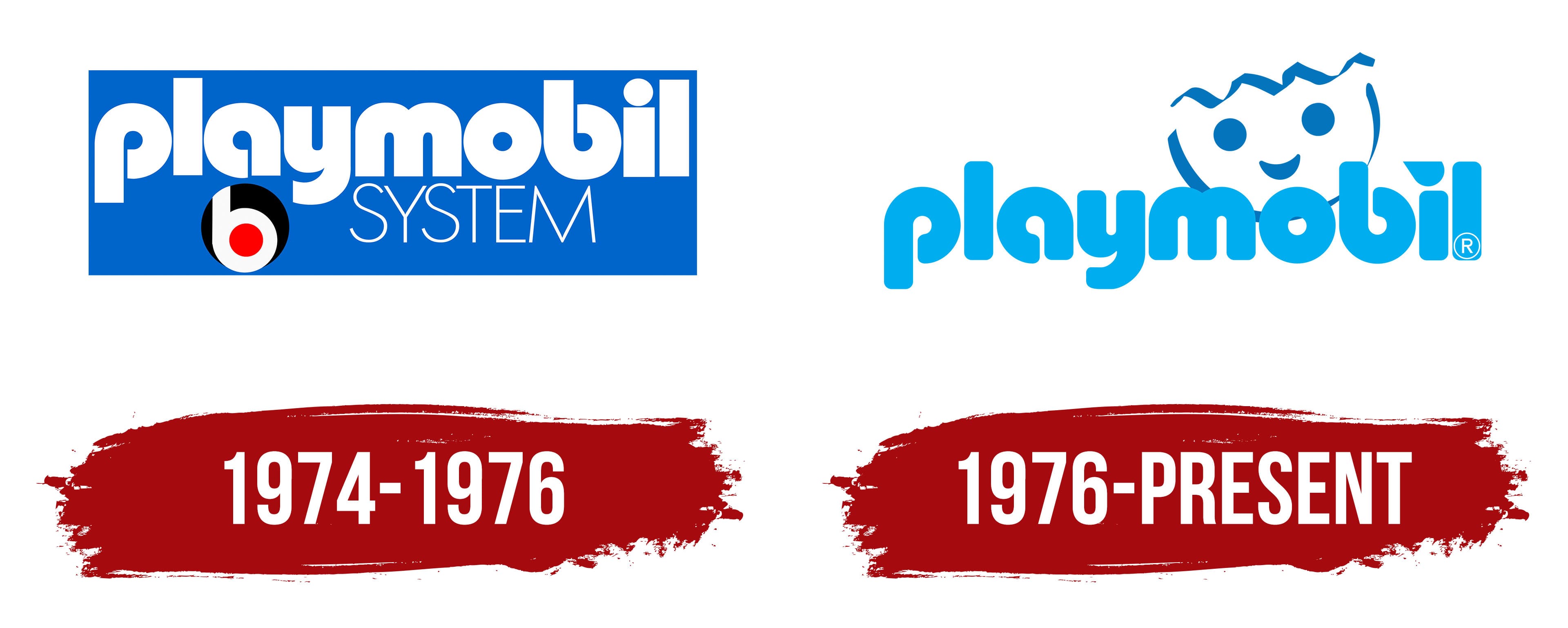
Generally, the brand’s work can be described in two words: stability and gradual improvement. This manifests in visual identity. Over the years, the company has changed its logo only once, indicating stability. At the same time, Playmobil actively introduced new technologies and improved its products. The logo’s current version reflects innovation and development
What is Playmobil?
Playmobil is a well-known German toy manufacturer. The company’s assortment includes sets and individual models, miniature replicas of real items. The basis is unique figurines of little men with special attachments in their hands. The Brandstätter Group currently manages the brand, and it is headquartered in Zirndorf.
1974 – 1976
The history of the famous Playmobil brand began with the German inventor Hans Beck. He presented the company’s signature toy in 1974. Before that, he spent three years researching to create an incredibly comfortable and beautiful toy for children. Later, the manufacturer presented his subsequent developments to the world, which small buyers liked.
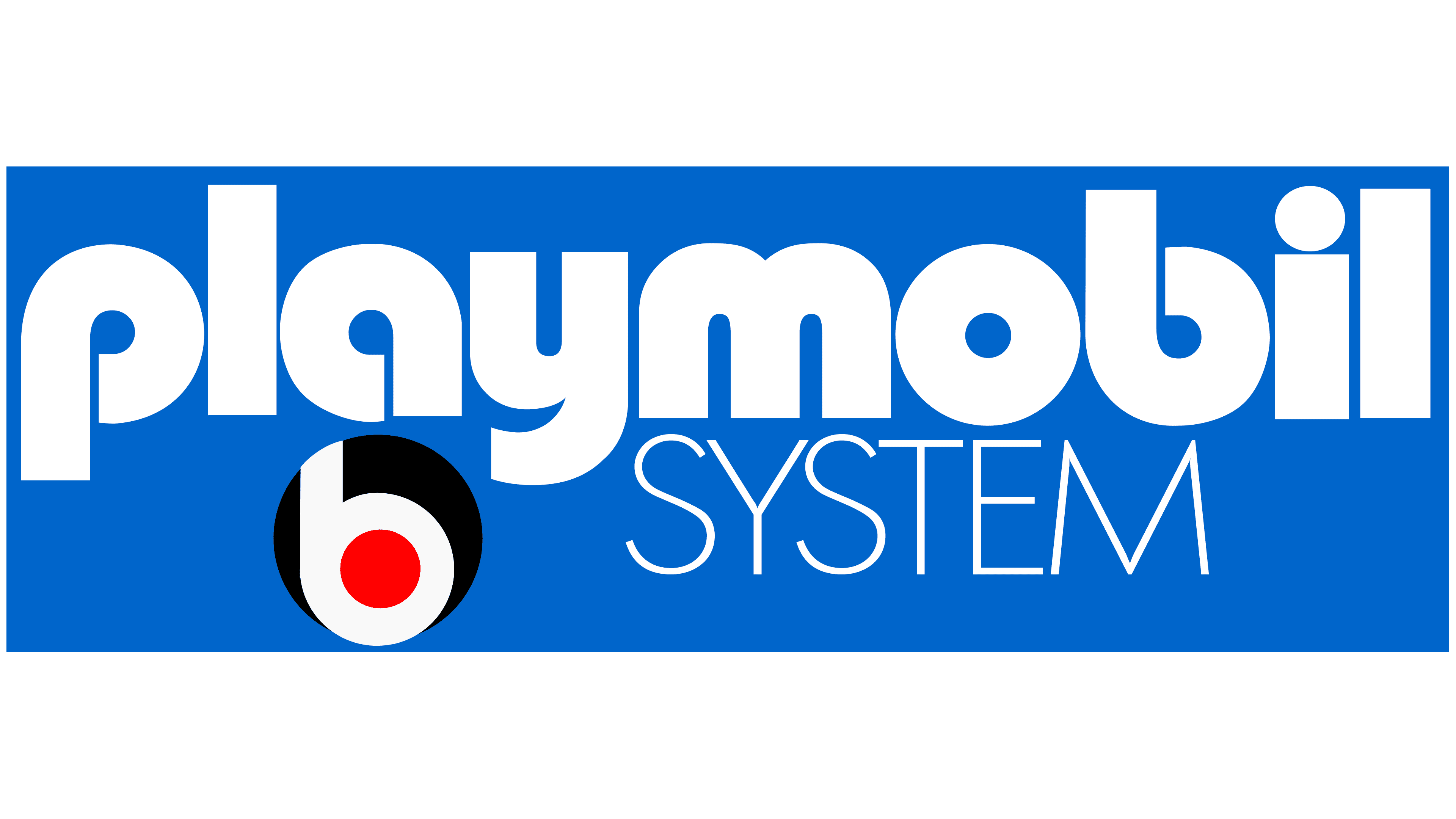
At one point, Playmobil was even a direct competitor to the giant Lego. From the release of the first toy in 1976 until 1976, the company used a stylish multi-component logo. It featured a neat rectangle, a massive rounded inscription, a contrasting badge, and a thin additional wordmark. The composition evoked a friendly, fun, carefree atmosphere.
The inscription itself was located on two levels. The top line featured the brand name in large, soft letters. The lower inscription read “System,” decorated with thin, graceful lines. This design conveyed reverence for toy production and confidence in high quality.
A single concept was diluted by a contrasting icon: a black circle with the letter b inside. It was painted white, and the roundness had a rich red tint. This badge emphasizes the uniqueness of the toys that the brand represents. In addition, the logo emphasized professionalism and integrity. This was demonstrated by the blue background and the white paint used for the letters.
1976 – today

In 1976, the brand received a new, more modern logo that more clearly showed the main message. The new badge conveyed limitless possibilities, friendliness, and high-quality products. The first characteristic was manifested in the absence of a frame, and additional features were reflected in a well-chosen font. Unlike in the previous version, only one inscription was used here: Playmobil.
The wordmark was supplemented with an abstract image of a smiling face to create a playful effect. This drawing has become a symbol of the toys that the manufacturer produces. It is associated with kindness, joy, fun, and friendliness, feelings that arise while playing with Playmobil products. A distinctive feature is its coloring, which uses several shades of blue and white. This design option demonstrates reliability and safety.
Font and Colors
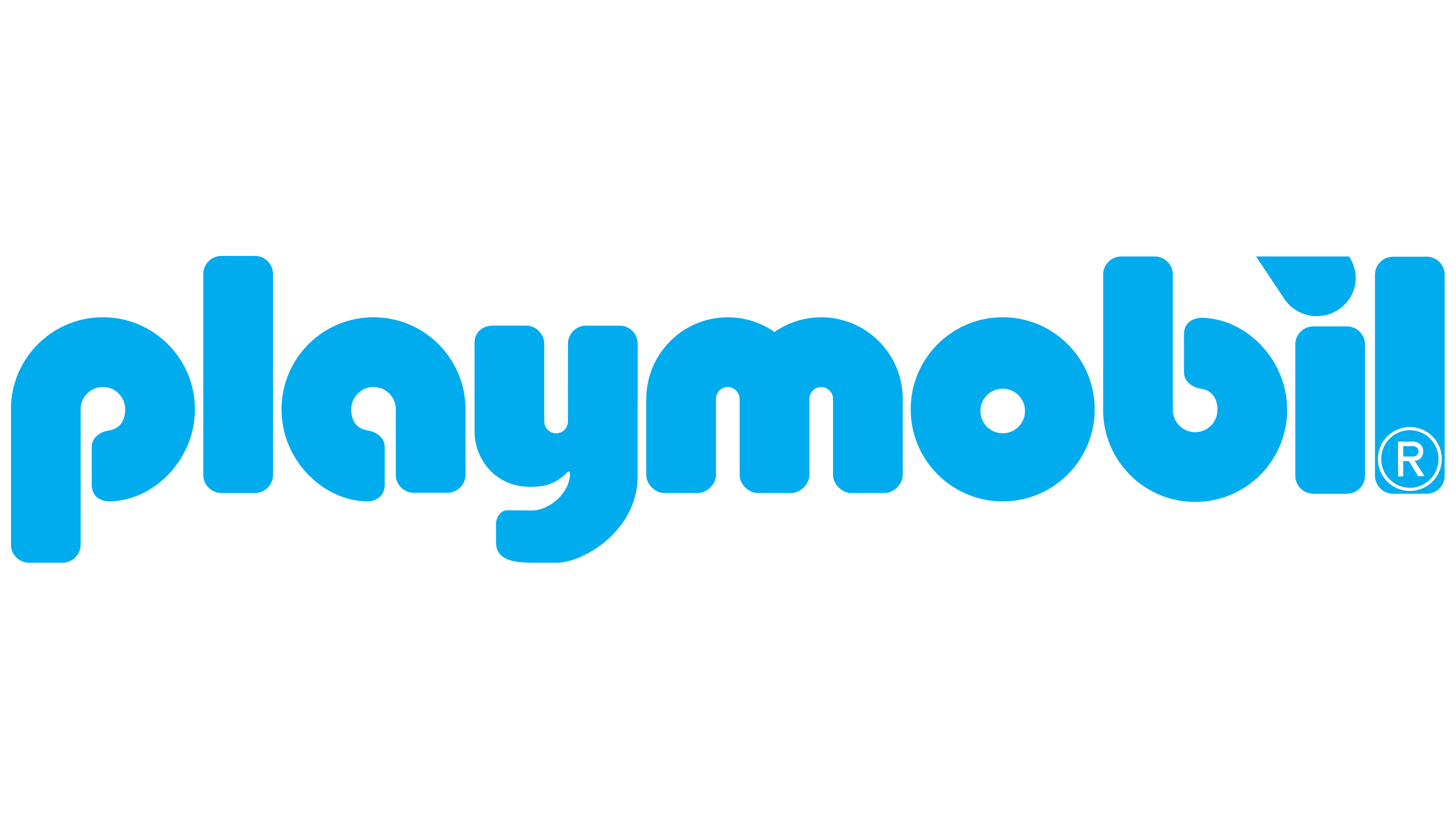
The Playmobil logo’s main message is friendliness, professionalism, and high quality. The manufacturer’s characteristics were conveyed through a well-chosen font, graphic figure, and light colors. For the inscription, the designers chose a bold font with rounded lines, lacking right angles and sharp transitions.
It conveys comfort, security, and loyalty. Most letters also have open forms, suggesting ongoing development and a desire for renewal. Emphasizes the brand’s advantages and the favorable coloring. Its feature is the presence of two shades of blue. The darker shade is used for the figure, and the lighter shade for the title.

They symbolize professionalism, safety, and reliability. The traditional white background symbolizes responsibility and integrity. The chosen format fully describes the German brand and conveys its attitude toward producing exclusive toys.