



When the Portainer project was launched in 2016, it was tied to Docker and visually reflected this connection through a logo with a blue whale and containers. The image emphasized its role as a simple tool for working with containers. Over time, the product evolved: today, Portainer covers Kubernetes, Edge infrastructure management, and complex enterprise scenarios. However, the old style remained tied to its origins and hindered the company’s perception as a mature player in orchestration and infrastructure management.
For this reason, the team introduced a new style. The logo no longer contains symbols related to Docker. Instead, it features a minimalist rendering of PORTAINER.IO in a strict typeface. The focus is on the seriousness and versatility of the product, moving away from associations with a simplified entry-level tool.
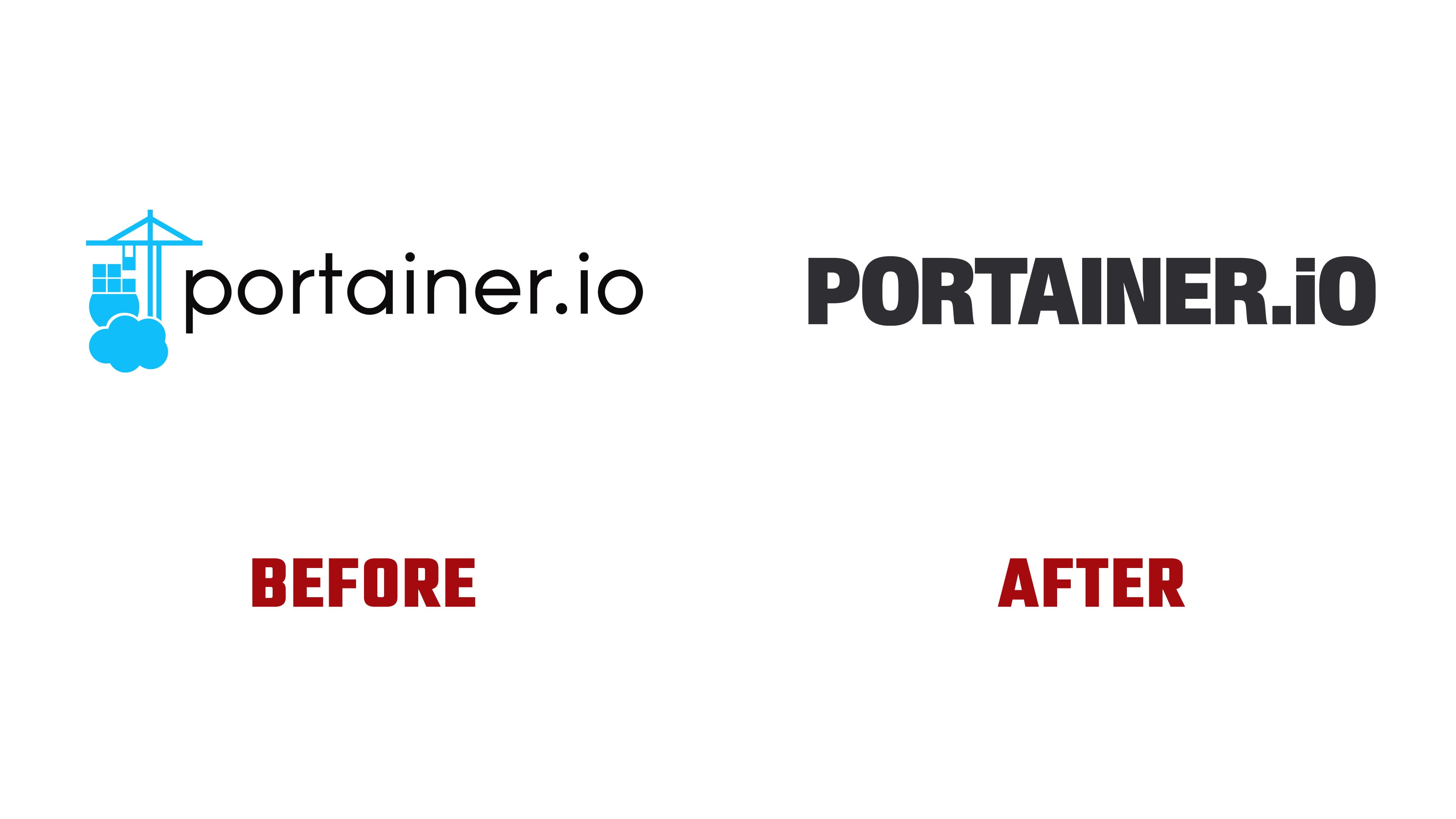
The new visual system demonstrates that Portainer is no longer just a “shell” for Docker. It is a full-fledged platform for managing Kubernetes and hybrid environments. The design has been stripped of decorative elements and is oriented toward functionality. The removal of the previous whale-and-crane graphics has become a symbol of the company’s transformation as it adapted to the modern container technology market.
Portainer emphasizes that the updated identity reflects the company’s key principle: simple interfaces for complex tasks. The product helps teams solve practical problems without unnecessary complexity. The new style highlights straightforwardness and practicality, shaping a clear image of the company in the eyes of a professional audience.

The changes also affected communication. Portainer now addresses users in the language of developers and engineers, avoiding trendy terms and marketing clichés. This builds trust and confirms its focus on the real needs of teams working with Kubernetes and container infrastructure.
Portainer is used by more than 750,000 users worldwide. Its clients include large enterprises that use the platform to manage clusters, edge nodes, and corporate environments. The new style helps convey the scale of the company’s operations and its modern role in the industry more accurately.

The refreshed brand reflects the changes made to the product itself. Portainer remains a convenient and accessible tool, but it is now perceived as a mature solution for a professional audience, meeting the demands of the modern market.