


 Procter and Gamble Logo PNG
The Procter & Gamble logo goes with everything from laundry detergent to toothpaste. A manufacturer of a wide range of consumer goods has specifically chosen this universal sign to demonstrate its leadership across different market segments. A clean design is associated with the freshness and hygiene of products such as household chemicals.
Procter & Gamble began in Cincinnati, where English candlemaker William Procter and Irish soapmaker James Gamble settled after unexpected delays in their journeys. Both married into the Norris family, and their father-in-law, Alexander Norris, pushed them to stop competing for the same animal fat supply. On October 31, 1837, they formed a partnership, each investing $3,569, and began making soap and candles.
By 1859, annual sales had reached $1 million. During the Civil War, the Union government gave Procter & Gamble contracts to supply soap and candles. The factories ran continuously, but the larger effect came after the war, when soldiers who had used the products across the country kept buying them at home.
In 1879, James Norris Gamble developed Ivory, a soap for laundry, dishes, and personal washing that floated in water. Harley Procter named it after a biblical phrase and pushed national newspaper advertising in 1882, making Ivory P&G’s first nationally promoted consumer brand. Colgate was already on the market, but P&G used advertising on an unusual scale for the period. In 1887, William Arnett Procter introduced profit sharing for employees, and by 1890, the company made more than 30 kinds of soap.
P&G later expanded through products that changed daily household routines: Crisco in 1911, Tide in 1946, Joy in 1949, Crest in 1955, Charmin after its 1957 purchase of a paper mill, and Pampers in 1961. In 2005, P&G bought Gillette for $57 billion, adding Gillette, Duracell, Braun, and Oral-B. From 2014 to 2017, CEO David Taylor sold or closed more than 100 brands, including Duracell, focusing the company on 65 core brands across ten categories.
Meaning and History
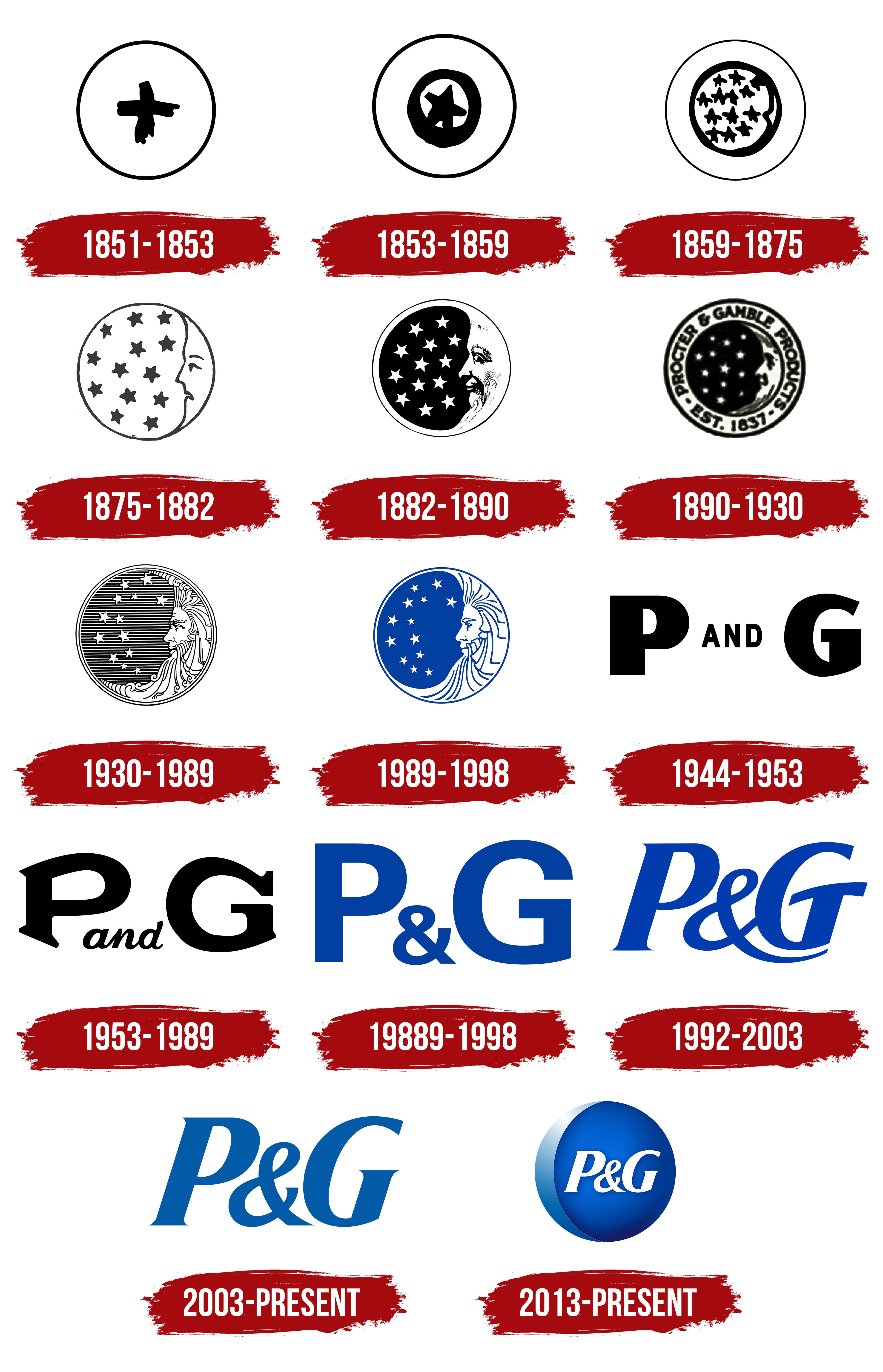
All Procter & Gamble logos can be grouped into two broad categories: hand-drawn and letter. And given the company’s almost 200 years, there have been many changes to its visual identity.
What is Procter & Gamble?
An American corporation, one of the top 100 largest companies in the world. Among its offerings are well-known brands such as Pampers, Tide, Ariel, Head & Shoulders, Pantene Pro-V, Tampax, Gillette, Wella, Always, and others, sold in 180 countries.
1944 – 1953

Television is on the rise in the US. Advertising requires a short letter. It was made quite simple: P AND G. The large capital letters stood for the first letters of the founders’ names. The smaller AND was placed right in the center between the initials. This showed equal participation. Each contributed $3,596 to form the company.
1953 – 1989

The letters of the surnames are elongated so that the composition forms an oval as if the image is in a soap bubble. P&G sponsored operas on the radio, and the term “soap opera” gradually emerged. Tide powder is also becoming very popular. And the logo hints at foam bubbles during washing.
1989 – 1998
The logo was released simultaneously as the latest emblem of the stars. They are both blue and are used both together and separately. The company is actively absorbing other brands, and its portfolio is expanding sky-high. Large, straight letters indicate confidence and stability.
1992 – 2003
It was decided to reorganize assets primarily by closing unprofitable factories and reducing staff. The changes also affected the company’s logo. The new sign is written in italics to indicate change and moving forward with new forces.
2003 – today
In 2003, it was decided to say goodbye to food brands. The change in the direction of activity was marked by rebranding. Ampersand’s long tail was removed, and the logo’s color paled. This indicated the clipping of one of the directions.
2013 – today
The company celebrated its 175th anniversary with a new logo. Landor Associates worked on creating the visual sign. The composition took into account the historical features of visual signs using luminaries. Therefore, the name abbreviation was placed on a round blue ball with a light crescent on its left side. The dark blue gradient background is a prototype of the night sky. The badge is used together with the main emblem of 2003. The logo, which touches on the company’s past, returns it to its original goals: to trade only the most necessary goods for people. Therefore, it was decided to part with 60 percent of the brands, leaving only the most popular and important.
Moon and Star
Initially, before the advent of the verbal logo, the company used a visual sign: a sphere with a moon and stars. However, claims that it is similar to Satanic led to the subsequent rejection of the image. The last logo of this plan appeared in 1989.
1851 – 1853

The first visual sign was quite simple: a circle with a cross. The image suggested the Christian faith and possibly depicted a simple cross on a batch of goods.
1853 – 1859

The logo’s concept has changed significantly. It resembled a spyglass in the center, a schematic representation of a star. Historical records indicate that the boxes transported to the site of the sale were marked with a star. Since the candles were called Star, the workers drew a schematic star for orientation. She later became P&G’s spokesperson.
1859 – 1875

The company decided to go further and expand the line of products that are in constant demand among customers. Procter & Gamble offered its powder, toothpaste, and toilet paper. As the firm grew and its influence expanded, so did the spyglass view. At this time, a crescent and many stars appear on the logo. Since Procter & Gamble was famous for candles, the visual sign featured a nighttime scene. The circle pointed to the globe, the number of stars to the growing list of goods. The number 13 was chosen in honor of the thirteen British colonies in America.
1875 – 1882

This year, the logo resembled the real one for the first time. If, before that, all the signs resembled a hastily sketched sketch, then the emblem of 1875 includes traced elements of the stars and the moon. At the same time, the Moon acquires human features with eyes, a nose, and a mouth. The company has a great impact on people. As the stars and the moon light up the night, Procter & Gamble products make life brighter and cleaner.
1882 – 1890

Newspapers started advertising soap, allocating $11,000 to the campaign. It was then that the first funds were invested in designing a professional logo. The emblem is an excellent example of artistic creativity. The brightest and most beautiful sign of all the previous ones. A wide white border around the circle’s edge, a black sky with sparkling stars. An image of a crescent moon close to the real face of an older person. Interestingly, with P&G’s age, the Month in the logo has also changed.
1890 – 1930
Around the “telescope” is a rim bearing the company name and the year of its formation. This is the first sign linking the luminaries to Procter & Gamble. The company is preparing to conquer other markets, so stars and the Month alone are not enough for recognition.
1930 – 1989
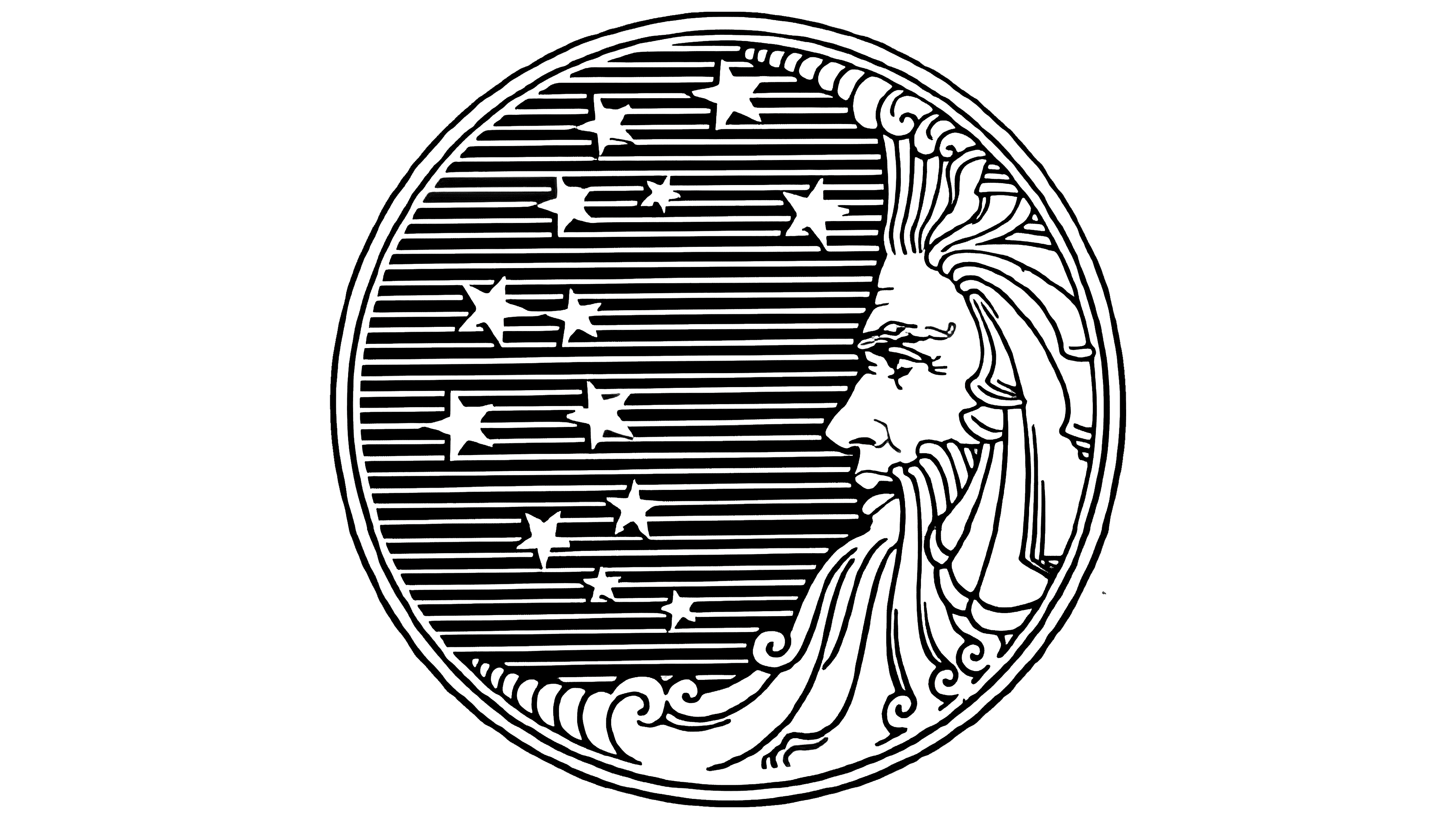
The logo moves away from naturalness and becomes more fabulous. The sky is stretched strings, on which stars are hung, and a crescent moon with curls and a beard twisted in all directions. This year, it was decided to develop a brand management system. Perfectly taut strings and attached stars visually demonstrated tidying up. However, in this image, users in the late 80s noticed a problem: the moon’s curls resembled the number 666, and the twisted ends of the horns. This strengthened the similarity of the sign with satanic symbols in people’s minds. Yes, and there were 13 stars in the image. But the company just wanted to hint at beautiful, clean curls washed with their popular soap.
1989 – 1998

The logo was changed to avoid misunderstandings, and the curls were removed. But it did not help. The company even sued the spreaders of false rumors in 1982 and 1995. It was decided to abandon the emblem. Blue skies and white stars are the latest Procter & Gamble image in this series. The blue and white colors link the emblem to Christendom. They are a type of heaven, faith, purity, and chastity. This is one way to refute accusations of Satanism.
Font and Colors

In recent years, the company’s main color has been blue. It replaced black at the time of the fight against rumors of Satanism. Color inspires confidence and conveys calm. As a celestial shade, blue indicates the patronage of higher powers, serious success, and the company’s scale, which has become one of the world’s largest manufacturers.

Reserve Condensed Black Italic font.