


 San Pellegrino Logo PNG
The elements’ strokes resemble pure, transparent water flowing from a mountain spring. The San Pellegrino logo’s mineral composition conveys the sign’s shades. The emblem features a star to indicate the best product, as judged by consumers.
Meaning and History
The thermal spring that became the basis for the mineral water has been known since Leonardo da Vinci visited it in 1509. In fact, the spring is much older: locals have used its water for over 620 years. Even in the 13th century, Italian doctors recommended treating patients with Val Brembana’s life-giving water. However, they began bottling the water for commercial purposes only in 1899, marking the start of the brand’s history.
Before then, several health resorts operated near the dolomite mountain wall. San Pellegrino is distinguished by its 14 components, which positively affect the body. It helps treat several diseases by activating the kidneys, urinary system, and gastrointestinal tract. Thanks to its carbon dioxide saturation, it has a sparkling, distinctive taste. That is why many restaurants in the world serve bottles with a star on the logo, and sommeliers recommend drinking this water with red wine.
The branded range now includes different drinks: clear mineral water and sparkling water with natural juices of lemon, grapefruit, orange, raspberry, cherry, pomegranate, strawberry, and mint. The range also includes the usual flavors. The products are poured into legendary bottles that have retained their original shape since 1899. They come in glass and plastic (the latter began production in the late 1990s). Each unit has a label with blue lettering and a red star. The neck also features a picture of mountains and the main building, along with the plant’s founding date and the fact that the water comes from a natural spring.
What is San Pellegrino?
This mineral water, born in the charming Val Brembana valley at the foot of the Alps, has become a true Italian legend. The brand has expanded into a wide range of drinks, including natural fruit juices and a renowned sparkling mineral water, turning a simple product into a symbol of Italian elegance and sophistication. The iconic green bottle with a star and a red-and-white label has become an emblem of superior quality and refined taste, known in elite establishments and at family dinners worldwide.
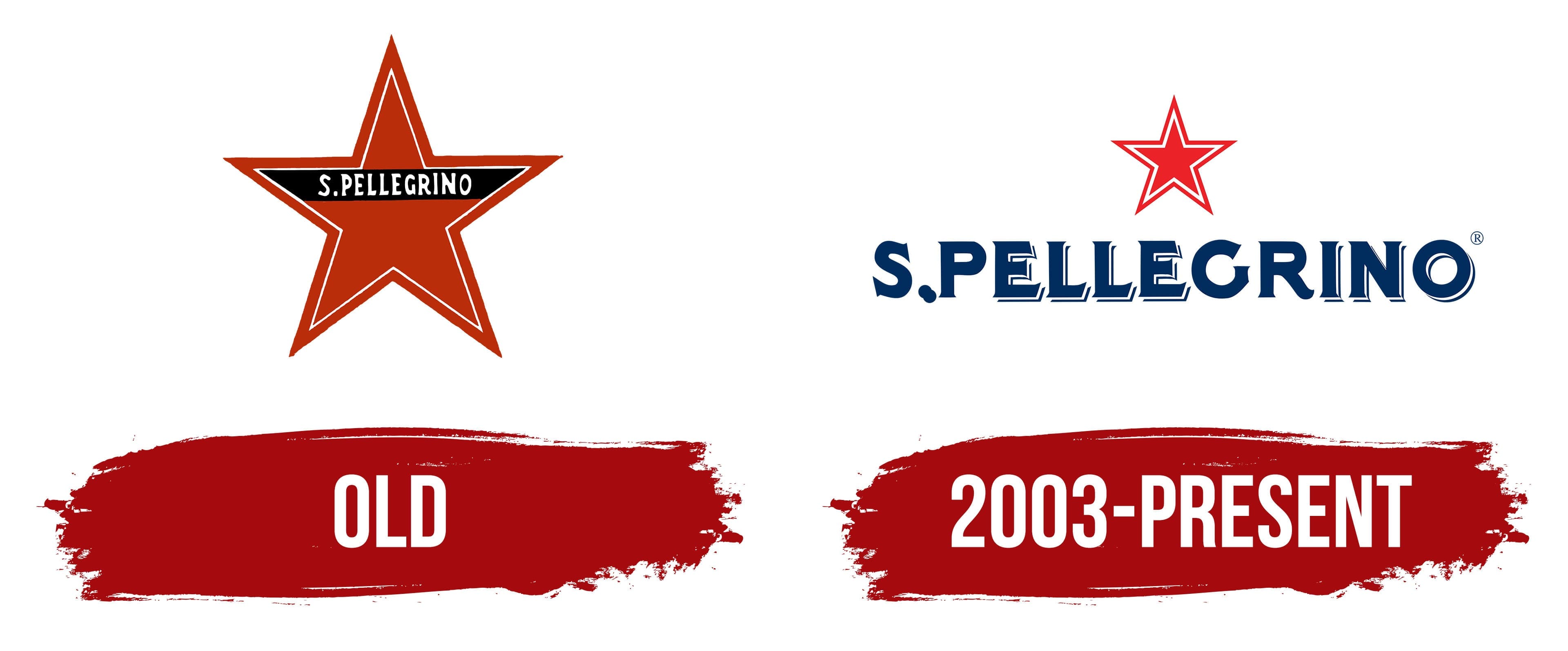
Old

The old emblem has a single red star with pointed rays. It has a symmetrical white line inside that repeats the key figure’s shape. Under the upper ray is a horizontal black stripe with the brand’s name. The inscription took on a recognizable style: with graceful, slightly extended serifs and diagonal cuts at the “L” and “E.” To make the text readable and fit perfectly on the miniature star, the designers shortened the first word and added a dot after the ‘S.’
2003 – today
In the current version, the mineral water brand name is removed from the star and placed below. It is much bigger than before but has the same diagonal cuts and curved serifs on ‘G’ and ‘R.’ The other letters are sharpened and shaped like miniature spikes. A thin shadow stroke runs to the right and bottom of each symbol, set slightly apart. This makes the signs look three-dimensional. Above the name is a red star with a white outline inside. It looks laconic and immutable.
Font and Colors

The adjustments to the San Pellegrino logo aim to improve readability, as the company’s administration wants the small label to look modest yet eye-catching. To achieve this, the developers removed the brand name from the star, increased its size, and moved it to the bottom. By contrast, they reduced the geometric sign.
The lettering in the San Pellegrino logo faintly resembles a bold version of the vintage Quattrocento font. It has the same curves at the ends, which smoothly transition into short, sharp serifs. The Italian mineral water brand’s signature palette uses only two colors: navy blue and red. They stand out against the white background, which adds purity and stability to the emblem.