


 Schindler Logo PNG
The stylish, geometric Schindler logo is designed in three dimensions. It conveys several important meanings and perfectly underscores the excellent brand design. The base is the word mark, above which there is a massive graphic element of special value to the company. This symbol is based on the original visual concept and clearly describes Schindler’s activities. The modern emblem serves the same function but features a more contemporary design.
Schindler began in 1874, when precision mechanic Robert Schindler and Eduard Villiger rented a small workshop on an island in the Reuss River in Lucerne. Their company, Schindler & Villiger, repaired and made mechanical equipment, including lifts, agricultural machines, and simple freight devices. As cities grew and taller buildings emerged, vertical transport became the firm’s primary focus.
In 1883, the company moved to Sentimattstrasse. In 1892, it installed its first belt-driven electric elevator, while Villiger left the partnership. In 1901, Robert Schindler sold the business to his nephew Alfred Schindler, who turned the workshop into an international manufacturer. In 1906, Alfred opened Schindler & Cie. oHG in Berlin, the company’s first foreign branch.
In 1915, Schindler began making its own elevator motors. In 1936, it installed its first escalator in Basel, entering a new product category. After World War II, the company diversified through Schindler Wagon AG in 1945, making railway cars alongside cranes, motors, and pumps. In 1957, the headquarters moved to Ebikon near Lucerne, and in 1971, Schindler was listed on the Swiss Stock Exchange.
As Otis Elevator Company and Kone expanded, Schindler used acquisitions to grow. It bought Haughton Elevator Company in 1979, founded China Schindler Elevator Co. in Beijing in 1980, acquired Westinghouse Electric’s elevator and escalator unit in 1989, and bought Thyssen AG’s elevator business in 1997. The same year, it sold Schindler Waggon to ADtranz. In 1995, Schindler introduced Miconic 10, a destination-control system that changed elevator traffic management.
Meaning and History
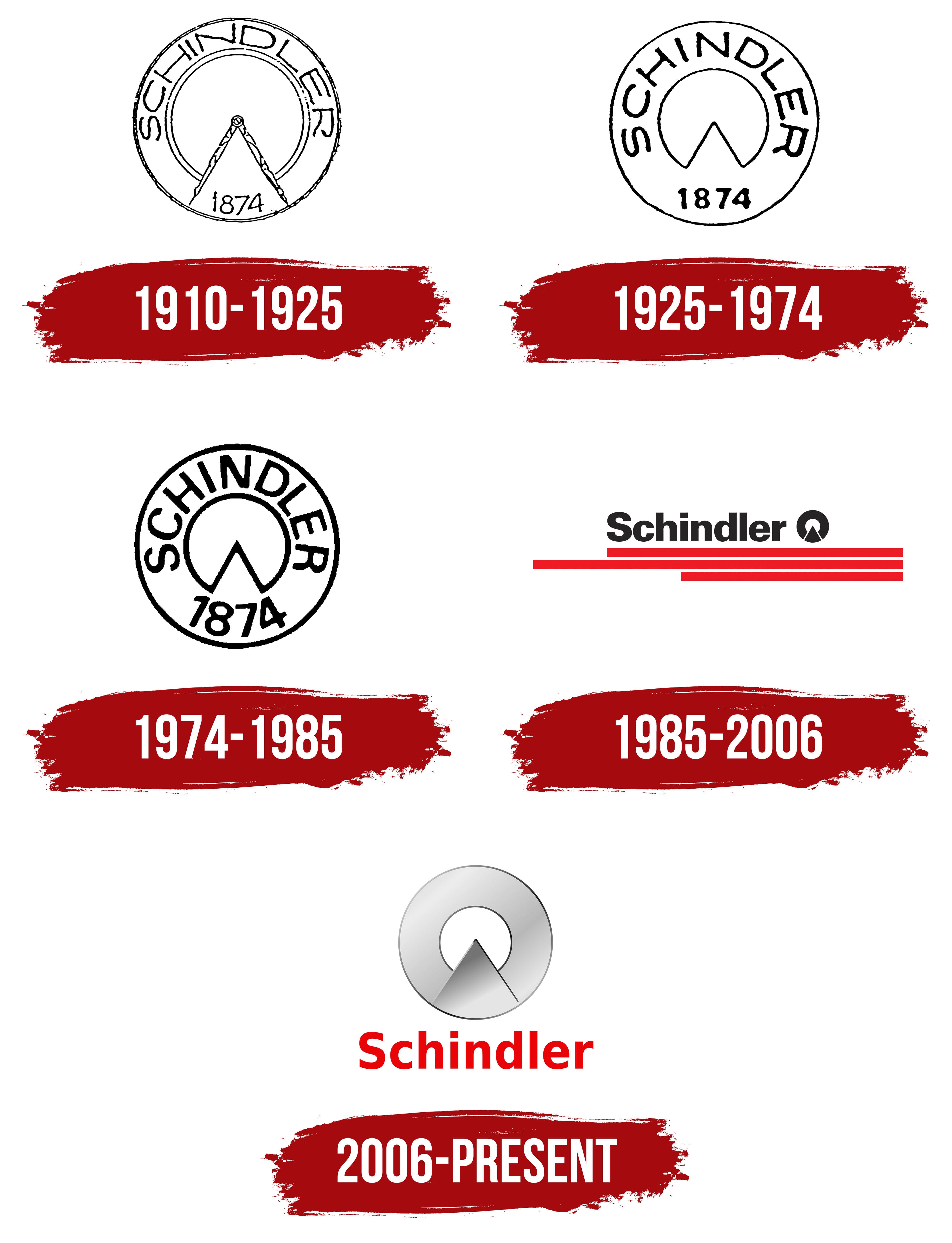
The company’s main feature is its constant pursuit of new ways to improve its products, while also cherishing its heritage and traditions. This trait is also evident in visual identity. In all the logos Schindler has used throughout its existence, there is one clear line of meaning. It stands for professionalism, perfection, and reliability.
What is Schindler?
Schindler is a famous Swiss manufacturer of elevators and escalators. The company has been on the market for over 100 years and, during this time, has created an incredibly functional and reliable design. Now, Schindler supplies high-quality elevators, escalators, and moving walkways in hundreds of countries. The scale of production is provided by the structural units located on almost all continents.
1910 – 1925
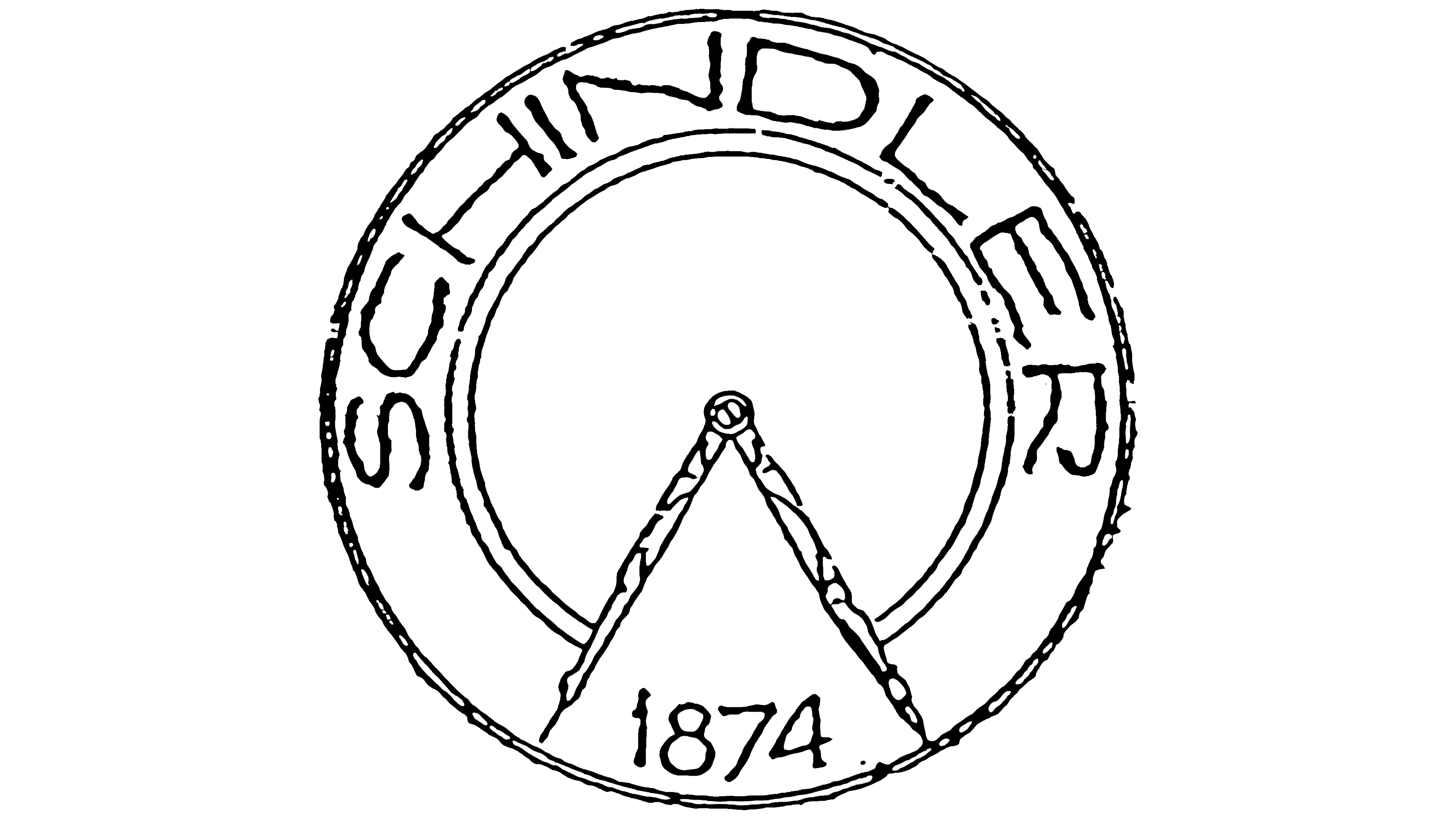
The owners of Schindler announced its launch in 1874. But the brand’s first emblem appeared much later. The badge was presented to the public in 1910. Its development was entrusted to the young artist Maxim Chatel and one of the founders’ family members. Their efforts resulted in a creative image that symbolizes the direction and the company’s main principle.
The result was a round frame, inside which was another circle, the manufacturer’s name, the founding date, and a sign resembling a compass. The designers intended to demonstrate perfection (through a perfectly flat circle) and architectural specialization (through the compass figure). The coloring emphasized the main message favorably. Black symbolized high quality and professionalism, and white symbolized responsibility.
1925 – 1974
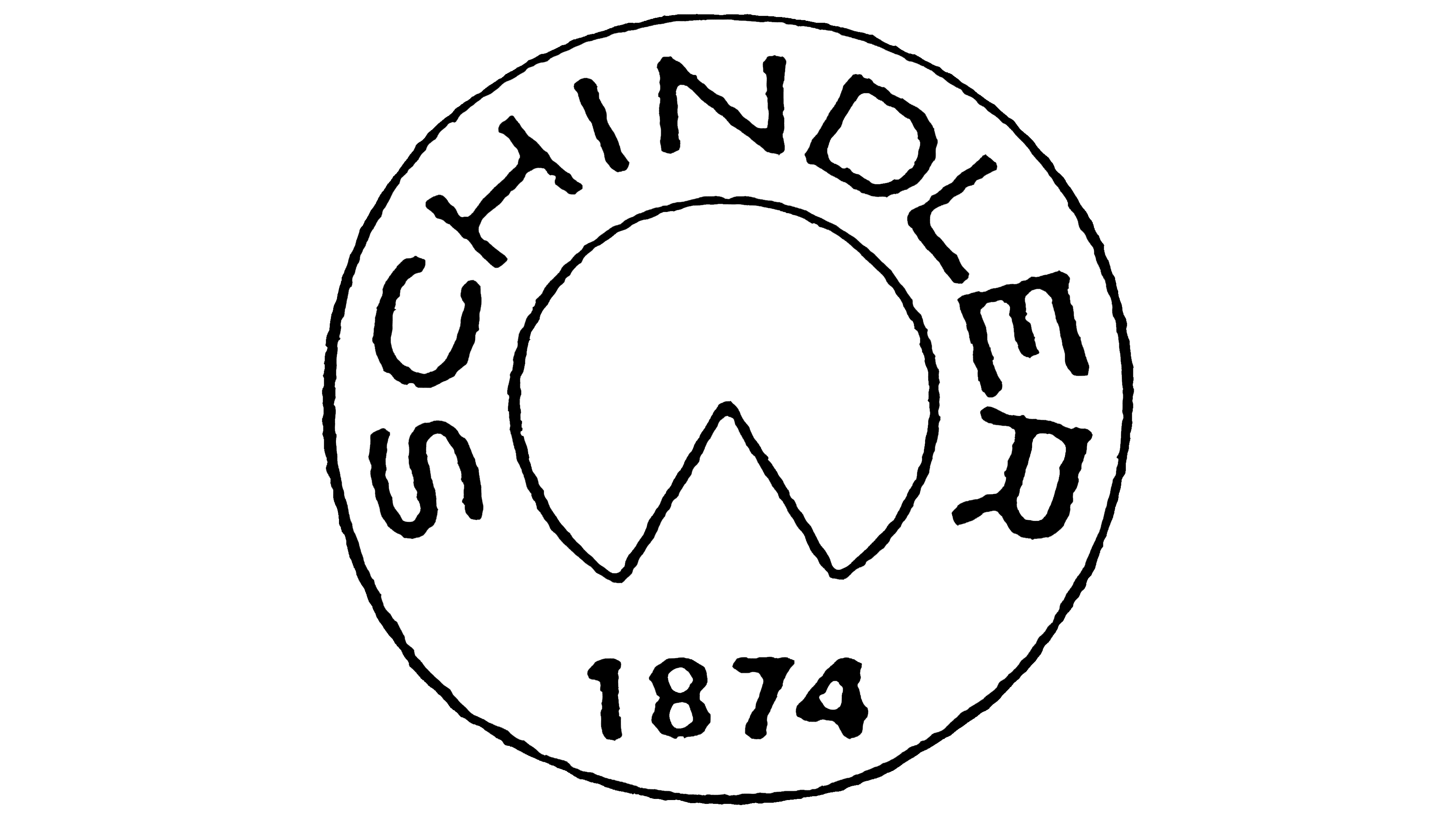
In 1925, the company updated the logo and officially registered it. The basis for the emblem was the previous composition. But it became more abstract and minimalistic. A large outline frame now contained the name, made in a more stylish font, and a circle with a triangular cutout. It was a better circle version with a compass used in the 1910 logo.
In addition to this mark, the logo featured the founding date and the name in a cleaner, more expressive sans-serif font. These updates were intended to emphasize the respect for the company’s past and the high quality of its products.
1974 – 1985
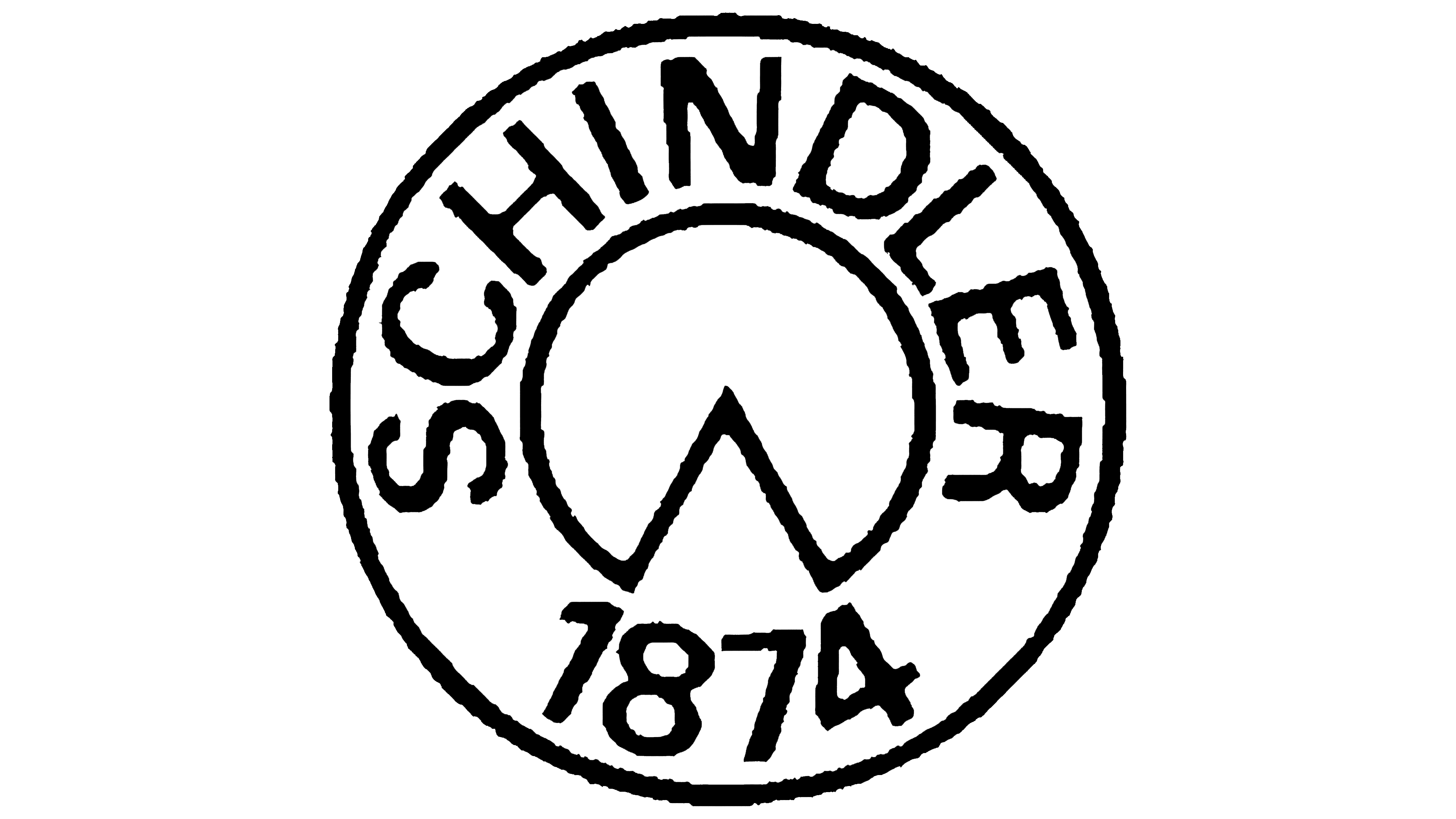
1974 was a landmark year for Schindler as the company celebrated its 100th anniversary. In honor of this event, the brand decided to rebrand itself, resulting in a clearer, more confident logo. It was created based on the previous two versions, but with expressive and thicker contours. The logo’s filling remained the same.
It had a circular frame with a triangular notch, the company name, and the date of foundation. Each element became clearer due to thicker lines and increased size. This design preserves the brand’s core strategy while strengthening its position in the market. This line also continues in an achromatic black-and-white color scheme.
1985 – 2006
In 1985, the company launched a new era of visual identity that continues to this day. It was based on a new approach to the Schindler corporate identity. It retained the characteristic brand badge, demonstrating respect for tradition and the main element, the name. At the same time, the logo layout and style were completely changed.
An additional feature was the appearance of thick decorative stripes at the bottom of the badge. A simple, sans-serif font was used for the company’s name. It was notable for its excellent readability and balanced shape. In addition, the font reflected the company’s confidence and authority as it expanded its production capacity at the time.
Next to the name was the traditional brand icon, including a circle with a triangular cutout. This version’s part was filled with black, giving a solid look. The new element, in the form of red stripes of varying lengths, symbolized Schindler’s additional features, energy, and progress.
2006 – today
In 2006, the company returned to its original concept, featuring a large, round icon alongside its name. But the old outline style no longer suited the brand’s active development, so the designers created an incredibly stylish abstract emblem. The decorative symbol, which features a circle with a triangular cutout, has been updated to a new format.
The effect of three-dimensional space was used for it. Volumetric shapes were achieved through shadows, expressive lines, and open areas. The lettering was designed in a simple, massive font. Overall, this design underscored the business’s heritage, professionalism, and active development.
Font and Colors
The Schindler corporate identity is a prime example of how an original visual concept can be played with while aligning with modern brand design trends. Instead of the old-fashioned thin typeface, an expressive, beautiful sans-serif is used for the lettering. Massive shapes, smooth curves, unequal line thickness, and small spaces characterize it.

These features make the lettering look confident and powerful. In the context of visual identity, it signifies power, strength, and high status. In addition, the name is easy to read, contributing to the logo’s overall recognizability. The color scheme also contrasts favorably with the old version. The current emblem uses metallic gray tones to convey prestige and elitism, as well as rich red. The bright hue emphasizes energy and vitality, which fit perfectly with Schindler’s characteristics.