


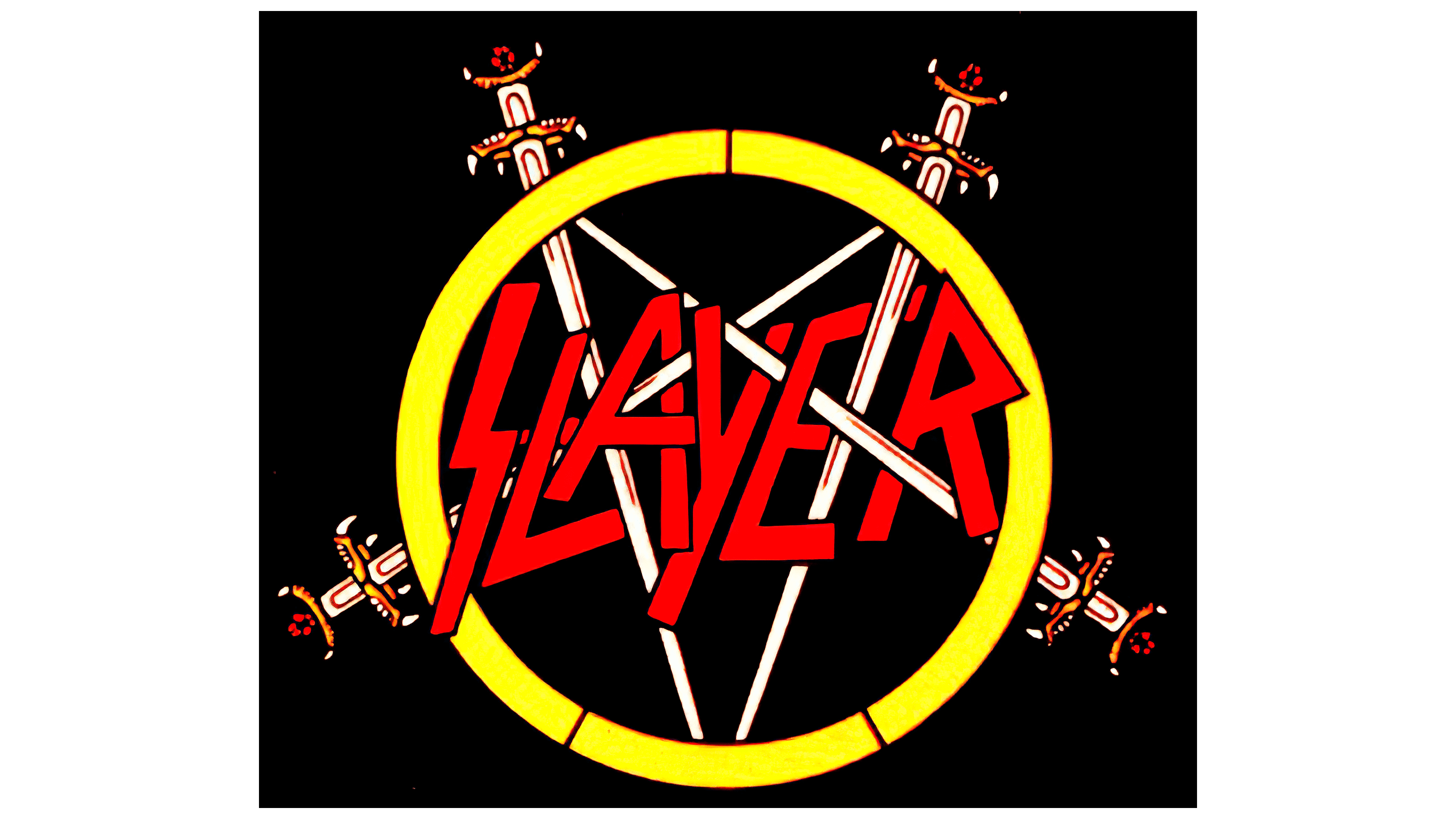
 Slayer Logo PNG
Aggressive energy, like a lightning bolt, comes from the rock band’s emblem. The theme of battle, protest, and opposition to this world’s rules and foundations is applied to the Slayer logo. The sign matches the thrash-metal style the musicians perform.
Slayer formed in 1981 after guitarist Kerry King met Jeff Hanneman at a local band audition. King later met Dave Lombardo when the young drummer delivered pizza in his neighborhood. Tom Araya, a Chilean-born musician in Southern California, worked as a medical worker and trained to become a nurse when he joined as bassist and vocalist.
The band first played Iron Maiden and Judas Priest covers at parties and clubs, but quickly moved toward a harsher identity than many local metal acts. Satanic imagery, provocative lyrics, and extreme speed made Slayer divisive from the start. Brian Slagel saw them live and placed the band on Metal Massacre Vol. 3. The same compilation series had introduced Metallica on vinyl.
That exposure led to a deal with Metal Blade Records and the 1983 debut Show No Mercy. Hell Awaits followed in 1985, pushing the sound further. In 1986, Rick Rubin signed Slayer to “Def Jam Recordings” and produced Reign in Blood. The 28-minute album reached No. 94 on the Billboard 200 and later received RIAA gold certification. South of Heaven (1988) and Seasons in the Abyss (1990) established Slayer as one of thrash metal’s leading acts alongside Metallica and Megadeth.
Dave Lombardo left in the early 1990s, with Paul Bostaph replacing him. Later albums included Divine Intervention (1994) and God Hates Us All (2001). Slayer won Grammys for “Eyes of the Insane” in 2006 and “Final Six” in 2007. Jeff Hanneman died in 2013 after a severe illness, and Gary Holt of Exodus became a full member. Repentless arrived in 2015, followed by a farewell tour from 2018 to 2019.
Meaning and History
When the group first formed, it had no name. The members gathered in Tom Araya’s garage to rehearse cover songs. In late 1981, Jeff Hanneman suggested naming the band Slayer, and everyone agreed. Rumors suggest this was an abbreviated version of “Dragonslayer”: supposedly, the musicians considered it unoriginal and removed the “Dragon” part. This common mistake arose after an interview in which “Slayer” and “Dragonslayer” were mentioned side by side in the same sentence.
The group has been repeatedly accused because of their name, black outfits, dark lyrics, and frightening cover artwork. Moreover, she was accused of links to Nazism, especially after Hanneman admitted to collecting Nazi items. The drummer said he had read books about Josef Mengele and was inspired to write the song “Angel of Death.”
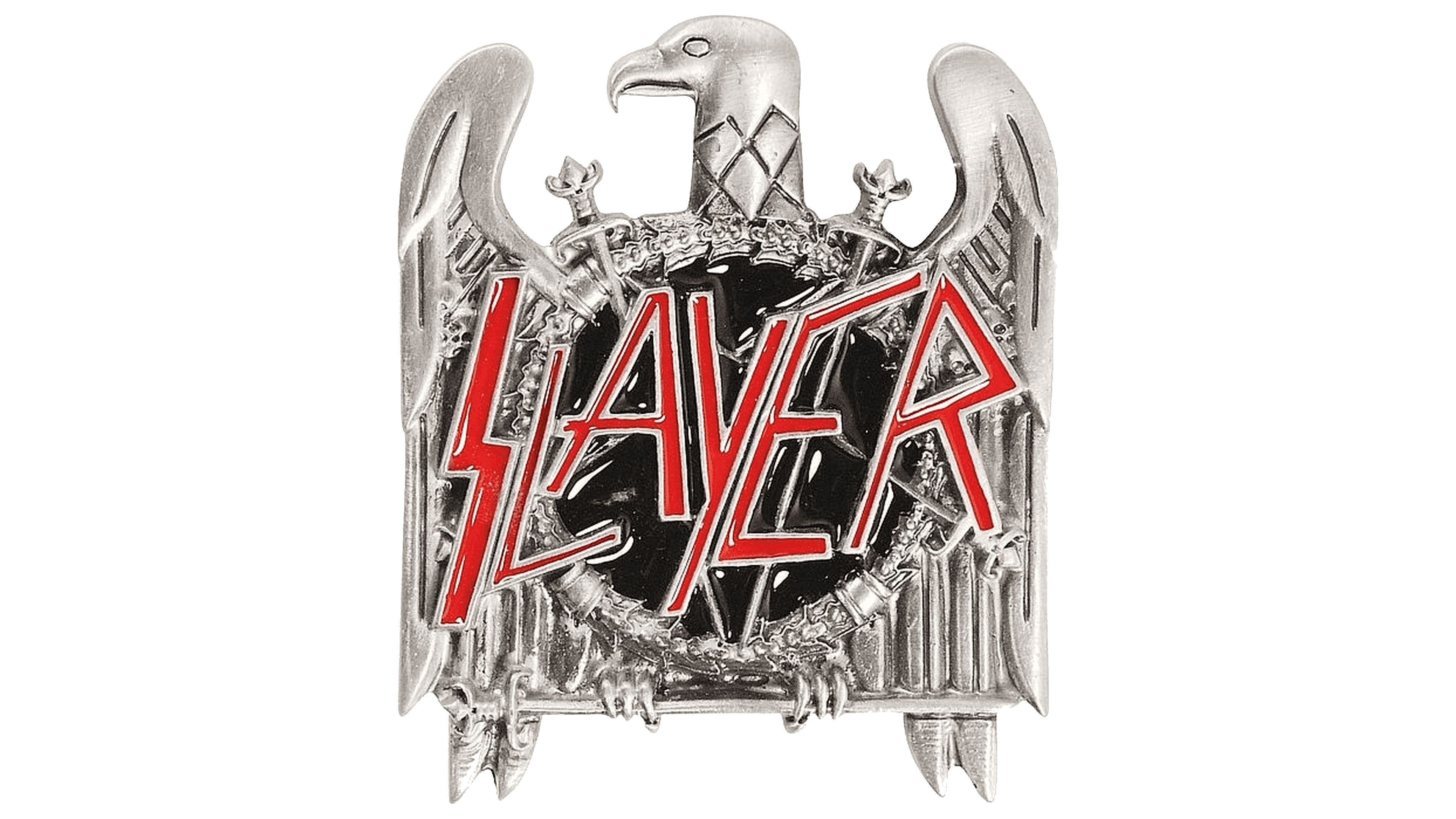
The name of the Slayer fan club, Slaytanic Wehrmacht, sparked another scandal. And the fact that the letter “S” in the musical group’s logo resembled the infamous “SS” (Schutzstaffel sign) only added fuel to the fire. Critics were once again convinced that they were right when, in 1990, the album Seasons in the Abyss was released with a Nazi eagle on the cover. In front of the bird was a wide ring in the style of Der Reichsadler. But unlike the Third Reich coat of arms, the circle contained a pentagram of four swords, whose blades pierced the red letters of the word “SLAYER.” The eagle held the fifth sword in its claws.
Steve Craig, the band’s all-around manager, is credited with designing many of the band’s logos. But producer Rick Rubin proposed the eagle symbol. A native of a Jewish family, he picked up a book about Nazi medals and found a suitable reference in it. He wanted to manipulate public opinion, so he encouraged the scandals around Slayer in every possible way and fueled rumors that the musicians were neo-Nazis. And no one was embarrassed that the bass player was from Chile, and the drummer was from Cuba.
The band members even tried to justify themselves, but no one believed them because their graphic symbols were as ambiguous as the lyrics. Despite everything, they have become metal classics. By the time the group broke up, its logos had become famous worldwide.
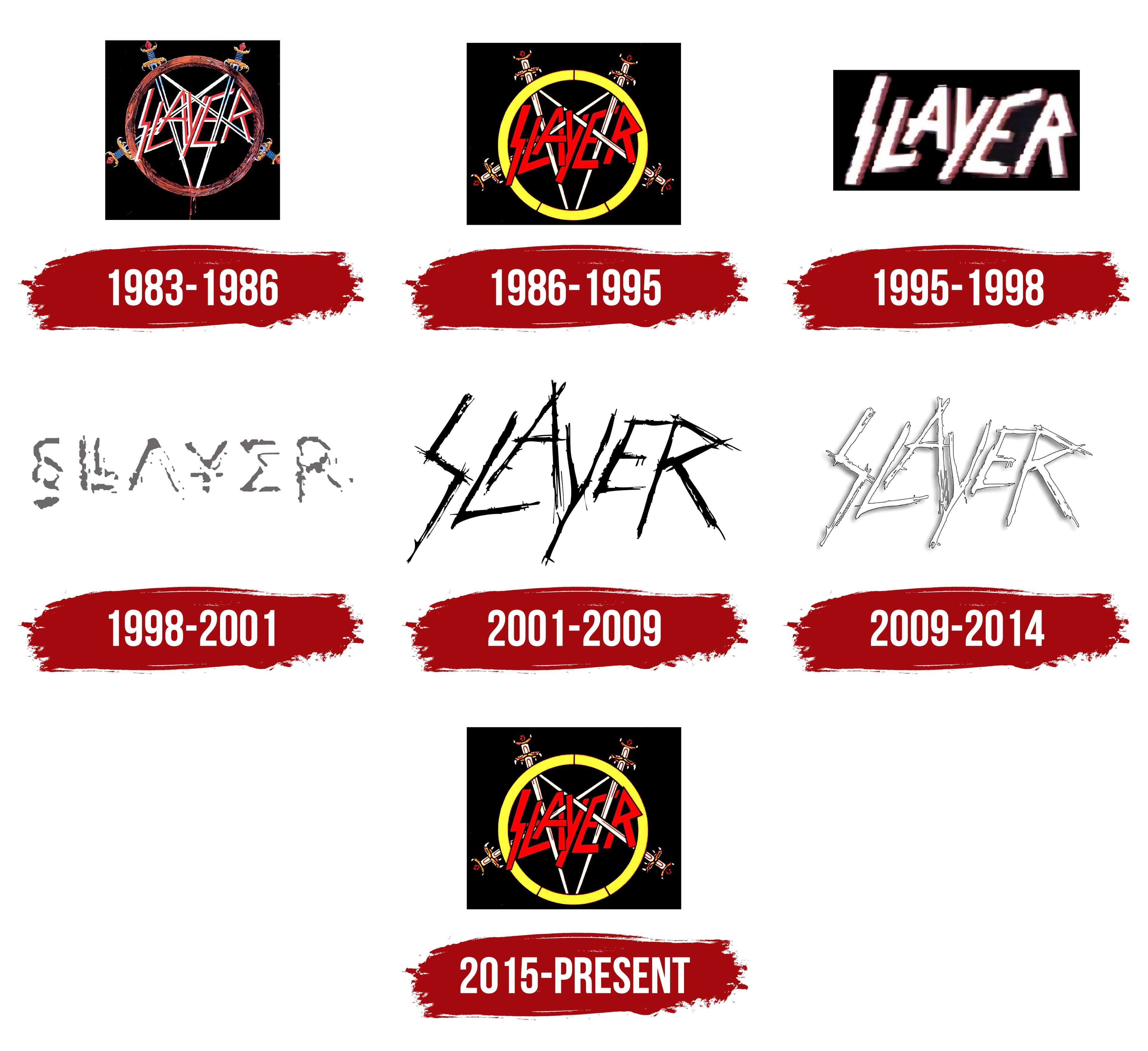
1983 – 1986
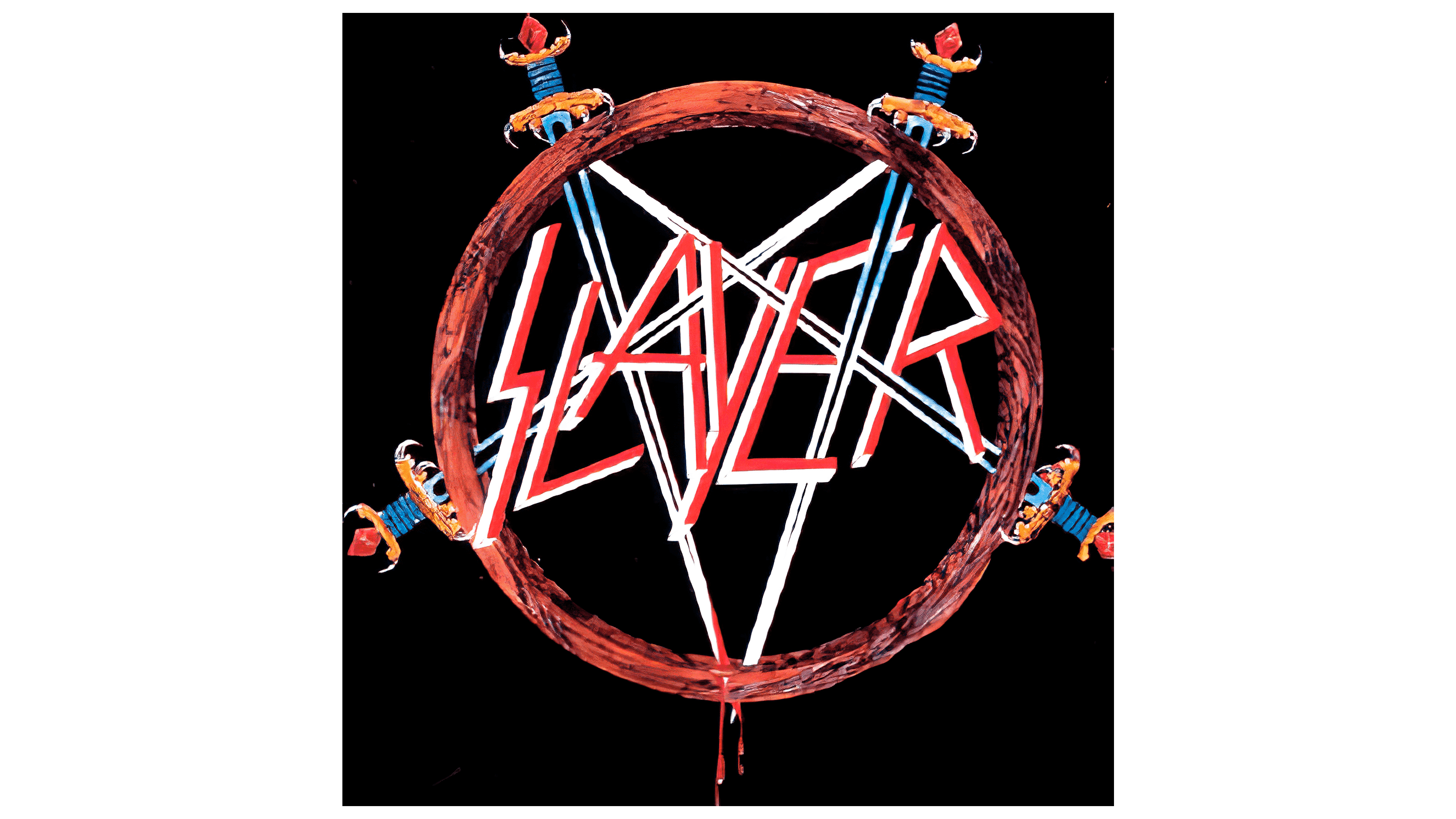
In 1983, they recorded their first studio album, Show No Mercy. Its cover featured an incomplete pentagram made of four swords. One more sword was missing at the bottom for the five-pointed star to be considered complete. The hilts of bladed weapons lined a brown ring, and inside, across the crossed blades, was the red-and-white word “SLAYER.” This inscription predated the album. David Lombardo invented it when the band started writing covers.
The musicians sat in Tom Araya’s living room, wondering what they could do with the logo. Then Dave put the paper on the floor and scrawled the band’s name on it as if the pencil had suddenly turned into a knife. Everyone liked the notches and decided to leave the inscription as it is. As a result, the letters in the word “SLAYER” on the debut album’s cover featured sharp, jerky lines.
1986 – 1995
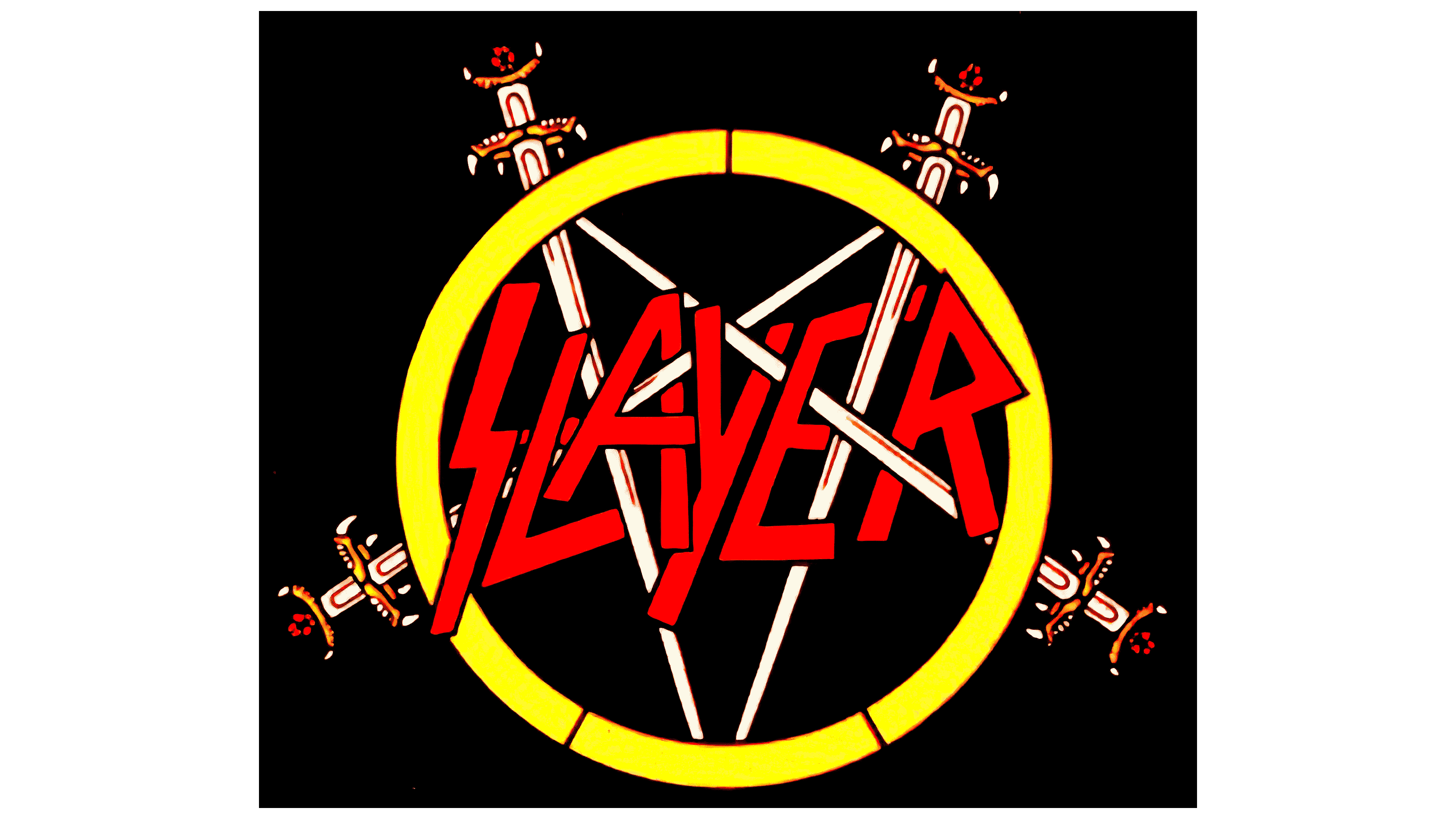
To maintain their identity, the group did not experiment with the logo. It retained the original structure; only the ring became yellow, and the inscription was repainted in bright red. The bluish sheen of the swords has disappeared, and the shape of the blades and hilts has changed slightly.
1995 – 1998

In the mid-1990s, musicians abandoned the traditional pentagram symbol. They focused on the redesigned inscription. The letter strokes were edited, but this did not affect the aggressive style. The name “Slayer” was white, with a thin red shadow on the right side.
1998 – 2001

In 1998, the album Diabolus in Musica was released, named after the dissonant combination of sounds. Its cover featured a redesigned logo unlike any previous version. The occult script of the letters resembled runes or, at most, typographic symbols. “S” looked like “§,” “A” lacked a horizontal stroke, “Y” looked like a single-stroke yen sign, and “E” imitated the mathematical sum symbol.
2001 – 2009

In 2001, fans cheered for the return of the original “SLAYER” lettering, created by the band’s drummer. But unlike David Lombardo’s version, the new design had nothing to do with “cuts”; rather, the lines were carelessly drawn. The letters were black for the first time.
2009 – 2014

After the redesign, the inscription returned to white. At the same time, it had thin gray outlines that looked very chaotic. Small random dots surrounded the letters.
2015 – today
In 2015, the logo, which debuted in 1986, began to be used. The five-pointed star of swords, set in a ring with a red inscription, is a classic symbol familiar to longtime fans.
Font and Colors
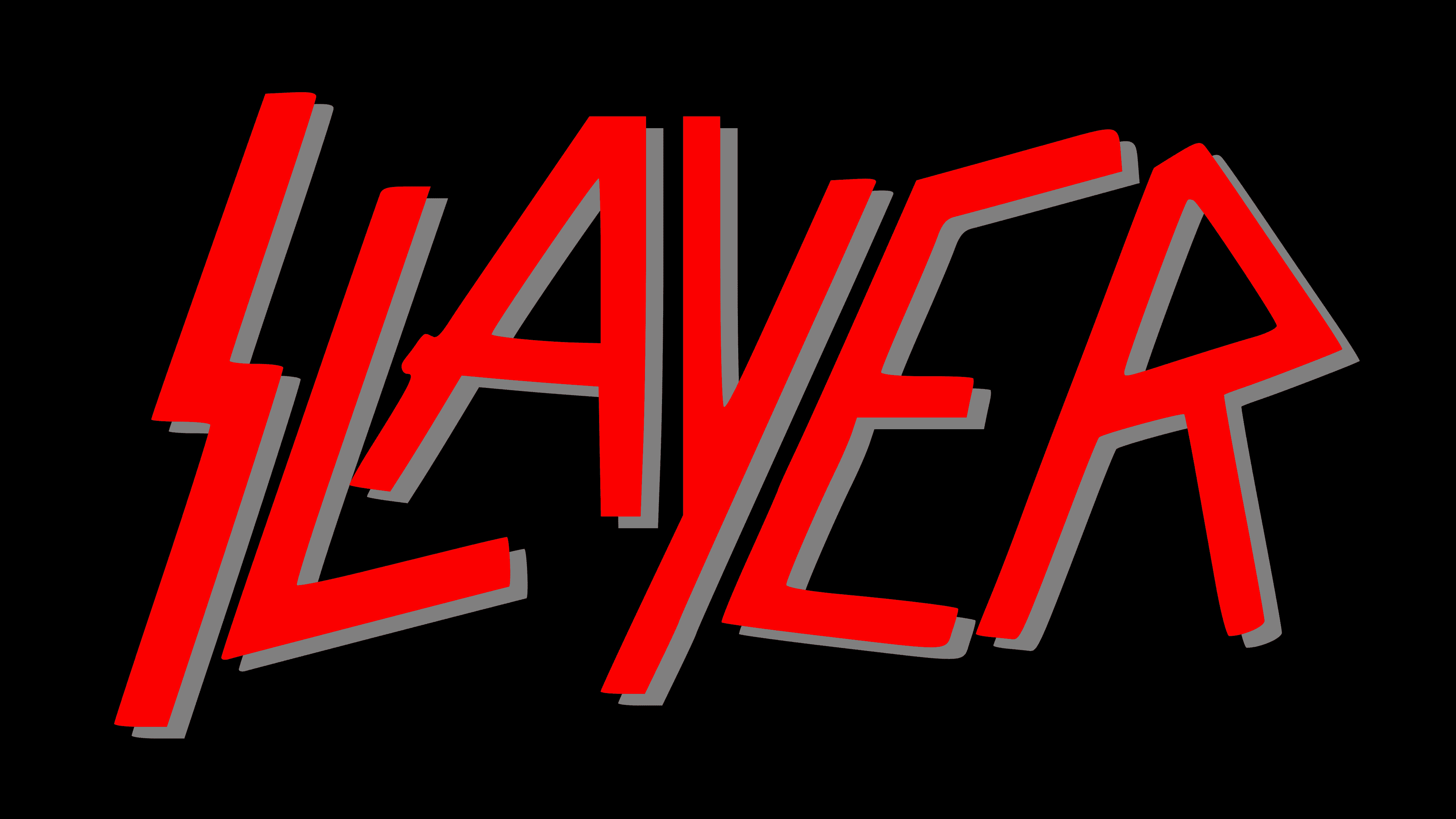
The Slayer logo draws on thrash metal. Sharp, straight edges reflect the music’s austere sound. The most scandalous elements of the picture are the pentagram (an attribute of Satanism) and the letter “S,” similar to the Schutzstaffel sign. On the other hand, the “S” can symbolize lightning because Slayer introduced the popular “thunder and lightning” motif into rock culture, which Metallica, Black Sabbath, and Steppenwolf later picked up. However, David Lombardo himself did not put any secret meaning into the letter. He simply wanted to play with the group’s name, imagining the pencil as a knife.
The logo’s inscriptions feature visual harmony and symmetry. A drummer invented it by cutting paper with a pencil. His left-handedness affects the angles of the lines. A similar font is called Slaytanic. Chris Hansen developed it based on the original design.

Slayer’s graphics are predominantly black and white, but the latter is the brightest. It presents both expressive colors (yellow, red) and neutral tones (brown, black, white).