


 Sprite (drink) Logo PNG
The Sprite logo represents the drink as an explosion of vivacity and taste. The elements show the lemon’s sourness, complemented by sizzling bubbles. Lemonade never remains in the bottle; everything is drunk to the last drop.
Coca-Cola began working on Sprite after watching 7Up dominate the U.S. lemon-lime soda market in the late 1950s. West Germany developed the first version in 1959 as Fanta Klare Zitrone. It was later adapted for America under a new name. Coca-Cola registered Sprite in 1960, and the drink went on sale in the U.S. on February 1, 1961.
Early Sprite was sold as both a standalone soda and a cocktail mixer. By 1967, it was available to 85 percent of the U.S. population, and by 1978, it led the American lemon-lime soda category. The advertising focused on clean taste and the absence of caffeine, setting Sprite apart from dark, sweet colas.
The brand changed direction in 1994 with “Obey Your Thirst,” created with Lowe & Partners after rapper Grand Puba used the line during rehearsal. Grant Hill led the first campaign, followed by KRS-One, A Tribe Called Quest, Nas, LL Cool J, and Kobe Bryant. In the same year, Sprite became the official soft drink of the NBA, added blue to its green packaging, and surpassed 1 billion cases in annual global sales.
In 2008, Sprite became Coca-Cola’s third product to exceed two billion cases a year, after Coca-Cola and Diet Coke. In 2016, “Obey Your Verse” released limited-edition cans featuring lyrics by 2Pac, Missy Elliott, Notorious B.I.G., Drake, Nas, and J. Cole. In 2022, Sprite switched from green bottles to clear ones worldwide. In 2024, “Obey Your Thirst” returned with Anthony Edwards and Sha’Carri Richardson, as PepsiCo’s Starry and Schweppes kept pressure on the citrus soda market.
Meaning and History
The Coca-Cola Company gradually entered the market with its novelty: first, soda appeared in stores in two cities in Georgia, Atlanta and Marietta. After testing it with residents, it introduced the drink into commercial circulation in eight cities. Soon after, Sprite entered retail outlets in 40 states.
And to make the soft drink instantly recognizable and attract more customers, the manufacturer began pouring it into special containers with round surface protrusions that mimicked rising air bubbles. In addition to king-size bottles, the company introduced motivating slogans and innovative labels. In this way, the company has instilled in society a philosophy centered on vigorous activity, self-expression, and continuous forward movement.
The recipe did not drive Sprite’s popularity; instead, its freshness, thirst-quenching appeal, and original container design did. Over time, the parent company fully adapted the classic soda for teenagers, turning it into a popular lemon-lime soda. Its name has been known in the United States for 20 years; it was given to a jolly silver-haired elf who advertised Coca-Cola and wore a branded cap. Artist Haddon Sundblom created this character.
What is Sprite (drink)?
This well-known soft drink brand stands out with its pronounced lemon-lime flavor and crystal-clear appearance. Its unique recipe strikes the perfect balance of sweetness and citrus freshness, while its high carbonation delivers a crisp, refreshing taste. The product lineup includes the classic version, a sugar-free option, and various flavor variations tailored to consumers’ preferences in different countries. The drink is especially popular among young people and is associated with sports, music, and urban culture. Its iconic green bottle with a silver label has become a global symbol of refreshment.
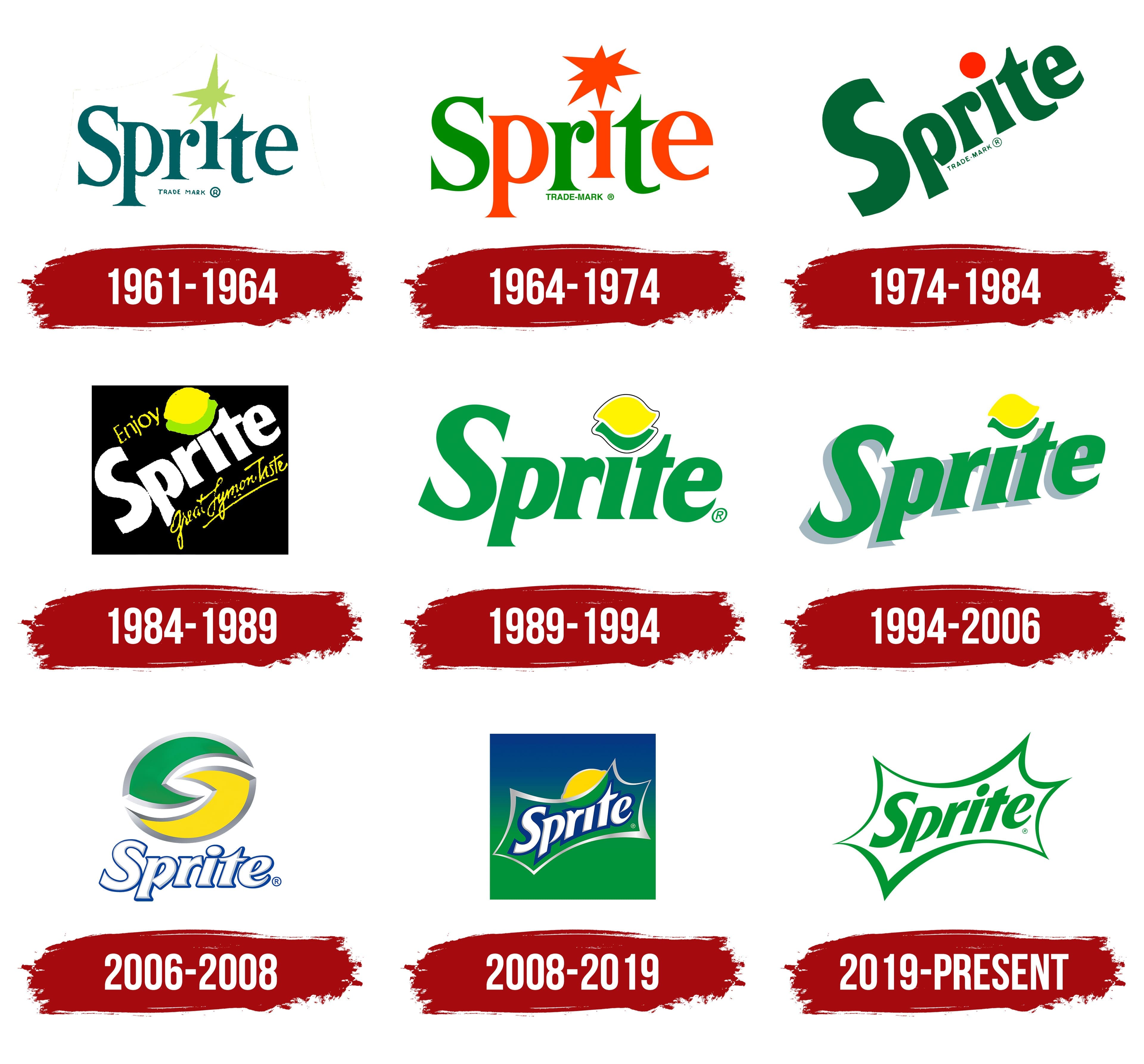
1961 – 1964

The debut logo features the trademark name in uneven green letters. To demonstrate the dynamics, the designers made them jump. Sharp, distinct serifs accompany each letter. They are prickly, like the taste of lime-lemon soda. A yellow-green star replaces the dot above the “i,” with eight rays of different lengths that echo the spikes on the symbols. A thin curly frame surrounds the text.
1964 – 1974
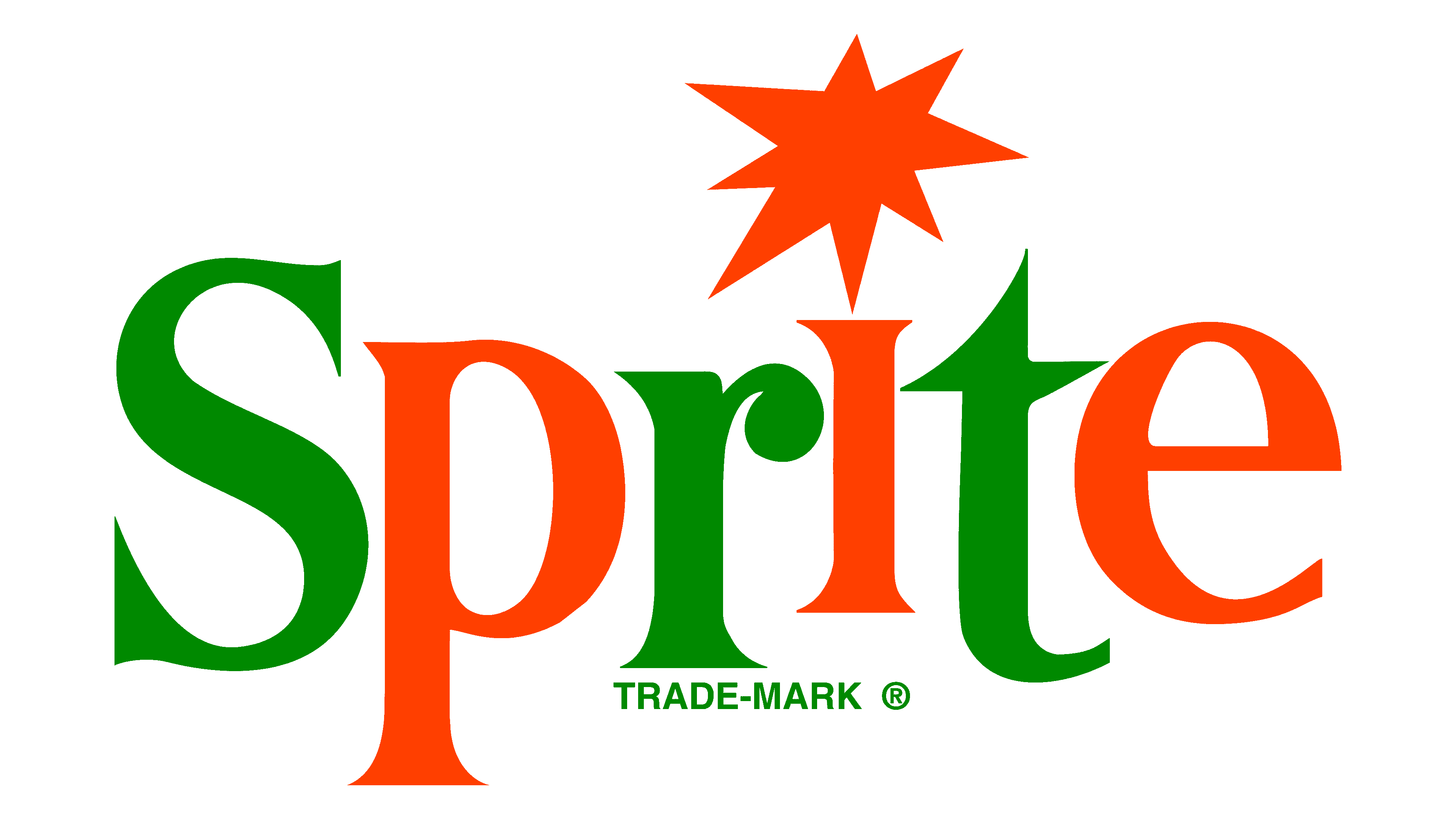
After the redesign, the dark green shifted to a light, grassy green, and half the letters took on an orange tint. They alternated, brightening the logo. The eight-pointed star above the “i” in “Sprite” grew much larger and was recolored orange, along with the vertical part of the sign.
1974 – 1984
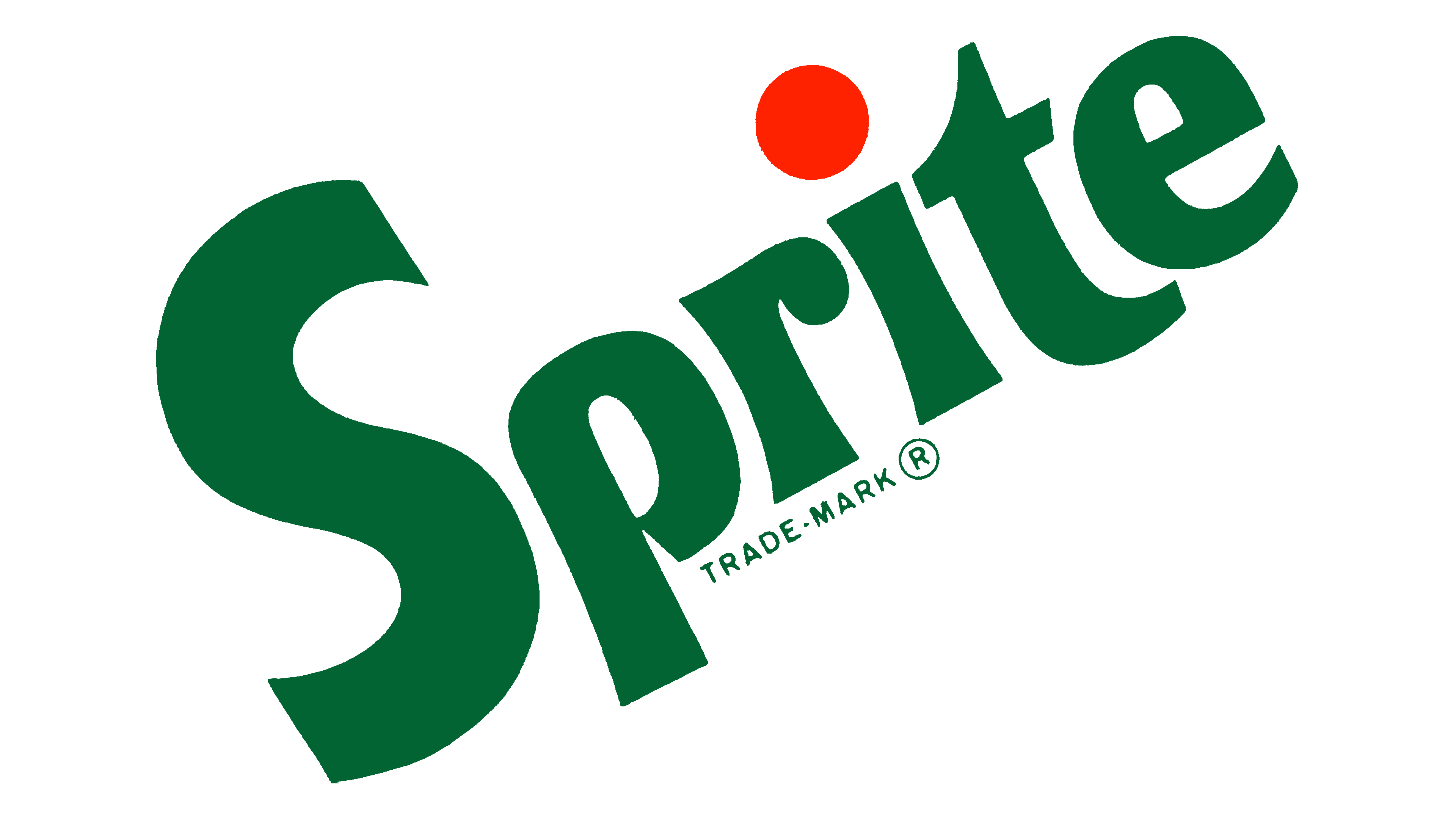
This period is significant because a new inscription style emerged, which was used in almost all subsequent emblems. The letters are bold, large, rounded, and smooth, with varying line thicknesses and smoothed corners. The only triangular protrusion is at the “p,” where the legs meet the top. The carbonated drink name is set diagonally and recolored in dark green. The eight-pointed star above the “i” was replaced by a bold orange dot resembling an orange.
1984 – 1989
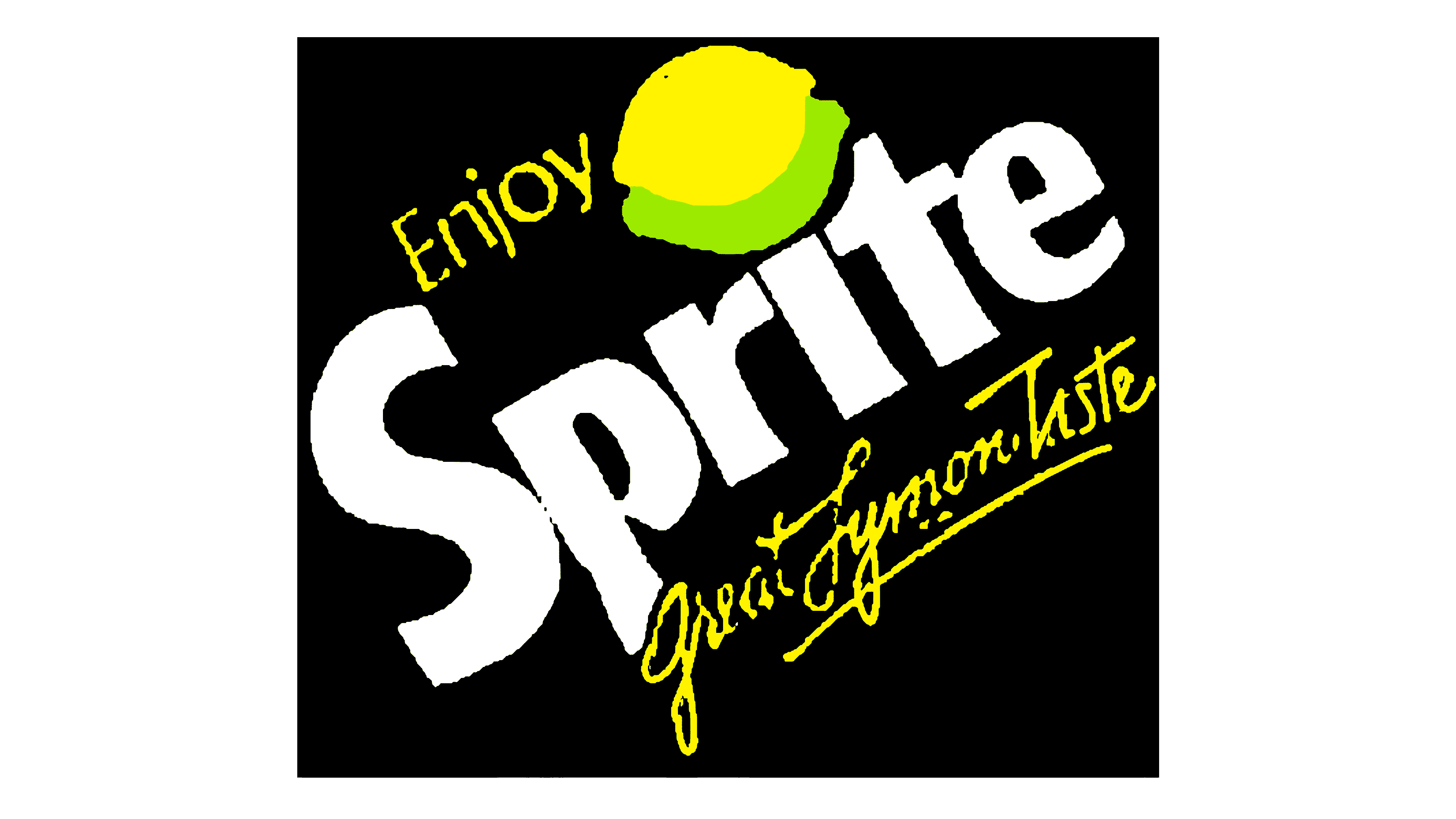
The label’s design has been transformed beyond recognition. She has a new everything: background, font, color, style. For example, a black square appeared, and the developers placed the main elements inside it. Among them is the name of a carbonated drink, slightly modified. The lower curve of the “t” disappeared, the vertical element of the “i” was straightened, the dot was replaced with a lemon and lime superimposed on each other, and the rounding on the hat was removed from the “r.” In contrast, the designers painted the word “Sprite” in white and the surrounding inscriptions in yellow.
1989 – 1994
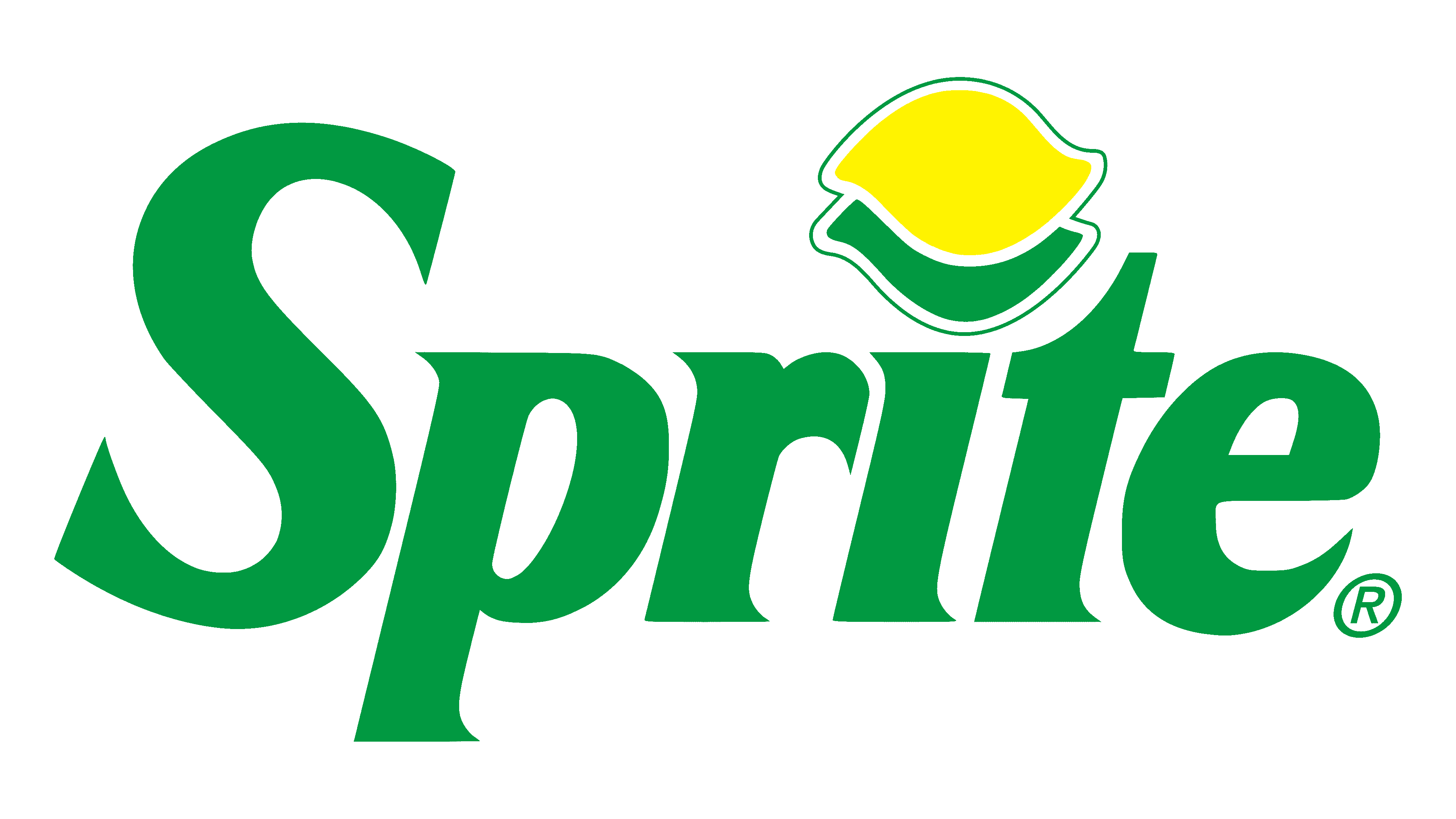
The double lemon-and-lime theme, instead of a dot over the “i,” continued and improved. To do this, the developers depicted citrus fruits more clearly and, for expressiveness, circled them with a thin black line that follows the contours of two fruits. They aligned the text horizontally but added light italics. The designers also returned sharp serifs to the letters, reminiscent of miniature thorns.
1994 – 2006
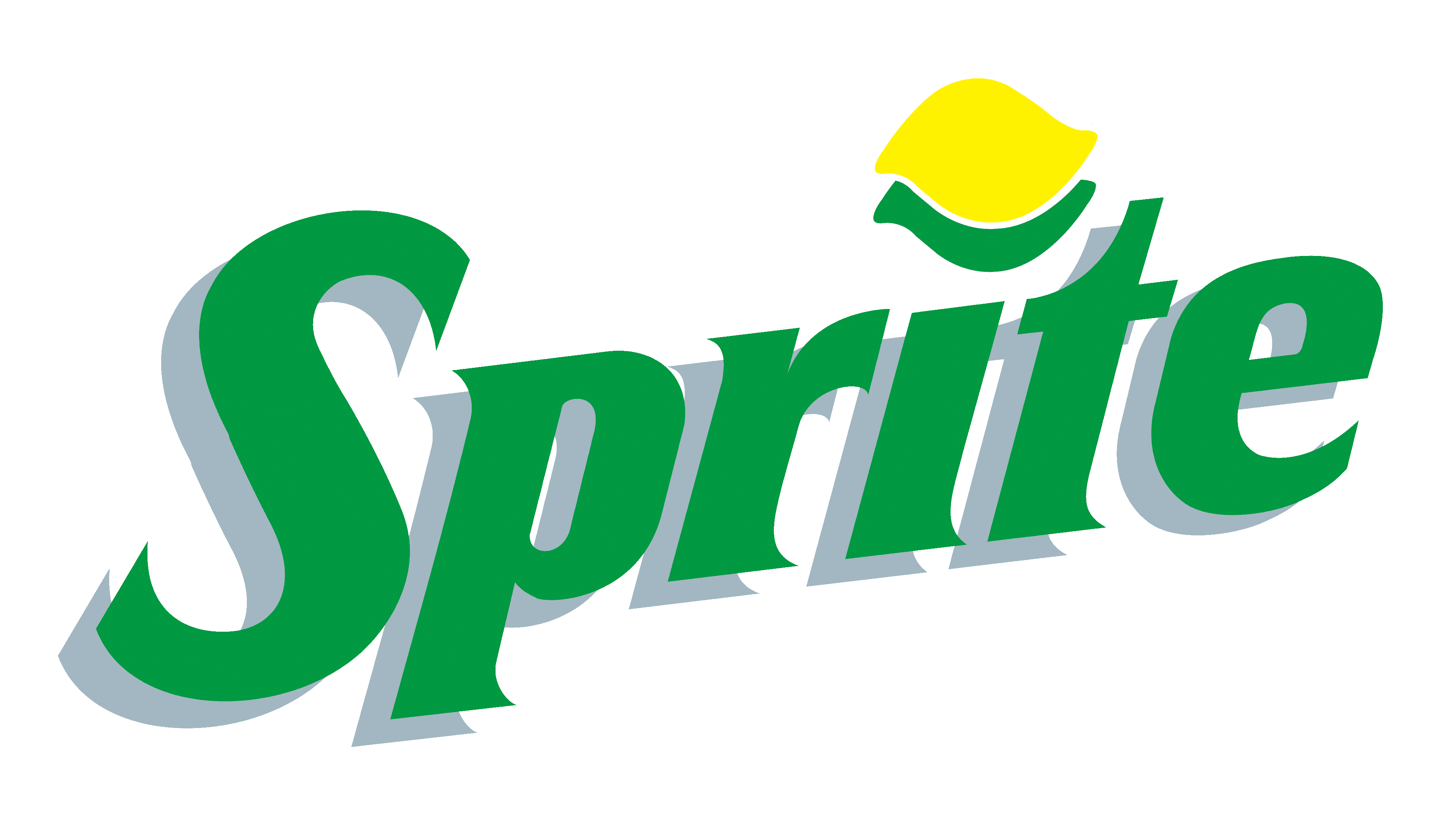
In 1994, the Sprite emblem received an updated graphic, sharp and cold, emphasizing the frosty-cooling character of the carbonated drink. Each letter is now accompanied by a ghostly gray shadow located under the signs on the left. This technique makes the inscription seem to float in the air, as if it were three-dimensional. The black outline around the citrus fruits disappeared, and the green color shifted from dark to light.
2006 – 2008
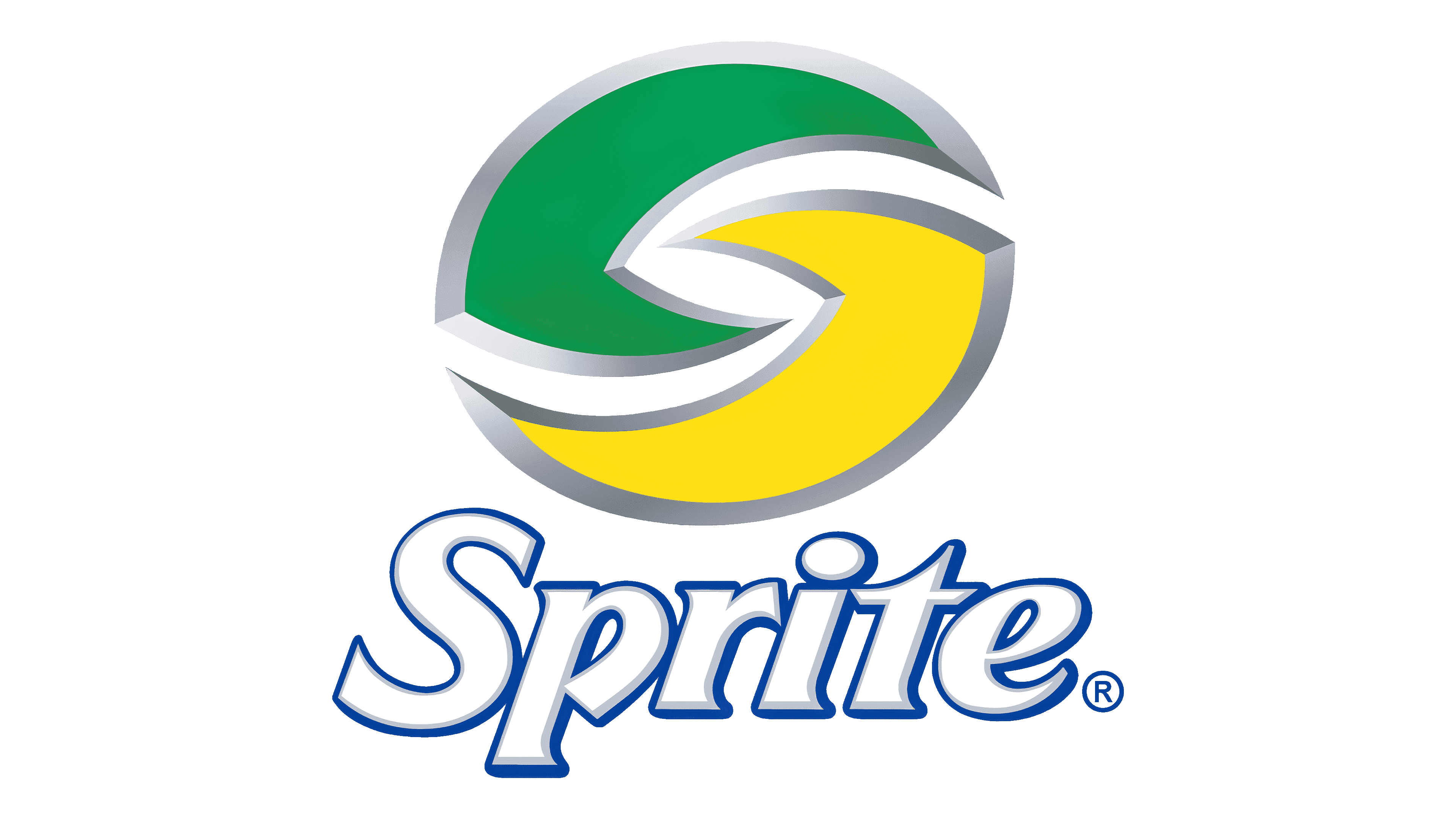
At that time, Sprite jars and bottles featured a completely different logo, unlike the style they had before. The emblem is made of two zigzag halves of lime and lemon. They are arranged like a yin-yang symbol and are not connected: a curved strip resembling the letter “S” runs through the middle. A wide silver line surrounds each citrus slice. At the bottom is the brand name in white letters with a light (inner) and dark (outer) outline. The inscription is cursive.
2008 – 2019
In 2008, the company decided to revitalize its identity and adopted a more dynamic slogan and a catchy logo. It returned to the curly silver frame, as in 1961, and changed the font to a flowing one. Straightness appears only in “the t” and “i”: they have wide, even legs resembling pillars. All characters have sharp elements resembling serifs in the “s” and “p.” The word “Sprite” is diagonal, white, with a blue outline that merges into a curly tail. Instead of a dot above the vertical “i,” a lemon (top) and lime (bottom half) are stacked together. Only a gray stripe separates them. The background is a square with a gradient transition from blue to green.
2019 – today
In the current logo, the border of the curly contour that surrounds the name of the carbonated drink has been redrawn. The corners are elongated and pointed. The diagonal of the inscription has become less pronounced and is now almost horizontal. Moreover, in this version, the lemon palette is not used on first use: only green is used. The dot above the “i” is now standard, without the citrus fruit image.
Font and Colors
Coca-Cola’s parent company pays close attention to marketing, so each redesign of its brand logo was accompanied by a change in the advertising slogan. It offers many visual identity options, so the labels on cans and bottles intended for different countries may differ. But they share one thing: a desire for a modern style that appeals to a potential segment of young buyers.
The Sprite logos use the Verlag Black Italic typeface, designed by graphic studio Hoefler & Co. The main colors are yellow (representing lemon) and several shades of green (representing lime). Some emblems also feature orange, black, and blue to reflect the water theme.