


 Van Halen Logo PNG
The band’s initials fly up on the emblem like an eagle made from a rock musician’s guitar strings. As the Van Halen logo shows, heavy music is a sharp blade. It hits the target, striking listeners’ hearts with its unusualness and clear rhythms.
Meaning and History
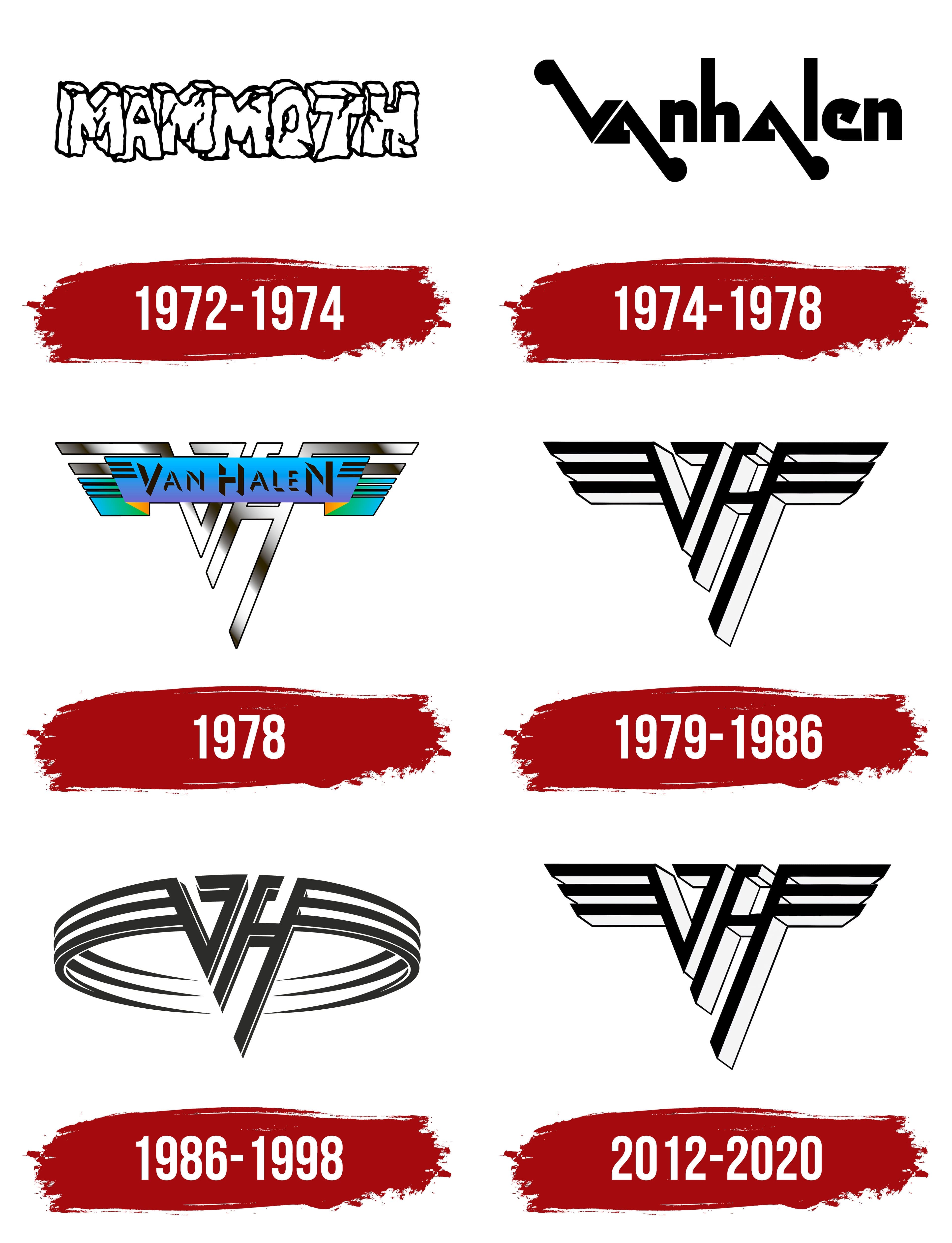
In 1972, two talented Van Halen brothers (guitarist-songwriter Eddie and drummer Alex) formed their band. They also brought in energetic lead singer David Lee Roth and bassist-vocalist Michael Anthony. The four launched a project called Genesis, but a team with that name already existed. Therefore, the musicians first renamed themselves “Mammoth” and then “Van Halen”.
After the 1978 album of the same name, it immediately climbed to number 19 on the Billboard charts and sold over 10 million copies in the United States. By 1982, the rockers had already released four albums that would eventually go multi-platinum. All subsequent albums enjoyed similar success and gained immense popularity worldwide. The single-lead jump is recognized as number one in the United States. Gradually, their emblem gained increasing recognition and fame.
1972 – 1974

At first, the group was called Mammoth. This word served as its debut sign of identity. The font was in uppercase. The letters were voluminous but uneven in contour; a “trembling” strip gave the logo a dynamic feel. Realism was also added through cracks, chips, and other damage, generously painted on all the symbols.
1974 – 1978

After the rebranding, the musicians adopted a new logo. This is the Van Halen wordmark, as suggested by vocalist David Lee Roth. He felt the name would bring marketing, personal, and creative advantages. Bassist Mark Stone painted the original logo. The sans serif font is complemented by elongated “v” and “a.” The first has the left side stretched upwards; the second has the right side stretched downwards.
Moreover, they look like notes. The symbols “h” and “l” look like perfectly even stripes, and “e” is configured differently, which is unusual for this letter; as a result, it reads worse than the others. In addition, the “a” resembles a pyramidal sign. The sleek, elegant logo changed only after six years.
1978
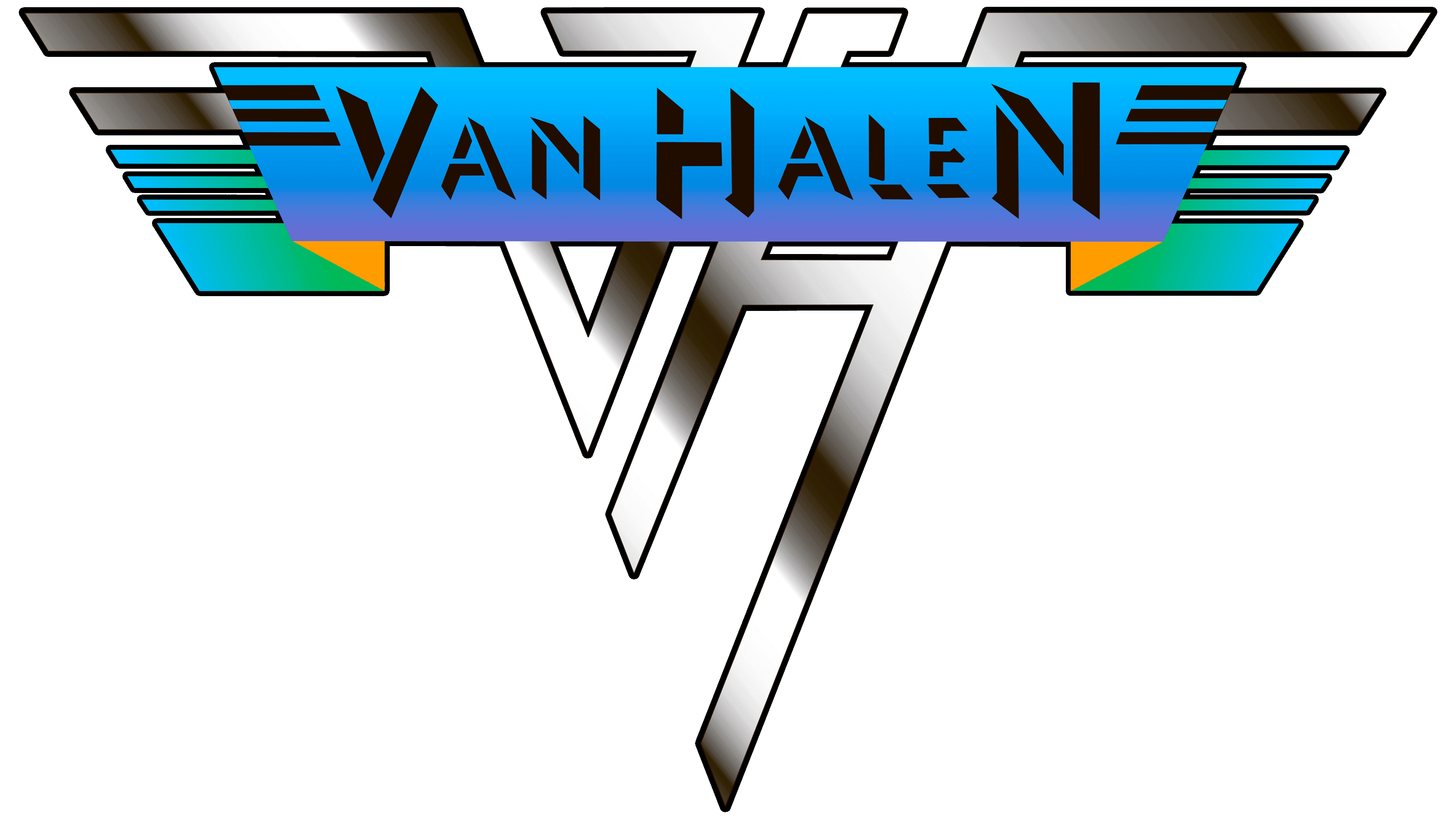
Dave Bhang designed the new logo. It is the most iconic symbol of the rock band Van Halen because the name is encrypted in it. It appeared on the debut album. To the right and left of the stylized “V” and “H” are two wings with six stripes of different lengths and widths. The first letter in the monogram is aligned, while the second is angled, giving it a diagonal look. Above them, in a blue trapezoid, is the band’s name. The shadows gave the inscription a 3D effect. This version of the logo served as the basis for all subsequent ones.
1979 – 1986
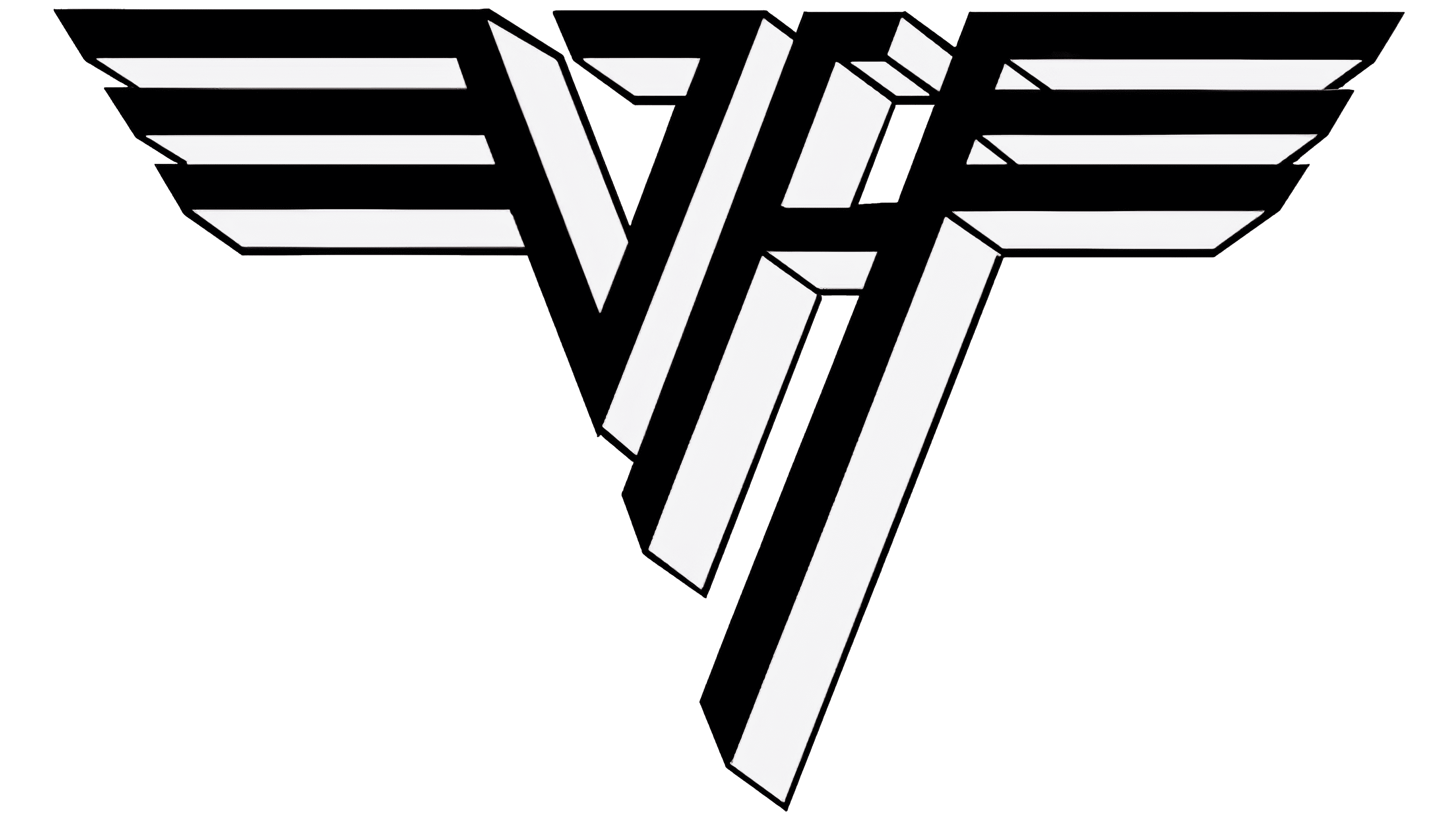
The three-dimensional emblem contains the same elements as the previous version. The exception is the trapezoidal plate, which the authors removed, and a smaller number of horizontal lines (now three). The stylized “V” and “H” are now clearly visible. They consist of strips of the same width but different lengths. Moreover, they have no shadows; white lines replace them, turning the logo into a three-dimensional sign. This effect is created by slightly offsetting the stripes below the letter level. This version of the winged symbol adorned the cover of Van Halen II in 1979.
1986 – 1998

When Sammy Hagar became the band’s new vocalist, the band adopted a different logo. It was also based on the iconic winged prototype Dave Bhang created. The artists lengthened the horizontal stripes into a circle, resembling a huge ring. The ends of all lines are pointed. Small hand-drawn serif strokes form the ribs. The color is changed to dark gold. This mark was used on the 1986 album 5150.
2012 – 2020
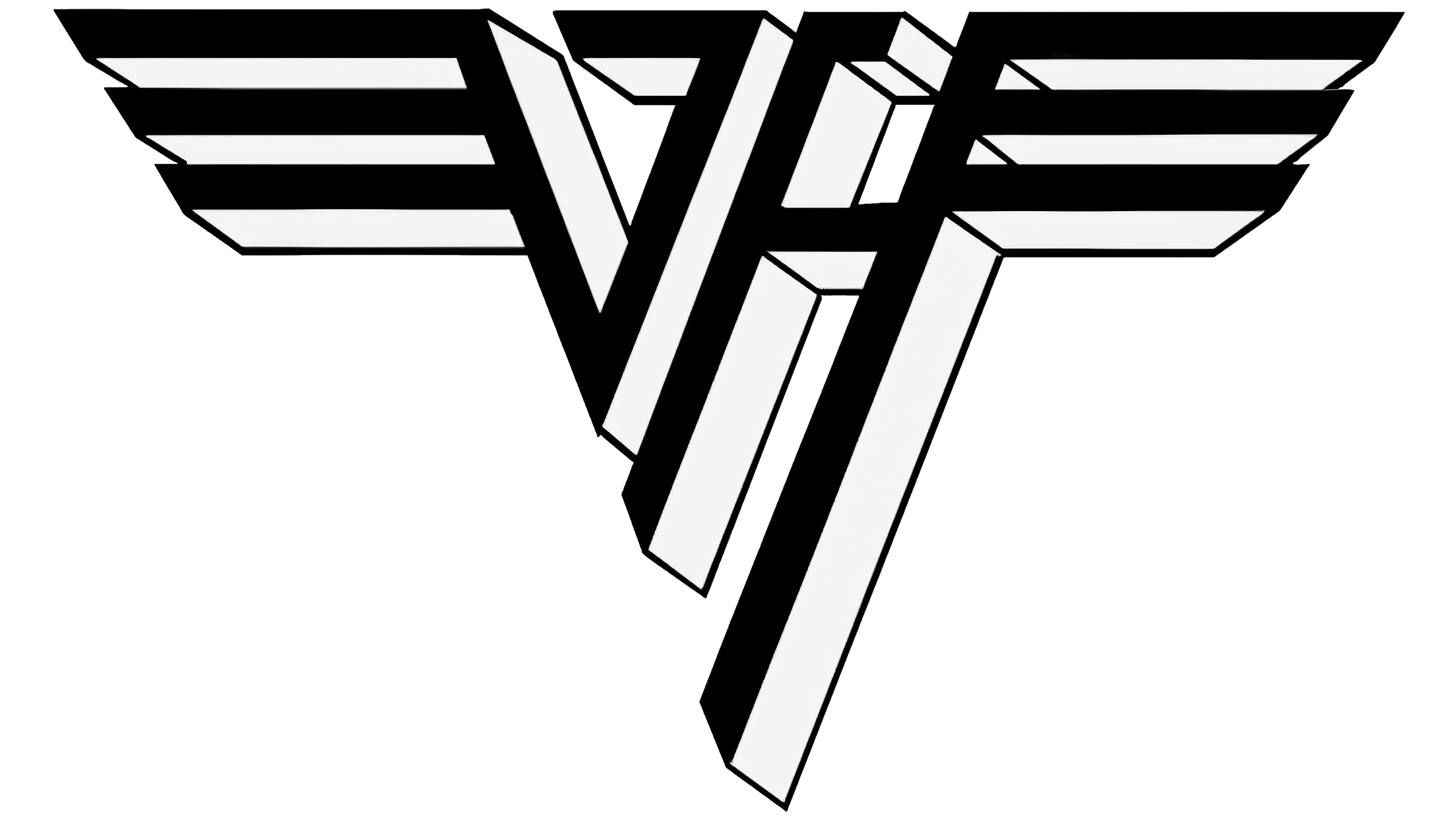
The cover art for 2012’s A Different Kind of Truth featured an old logo that was used from 1979 to 1986.
Font and Colors

The musical group Van Halen had several emblems, but the “VH” monogram is considered a cult classic. It appears in several variations and reflects the band’s creative atmosphere.
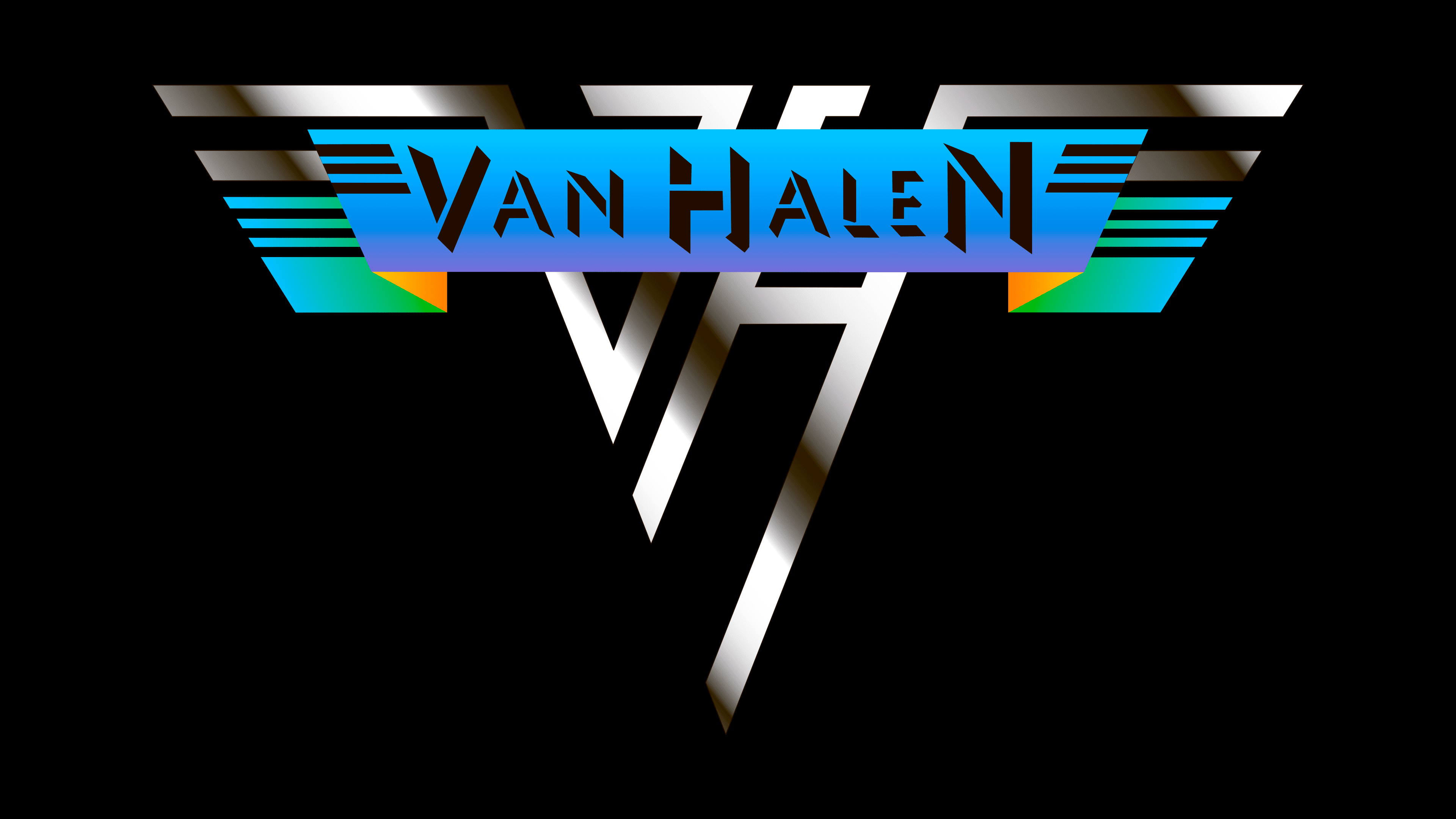
All emblems use an individual typeface. David Lee Roth created the first wordmark (with letters-notes); Dave Bhang created the second (with winged elements). The color palette is monochromatic, containing only black and white. The exception is the 1986 logo, which has a dark golden hue.