


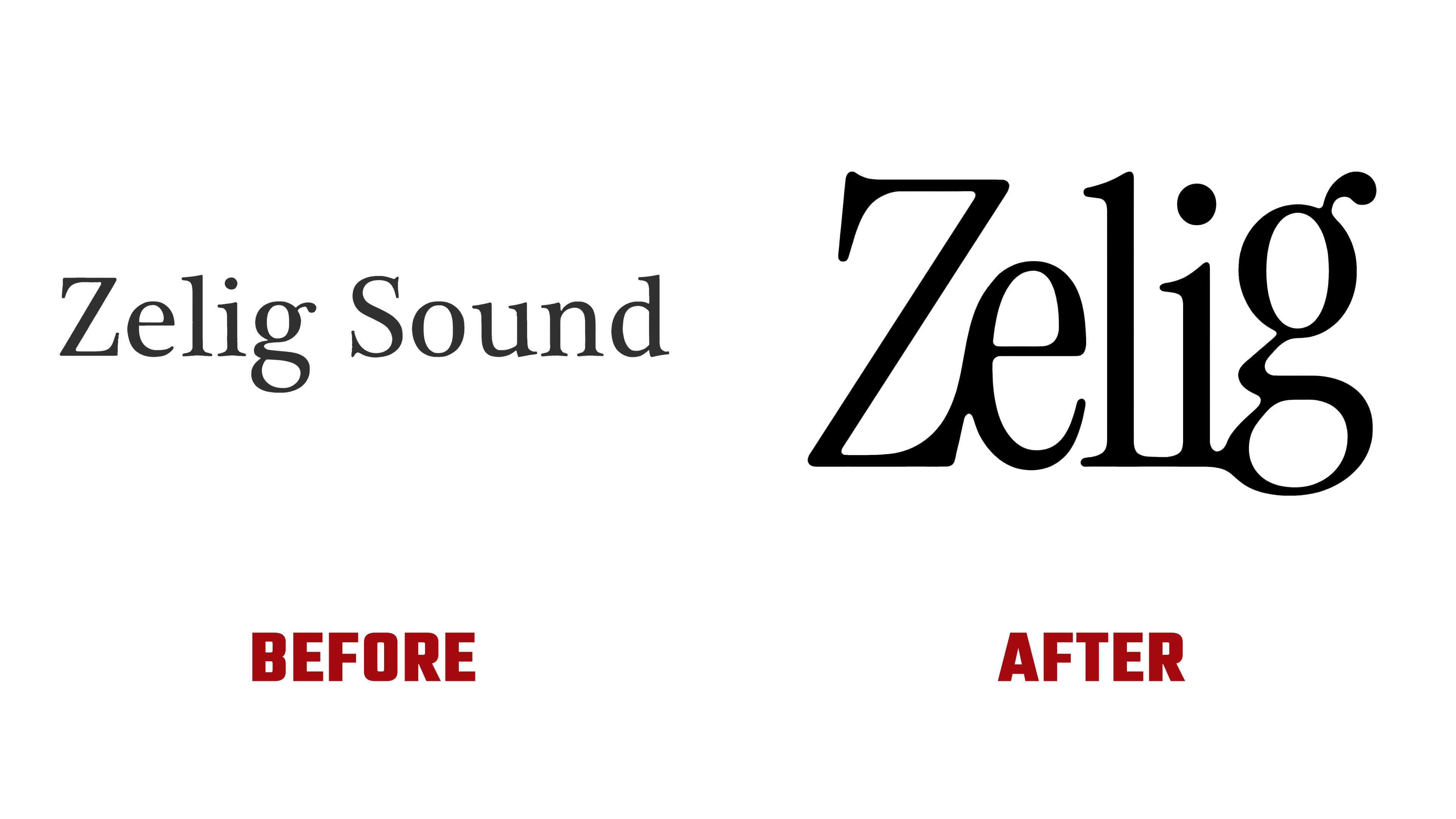
Zelig has announced a change in its visual language. The old mark, built on a classic typeface with traditional proportions, has given way to a new symbol, one that is more expressive and flexible. In the updated logo, the focus is on the letter “g.” Its shifted form creates a sense of play and transformation, hinting at the company’s key trait: the ability to adapt to any environment.
The name Zelig was borrowed from Woody Allen’s film, in which the main character can alter his appearance depending on his surroundings. The theme of metamorphosis is reflected in the identity. The logo exists in motion, changing its shapes, animating, and unfolding in various styles. This principle reinforces the idea of flexibility and continuous exploration.
The company operates at the intersection of music and technology. The team creates original music, sound branding, and develops sound solutions for films, digital products, and games. Over the years, Zelig has collaborated with major global brands, helping to shape new standards for the perception of sound in culture.
The typographic foundation of the new mark is the Instrument Serif typeface. It retains a reference to classical fonts but adds a touch of whimsy. It combines rationality and artistry, reflecting the collective’s character, where analysts and composers work side by side to create new sonic forms. Unlike the previous Garamond, the typeface is closer to modern perception while maintaining a link to the history of design.

A chameleon symbol supports the identity. It has become a metaphor for the company’s ability to adapt to genres and formats. The image is enhanced by animation, which strengthens the effect of change and creates the impression of a living organism.
The new website, developed by the studio Lost Property, has become a platform for demonstrating ideas. It features major projects related to shaping the sound of brands alongside small creative experiments. They reflect the company’s wide range, its ability to work with global assignments as well as with quick conceptual findings.
The updated mark corresponds more closely to Zelig’s character. It leaves room for interpretation, creates space for play, and evolves in response to the changing cultural context.