


 Albert Heijn Logo PNG
The Albert Heijn logo is tied to a history that began with a small family shop and grew into one of the leading retailers. Focusing on quality, affordable products, including in-house production, helped earn customers’ trust and become part of their daily lives.
Albert Heijn began in 1887, when 21-year-old Albert Heijn bought his father’s grocery store in Oostzaan, the Netherlands. He introduced his own coffee brand at a lower price than competing products. He opened a second shop in Purmerend in 1895. By 1897, the business had four branches, and it opened its own bakery in 1899, giving the company closer control over production and pricing.
A store in Amsterdam opened in 1911, while AH-branded tea, coffee, and biscuits appeared in 1913. The company introduced self-service retail in 1927 and had passed 100 locations. Albert Heijn Jr. took control in 1948, and the first supermarket opened in Rotterdam in 1952, shaping the format used for later expansion.
Growth continued through the 1960s. Gall & Gall joined the group in 1969, while Ahold was created as the parent company. Electronic cash registers arrived in 1974, barcode scanning in 1977, and private-label ranges expanded with a budget line in 1981 and AH Excellent in 1984. The AH Bonus card launched in 1994 and became a key loyalty program in the Netherlands.
AH to go appeared in 2003 with compact stores at busy transport locations. Albert.nl followed in 2006, while the parent group later joined with Delhaize. From 2015 to 2018, the chain expanded online ordering, mobile services, and self-checkout systems. Between 2019 and 2022, stores were modernized and prepared-meal delivery grew. By 2023, Albert Heijn operated more than 1,000 stores across several formats in the Netherlands.
Meaning and History
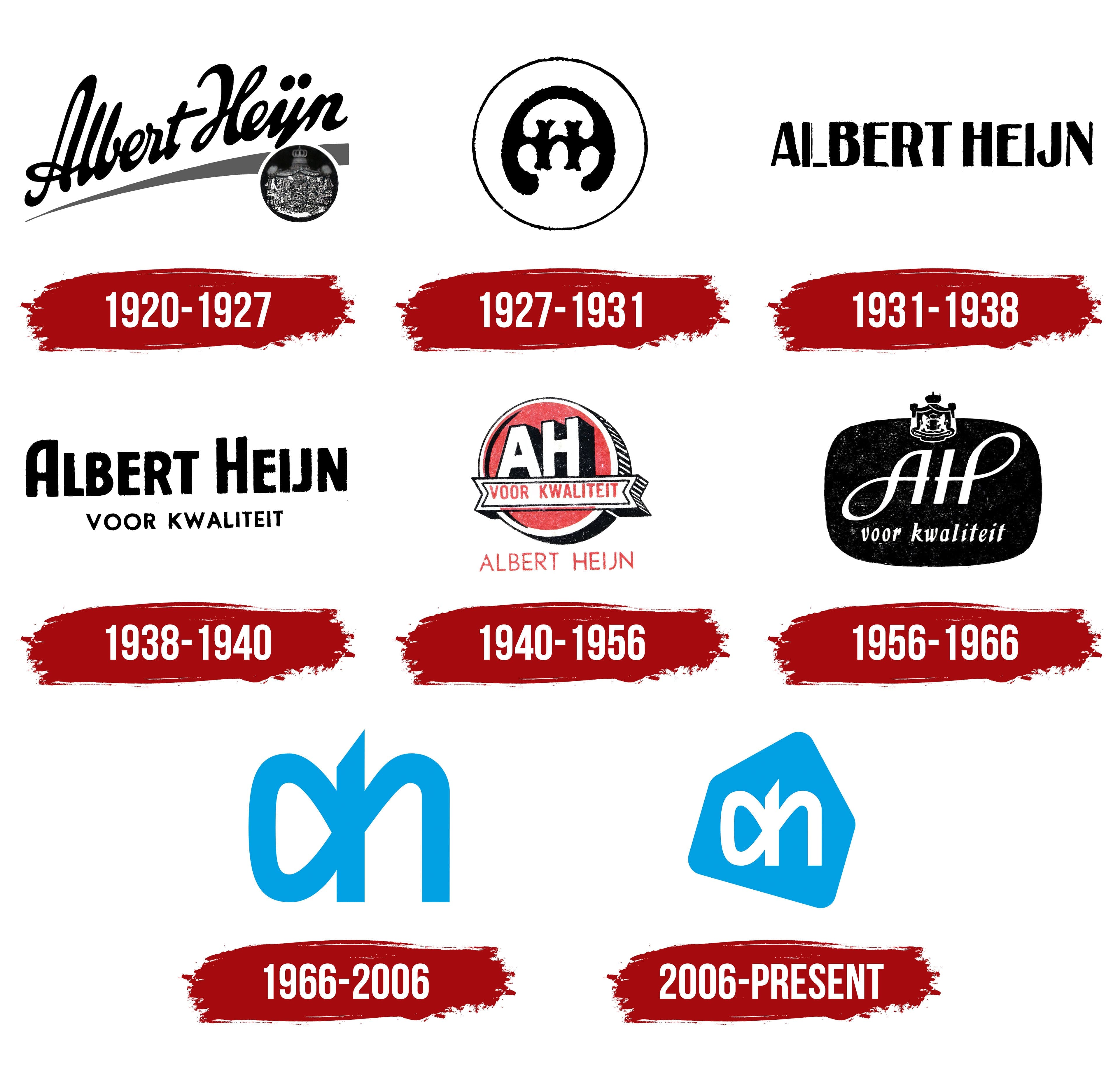
What is Albert Heijn?
This is the largest grocery chain in the Netherlands, operating stores in various formats from small local shops to hypermarkets. It offers many products, including private-label items, from premium to affordable options. The brand actively collaborates with regional producers and suppliers, supporting local production. Its stores are conveniently located in cities, residential areas, and transport hubs, making them an integral part of daily life. The assortment includes fresh local produce, ready-to-eat meals, essential goods, and international delicacies. Modern store formats, such as automated sales points and pickup locations, combine traditional shopping with convenient modern solutions.
1920 – 1927
The Albert Heijn logo, created in 1920, conveys the style and atmosphere of the early 20th century. It is based on a diagonal inscription in an elegant font with smooth lines that convey confidence and stability.
The font reflects the aesthetics of the time. Soft curves and subtle transitions give the text a classic and sophisticated look. Dark text on a light background gives the emblem expressiveness.
The diagonal arrangement adds a sense of movement and emphasizes the company’s focus on development. The triangle below the text enhances the composition, adding structure and symbolizing purposefulness.
The logo ends with a circular print crossing the text and the triangle. A crown is in the center of the seal, emphasizing the brand’s status and ambitions. It hints at leadership positions and respect for traditions.
The emblem combines the ideas of stability, movement, and heritage. The name Albert Heijn stands out, reflecting pride in the family brand, which has been a confident presence on the market since 1887.
1927 – 1931
In 1927, the Albert Heijn logo was updated to give it a more modern look. An elegant monogram replaced a complex design, emphasizing sophistication and simplicity.
The monogram “AH” is located inside a closed circle, creating a sense of completeness and stability. The letters “A” and “H” are visually combined: a large “A” with an extended left part seems to embrace a rounded “H.” The image emphasizes unity and cohesion, reflecting the values of a family business.
The monogram font’s soft curves add friendliness and remove excessive austerity. The letter “H” has smooth lines and subtle curves, giving the logo a sense of dynamism and liveliness. This gives the design warmth and attractiveness.
The brand’s rejection of complex elements in favor of minimalism was a step forward, emphasizing its readiness for change and current approach to visual presentation. The new style looked modern and was in line with the times.
The thin bezel around the monogram creates balance without weighing down the overall look. The circle symbolizes the company’s integrity, development, and constant customer interaction.
1931 – 1938
The 1931 logo was an example of conciseness and confidence. A clear inscription in capital letters replaced the complex monogram.
The font is minimalistic and austere. Straight lines without serifs look modern and dynamic, and the beveled edges of the letters give the text movement and lightness.
The even and proportional arrangement of the letters creates a sense of order and structure. The emblem looks straightforward and emphasizes the brand’s seriousness and openness.
By the time of the redesign, the company had already strengthened its position among retailers. The new visual appearance reflects its status and desire for clarity and simplicity in communicating with the audience.
1938 – 1940
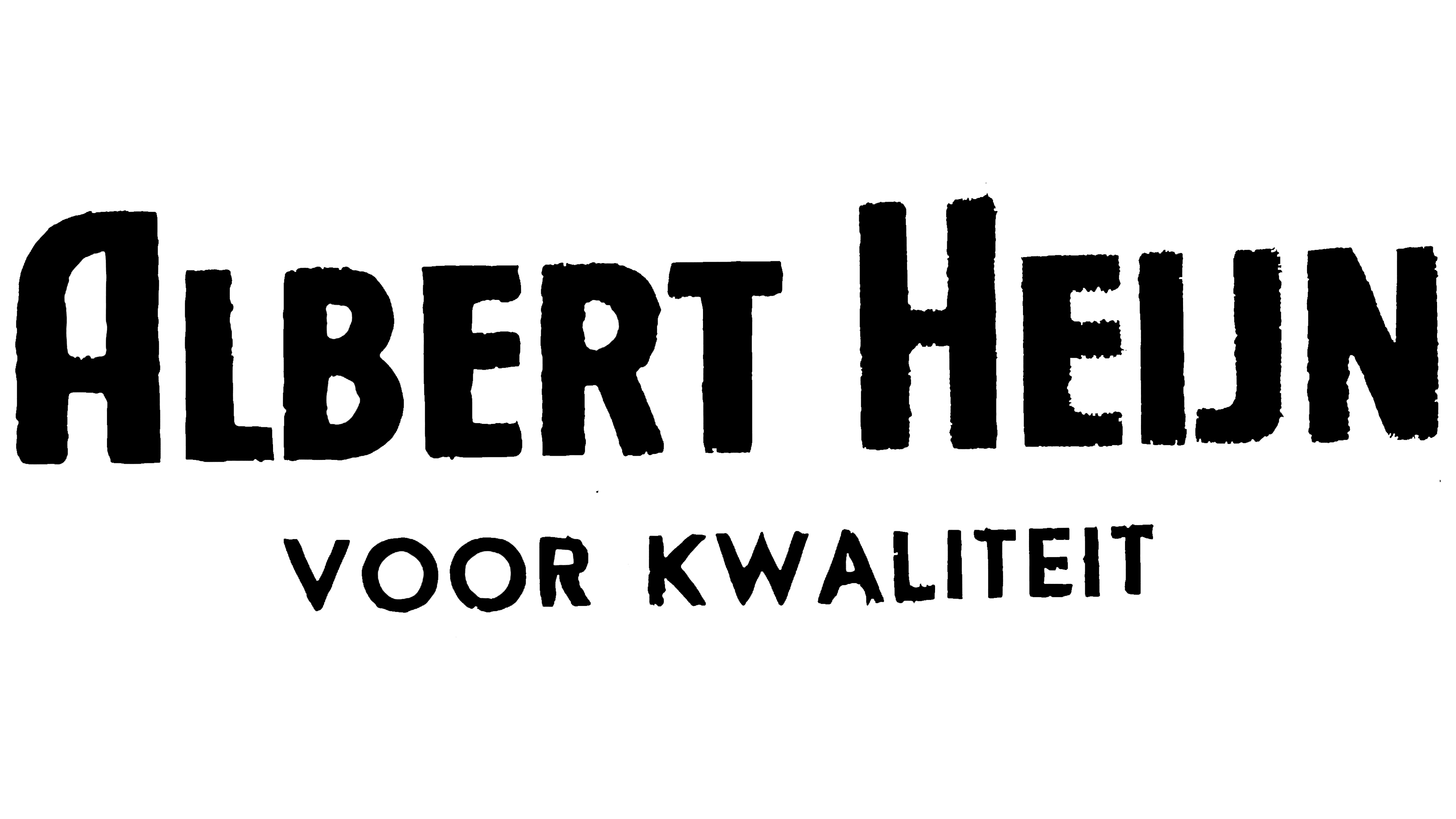
The logo reflects a new stage in the company’s development. The inscription is in capital letters, emphasizing the large “A” and “H” and highlighting the name and its connection to Albert Heijn’s founder and tradition.
The font has become wider, adding stability and confidence. Rounded lines make the text modern and dynamic. The style is strict but accessible and understandable.
The slogan “Voor Kwaliteit,” translated as “For quality,” became an important addition. Small capital letters under the name emphasize the company’s commitment to quality. The slogan fits organically into the composition, complementing and giving it meaning.
The broad lines of the letters reflect stability, the large initial characters accentuate the name’s significance, and the slogan confidently declares a commitment to quality.
1940 – 1956
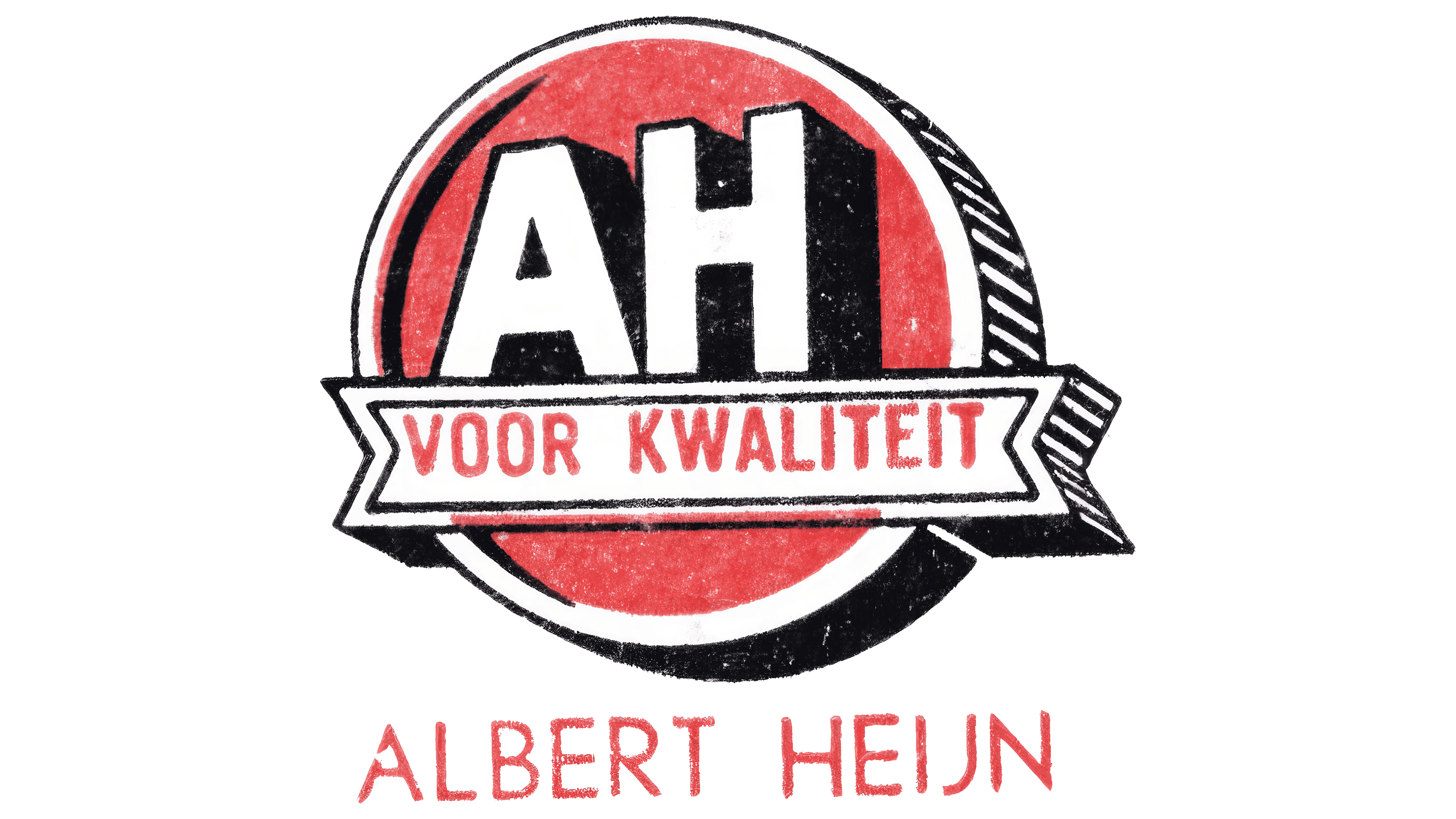
The Albert Heijn logo emphasizes the brand’s stability and strength. The design is based on a round banner with the abbreviation “AH” in massive geometric letters. Simplicity and confidence have become key styling details.
The color palette includes black, white, and red. The black letters “AH” add solidity, the red circle adds energy, and the white lines around the circle create contrast and emphasize clarity.
A horizontal ribbon crosses the emblem and contains the slogan “Voor Kwaliteit” (“For Quality”) in capital letters with thin outlines. The red text color emphasizes the meaning of this message. The ribbon divides the circle, creating visual balance and structure.
The letters “AH” became a distinctive design element. Clear geometric lines make them functional and expressive. The logo is built around these letters, enhancing their significance.
The circle symbolizes unity and constancy. The red inside the circle adds energy, and the black-and-white details create a sense of order. The design reflects the clarity and confidence appropriate to its creation time.
The emblem served the company for over 15 years, supporting it during the difficult mid-20th century. It conveys a commitment to quality and respect for tradition, cementing Albert Heijn’s place among the market leaders.
1956 – 1966
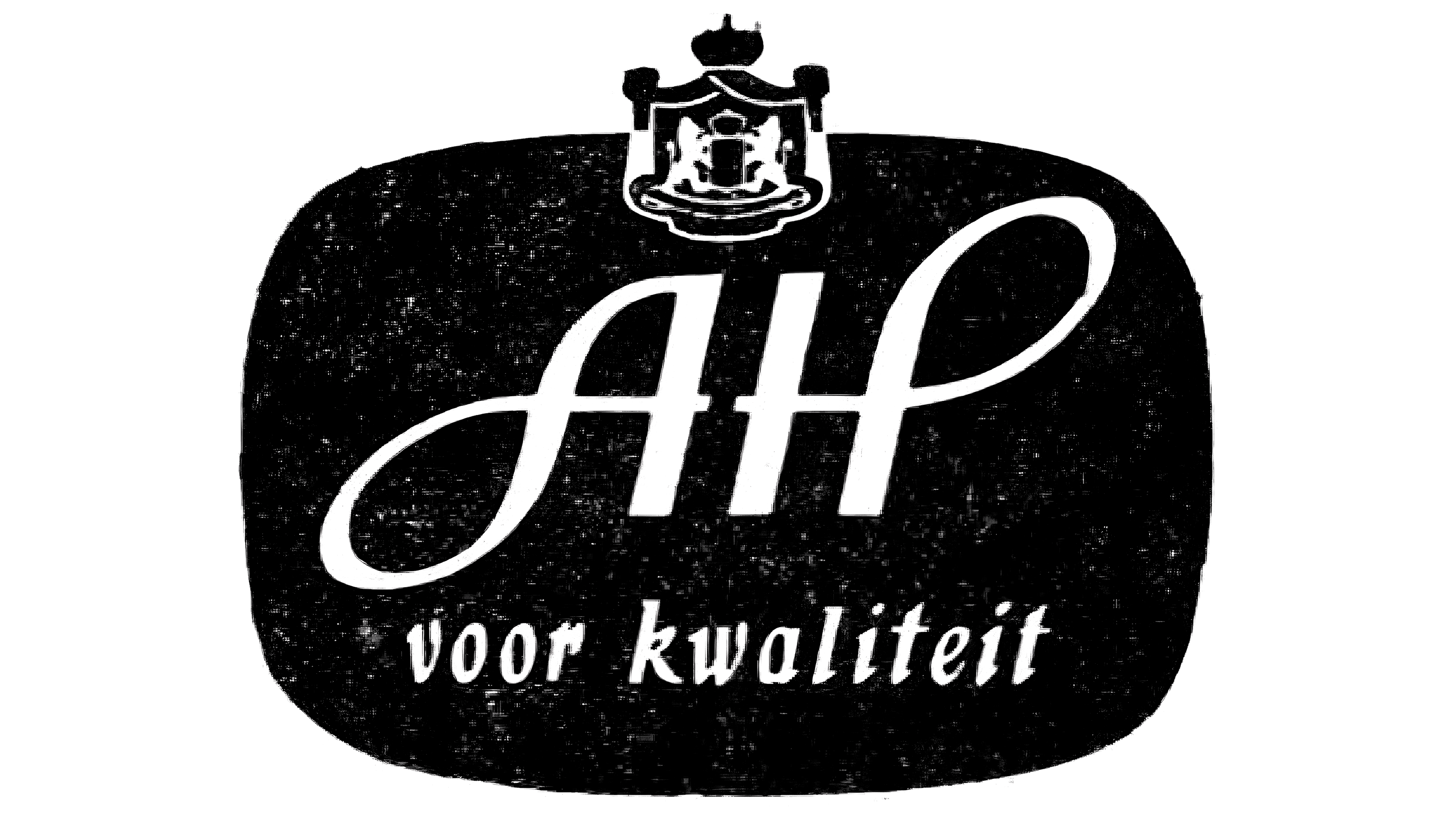
The logo appeared when the brand confidently became one of the largest supermarket chains in the Netherlands. The design emphasized the company’s reliability and commitment to offering quality products for everyday life.
In the center is a white “AH” monogram on a black background. The combination was associated with practicality and reliability, making it suitable for a supermarket where customers expect quality at affordable prices. The monogram font is elegant, with flowing lines that lend the design a sophisticated, modern look.
The monogram is on a rounded-cornered shield, symbolizing security and trust. This symbol became relevant in an era when supermarkets were supplanting traditional markets. The shield’s black color added austerity, creating associations with stability and quality.
At the top is a crown-shaped seal, emphasizing the brand’s leadership among supermarkets in the Netherlands. This symbolizes the company’s ambitions and respect for traditions. In the competitive environment of the mid-20th century, such a detail strengthened customer confidence.
The slogan “voor kwaliteit,” at the bottom of the logo, expresses the company’s main mission: offering high-quality products. The italic font adds lightness and friendliness to the message.
1966 – 2006

The 1966 logo reflected the supermarket chain’s renewal of design and development. It is based on the stylized monogram “AH” in pale blue, which symbolizes purity, freshness, and trust, as well as the company’s concern for the quality of its products and services.
The monogram’s shape is simple and harmonious. The letters “a” and “h” are connected by a common vertical line, creating a sense of integrity and combining tradition with innovation. Sleek lines make the monogram modern and friendly, evoking associations with comfort and accessibility.
The top of the vertical line is directed upwards, symbolizing growth and development. In the 1960s, during the rapid expansion of supermarkets in the Netherlands, this symbol emphasized the company’s ambitions and desire for progress.
The pale blue color creates a sense of freshness, a key quality for a supermarket offering a wide range of products. It also emphasizes the honesty and reliability of a large retail chain.
The visual design is minimalistic and functional. Simple lines, soft colors, and the unusual shape of letters distinguish the brand from competitors. This allowed Albert Heijn to strengthen its position and maintain a relevant visual identity to this day.
2006 – today
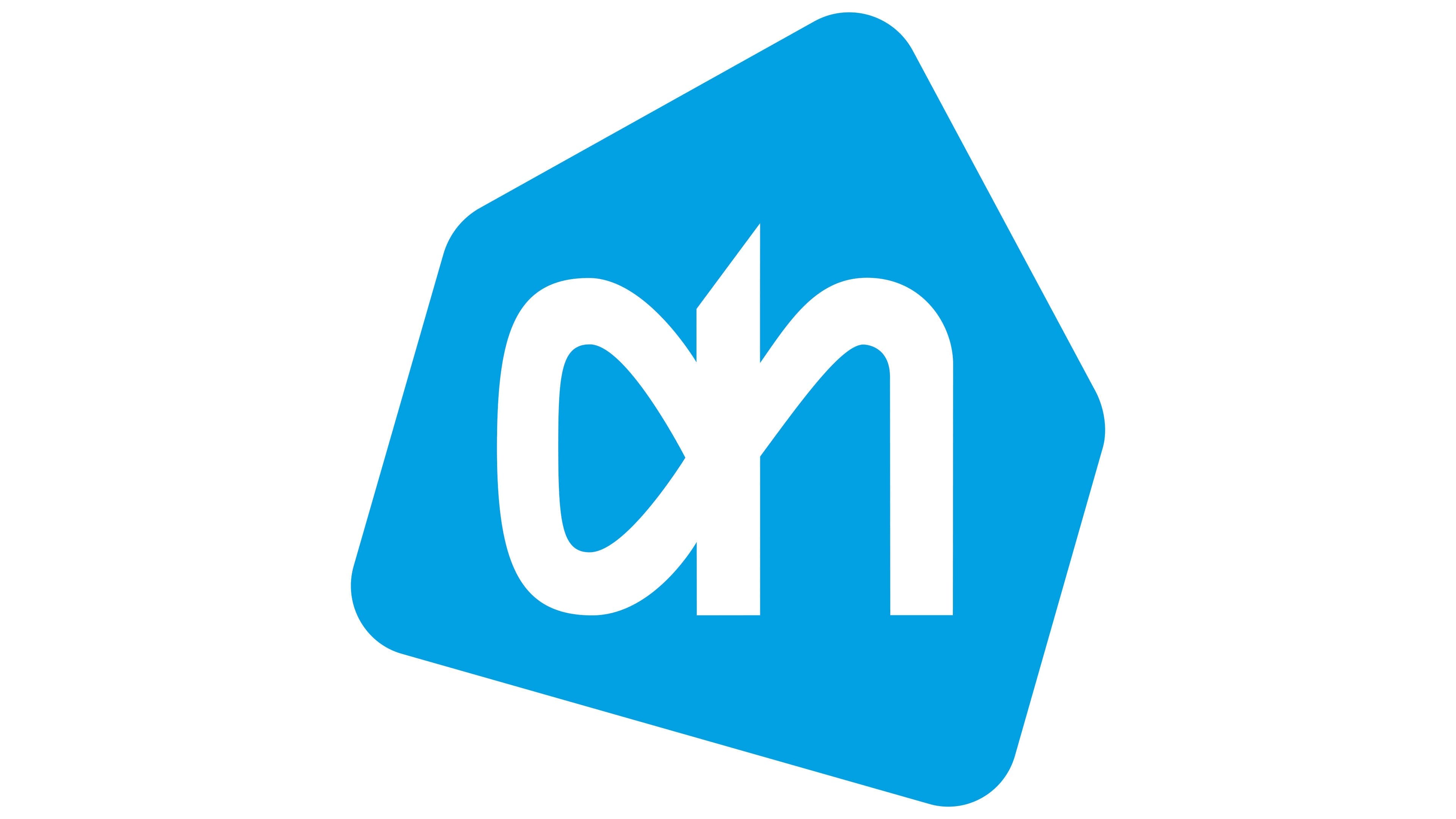
The 2006 redesign made Albert Heijn’s logo more modern. The blue banner had rounded corners and a slight slope, reminiscent of a price tag, linking it to supermarkets.
The white monogram “AH” remained, but the lines became smoother, making the design lighter. The vertical line in the letter “A” has been softened to blend with the smoothed style.
An additional version of the logo includes the company’s full name in blue font on a white background. A font similar to Myriad or SST gives the logo versatility: the monogram is suitable for compact formats, and the full name emphasizes the brand in official materials.
The blue color has become brighter, enhancing associations with purity and freshness. The updates made the visual appearance suitable for new store formats and modern advertising platforms.