


 Carrefour Logo PNG
The Carrefour logo’s message is simple and clear: wherever the buyer goes, they will find a store in the chain. The emblem promises that inside, you can choose from exclusive products and a wide range of everyday items at affordable prices.
Carrefour’s history began in the late 1950s with Marcel Fournier and the Defforey brothers, Denis and Jacques. Each attended seminars by Bernardo Trujillo in Dayton, Ohio, where the concept of large-scale self-service retail with low margins and parking outside city centers was promoted.
On July 11, 1959, they formed a joint company. In June 1960, the first store opened in Annecy, a 650-square-meter self-service retail space at a road junction that gave the brand its name. A larger shift came on June 15, 1963, with the opening of the first European hypermarket in Sainte-Geneviève-des-Bois, near Paris. It covered 2,500 square meters and offered 12 checkouts and 400 parking spaces.
From 1965 to 1971, sales and assets grew by around 50 percent annually. Non-food items accounted for up to 40 percent of revenue. Carrefour was listed on the Paris Stock Exchange on June 16, 1970, securing capital for expansion. The first foreign store opened in Belgium in 1969, followed by Spain in 1973 and Brazil in 1975. Italy joined in 1972, and Taiwan in 1989 marked entry into Asia. Competition with Promodès and its Continent hypermarkets lasted decades. In 1999, Carrefour acquired Promodès in a deal valued at about 16 billion euros, becoming Europe’s largest retailer and the second-largest globally after Walmart.
In the 2000s, pressure from Aldi and Lidl challenged the hypermarket model. Carrefour expanded into smaller formats, including Carrefour Market, Carrefour City, and Carrefour Express. In 2018, CEO Alexandre Bompard launched the “Carrefour 2022” plan, focusing on digital retail, e-commerce, and cost reduction, alongside the rollout of delivery and click-and-collect services.
Meaning and History
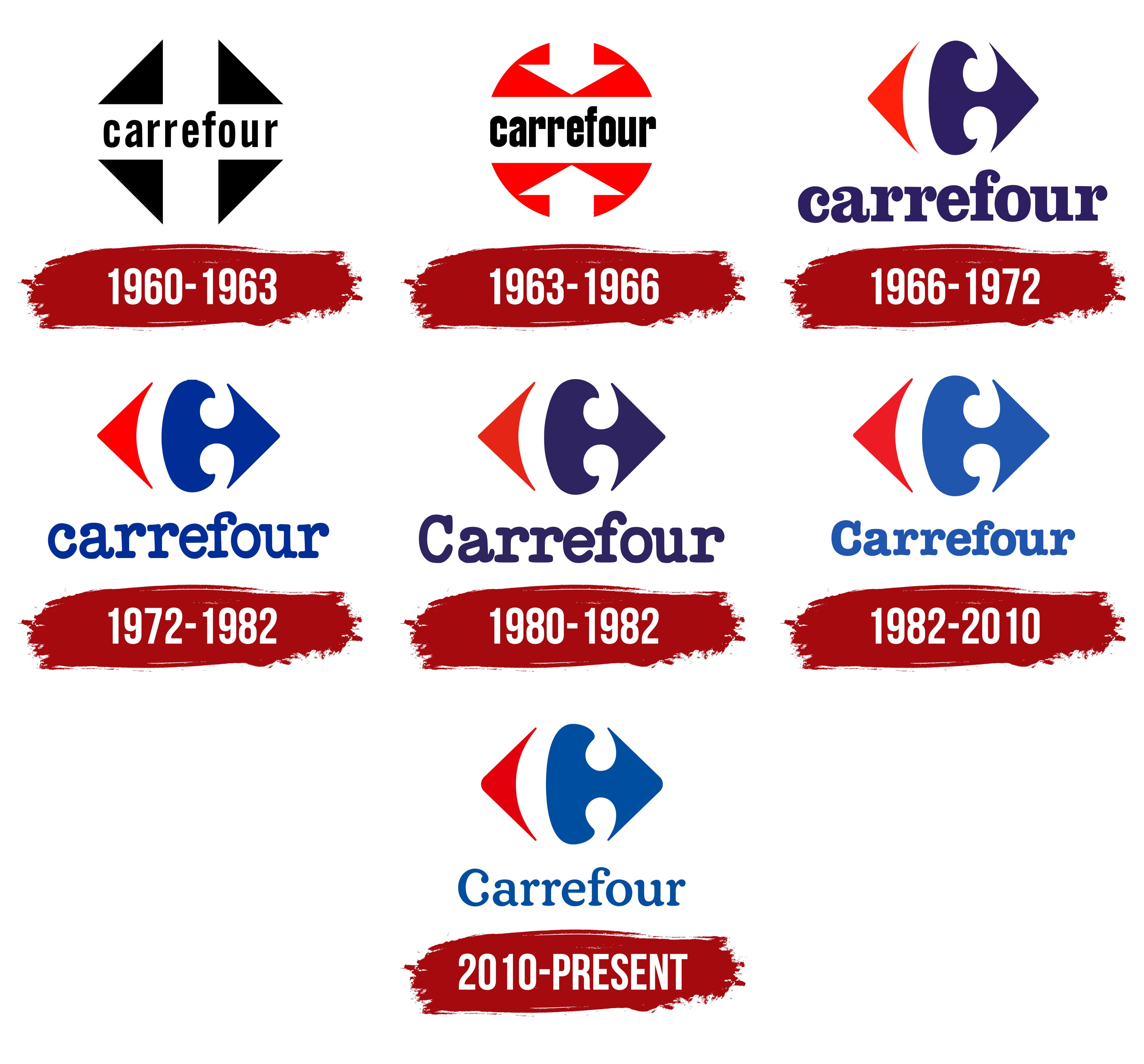
The trading company was founded in 1957 and opened its first shop in Annecy. In 1963, Carrefour opened Europe’s first hypermarket in the Paris suburbs of Sainte-Geneviève-des-Bois.
Today, Carrefour owns almost 16,000 stores, including super- and hypermarkets, in France, Spain, Russia, and Kazakhstan; its chains operate in Argentina, Brazil, Asia, and North Africa. It employs more than 400 thousand people.
After merging with the Promodès chain of stores in 2000, Carrefour became Europe’s largest retailer. In 2009, it left the Russian market and sold its assets to X5 Retail Group.
Throughout its history, the logo has changed several times, and today it is considered complete.
What is Carrefour?
Carrefour is a French chain of hypermarkets, supermarkets, and discount stores. It was established in 1958 and has since expanded to more than 30 countries worldwide. Its retail outlets operate in Africa, Asia, Europe, the Middle East, and South America. The company offers a variety of products under both its own and third-party brands, including food, clothing, electronics, household appliances, and much more.
1960 – 1963
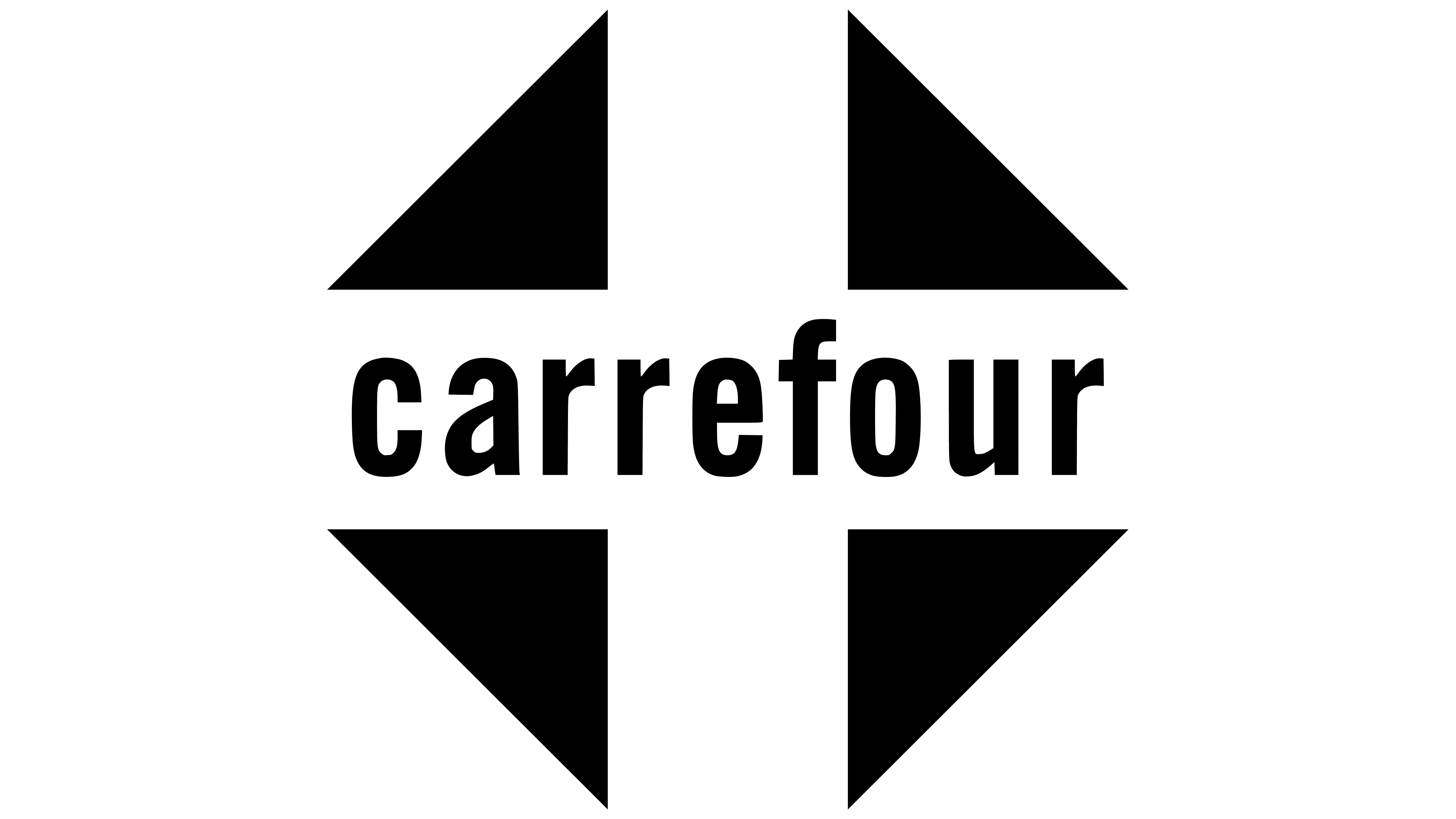
The first emblem was a schematic representation of an intersection, with a white cross of wide stripes set against a black rhombus background. The company name is written on the horizontal line in black lowercase letters.
1963 – 1966
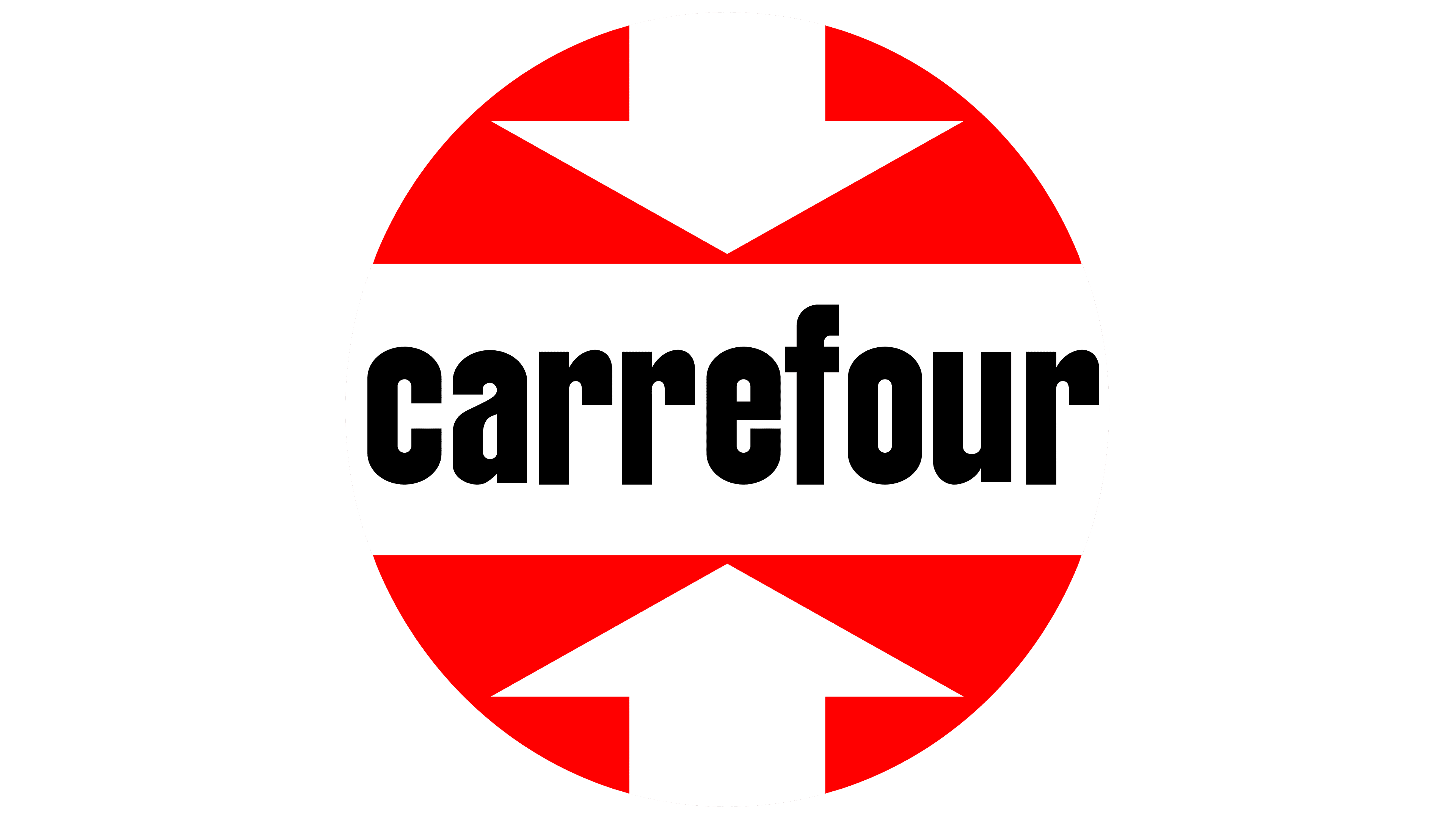
At the beginning of 1963, the logo’s image changed dramatically: it became round and red. The company name, as before, is written in a wide, horizontal white stripe. Two large white arrows have replaced the vertical stripe
1966 – 1972
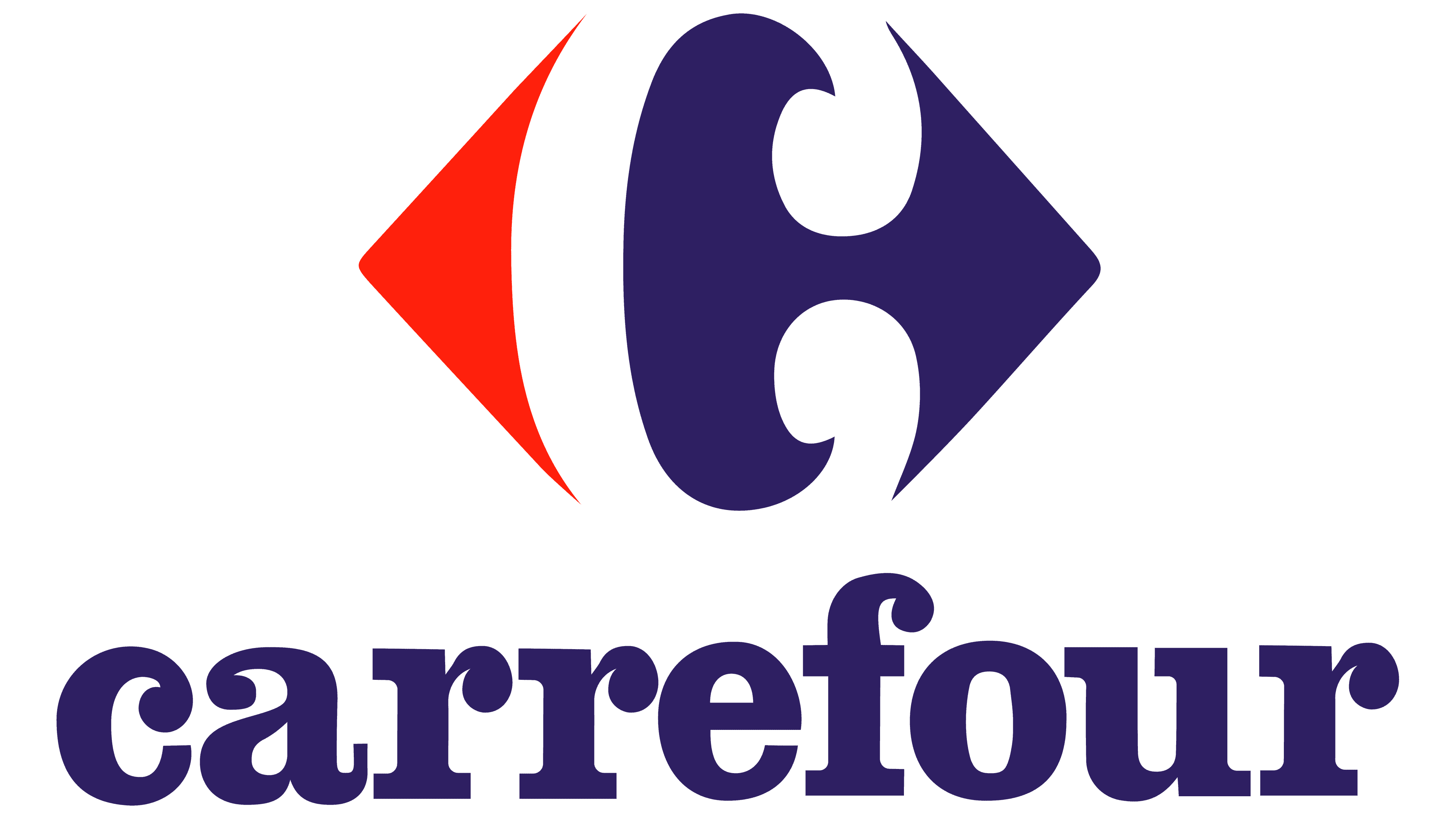
Again, a complete logo update accompanies the new “Positive is Back” campaign. This time, it was performed in France’s colors: white, red, and blue. On a white background, the company’s name is written in blue letters, and above it, two red-and-blue arrows point in opposite directions. The letter “C,” symbolizing the company itself, seemed to be glued to the blue part. The two arrows mean a crossroads, and the company’s values are an attractive price-performance ratio for people.
1972 – 1982
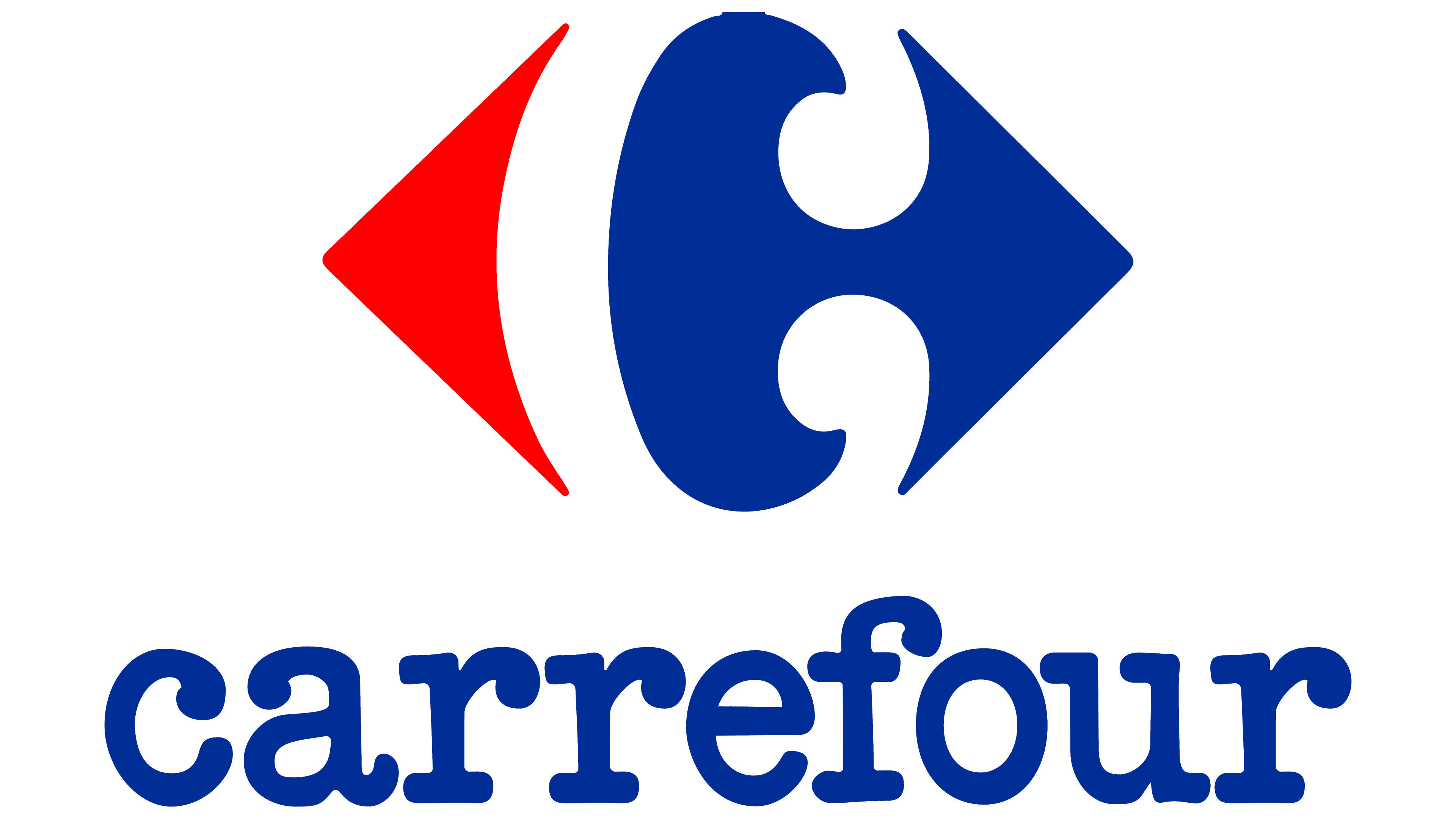
The logo remained the same in image and design. The proportions changed: the brand name was reduced, and the badge was made much larger, emphasizing that quality and affordable prices are the company’s top priorities.
1980 – 1982
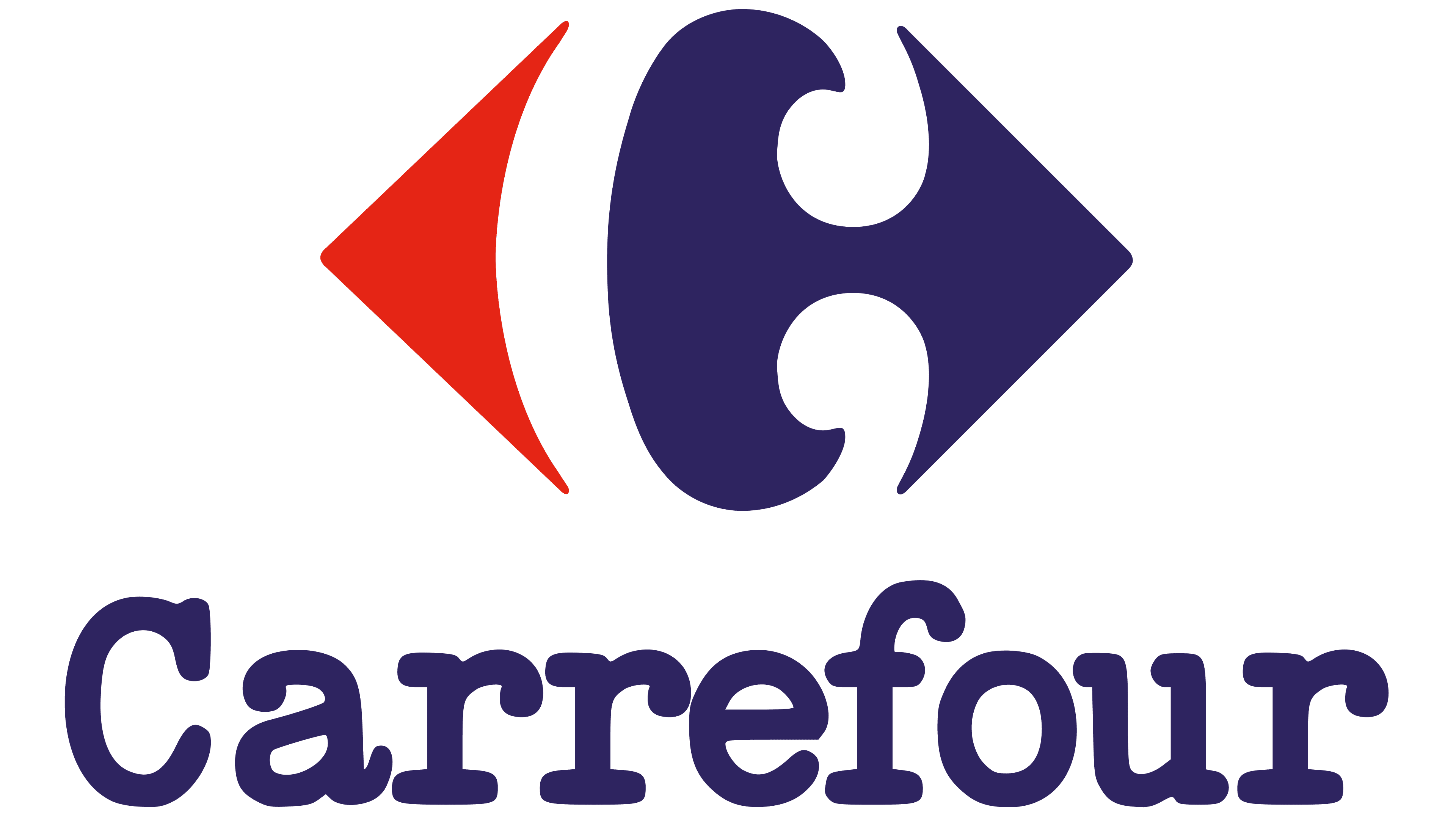
Changes in the Carrefour logo mainly affected the color: the badge in the form of multidirectional arrows remained. The designers replaced blue with purple and trimmed the letterforms, making them smoother and rounder. They also reduced the gap at the top of the ‘r,’ rounded the curve at the ‘f,’ used a capital ‘C’ instead of a lowercase ‘c,’ and shortened the serifs a bit.
1982 – 2010
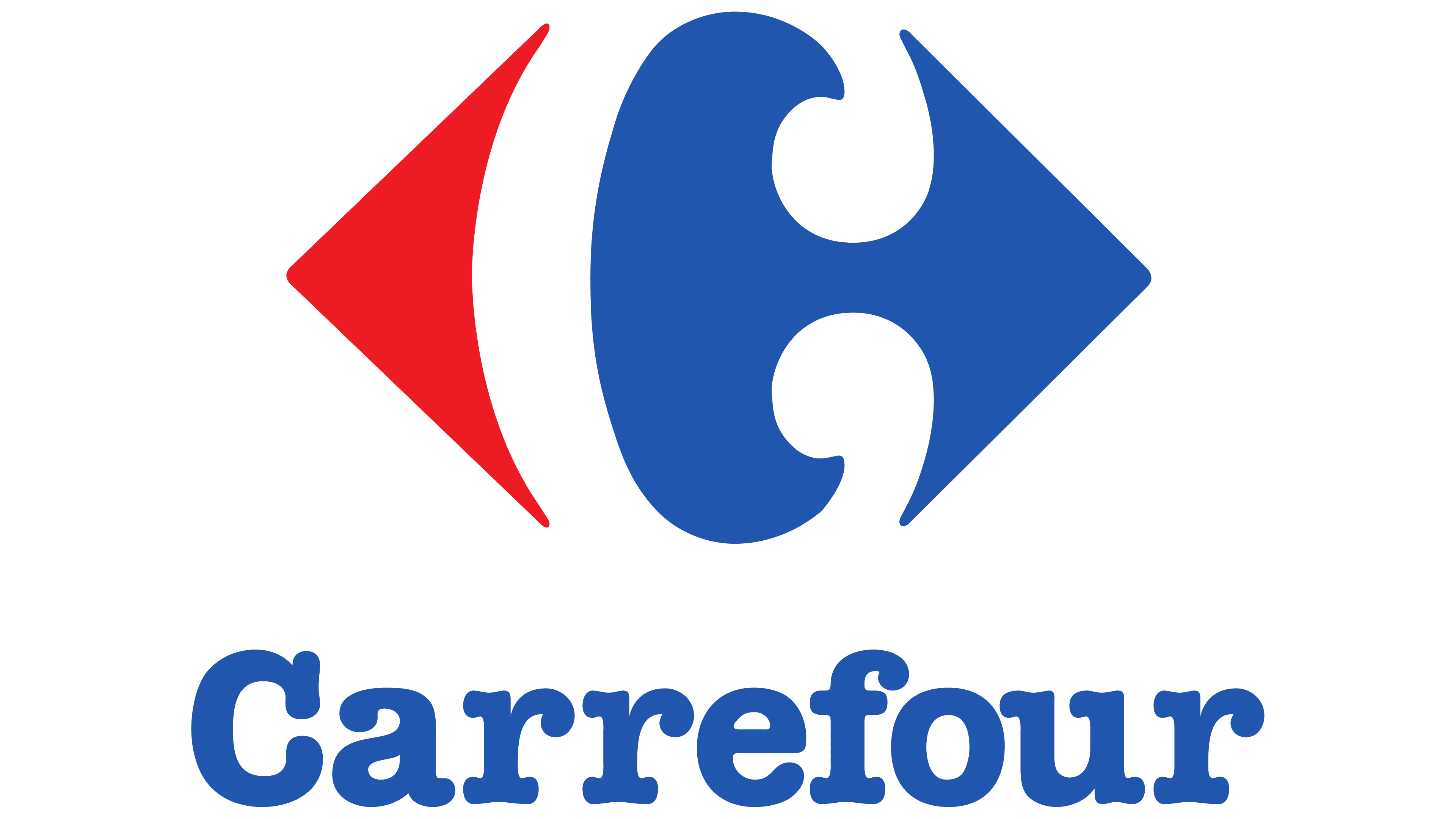
The company continued to increase the proportion of its brand name for better brand identification. The color scheme remains the same. But the inscription, attached to the emblem, was set in a new font. The serifs on the letters are now rounded. The entire inscription is in bold type.
2010 – today
Again, the logo received a slight improvement; the name and icon are now balanced in proportion. As noted in the presentation release, the chain has significantly expanded its price range, with products now in both the economy and elite classes.
Font and Colors
The current logo echoes the 1966 emblem. This was intentional because, after years of experimenting with identity, the brand decided to return to the symbolism that marked the start of the current logo series. Wolff Olins (its developer) only removed the edges at the ends of the protruding elements and reduced the sign’s color intensity to light blue.
The text part has also changed: thin characters are now used instead of bold characters. But the style is preserved: the letters are still retro, with enlarged dots at the ends. This is one interpretation of serifs. The main typeface is close to the commercial American Typewriter. Of the free fonts, it most closely resembles Erica Type Bold.
The corporate palette has not changed since 1966. It consists of red (a left-pointing triangle) and blue (curly elements with a right-pointing arrow). The rest is white, forming negative space with the original shapes: two short commas above and below.