


 Ashok Leyland Logo PNG
The Ashok Leyland logo is high-tech and modern. The brand offers passenger and commercial vehicles that can travel on high-speed highways and off-road. The emblem showcases the diversity of products, each characterized by technical excellence. The logo is dynamic and driven to achieve its goal through its developments; it is aimed at consumers, emphasizing high-tech products and a customer-focused approach.
Ashok Motors was registered on September 7, 1948, in Madras, now Chennai. Its founder, Raghunandan Saran, was a Punjab-born participant in India’s independence movement. Responding to Jawaharlal Nehru’s call to build a national industry, he named the company after his son Ashok and set up production in Ennore. The first business was assembling British Austin A40 cars for the Indian market.
The focus soon shifted to commercial transport. In 1950, Ashok Motors signed a seven-year agreement with Britain’s Leyland Motors for the import, assembly, and local production of Leyland trucks. In 1954, the Indian government licensed the company to build 1,000 Comet trucks a year. In 1955, Leyland bought a 40% stake in the company, and the company’s name was changed to Ashok Leyland.
The brand developed through trucks, buses, and special vehicles. In 1969, Ashok Leyland became the first Indian company to fit power steering to a commercial vehicle. In 1970, it supplied the Indian Army with the six-wheeled Hippo Tipper. Its main domestic rival was Tata Motors. After Leyland’s formal role ended in 1975, the company continued with models such as the Viking, Cheetah, and Taurus.
In 1987, shares held through Land Rover Leyland International Holdings passed to a joint venture between the Hinduja Group and Italy’s Iveco. Iveco kept a 15% stake for two decades, but after a dispute over control, Hinduja bought it out in 2007 and raised its holding to 51%. Ashok Leyland then became the group’s flagship in India, ranking second in the country’s commercial vehicle market and among the world’s major bus makers.
Meaning and History
The emblem demonstrates the connection between the company and its customers. All company developments aim to serve and improve people’s lives, facilitating their work.
What is Ashok Leyland?
It is an Indian automobile manufacturer headquartered in Chennai. It is one of India’s largest commercial vehicle manufacturers, producing a range of products, including trucks, buses, military vehicles, and light commercial vehicles. Known for its quality, it supplies reliable and durable vehicles to various industries. The company emphasizes advanced technology in the development of its vehicles.
1896 – 1962
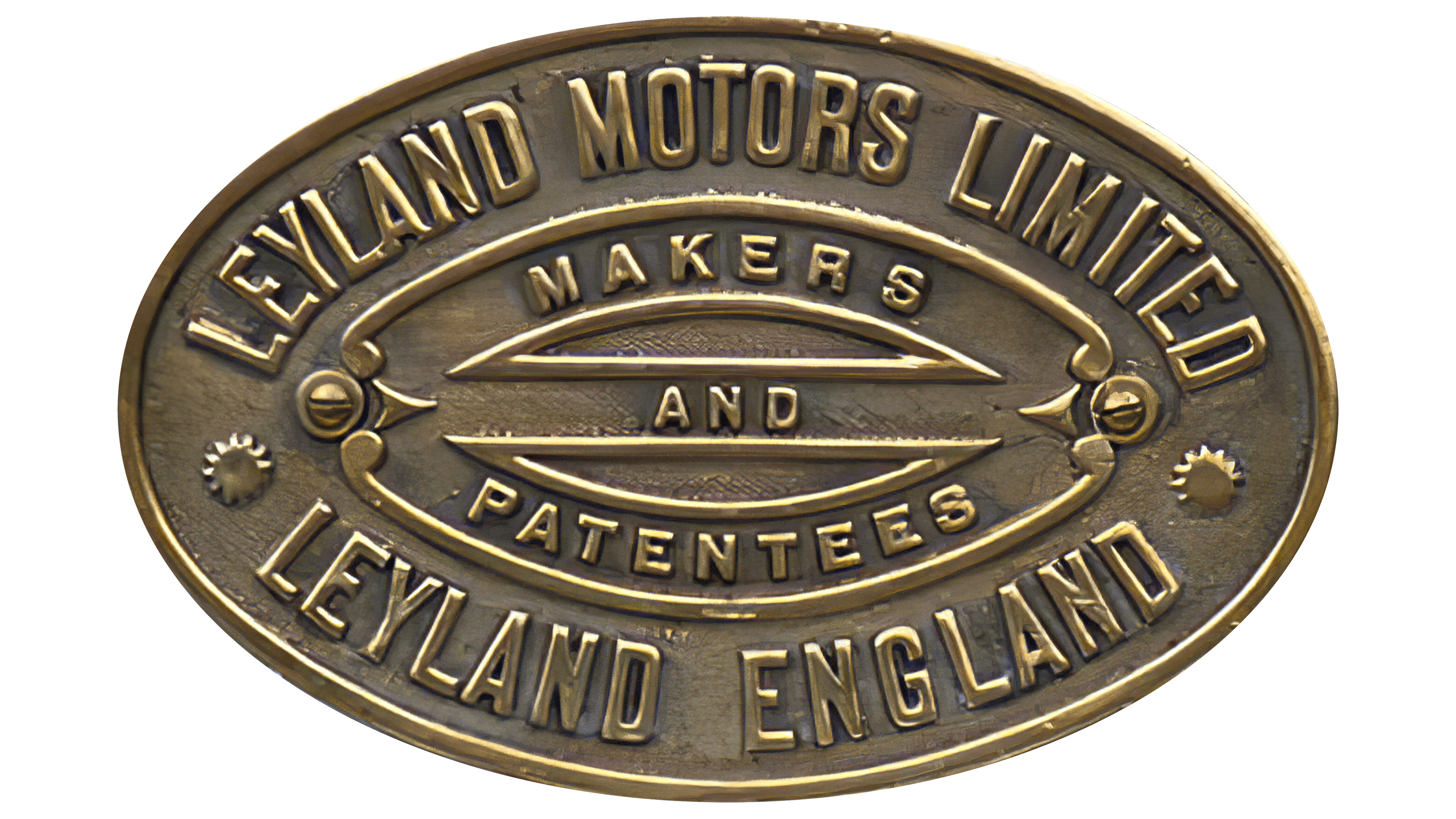
The logo Ashok Leyland uses today does not directly link to the mid-20th century, when the company was formed. The original name, “Leyland Motors,” is associated with a British company known for its cars and buses. This name remains a symbol of quality and reliability in the automotive industry.
The current Ashok Leyland logo features an oval metallic plate reminiscent of a quality seal. This design element symbolizes the company’s commitment to high standards in its production. The logo asserts that the company engages in assembly and patenting, highlighting its innovative approach to vehicle manufacturing.
The elegantly engraved and forged details in the logo illustrate the company’s professionalism and attention to detail, key aspects of the automotive industry. At the bottom of the logo, information states that the manufacturer is located in Leyland, England, adding historical significance and emphasizing its origin.
Ashok’s collaboration with the manufacturer began when the British company was British Leyland. After the dissolution of this corporation, Ashok Leyland continued to use the Leyland brand, which remains associated with quality and reliability in vehicle production.
1962 – 1968
In 1962, Leyland Motors merged with competitors, marking a significant turning point in the company’s history. This move was accompanied by a logo change, in which the company name was shortened to “Leyland.” The new logo was designed with calligraphy principles in mind, which lent it a special elegance and beauty. This design marked a new era for the company and emphasized its commitment to excellence, both technically and in product design.
Leyland Motors vehicles are recognized for their technical excellence and appealing appearance, making them attractive to consumers. The logo’s elegant black color symbolizes dominance and superiority over competitors, emphasizing the company’s status and reputation as a leader in the automotive industry.
The letters in the logo are designed to appear as if reaching up to the sky. This is a stylistic choice, a visual expression of the company’s ambition to reach new heights and achieve constant growth.
1952 – 1968
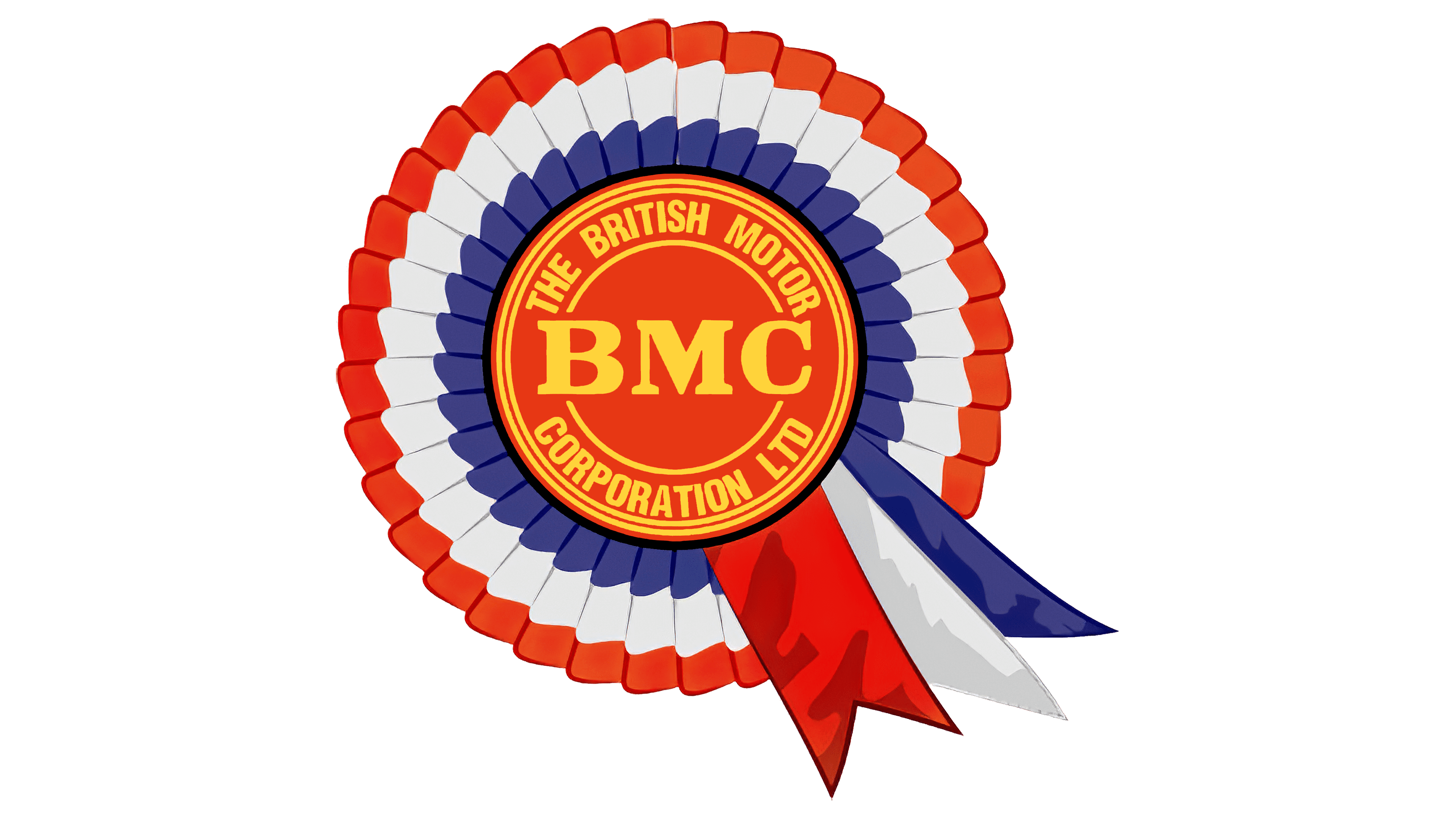
The emblem of the British Motor Corporation Limited (BMC), a leading car manufacturer in the UK, was designed to symbolize and emphasize the company’s uniqueness and British identity. The logo, shaped like a rosette of honor and painted in the colors of the English flag, clearly indicates the company’s origins. Using an honorary emblem in the logo design was a strategic choice to highlight the company’s pride in its British heritage and high product quality standards.
The rosette symbol in the BMC logo carries deep significance. The rosette, consisting of many petals, symbolizes unity and cohesion, which is particularly important for BMC, given its history. The company was formed by merging several car companies, and this logo was intended to reflect the new corporation’s unified character and strength. Each petal of the rosette can be seen as an individual component of this union, forming a strong, cohesive organization.
The logo design conveys that BMC cars are worthy of the highest praise, as indicated by the rosette symbol. This creates an impression that each vehicle produced by the company is a product of the highest quality and innovative technology, and each customer acquires a symbol of prestige and reliability.
1968 – 1986
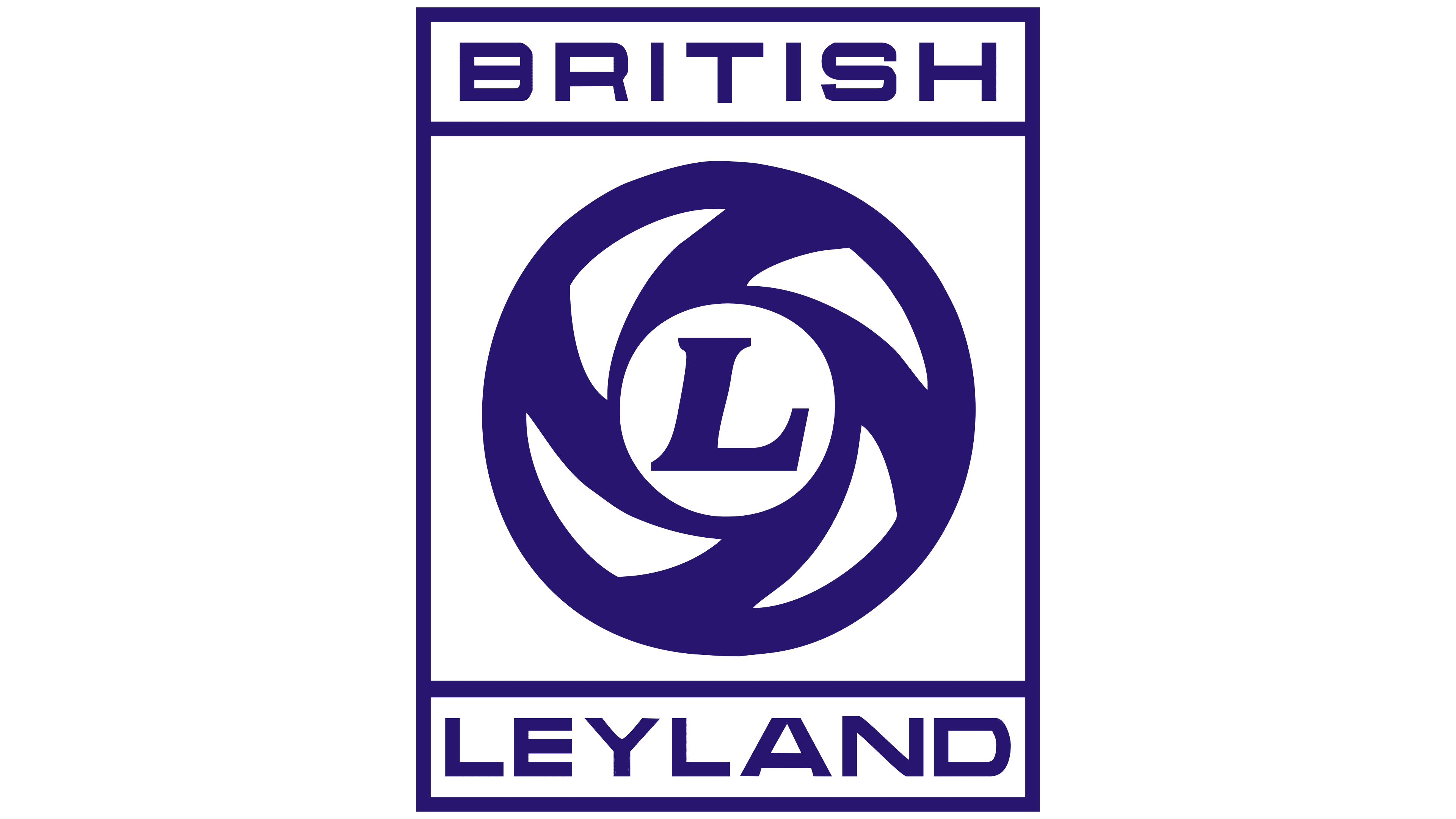
The logo of British Leyland (BL), introduced after the merger and nationalization of several automotive companies in 1968, visually reflects this significant historical period for the British automotive industry. It features a rectangular symbol with a purple border, adding a sense of rigor and formality. This design highlights the conglomerate’s official status as a state-owned entity.
The logo prominently displays the word “British” at the top, paying homage to the roots and history of the preceding organization, the British Motor Corporation (BMC). At the bottom is the word “Leyland,” emphasizing the company’s new identity following its merger with Leyland Motors and other manufacturers. These elements together form the full name under which the company was initially known, British Leyland Motor Corporation.
Soon after nationalization, the name was shortened to the more concise and modern “British Leyland,” shown on the logo. At the center of the new emblem is a symbol resembling a commercial vehicle’s wheel, signifying collaboration. This element has a deep symbolic meaning, reflecting the company’s industrial strength and engineering expertise. The letter “L” on the wheel disc stands for Leyland and symbolizes leadership and reliability, key attributes the company aimed to highlight in its products.
1986 – 2011
The logo consists of an elegant emblem followed by the company’s name.
The picture reminds:
- Camera shutter. The lens is slightly opened, and the letter L, representing the company, is at the center of attention. The composition demonstrates the company’s stardom and popularity. Indicates that everyone pays attention to the corporation. She is at the center of the news, and competitors look up to her.
- The wheel is the main symbol of movement and machines. It is not simple, but it has impressive carved discs that indicate the car’s style and modern, fashionable design.
- The spinning wheel is part of the Indian flag, a symbol of independence and the ability to produce the necessary goods for life. It was chosen in honor of the country where the company is based.
- The two parts of the tornado, spinning and mixing, form a conglomerate, indicating the enterprise’s emergence through the 1955 merger of Ashok Motors and Leyland Motors. A new firm has taken over the round badge from Leyland.
- Target in a target. The company consistently hits its targets in its development efforts. They fully meet customers’ needs, are well thought out, and are functional.
The combination of white and blue elements indicates the manufacturer’s two branches: ACCL (machines) and PLHT (components).
Font and Colors
The main color of the logo is light blue. It alludes to the expanse of heaven and the movement towards a dream. The logo indicates the great heights that the firm has reached.
The inscription font is unique and designed specifically for the logo. The style is light and free, with unusual roundings at the ends of the letters, reminiscent of streamlined car bodies and perfect parts fit.