


 Camel Logo PNG
The Camel logo’s visual identity combines pastel colors, a camel figure, and matching lettering. The image of the animal was not chosen by chance. The picture is complemented by a basic beige color scheme that harmonizes with all the emblem elements.
Camel’s story began in Winston, North Carolina. In 1875, Richard Joshua Reynolds opened the “Little Red Factory,” producing 150,000 pounds of chewing tobacco in its first year. After American Tobacco Company absorbed his firm in 1899, Reynolds retained the right to operate and, in 1907, launched Prince Albert pipe tobacco, a national hit for RJR.
After the US Supreme Court broke up the American Tobacco Company in 1912, Reynolds entered the cigarette market. In 1913, RJR introduced four cigarette brands, and Camel became the breakout product. Its blend of Turkish tobacco, burley, and bright Virginia later became known as the “American blend” and shaped the wider cigarette market.
The launch used a new teaser campaign. Early newspaper ads showed a camel without naming the product, followed by “The Camels are coming!” and then “Camel cigarettes are here!” Sales reached about 425 million cigarettes in the first year and 2 billion the next. By 1917, Camel led the US cigarette market, and by 1925, it held more than half of national consumption.
During World War I, RJR supplied “Camel” to US soldiers in Europe. In 1948, the brand sponsored Camel News Caravan on NBC. After the 1970 US ban on TV tobacco ads, Marlboro passed Camel with its cowboy image. RJR later revived Joe Camel in 1988 but dropped him in 1997 after lawsuits over youth-targeting. From 1980 to 2000, Camel backed the Camel Trophy, and from 1988 to 1993, it appeared in Formula 1 with Benetton and Williams. In 2000, Japan Tobacco International bought the international rights to Camel, while Reynolds American kept the US market.
Meaning and History
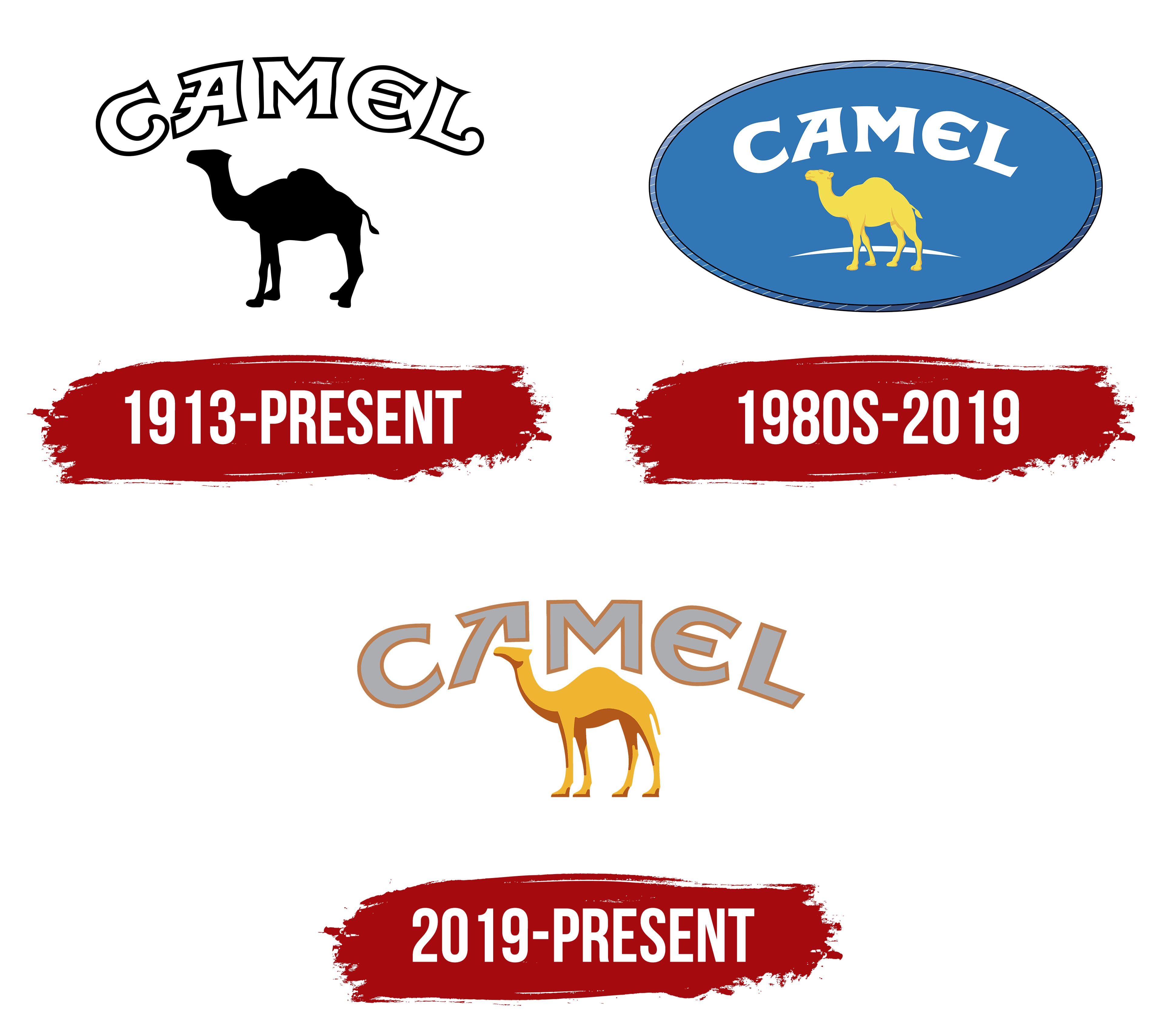
The visual component of the Camel identity is based on the use of a unique image of a camel and an inscription made in an unusual font. Each element of the concept complements the others favorably, resulting in a harmonious emblem. It is immediately recognizable in almost every corner of the world because the logo is completely different from that of other tobacco brands.
What is Camel?
Camel is the name of one of the world’s most popular tobacco manufacturers. The company has two control centers (in Asia and America), and its products are sold worldwide. The main difference among this brand’s tobacco products is the use of an American mixture. It consists of soft light tobacco and a tart Oriental variety.
1913 – today
The company first introduced its products to the market in 1913. At that time, the brand was owned by a large American company (R.J. Reynolds Tobacco). The manufacturer of the first cigarettes then used a special mixture (American Blend). It consisted of two types of tobacco: light and tart Oriental. In 2008, the composition was slightly changed.
The packaging for tobacco products was designed in the best traditions of strict, laconic design. The packs featured the brand’s main symbol, a one-humped camel, as well as an unusual brand name. The picture of the animal was not detailed. It was a black camel with pronounced contours. Above was the name Camel.
The inscription was in a thick, rounded typeface that was only relevant for a while. There were signs of thin black lines. Inside, the background was white. The elements were perfectly combined, creating a harmonious emblem associated with a solid brand. The chosen color also emphasized the tobacco manufacturer’s image.
For the emblem’s design, only two colors were used: black and white. This classic color combination conveys the company’s elitism and special status. The coloring also emphasizes stability and self-confidence, which the company has demonstrated throughout its existence.
1980s – 2019
The animal is in front of a large blue oval in this Camel logo. It evokes positive associations because it resembles an oasis, a welcome water source in the middle of a hot desert. The yellow silhouette of the camel is detailed with dark yellow outlines that outline the upper legs, ears, nose, eyes, and mouth. The light arc behind the animal symbolizes the sand hill.
The cigarette brand name forms a white arch above the animal. For the inscription, a set of glyphs with individual designs is used. The letters have an asymmetrical shape due to the uneven distribution of triangular serifs and due to the violation of standard proportions. The long projection at the top of the “A” resembles an upward arrow, a symbol of purpose. As for “C” and “E,” they look like a camel’s footprint in the sand.
2019 – today
The original logo was only changed in 2019. The company decided to carry out a complete rebranding. The changes affected all parts of the logo:
- font;
- images of a camel;
- colors.
The new Camel lettering was done in an unusual Coffin Nails typeface, inspired by handwriting. The image of a one-humped camel was still located under the brand name. The animal’s shape and contours have not changed much. However, the colors were drastically different. Instead of achromatic colors, calm and warm beige tones appeared on the emblem.
The chosen color symbolizes friendliness and comfort, which causes only pleasant associations. When paired with a stylized graphic element, it effectively emphasizes the company’s style. An advantageous addition is also a massive font with original curves. It demonstrates strength, confidence, and lightness.
The updated camel symbol also emphasizes the overall concept. Its contours have not changed much, but the picture has become more voluminous and “alive” due to the special coloring. Designers used several shades for decoration at once, allowing them to create a brighter, more vital figure. The new performance only emphasized that the company is developing and confidently moving towards success.
Font and Colors

The products are currently sold under a logo developed in 2019. This updated version uses warm base colors combined with an expressive font. The letters look quite powerful and confident, which evokes associations with success. All of them are in capital letters, but some have distinct characteristics.
The letters A and L have elegant curves that make the emblem particularly stylish. The selected design emphasizes the company’s commitment to development and ongoing updates. This applies to both visual identity and product quality. By updating its logo in 2019, the brand has again demonstrated the importance of periodically changing everything for the better.
A successful decision with the design was a clear confirmation of this. The classic black-and-white coloring has been replaced by several shades (beige, brown, light gray, and white). They are in perfect balance, thus symbolizing the balance in the tobacco blend. The updated color scheme also has an additional meaning.
It evokes pleasant associations of calmness, comfort, and friendliness. The goals were achieved because the brand is now recognized in almost every corner of the world. Many buyers first choose based on appearance and then evaluate quality. In the case of Camel, both criteria are in perfect harmony.