


 Carl’s Jr Logo PNG
This brand has a very good-natured visual identity: Carl’s Jr. chose a cheerful and smiling logo. It shows a yellow star standing on a beam, joyfully bouncing on one leg. In this way, the fast food chain conveys a great mood after visiting its restaurants, the highest quality of service, and its dishes. The name is cursive, with an imitation of individual handwriting.
Carl’s Jr. is a fast-food chain and a subsidiary of CKE Restaurant Holdings Corporation. It appeared in 1941 and sold barbecue, the main dish on the menu. This American franchise has grown to over 3,660 locations across 38 countries and 44 states in the United States. Its founder is the Karcher family.
The company started with a $311 loan that Carl Karcher and his wife, Margaret, borrowed to set up their diner. Adding $15 per Plymouth, they bought a cart that sold hot dogs, tamales, chili dogs, and soda on a Los Angeles street. Their marketing was weak, relying only on personal charm and delicious food. In any case, entrepreneurs opened four more tents despite the lack of glorious advertising. They didn’t have a fun logo even after moving to California (Anaheim), where they opened their first restaurant. This happened in 1945.
Carl’s Jr. began in 1941 as a hot dog cart in Los Angeles, founded by Carl Karcher and his wife, Margaret. By 1945, they had opened Carl’s Drive-In Barbecue in Anaheim, offering affordable hamburgers, hot dogs, and fries. In the 1950s, Carl introduced the “Carl’s Jr.” burger, marking the start of the brand’s expansion.
Over the 1960s and 1970s, the chain spread across the West Coast, adding charbroiled burgers and breakfast. In the 1980s, Carl’s Jr. expanded beyond California and launched the Western Bacon Cheeseburger, a fan favorite.
Carl’s Jr. grabbed attention in the 1990s and early 2000s with bold celebrity-driven ads. Facing criticism for offering unhealthy options, they added healthier choices such as salads and grilled chicken sandwiches.
Apollo Management Group bought Carl’s Jr. in 2011, leading to updates to restaurant design and the menu. With over 1,000 locations worldwide, Carl’s Jr. innovates, offering Angus beef Thickburgers and the plant-based Beyond Famous Star.
Carl’s Jr.’s journey from a small hot dog cart to a global fast-food brand demonstrates its commitment to quality, taste, and adaptability to changing customer preferences.
Meaning and History
What is Carl’s Jr?
Carl’s Jr. is a subsidiary of CKE Restaurant Holdings Corporation and an international fast-food chain. It started selling hot dogs in 1941 and now focuses on barbecuing. The Karcher family founded it, a former Carl’s Jr. driver with his wife, Margaret. The first branded restaurant with this name appeared in 1956; until then, it was street tents and several city eateries.
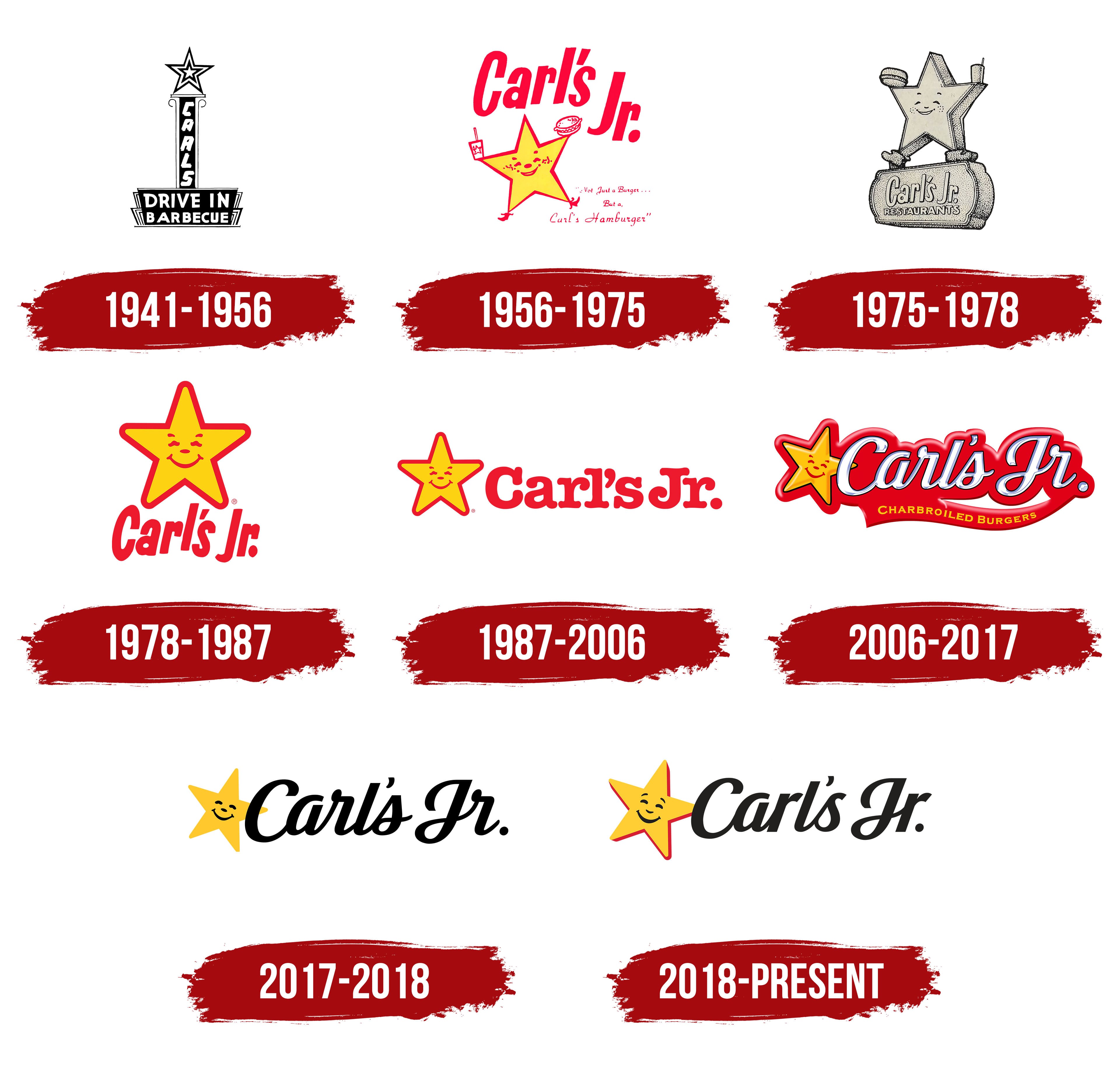
The short name and friendly logo of Carl’s Jr. originated in 1956. It was a smiling star with a hot dog and a glass, joyfully jumping from foot to foot in small shoes. The suffix “Jr.” was required. It’s just that after opening two more restaurants, Karcher decided to shorten their name because they were considered a mini version of their first establishment, Carl’s Drive-In Barbecue. That is, the presence of this particle in the identity is not associated with any family relationship: it is a practical, businesslike approach. In total, the brand has eight emblems.
1941 – 1956
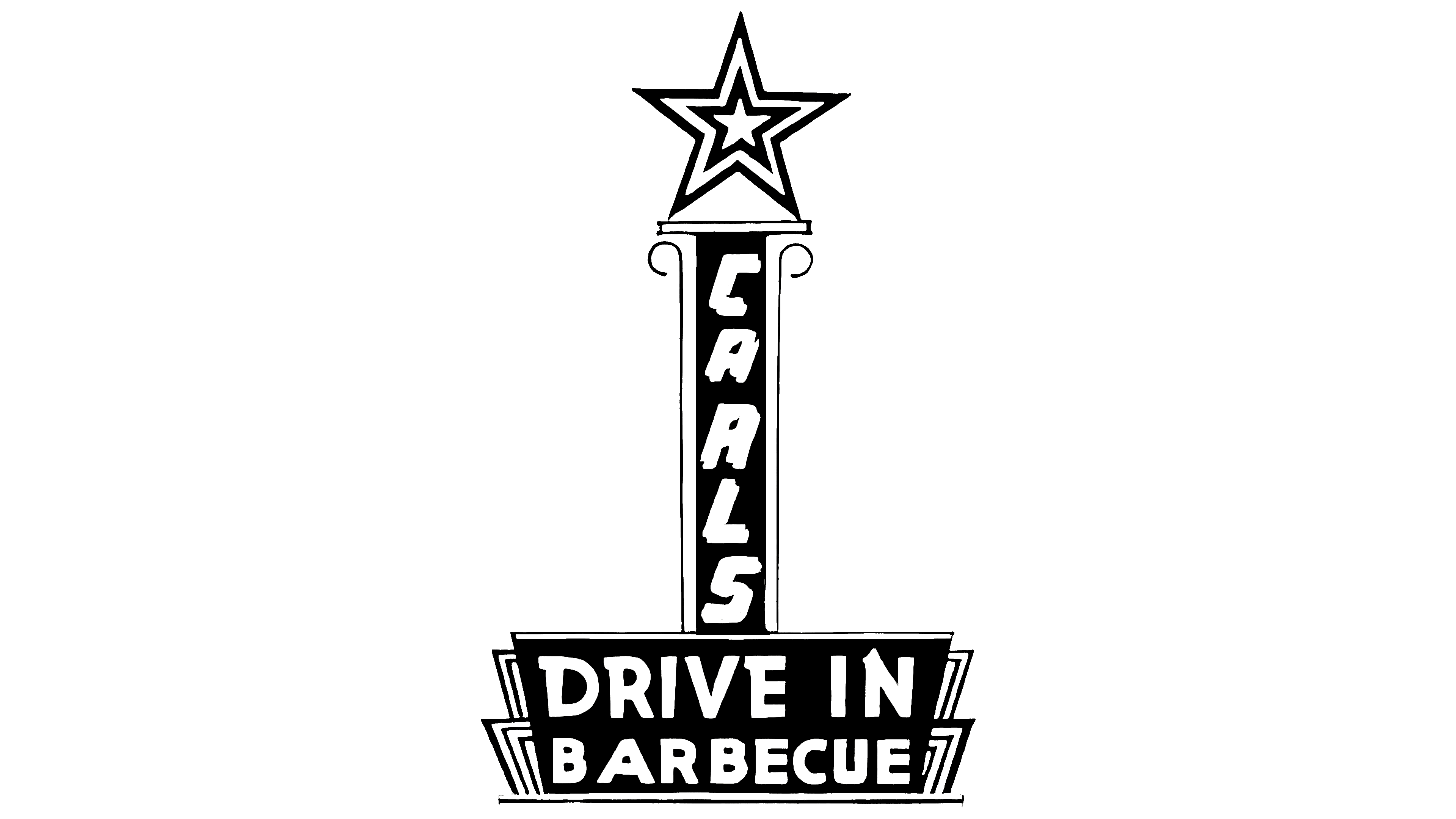
At first, the logo consisted of a high pedestal with a double five-pointed star. Its base contained the parent company’s name: “Carl’s” in a vertical rectangle and “Drive-In Barbecue” in a horizontal trapezoid.
1956 – 1975
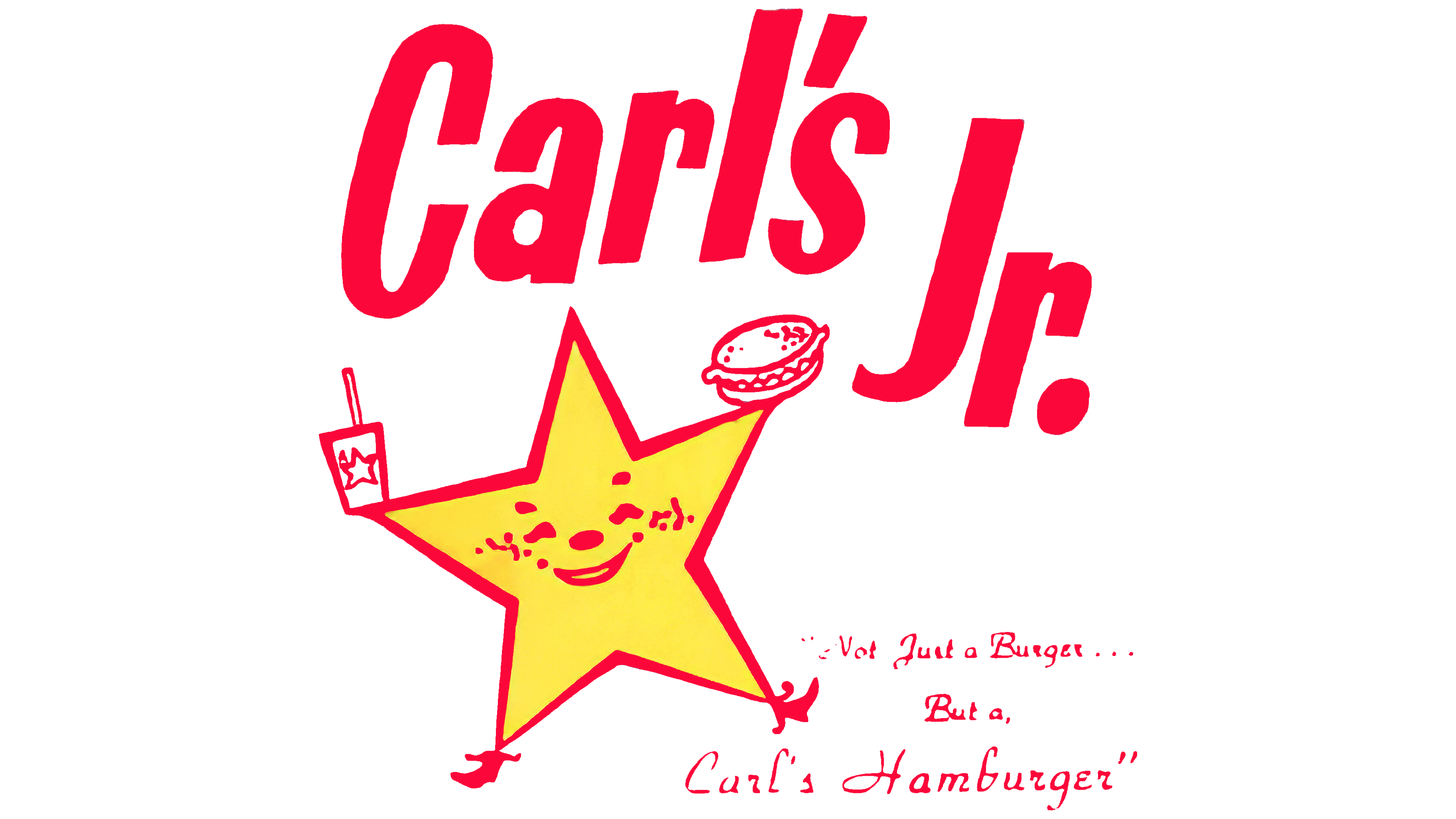
The era of a cheerful, friendly star of bright yellow color has come. She was anthropomorphic: the two lower rays were her legs, and the two middle ones were her arms. Her feet were shod in miniature shoes, and in her hands were a large hot dog and a glass with a straw. The company name and promotional information were placed around an asterisk. The logo colors were chosen to be as bright, positive, appetizing, and attractive as possible: yellow and red.
1975 – 1978
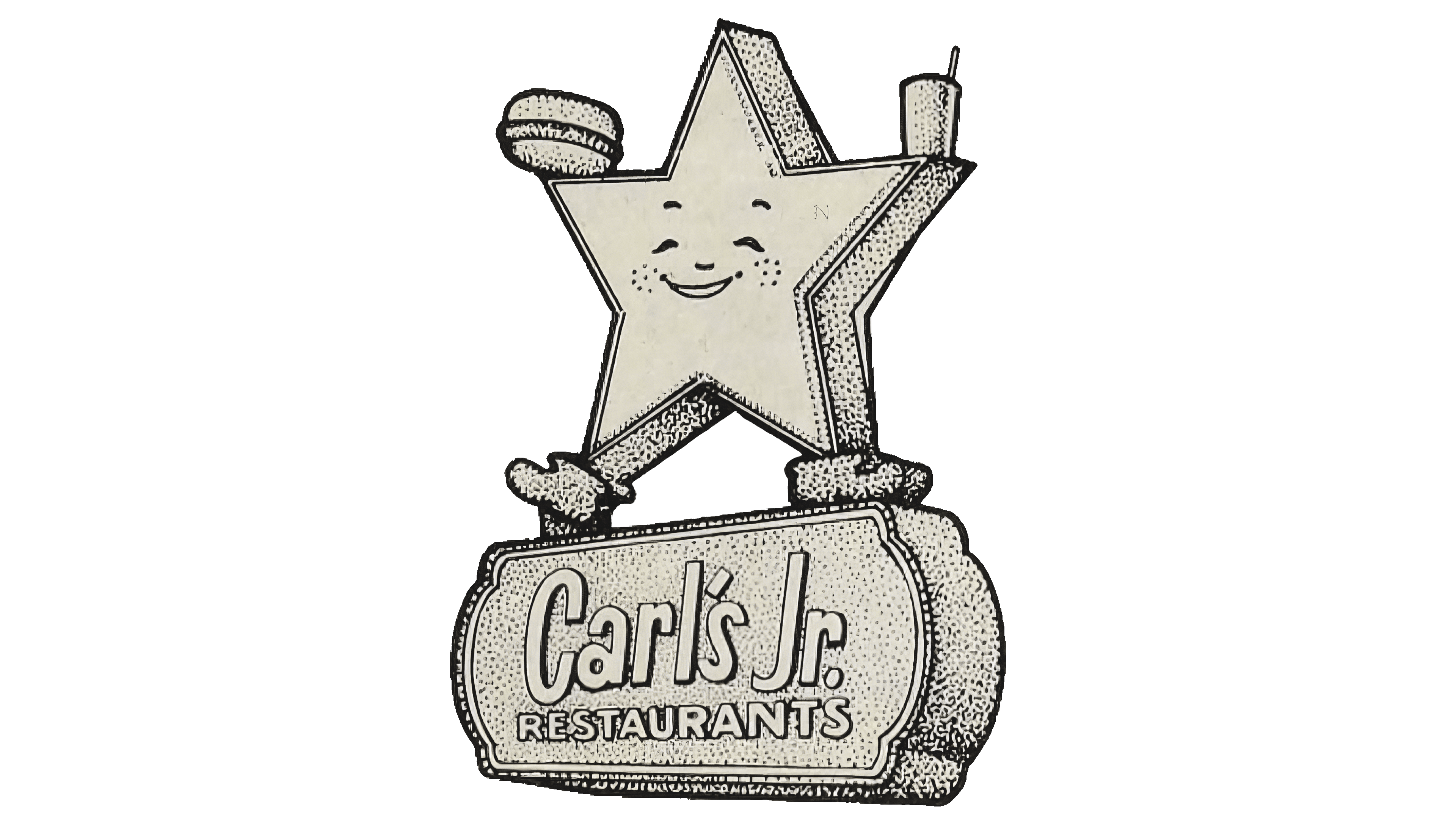
The company returned to the pedestal theme, placing a smiling star with a hot dog on an oval geometric shape with a two-level name. Designers made it wide and “shod” it in big boots. She looked friendly, as always.
1978 – 1987
In this version, the pedestal disappeared, and the star became yellow with a red border and rounded rays. The developers changed the name of the fast-food restaurant chain and used the writing style from 1956 to 1975. The star was located directly, not sideways.
1987 – 2006

The only change was in the inscription. The name was in a rounded font with large dots on the letters “a,” “r,” and “J.” The letters “C,” “s,” and “l” got bold serifs. In addition, the designers moved the text to the right of the star.
2006 – 2017
After the rebranding, an additional inscription was added to the logo: “Charbroiled Burgers.” The designers placed it at the bottom on a separate tape. They tilted the star to the right, connected it to the letter “C,” and added a general red background, with the star’s edge outlined in black. Thus, the company showed affinity with the parent company, CKE Restaurants, and another of its chains, Hardee’s.
2017 – 2018
This logo was used for only one year. It consisted of a smiling star without a border. The designers painted the elements of the impromptu “face” and the name black, and removed the red background and eyebrows.
2018 – today
Agency Havas returned the star’s eyebrows and added red elements to her. Because the lines are not connected in a frame, they are perceived as shadows, making the star three-dimensional. In addition, the designers changed the “r” and “s.” Now, those lowercase letters look printed rather than handwritten.
Font and Colors

The mark dubbed the “Happy Star” appeared in Carl’s Jr.’s logo immediately after the restaurant’s opening. At first, it was cartoony and childish, but then it turned into a symbol of quality, a golden star. She is an integral part of the identity, the result of efforts to grow the fast-food chain, and an iconic symbol of the Golden Arches.
The custom typeface used in the Carl’s Jr. logo was created specifically for this brand. It is similar in style to TT Polls Script Bold, Ethan Italics, and Kathya Script. However, there are no exact analogs. The title is in italics, reminiscent of handwritten text, neat. The corporate palette today is bright: it consists of yellow and red. Black is also used, which effectively contrasts with them. Previously, there was also white.
FAQ
Who created Carl’s Jr?
Carl’s Jr. was started by Carl Karcher and his wife, Margaret, who put all their savings into a hot dog cart. This bold move quickly paid off, and in just five years, they opened their first restaurant. This started the Carl’s Jr. chain, now famous for its burgers and other fast food. The Karchers’ hard work and initial investment have made Carl’s Jr. a well-known brand in the U.S. and around the world.
Why is Hardee’s mascot a star?
The star mascot of Hardee’s has a history dating back to when Carl Jr., from Southern California, bought the East Coast-based Hardee’s. The star has always been a key symbol for Carl’s Jr., chosen by its founders, Carl Karcher and his wife, Margaret, to represent their commitment to excellence and quality. It also reflects the hopes and dreams tied to the American West. After the acquisition, Hardee’s adopted Carl’s Jr.’s star, blending the heritage of both brands into a single symbol. This wasn’t just about combining two fast-food names; it was about uniting their histories and quality standards. Despite some changes over the years, including the removal of the mascot’s smile in 2017, the star has remained a core part of Hardee’s identity, honoring its founders’ roots and forward-looking ethos.
Is Carl’s Jr only in America?
Carl’s Jr. isn’t just found in the United States; it’s a global brand. Together, Hardee’s and Carl’s Jr. have more than 3,800 locations in 44 U.S. states and 43 other countries and territories. This includes both restaurants they run themselves and those run by franchisees, highlighting how popular Carl’s Jr. is worldwide. Even outside the U.S., Carl’s Jr. keeps its varied menu, tweaking it to fit what people in different countries like to eat. This approach helps make Carl’s Jr. well-known and loved around the world.
Is Carl’s Jr still in Russia?
Carl’s Jr. still operates in Russia despite earlier reports hinting at a possible pullout. The fast-food chain continues to engage with the Russian market, as evidenced by its marketing efforts, including Russian-language Instagram ads featuring Russian models eating its food. This activity shows that Carl’s Jr. is conducting business as usual in Russia, even as some international companies choose to leave. As Professor Jeffrey Sonnenfeld pointed out, Carl’s Jr.’s continued presence in Russia confirms the brand’s decision to remain active there.
Why did Carl’s Jr get sued?
Carl’s Jr. was sued by a current and a former employee who claimed that the company and its franchisees conspired to keep wages low. They filed a class-action lawsuit in Los Angeles, arguing that Carl Karcher Enterprises LLC and its franchisees had agreements that prevented managers from transferring to other Carl’s Jr. locations. This was supposedly done to prevent these employees from earning higher pay at other restaurants in the chain, effectively limiting their chances of earning more by restricting where they could work. This lawsuit highlights significant concerns about how Carl’s Jr. treats and pays its management staff.
What is Carl’s Jr famous for?
Carl’s Jr., founded in 1941, is famous for its charbroiled burgers. For over 80 years, it has been a favorite on the West Coast, known for the quality and flavor of its burgers. This popularity has helped it grow to over 1,000 locations in the U.S. and 28 countries worldwide. The brand’s focus on making tasty, flame-grilled burgers is why it’s recognized and loved globally.