


 Jet Airways Logo PNG
The Jet Airways logo symbolizes the company’s commitment to providing impeccable service and a comfortable atmosphere for passengers during flights. The emblem represents safety, reliability, and the sky, which the company chose as the fastest way to reach any destination on the planet.
Jet Airways began operations on April 1, 1993, after Naresh Goyal founded it as a private airline in India. The carrier entered the market on May 5, 1993, with its first flight from Mumbai to Ahmedabad. Throughout the 1990s, it built a large domestic network and became one of the country’s main private airlines.
The airline entered international service in 2004 with a route to Colombo, Sri Lanka. In 2005, Jet Airways held an IPO on Indian stock exchanges, giving the company a public market profile. In 2006, it acquired Air Sahara for $500 million, a deal that expanded its market position. In 2007, Air Sahara was renamed JetLite and operated as the group’s low-cost division.
In 2009, Jet Airways attracted attention as the first Indian airline to join an international airline alliance and become a future member of Star Alliance. In 2010, it added Jet Konnect as a budget brand for domestic flights. In 2012, the company sold a 24% stake to Etihad Airways for $379 million, forming a partnership that tied the Indian carrier to a major Gulf airline. By 2014, JetLite and Jet Konnect had been merged into a single brand, JetKonnect.
In 2016, Jet Airways shifted back toward a full-service model and moved away from budget operations. By 2018, financial problems had deepened, leading to delayed salary payments and unpaid aircraft leases. On April 17, 2019, the airline stopped all operations after failing to secure emergency funding. Revival efforts started in 2020, and in 2021, India’s NCLT approved a recovery plan submitted by an investor consortium.
Meaning and History
What is Jet Airways?
This is a leading Indian airline based in Mumbai. It offers an extensive network of domestic and international flights covering numerous destinations across the subcontinent, Southeast Asia, the Middle East, Europe, and North America. The company operates a modern, diverse fleet of narrow-body and wide-body aircraft, including Boeing 737, Airbus A330, and Boeing 777, providing high levels of comfort and service for its passengers.
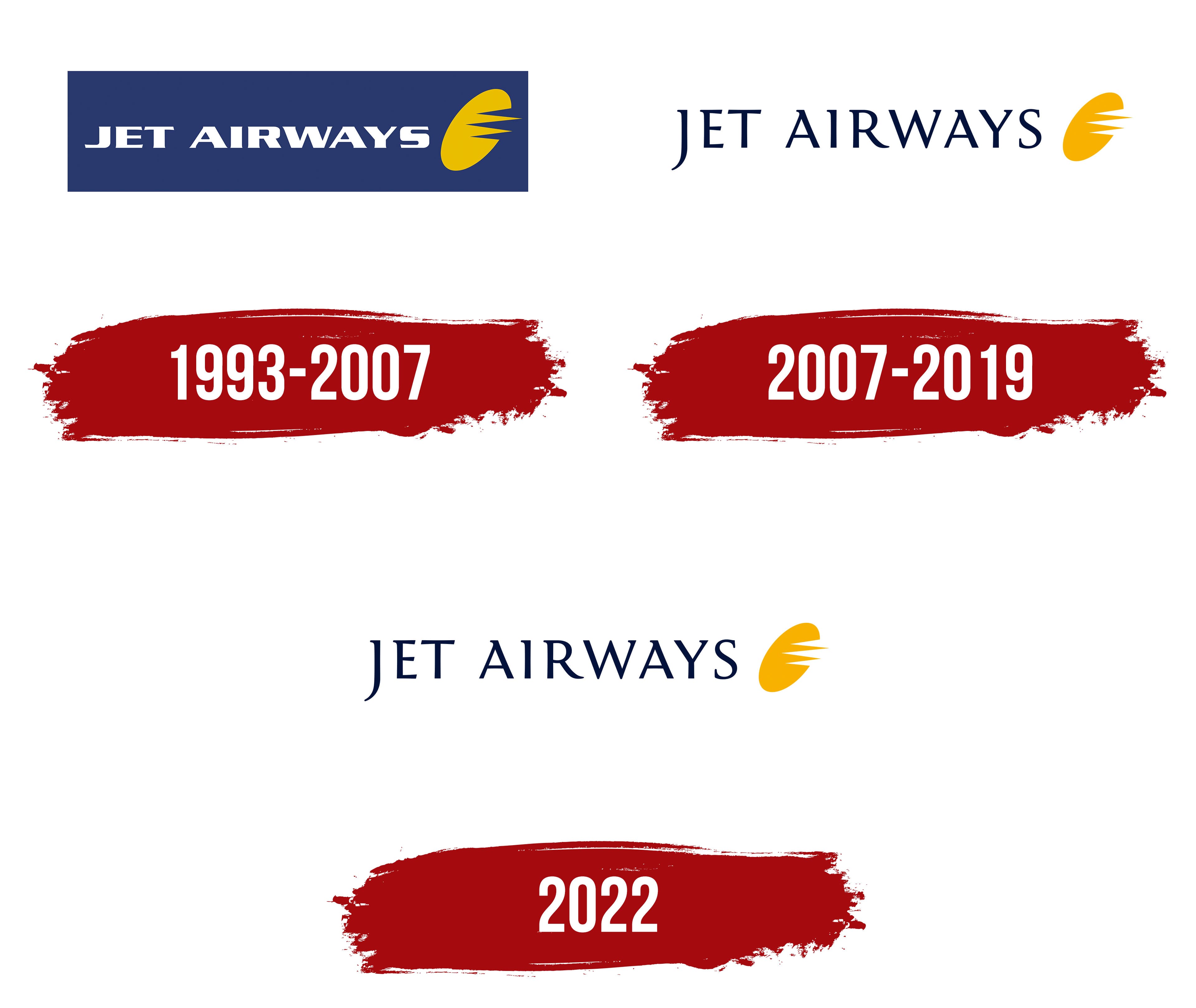
1993 – 2007
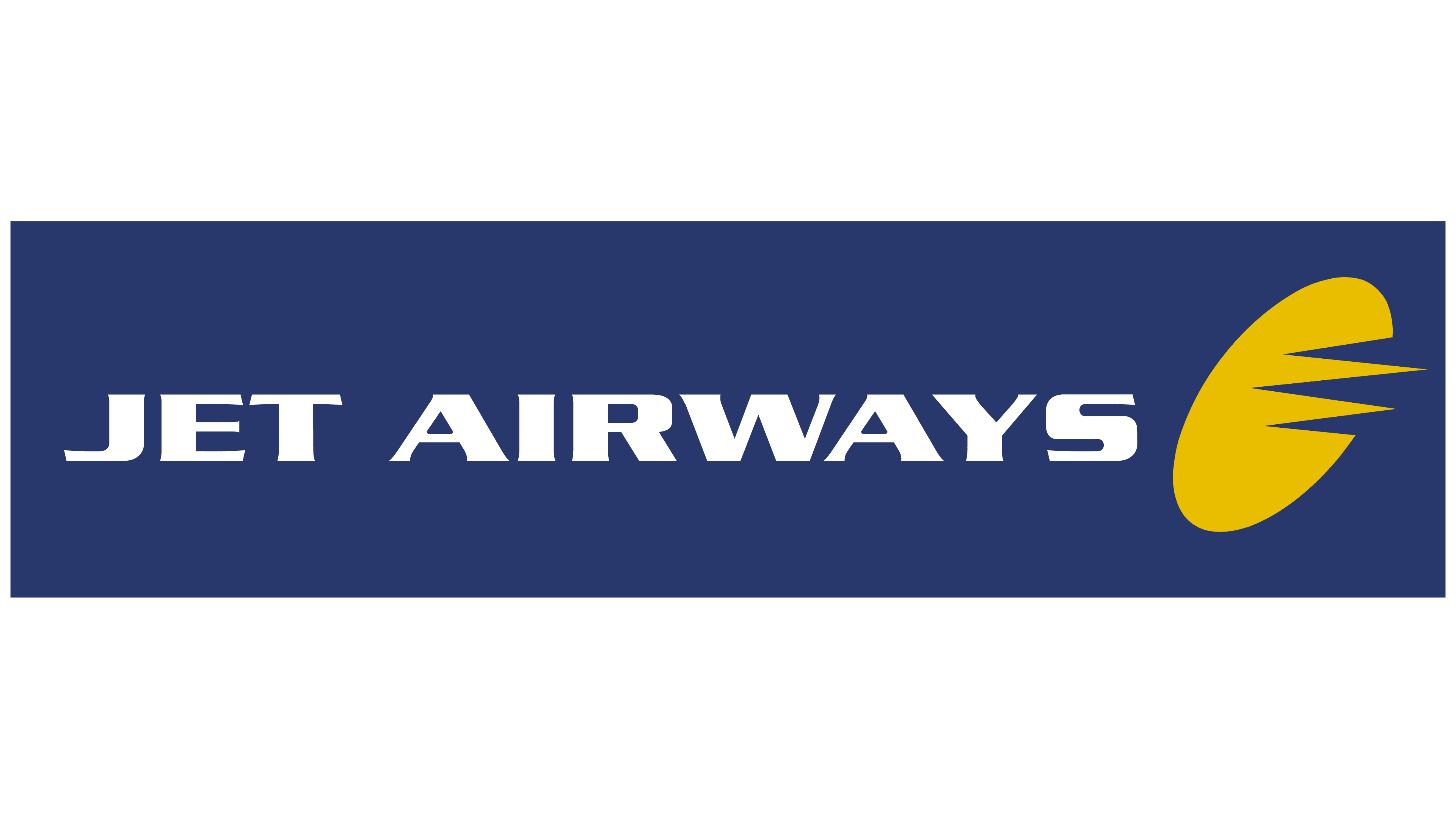
The Jet Airways logo is based on the sky, symbolically represented by a long, horizontally positioned rectangle. This shape was chosen for several reasons. The primary reason is the alignment of the name’s length with the geometric figure. The wide horizontal rectangle resembles the view from a pilot’s cockpit window.
Inside the rectangle is the brand name, which occupies two-thirds of the space and is centrally located. This layout underscores the company’s importance and its goal of holding a key position in the aviation services industry.
The text is divided into two parts with significant spacing between them, indicating that the airline strictly adheres to all operational rules and regulations and pays attention to every detail. The font characteristics include:
- Wide and squat glyphs
- Technical style
- Miniature serifs (or even their imitation)
- A combination of thick and thin lines
- Monolithic letters
This typographic approach conveys the company’s confidence, determination, reliability, strength, and high level of security. The white text stands out against the dark blue background, ensuring readability despite the heavy glyphs.
Another significant element of the emblem is the slanted oval. It features three blue spikes pointing inward and two yellow spikes pointing outward. Essentially, these are triangular cutouts with an open side, symbolizing the absence of boundaries for the airline in achieving its desired results – the final destination. This abstract figure represents the sun, serving as a celestial guide for the brand.
2007 – 2019
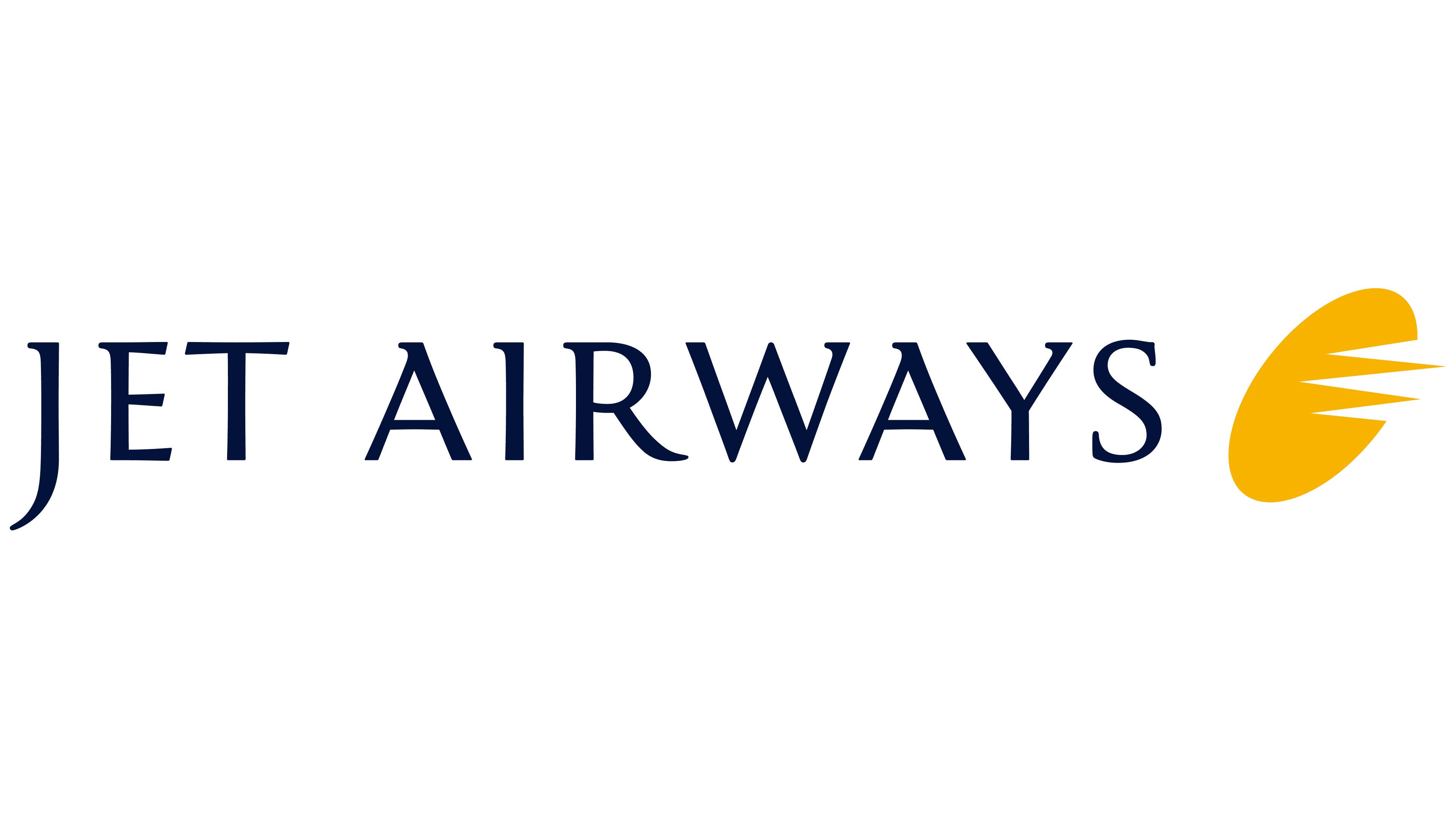
The transformation of the Jet Airways logo has brought a sense of lightness and airiness directly related to flight. This impression is achieved through a series of innovations.
- A lot of free space has been introduced, as the background has become a neutral white, borderless field that symbolizes unobstructed flight.
- The bold geometric font has been replaced by a thin, elegant one with small serifs.
- The yellow oval mark has been removed from the text, providing enough space to prevent merging.
The oval’s shape remains unchanged, with sharp spikes extending to the right. However, the spikes now resemble speed lines, often used in logos to convey rapid movement. These lines perfectly complement the airline’s emblem, linking it to dynamism, high speeds, and swift flights.
2022
The logo, developed in 2007 by Landor Associates, features the “flying sun” from Jet Airways’ previous design. The “flying sun” is oval with deep triangular cutouts. It is yellow and tilted to the right, suggesting flight and movement. The airline’s name appears in dark blue letters on the right with thin serifs.
The “flying sun” is the logo’s dynamic focal point, capturing the essence of air travel and adventure. The sun’s yellow color contrasts with the dark blue text, enhancing the logo’s visual appeal. The elegant font gives the logo a refined look, aligning with the company’s high-quality service goals. This combination ensures the logo is modern and rooted in tradition, symbolizing the airline’s adaptability and forward-thinking vision.
The “flying sun” adds a dynamic feel and reinforces the brand’s identity and heritage. The yellow color represents warmth, optimism, and the possibilities of air travel, while the dark blue text exudes professionalism, reliability, and excellence. The interplay of these colors creates an eye-catching, meaningful, and balanced design.
The geometric precision of the “flying sun” and the carefully chosen serif font reflect meticulous attention to detail, emphasizing the airline’s commitment to excellence. The tilted sun adds a sense of motion and progress, resonating with the adventurous spirit of travel.