 KEPCO Logo PNG
Electricity supply in South Korea covers homes, industry, and digital infrastructure, keeping cities and businesses running. Power generation and distribution occur through a unified system that maintains a stable electricity supply. The KEPCO logo represents a national energy company that generates and distributes electricity nationwide.
KEPCO’s history dates back to 1898, when the Seoul Electric Company was founded. This company supplied electricity to Seoul. In 1961, several companies merged, resulting in the creation of the Korea Electric Power Company, KECO. It became a key part of South Korea’s energy supply during its period of economic growth. In 1982, the government nationalized the enterprise and renamed it KEPCO. The company continued building power plants, including nuclear and hydroelectric facilities.
Since 1989, its shares have been listed on the Korea Stock Exchange. In 1994, the company was listed on the New York Stock Exchange. In 1993, international expansion began. KEPCO secured contracts to construct and operate power plants in various countries. In 2001, the company underwent restructuring and separated its generating assets into individual enterprises.
In 2005, KEPCO began supplying electricity to the Kaesong Industrial Complex located in North Korea. In 2009, the company began acquiring coal and uranium mining assets worldwide. These steps aimed to build energy independence. In 2014, the company moved its headquarters to Naju. By 2020, renewable energy accounted for about 6 percent of total production.
Since 2021, the company has faced instability in the energy market. This forced it to review electricity tariffs. In 2023, the South Korean government approved a program to gradually decommission nuclear power plants.
In 2024, KEPCO continued adapting to changes in the global energy sector. The company invested in solar and wind power plants and developed hydrogen energy projects.
Meaning and History
What is KEPCO?
The largest energy corporation in South Korea, with headquarters in Naju, controls power transmission and distribution. Through its subsidiaries, it provides more than 90 percent of electricity generation and serves over 23 million customers, with a capacity of about 67 gigawatts. The government holds a controlling stake. The main areas include power transmission and distribution, nuclear and thermal generation, hydropower, and nuclear fuel production.
1961 – 1986
The history of Korea Electric Company dates back to Hanseong Electric Company, founded on January 26, 1898, with the participation of the Korean imperial court. The company received rights to provide electric lighting, telephone service, and streetcar transportation in Seoul. One of its first major projects was an electric streetcar system that opened in 1899.
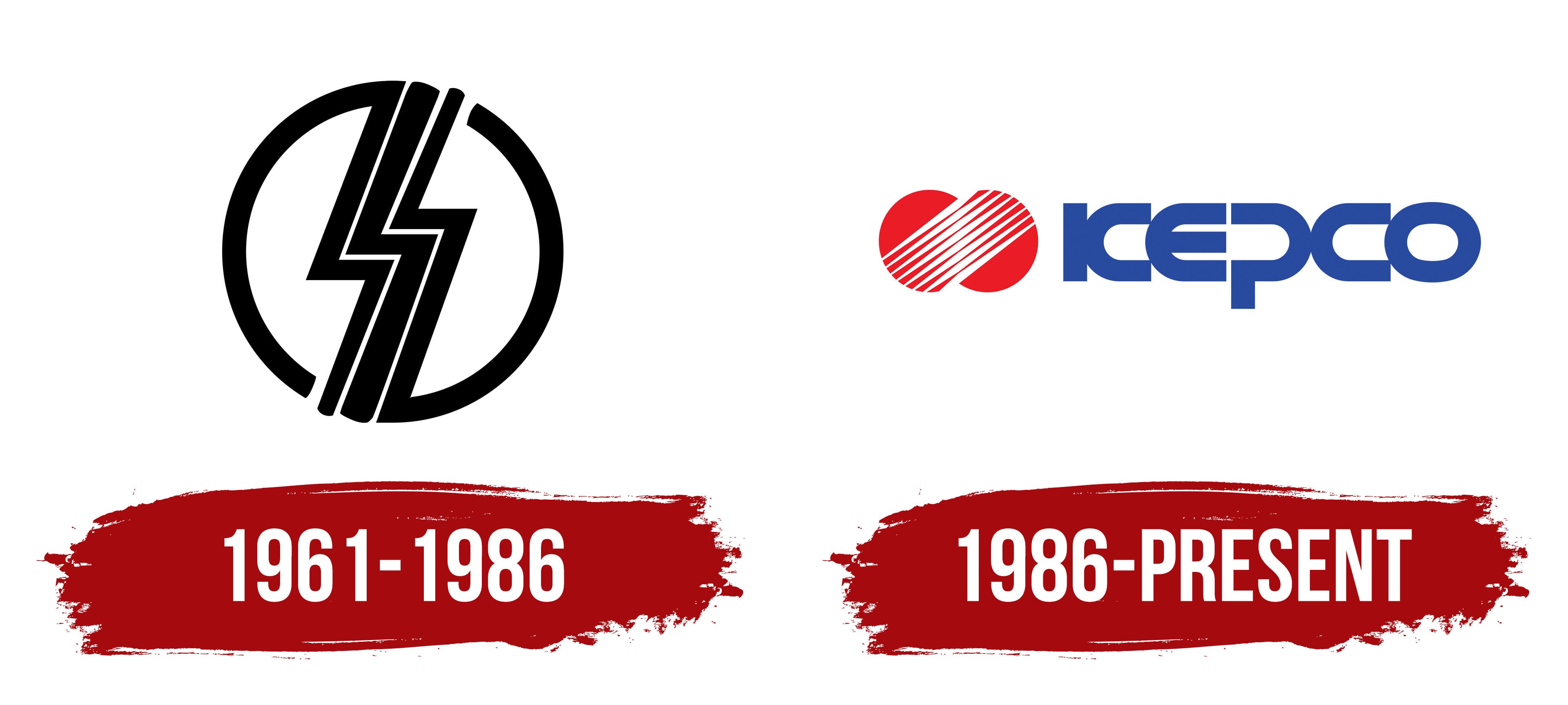
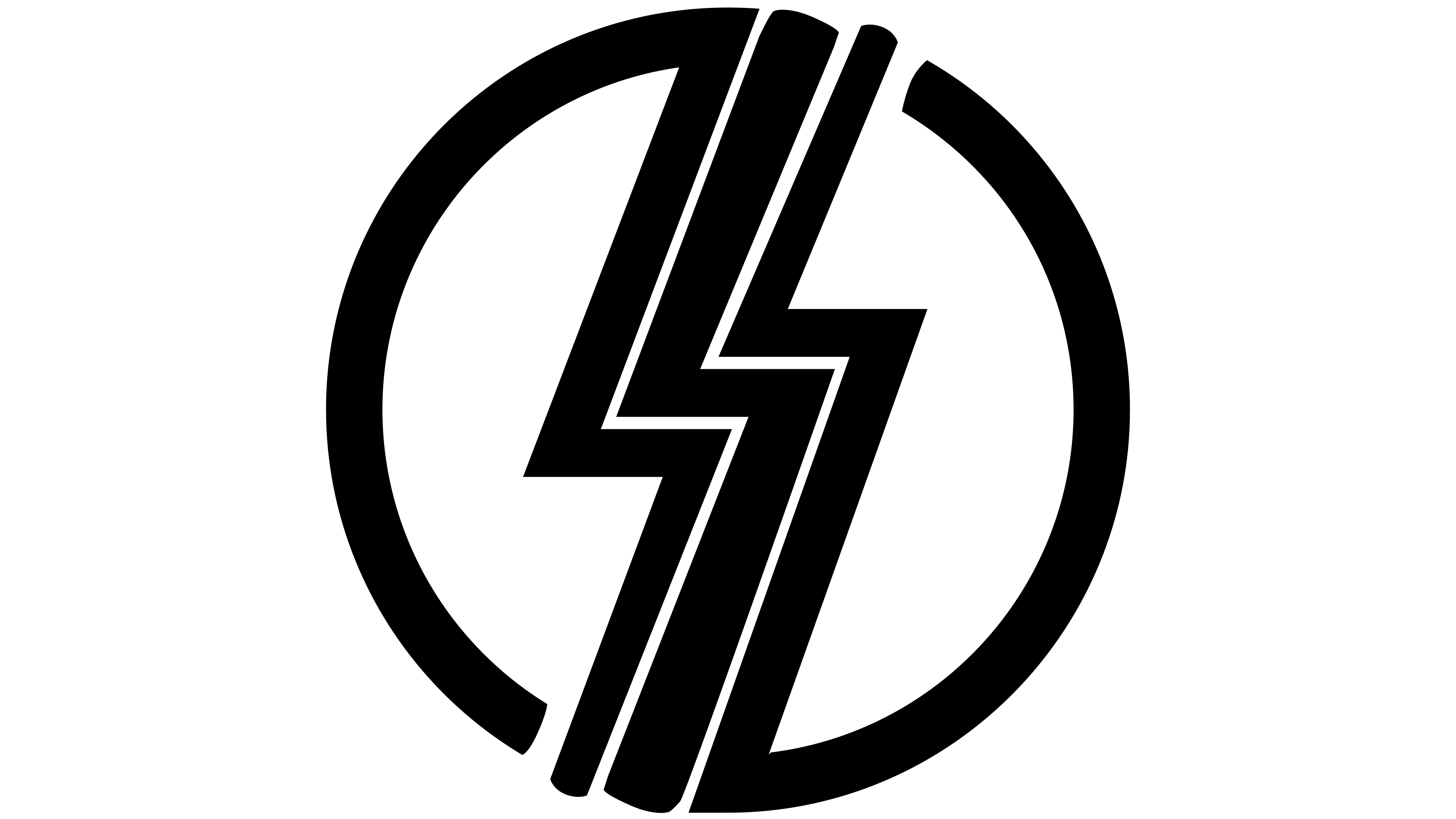
On July 1, 1961, Chosun Electric, Gyeongseong Electric, and Namseon Electric merged to form Korea Electric Company. During this period, the company used a black emblem featuring lightning-like lines inside an open ring. The angular strokes resembled electrical discharges and referred to the company’s operations.
The outer frame consisted of two black arcs. Three parallel vertical zigzag lines ran between them. Their sections met at angles, forming sharp turns. The repeating zigzags filled the center, while the arcs united them into a compact circular figure. Although the entire emblem was black, its components differed in form. Smooth curves along the outer contour surrounded the angular strokes in the center.
The logo consisted of a single symbol. The abbreviation “KEPCO” appeared in later versions of the company’s identity. It comes from the English name Korea Electric Power Corporation, adopted on January 1, 1982, when the company was reorganized as a government-owned corporation.
1986 – today
In 1986, KEPCO replaced its black emblem with a red-and-blue logo created by Korean designer Kwon Myung-kwang. A blue “KEPCO” wordmark accompanied the rounded red symbol. The name is an abbreviation of Korea Electric Power Corporation. The new identity presented the government-owned energy corporation under its English name.
The project followed the company’s reorganization. Korea Electric Company was dissolved in late 1981, and its assets and liabilities were transferred to Korea Electric Power Corporation. Kwon worked on the identity while operating the Seoul Graphic Center, which he founded in 1983. He was part of South Korea’s first generation of professional designers. Crayfish Branding Group, which continues his studio’s legacy, describes the KEPCO identity as the first major corporate identity project for a Korean government-owned corporation.
The red emblem consists of two rounded forms that partially overlap. Eight parallel diagonal stripes pass through the area where they connect. The striped section widens in the middle and narrows toward the edges, joining the two parts. According to the company’s explanation, the circular forms represent continuity and longevity. The stripes represent eternal light and hope generated by electrical energy.
The emblem’s interpretation also includes energy produced by nuclear processes. The theme connects to the development of South Korea’s electric power industry in the mid-1980s. Nuclear power played a major role in the country’s energy supply. Reactor construction continued, while engineering knowledge and nuclear expertise advanced.
A blue “KEPCO” wordmark appears on the right. The five uppercase letters use a geometric sans-serif style with extended horizontal strokes and rounded transitions. The letters sit close together, and the connections between sections turn the abbreviation into a compact block. The emblem and wordmark can be used separately or included in a horizontal logo with the names 한국전력공사 and Korea Electric Power Corporation. Korean, English, and combined versions are available.
The emblem’s specified color is KEPCO Red (C0 M100 Y100 K0). The “KEPCO” wordmark and full corporate name use KEPCO Royal Blue (C100 M80 Y0 K0). Red is assigned to the energy symbol, while blue is used for the text. This distribution remained consistent during later identity updates.
The logo remained in use during subsequent periods of corporate restructuring. In 1989, KEPCO listed part of its shares on the Korea Stock Exchange, and its depositary receipts began trading on the New York Stock Exchange in 1994. In 2001, it distributed its generating assets among Korea Hydro & Nuclear Power and five thermal power generation companies. Kwon retained the basic form of its emblem and the blue wordmark. Affiliated companies adopted related designs. KEPCO KPS, for example, uses two circles and diagonal stripes beside its separate name.