


 Kika (TV) Logo PNG
The children’s TV channel is characterized by bright, expressive identity elements that may appeal to the target audience. Therefore, the Kika (TV) logo expresses joy, optimism, and inexhaustible energy, which children usually like. It symbolizes a good mood.
KiKA emerged from a debate on German television in the early 1990s. Commercial channels such as RTL and Sat.1 were moving children’s programming into weaker time slots. At the same time, Nickelodeon expanded in Europe, and RTL and Disney launched Super RTL in 1993 as a joint venture. Public broadcasters ARD and ZDF responded by creating a joint, ad-free children’s channel.
In 1995, ARD and ZDF agreed on the project, with nine ARD regional broadcasters and ZDF involved. The headquarters were placed in Erfurt, and MDR handled technical broadcasting. On January 1, 1997, Der Kinderkanal von ARD und ZDF went on air at 6 a.m. Its model differed from Super RTL and Nickelodeon: no ads, no commercial pressure, and programming aimed at children and parents.
The early schedule drew heavily on existing ARD and ZDF programs, including Tabaluga tivi, archive cartoons, Augsburger Puppenkiste, Unser Sandmännchen, and foreign animated series. On May 1, 2000, the channel was renamed KI.KA, with a new identity by Dutch agency N+T Vision.
In 2000, KiKA introduced Bernd das Brot, a gloomy bread puppet first used during off-air night loops after 9 p.m. The character unexpectedly became popular among adults and later became the channel’s mascot. On October 1, 2005, the name changed to KiKA, and Ingo Steinacker refreshed its style. In 2009, the preschool mascot Kikaninchen appeared, while original shows such as “KI.KA LIVE” helped the channel build its own production base.
Meaning and History

Today, Kika is one of Germany’s leading children’s TV channels. Initially, broadcasts were in standard definition, and the channel later upgraded to HD. This innovation let viewers watch programs in high definition with greater detail. These improvements made Kika popular and significantly increased its ratings.
The channel has changed its visual identity several times throughout its existence. This is due not only to gradual development but also to changes in brand design. Kika’s management periodically updated the logo to reflect current design trends, so each icon was beautiful and recognizable. The modern emblem also conveys cheerfulness and a positive attitude.
What is Kika (TV)?
Kika is an exciting children’s channel broadcasting programs throughout Germany. The organizations ARD and the federal government agency ZDF helped establish it. The channel operates around the clock, but broadcasts run from 6.00 to 21.00. TV games, cartoons, TV series, feature films, fairy tales, TV magazines, and other programs are aired.
1996 – 1999

In 1996, the channel adopted its first logo, combining wordmarks and graphic elements. At the center was a large, powerful letter H. Above it was a symbol resembling the steps of a ladder. Below the letter was the inscription C”lub House.” Together, these elements emphasized a homely, cozy atmosphere and helped create exciting programs for the Kika TV channel.
The stylized staircase directly symbolizes the house, warmth, and relaxation. The massive letter H is a stylish graphic addition that evokes positive emotions and joy. In addition, the sign’s thick, bold lines make the logo look more confident and reinforce the TV channel’s position.
He is among the best in Germany, so he steadfastly holds his position against competitors. Another important element is the inscription. It is set in small letters in a playful style. This typeface is distinguished by smooth, rounded lines and no serifs. The chosen style makes the design more modern and stylish.
1997 – 2000

The TV channel Kika (then Der Kinderkanal) officially launched in 1997. At this point, management decided to change the logo. The old version did not fit the channel’s new concept. The result was a logo that was radically different from its predecessor. The new version featured bright graphic elements and a figure bearing the channel’s name.
In the background, two interconnected X letters are placed. They look like two figures holding hands. In the middle, an elongated, thin oval contains an inscription. The updated design best reflects the channel’s philosophy and values.
The two figures symbolize friendliness and positivity, while the inscription provides information. An additional element of the visual identity was bright, expressive colors. The logo’s colors are blue (trust), white (purity), yellow (fun), and red (energy). Together, they reflected Kika’s main characteristics.
2000 – 2012

In 2000, the management decided to rebrand again. The old logo was replaced with a more perfect and stylish version. The new version kept the colors and the X-shaped sign. In addition, the channel name became more vivid and expressive. The Kika lettering became the centerpiece. The letters were set in a large, sans-serif type.
Among the inscription’s characteristics, one can single out massive straight lines that demonstrate adherence to principles and steadfastness. However, the strict lines were softened by an unusual slope in the letter I. It was outside the general concept and made the emblem quite funny. Near it was a blue circle with an X inside. The badge favorably emphasized the contrasting colors and complemented them.
2012 – today

In 2012, Kika received a new logo, which is still used today. It marked a clear departure from the old visual concept and a new stage in the channel’s development. One clear reason for that year’s logo change was the broadcast’s move to the more advanced HD mode. In this regard, the designers created a beautiful, powerful emblem that conveyed incredible achievement and prosperity.
It still featured the inscription indicating the channel’s name, but in a different format with an addition. Below it read “von ARD und ZDF,” indicating the broadcasters. The Kika letters were enlarged into a more expressive format and complemented by a neat, thin outline. Unlike the previous version, they were all precisely aligned, symbolizing stability.
In this case, playfulness was achieved through unusual cuts that gave the letters bizarre shapes. The lower inscription is set in a stricter, thinner font. Straight lines, clear cuts, and no serifs distinguished it. Both typefaces fall into the category of new modern variations that symbolize style, renewal, and progressiveness.
Font and Colors
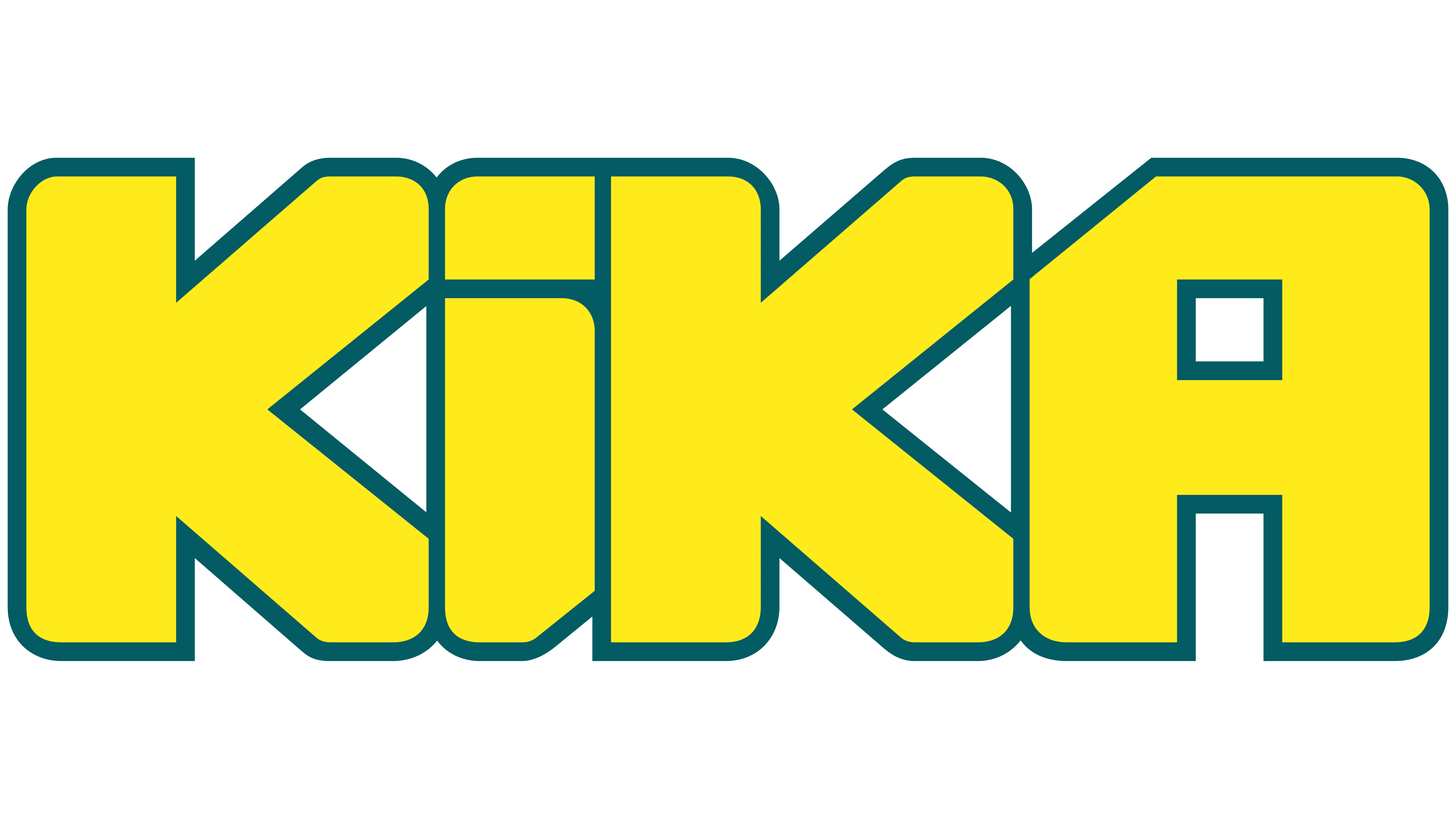
The Kika logo impresses with its large shapes and bright colors. This is a classic example of the expressive style that famous TV channels use for decoration. The name and contrasting tagline stand out, and the background and colors work in perfect harmony. The main component is the children’s TV channel’s name. It is set in a massive, soft font with original, smooth, differently shaped cuts.
This feature makes the letters especially attractive and memorable. In addition, this form demonstrates goodwill, coziness, and comfort. The lower inscription is in smaller letters. For this, a simple, concise, highly readable font was used. Straight lines with regular cuts are visible here. Another feature of the visual identity is a well-chosen color scheme.
The name is painted in two colors. A bright yellow tint serves as the main color, filling the entire letterforms, with thin contours painted in muted blue. The lower inscription is decorated in the same shade. Yellow is a positive symbol; muted blue is associated with trust, professionalism, and calmness.