


 Llama Logo PNG
The Spanish arms manufacturer expressed its fiery nature with an appropriate logo. The Llama logo itself is not very bright, but the images embedded in it compensate for the external fade. It is a symbol of aggression and a bellicose mood, balanced by a cold mind and precise calculation.
Gabilondo and Urresti was founded in 1904 in Eibar, in Spain’s Basque Country, a major firearms center. The company appeared in the city’s industrial census in 1907 with four gunsmiths, rising to eight by 1914. At first, it made copies of Nagant and Velo-Dog revolvers, produced parts for other makers, and assembled weapons to order.
The breakthrough came during World War I. In 1914, Gabilondo developed a semi-automatic pistol based on the Browning 1903 design and chambered for 7.65×17 mm. The model, called Ruby, had a nine-round magazine, larger than many rivals. In May 1915, France adopted it and ordered 10,000 pistols a month, later raising demand to 30,000 and then 50,000. Gabilondo used subcontractors and coordinated quality control and delivery to Bayonne. At least 750,000 Ruby pistols and copies were produced, and the French army used them until 1958.
After the war, the company moved to Elgoibar, later to Vitoria, and became Gabilondo y Compañía. The Llama trademark was registered in 1932, with pistols sold under that name from 1933. As Llama-Gabilondo y Cía SA, the company built affordable pistols and revolvers, competing with Basque makers Astra-Unceta and Star Bonifacio Echeverria.
In the late 1970s, Llama-Gabilondo tried to win a Spanish army pistol contract with the Omni series and the M-82, but neither was successful. The company went bankrupt in 1992. In 1993, workers formed a cooperative to buy the Llama name and equipment. Fabrinor Arma Corta y Microfusion S.A. later moved production to Legutiano, but debt remained too heavy. After restructurings in 2002 and 2003, the factory closed in early 2005. The Llama mark later passed to Metro Arms Corporation in the Philippines.
Meaning and History

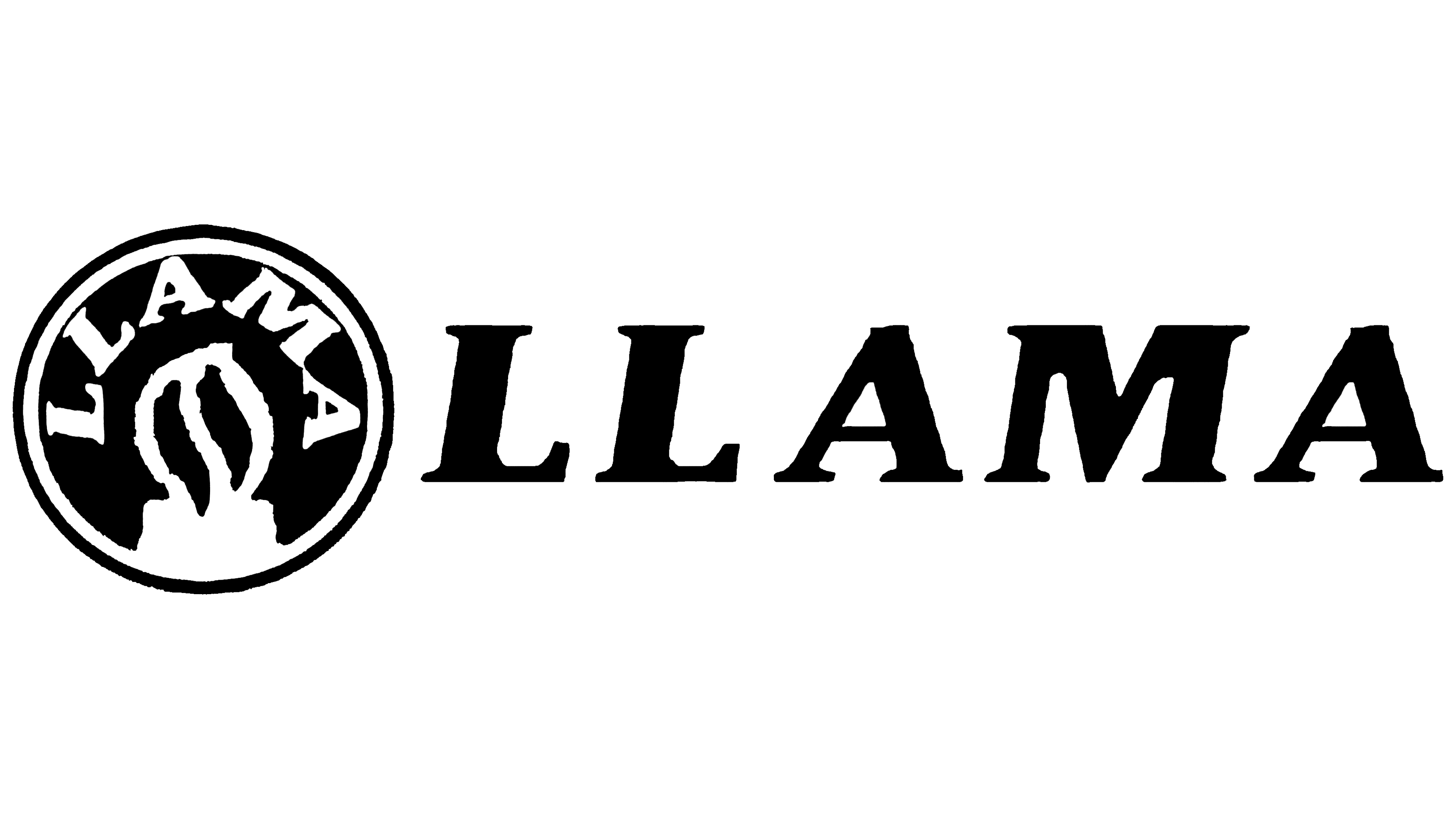
Brand recognition was high because the logo had not changed much over Llama’s entire operating period. There were several redesigns, but they were all based on the same line. Naturally, the company logo was popular among gun lovers. It consisted of a verbal inscription and an emblem located on the left. The company’s name used a classic bold serif font with medium-thickness lines. All letters were presented in uppercase, which only gave credibility and status to the brand. Also, there was significant spacing between the letters.
If we talk about the emblem, it is an image of a flame inside a round frame with a double white-and-black outline. At the top of the circle is the inscription “Llama.” It is identical to the main verbal inscription. The emblem is slightly larger than the letters in the company name, making it easier to notice. Some logo variations feature a flame image without a frame.
What is Llama?
This is a company that has suspended its activities but was, for a long time, considered one of the most popular Spanish weapons brands. It had an influence far beyond the European continent.
The black-and-white color palette demonstrated the company’s serious attitude toward its business, distinguishing it from competitors with a bright emblem. Thus, associations with security were created among the company’s clients, further increasing interest in weapons manufactured under the Llama brand.
Font and Colors

A classic, bold serif typeface was used for the wordmark, including the company name. It looks harmonious on any surface. The inscription was readable; therefore, potential customers of the weapons brand could see it from afar against the background of other logos. Capital letters spaced widely added confidence and strength to the name “Llama,” clearly associating the company with serious activities.
The black-and-white color palette was not chosen by chance. At a minimum, the black inscription on a white background looks confident, making the logo timeless and ideally suited to any market trend. Also, with this color scheme, the logo will look harmonious from any angle. On the other hand, some potential customers may not always recognize the “flame” on the emblem precisely because it is depicted in black rather than red.