


 Mini Logo PNG
The emblem seems to fly above the ground, illuminating the way with burning headlights. The Mini logo hints at the car’s small size, letting it move quickly and maneuver easily to reach its goal.
Mini began as a response to the 1956 Suez Crisis and Britain’s fuel rationing. BMC chief Leonard Lord wanted a small British car to challenge the Volkswagen Beetle and Isetta. Engineer Alec Issigonis developed the idea around a strict packaging constraint: four adults, luggage, and an existing A-series engine, all inside a body about 3 meters long. His layout put the engine sideways, placed the gearbox in the sump, and sent power to the front wheels. By July 1957, the prototype, nicknamed the “orange box,” was ready.
On August 26, 1959, BMC launched the car as the Morris Mini-Minor and Austin Seven. The differences were mostly grille, trim, and colors. Sales were modest at first, around 20,000 cars in the first year, but by 1962 production passed 200,000 units a year. In 1961, John Cooper helped turn Mini into a performance car with the Mini Cooper. In 1963, the Cooper S debuted with a 1071 cc engine.
Mini won the Monte Carlo Rally in 1964, 1965, and 1967, beating cars such as the Ford Cortina and the Porsche. During the 1960s, John Lennon, Peter Sellers, Twiggy, and members of the royal family drove the Mini. In 1969, Mini became a separate marque. That same year, The Italian Job gave the car one of its best-known screen roles.
After BMC, British Motor Holdings, British Leyland, and Rover Group, BMW acquired the rights in 1994. The classic Mini ended production in 2000 after 5.38 million cars. In 2001, BMW launched the modern MINI Hatch, followed later by the Convertible, Clubman, and Countryman.
Meaning and History
This automaker has repeatedly changed hands, with each change of ownership leaving it with its original identity. In 1966, a new company formed after BMC’s takeover of several companies became its owner. The newly formed structure was named British Motor Holdings.
Then, BMH merged with the Leyland Motors plant to form British Leyland (Rover Group). In 1988, it broke up and passed to British Aerospace, which was subsequently acquired by BMW (in 1994). The new owner retained the Mini brand after the Rover Group disappeared in 2000. Throughout this time, the emblem has retained its original design. The logo’s conceptual evolution began only with BMW. It has six brand names in total.
What is Mini?
This well-known British automaker has gained worldwide recognition for its unique, personality-filled compact cars. Created to craft the ideal city car, the brand became an icon thanks to its round headlights, racing stripes, and “floating” roof, embodying a fun, agile drive and distinctive elegance. Under BMW Group management, the brand continues to blend German engineering expertise with British charm, producing modern vehicles distinguished by elegance and performance while staying true to the original spirit.
1959 – 1962
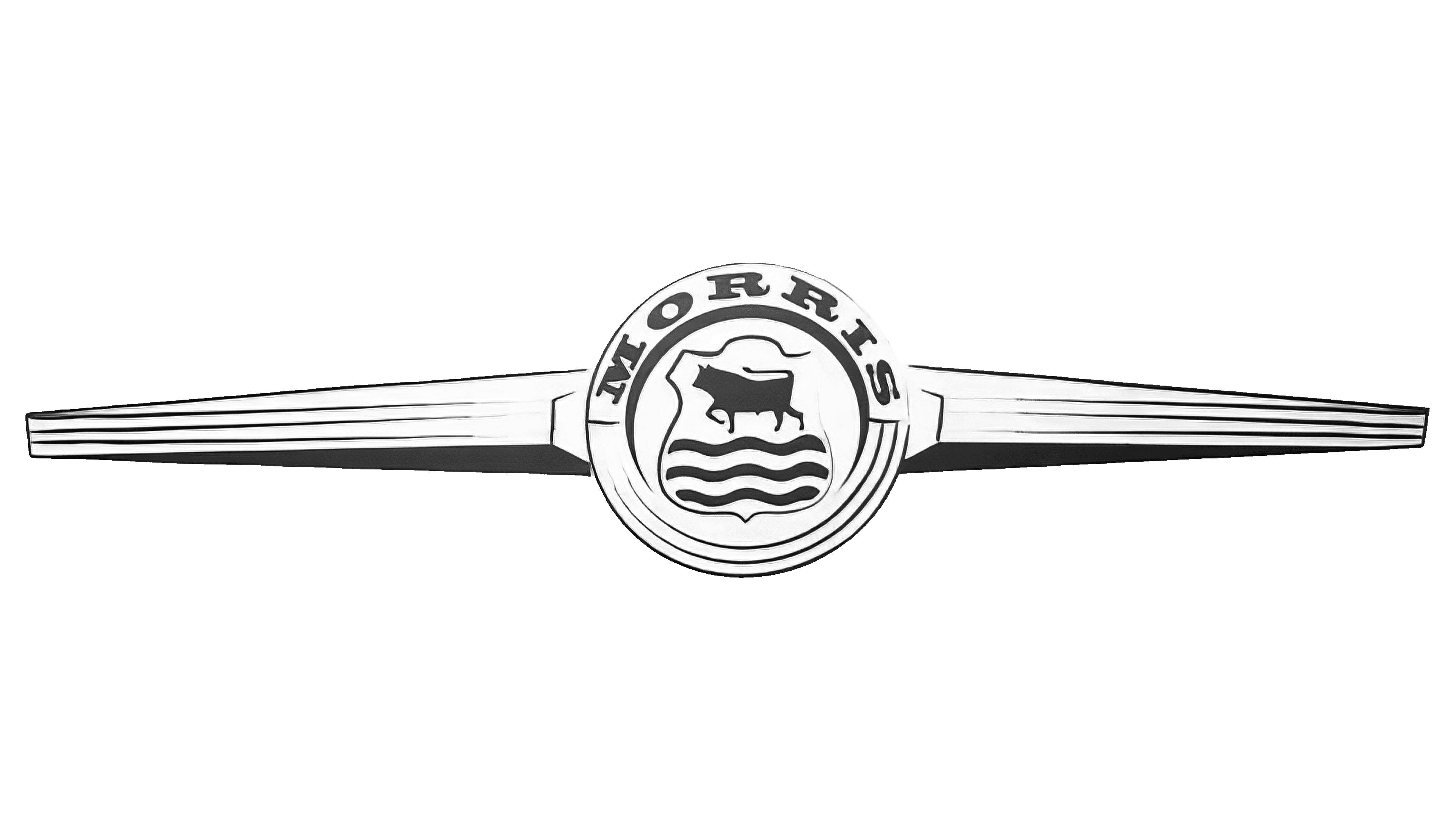
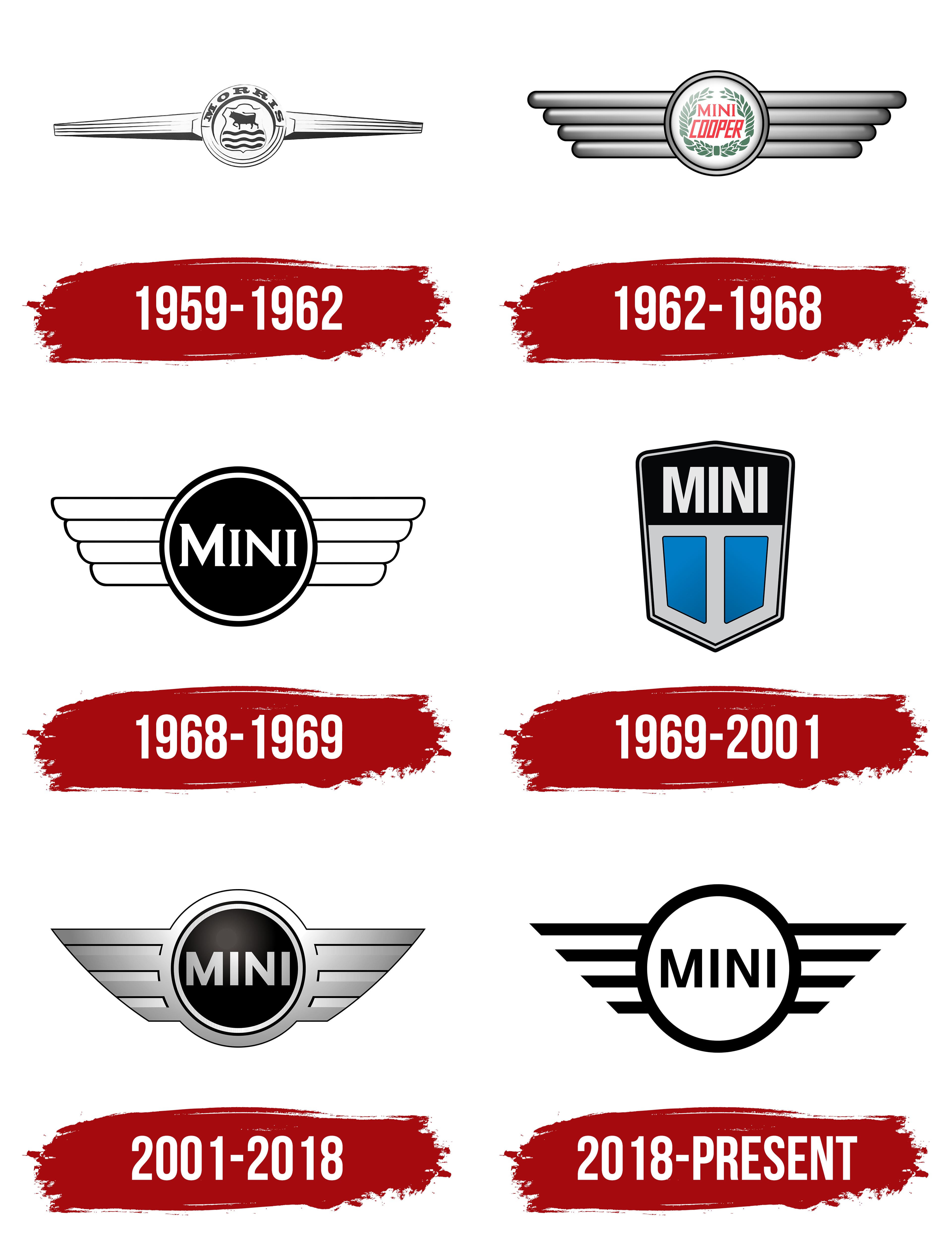
The debut logo features a propeller because the subcompact was first produced in several factories, including Morris Motors’ aircraft factory in Cowley, near Oxford. The models that emerged from there were called the Morris Mini-Minor and had a label shaped like an aircraft propeller. Later, the aircraft theme remained in all emblems. The center is a double circle with a coat of arms depicting a bull and three wavy lines. At the top is the Morris lettering in large serif type.
1962 – 1968
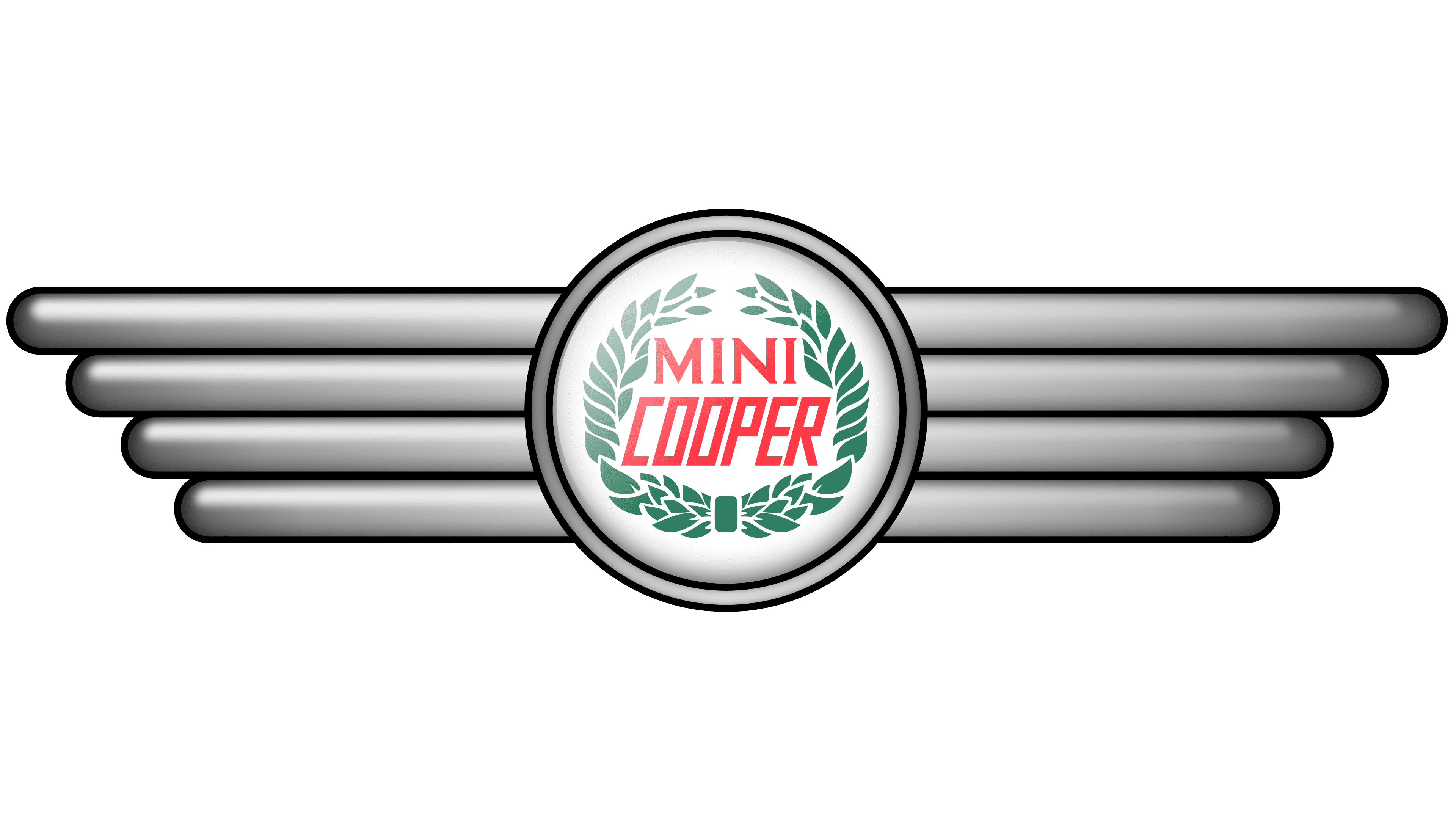
In the early 60s of the last century, the company collaborated with designer John Cooper, the creator of the famous Mini Cooper compact car. After the car’s release, the company immediately approved a new emblem design with a different inscription. The series’ name is at the center of the circle, forming a wreath of tree branches. Large elongated letters are colored red. The word “Mini” has serifs; “Cooper” does not. To the right and left of the disc, there are four broad lines of different lengths. They personify two elements at once: the radiator grille and the aircraft’s wings.
1968 – 1969
For one year, the brand changed its logo to black and white. In style, it resembles a simplified version of the previous emblem, retaining the most important element: the structure. But some details have disappeared or been replaced. For example, the inscription was reduced to the word “Mini,” the wreath of leaves was removed, and only two lines remain, alternating between triple-edged light and dark. The badge’s center is now black with a white brand name.
1969 – 2001
After Leyland Motors (Rover Group) acquired the brand, the small-car series was officially renamed MINI. At the same time, the emblem was updated. It consists of a hexagonal shield divided into two parts: a gray bottom and a black top. At the bottom are two sky-blue rectangles cut obliquely, with thick gray lines along their edges. Above is the car’s name, presented in white.
2001 – 2018
The new owner (BMW) returned the brand’s legendary winged symbol with a circle in the middle. It has also been modernized to meet current requirements. The logo features a black circle with chrome trim. On the left and right, the aircraft’s silvery wings extend. They have sharp corners and a solid fill between the protruding stripes. The word section is set in sans-serif letters with neat, even lines. This makes the emblem austere, stylish, and recognizable, fitting the automotive theme.
2018 – today

The current version, the 2D model, is a flat visual identity sign, simplified and free of unnecessary details. This approach creates a simple logo that works equally well as a car marking, a legal brand symbol, and a creative advertising element. To do this, the designers removed the gray, leaving the classic black-and-white combination. They focused on the brand name and the wings.
Font and Colors

The original logo underwent a long modernization process but returned to simple shapes. They convey what matters most for the car company: freedom and speed, reflected in the widespread wings. The modern logo’s prototype is the 1968 version. It is also black-and-white and as simple as possible.
Early versions used a serif typeface reminiscent of Copperplate FS Bold Condensed. Later versions had chopped variants with smooth, even letters. They share similarities with Barnaul Grotesk Extra Bold and Motiva Sans ExtraBold. The specially designed typeface MINI Serif is currently in use.
The corporate palette is monochrome, black and white. However, earlier, the logo also featured other colors, red, green, and shades of gray.
FAQ
What does the MINI logo mean?
The logo reflects the brand’s personality and values. It features stylized wings that symbolize speed, freedom, and strength. These elements highlight the vehicle’s dynamic and agile character. The wings suggest freedom and the ability to travel easily across various terrains.
BMW has owned the British car brand since 2000. The logo has evolved over the years to stay modern and elegant while preserving the brand’s heritage. The circular emblem at the center of the wings bears the brand name, showcasing its strong, recognizable identity.
Why does the MINI logo have wings?
The logo features wings that symbolize speed, freedom, and agility. Many automakers use wings in their logos to convey these qualities.
The wings symbolize the brand’s commitment to creating dynamic, agile cars. The design suggests these cars are fast and deliver an exciting driving experience. This aligns with the brand’s reputation for creating efficient, stylish, and easy-to-drive cars. The company’s wings reflect its heritage and evolution under BMW’s leadership. The logo maintains a modern look while paying homage to the brand’s history.
Who makes the Mini Cooper?
BMW produces the Mini Cooper. It was originally a model from two Leyland brands, the Austin Mini and the Morris Mini. In 1969, Mini became its own brand. BMW later bought the brand and relaunched the Mini Cooper.
BMW produces and develops the Mini Cooper using modern technology and design. The car retains its iconic and compact styling. The brand is known for its distinctive looks, efficient performance, and driving pleasure.
What is the Mini logo?
The modern logo is simple and stylish. The brand name appears in capital letters in a sans-serif font. The name is inside a circular ring. On each side of the ring, there are four horizontal lines of varying lengths. The entire logo is black.
This design keeps the brand’s identity clear and modern. Simplicity makes the logo easily recognizable. The black color adds elegance and highlights the brand’s focus on quality and design.