


 Montreal Expos Logo PNG
The Montreal Expos logo connects sports and the city’s cultural heritage, capturing the atmosphere of a time when baseball in Canada found a new voice. Inspired by the World’s Fair that gave the team its name, it became a symbol of new opportunities and a significant part of Montreal’s history.
The Montreal Expos were created in 1968, when Montreal received an MLB expansion franchise, the first based outside the United States. The name referred to Expo 67. The club entered the National League in 1969 at Jarry Park under manager Gene Mauch and finished its first season with 52 wins and 110 losses.
During the 1970s, the roster improved through players such as Andre Dawson and Gary Carter. The team moved to Olympic Stadium in 1977 and posted its first winning record in 1979. In 1981, the Expos reached the National League Championship Series but lost to the Los Angeles Dodgers. Tim Raines and Tim Wallach joined Dawson among the leading players of that period.
Local business owners bought the franchise in 1989. The club produced baseball’s best record in 1994 at 74-40 before a players’ strike ended the season, leaving its possible World Series run unresolved. Financial pressure later led to the departures of Pedro Martinez, Larry Walker, and other key players. Jeffrey Loria bought the team in 1999 as attendance fell and Olympic Stadium required repairs.
The league purchased the franchise for $120 million and considered contraction in 2001. The team moved some home games to San Juan in 2003 and 2004 to raise revenue. The Expos played their final Montreal game on September 29, 2004. After 36 seasons, the club relocated to Washington in 2005. It became the Washington Nationals, ending the Expos era. At the same time, exhibition games and interest in a future Montreal team remained across Canada.
Meaning and History
What is Montreal Expos?
This team introduced Canada to professional baseball, adding a unique style and local flair. It was known for its vibrant tricolored caps and iconic logo, with games held at a large stadium affectionately called “The Big O” by locals. As the league’s only French-speaking team, it nurtured future stars and thrilled fans with dynamic play that combined speed, power, and defensive skill. Their vibrant uniforms and charming mascot made the team a favorite among supporters, and its legacy continues to inspire baseball fans in Canada and beyond, even after changes in the club’s history.
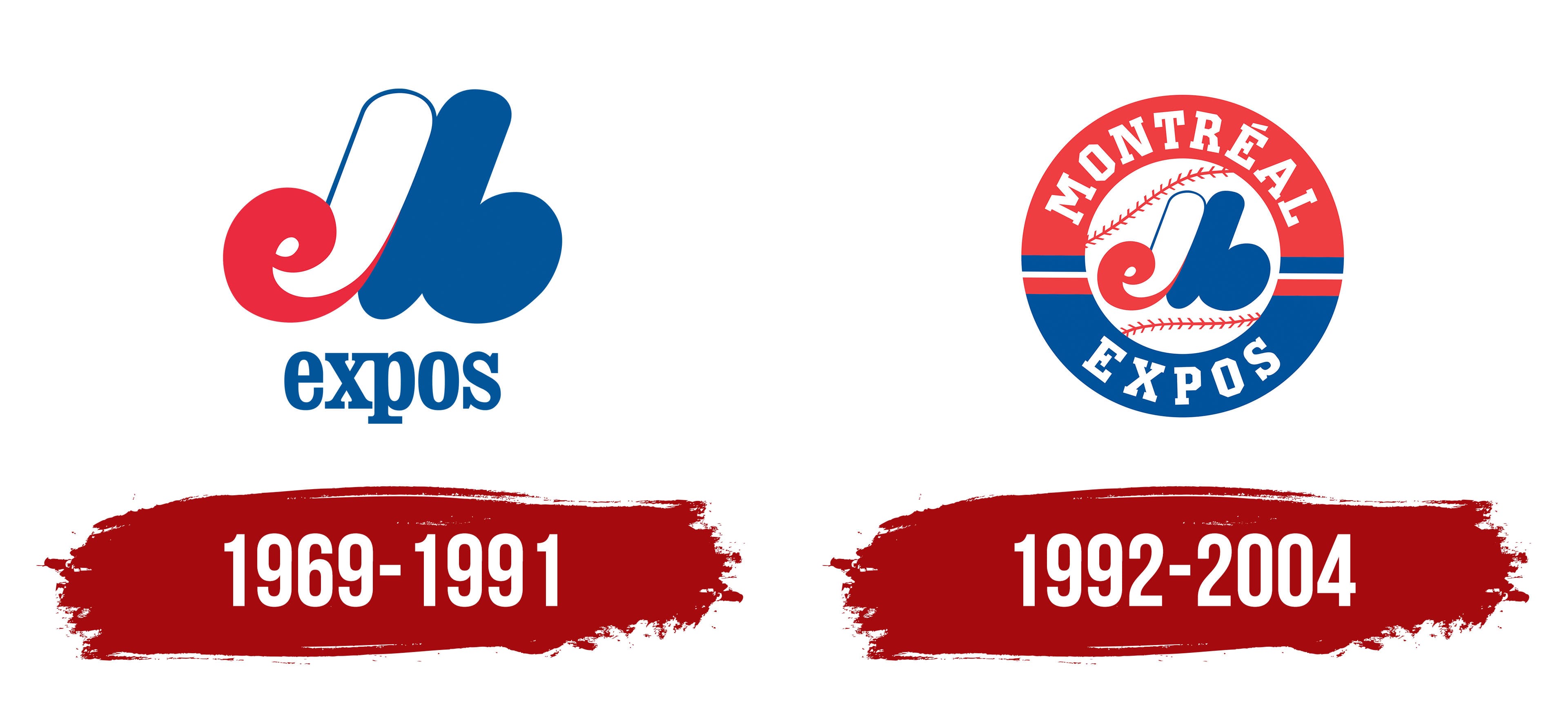
1969 – 1991
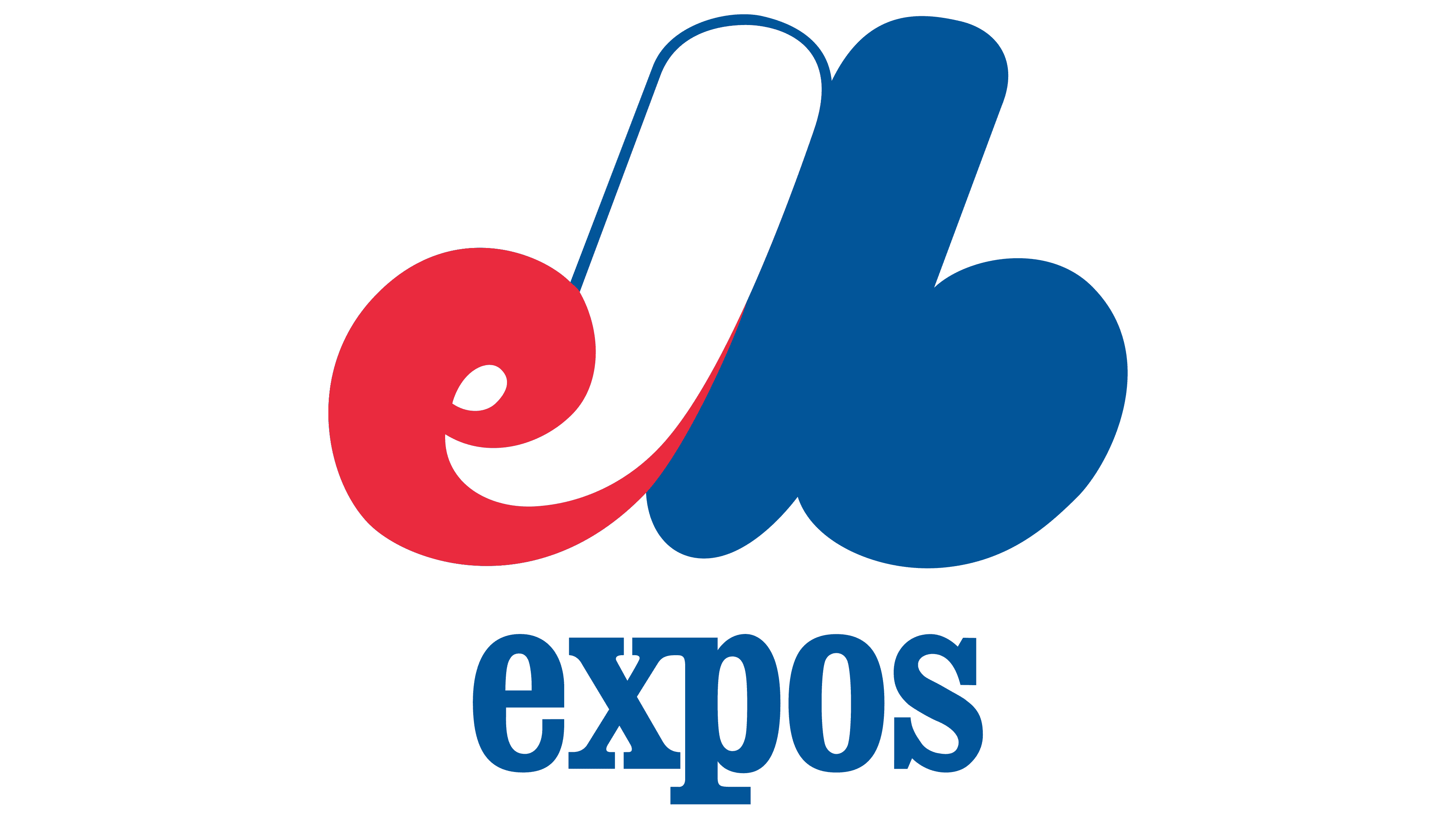
The Montreal Expo logo conveys the city’s spirit, sports, and national pride. The main symbol is the stylized letter “M,” which combines several meanings. The left fragment of the letter forms an “e,” referring to the team’s name, Expos, and the right one completes the emblem’s shape.
The color palette includes red, white, and blue, echoing the colors of the Canadian flag. The shades emphasize the connection with national history. The white center symbolizes unity, while the red and blue add energy and dynamics.
The serif font at the bottom solidifies the text and emphasizes respect for traditions while remaining modern.
Expo 67 was the international exhibition held in Montreal in the late 1960s. The event symbolized the city’s cultural uplift, and the team chose the name to emphasize its connection with Montreal’s history and atmosphere.
The logo is well-thought-out and detailed. The flowing lines of the letters create a sense of movement, reflecting the dynamics of a baseball game.
1992 – 2004
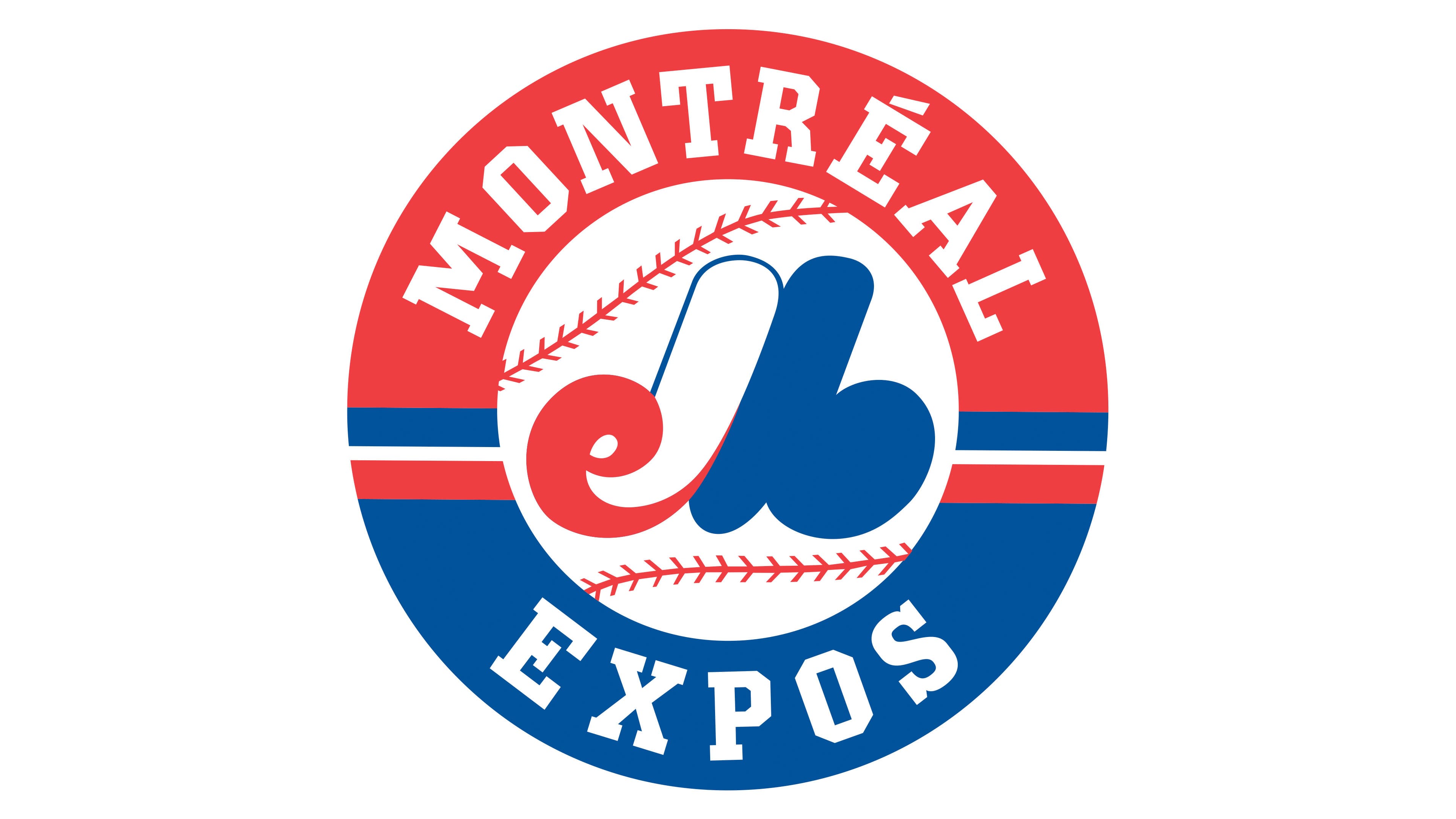
The updated team logo retained the original style. The traditional colors remained, but the blue deepened and brightened, saturating the palette. The changes emphasized the emblem’s expressiveness while preserving its connection to history and national roots. Red, white, and blue continue to reflect a sense of belonging to Canadian culture.
The letter “M,” associated with Montreal, remained the basis of the symbol. The baseball-like seam centerline adds a sporting dynamic and emphasizes the connection to the game.
The team’s name appears on the logo in a strict and concise font. The letters are easy to read, conveying the club’s professionalism and confidence.
The new design carefully preserved the original’s ideas, making it more modern and lively. The updates highlighted key details about history, the city, and sports, combining tradition and relevance.