


 Olmeca Tequila Logo PNG
The Olmeca Tequila logo tells the story of tequila’s ancient roots. The sign’s symbols show deep reverence for the civilization that gave rise to the beverage. The emblem’s shades hint at the color of the agave used to make the distillate.
Olmeca Tequila traces its background to 1873, when the Colonial distillery began operating in Arandas, Jalisco. The official brand story starts in 1967 with the registration of the Olmeca trademark. Its name refers to the Olmec civilization of Mesoamerica. The logo features a stylized stone head inspired by Olmec sculpture.
Seagram entered tequila in 1967 by buying a distillery in Tequila. In the 1990s, it signed a distribution deal with Patrón. It financed the new Colonial de Jalisco distillery in Arandas to support Patrón’s growth. The plant opened in October 1997, but four months later, Patrón’s owner, St. Martin’s Spirits, ended the deal. Seagram redirected the site to its own tequila brands, Olmeca and Mariachi.
In the late 1990s, Seagram shifted toward media, acquiring Universal Pictures and PolyGram Records in 1998. After its 2001 merger with Vivendi, Seagram sold the drinks portfolio and split it between Pernod Ricard and Diageo. Pernod Ricard acquired Olmeca and the Arandas production site, providing the brand with dedicated management and stronger global promotion. Sales then grew by 20 to 30 percent annually, and in 2003, Olmeca received international awards as a leading tequila.
In 2009, Olmeca Altos was developed with British bartenders Henry Besant and Dre Masso, along with master distiller Jesús Hernández. The 100% blue agave line used the tahona method for bar-focused tequila. In 2014, Pernod Ricard updated the brand with a Chris Mitchell logo and darker bottle colors. Olmeca later became the top-selling tequila in EMEA and stayed in the global top 5 outside the United States and Mexico.
Meaning and History
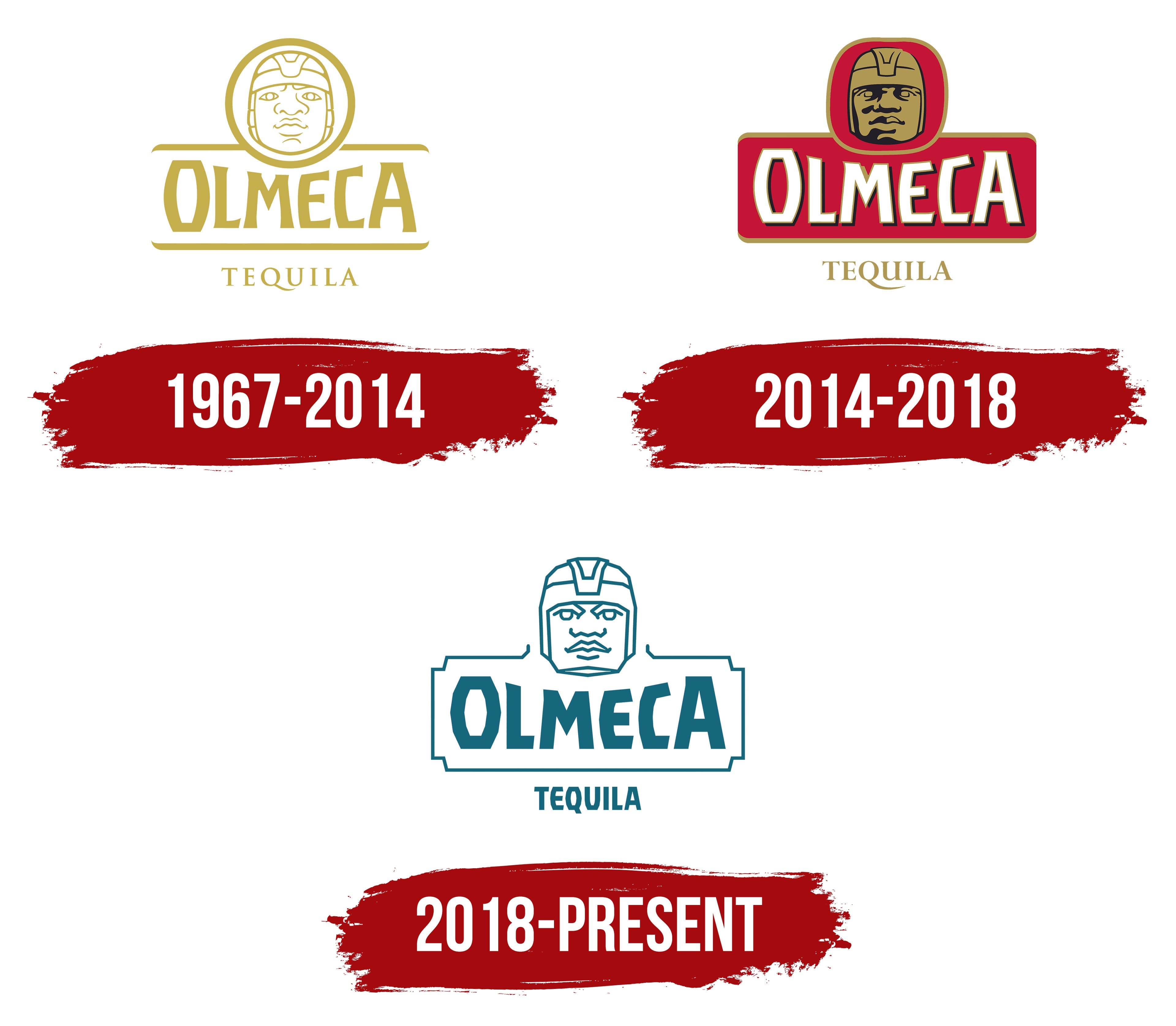
Under the Olmeca brand, the drink has been produced since 1967. Tequila is named after the first ancient civilization (2nd-1st century B.C.) that existed in the middle of the American continent (in the south and center of today’s Mexico). The Olmecs were the ancestors of the country’s cultural features. They were the first to prepare alcohol from agave. The modern brand’s drinks follow ancient recipes. Therefore, we chose an authentic name for the product. Colonial, founded in 1873, produces the tequila. Part of the pinyas is processed using an ancient tahona wheel, and the resulting liquid is added to all brand varieties in varying proportions.
During its existence, the tequila logo has changed three times, and only in the last six years, after Pernod Ricard’s purchase in 2001. Before that, for almost 50 years, the drink had a permanent logo. Modern changes weren’t cardinal either and didn’t touch the brand’s main visual symbol: an unusual head at the center of the composition.
What is Olmeca Tequila?
Olmeca Tequila is a premium Mexican tequila brand produced in the heart of Jalisco, where tequila has a protected designation of origin. The production uses ripe blue agave grown in highland regions, where the plant reaches its highest concentrations of sugars and aromatic compounds due to unique climatic conditions. The brand offers various types of tequila, including the ultra-premium Altos line, developed in collaboration with renowned bartenders, the aged Gold (Reposado), and the classic Silver (Plata). The production process combines traditional methods, such as roasting agave in brick ovens and distilling in copper stills, with modern quality-control systems, creating a tequila with bright citrus notes and a rich agave flavor.
1967 – 2014
Preserved artifacts of ancient civilization were used as visual brand symbols on every bottle, including ancient writings. The logo features a stone portrait of an Olmec ruler. It was copied from one of the unusual sculptures archaeologists found in Mexico’s coastal lands. The Olmecs carved the head from volcanic rock. Probably the same rock used to make the first tachones for tequila production. The sculptures represent the history and roots of the Mexican land and express the culture of ancient peoples. That is why the image was chosen as the drink’s main sign. According to ancient beliefs, the head contains a person’s soul and experience. Every bottle of tequila holds the experience and soul of its producers and the Mexican land.
The brand’s name appears on a rectangular plate, like a signature under a museum exhibit. The letters look ancient, as if carved from stone, matching the drink’s spirit. The first and last characters are larger than the central part of the inscription. They show that tequila has retained its unique taste from its inception to today; below the brand name, the inscription “tequila,” which indicates the original drink, can be produced only in five regions worldwide.
All logo elements are in gold to present Olmeca Tequila as an ancient, valuable product.
2014 – 2018
In 2014, the tequila owner restructured the company. As a result, the company updated its promotion and branding options. Designer Chris Mitchell developed a new logo for Olmeca. It emphasized the brand’s features and was realistic.
The plaque’s head and trim were done in a color that matched the actual sculpture. The logo’s background received color. This changed depending on the tequila, from deep red (the most common) to chocolate. Red was associated with the inner fire that fuels tequila, the red volcanic soils of tequila agave, and the brick ovens for its roasting.
The font and spelling features of the brand name have not changed. The inscription color changed to white. To reveal the drink’s full flavor, it is served chilled. During production, the company follows standards to ensure environmental safety and uses only natural ingredients. Therefore, the color indicated the naturalness, purity, and coolness that distinguish Olmeca.
2018 – today
In 2018, Elliott Management Corporation became a partial owner of Pernod Ricard, which affected the business policy. A new stage of development for the brand “Olmeca Tequila” included a more modern market presence. The renowned French creative studio Yorgo & Co. has created the new visual identity for Olmeca. The studio made the image more stylish. The emblem’s lines are thin and clear. The head looks stricter and no longer resembles a stone head. However, the emblem still preserves and highlights Mexican features. The inscription “tequila” uses the same font as the main brand name.
Font and Colors
A feature of tequila logos is using a single color throughout the image. The emblem’s final shade is moray. It mixes blue and green with a slight gray undertone. The color is deep and noble. It reflects the agave leaves used to make tequila.
The logo’s font doesn’t match the exact look, but it shares features with Lentz’s Bold and Los Lana Niu Pro Black.