


 Pepsodent Logo PNG
“If you use the brand’s toothpaste, the smile will not leave your face,” the Pepsodent logo promises. A small amount is enough each day, and results come quickly. The emblem suggests both cosmetic and therapeutic benefits.
In 1915, in Chicago, the Pepsodent Company launched its toothpaste with a formula containing pepsin, an enzyme intended to break down food residues. At the time, fewer than 10 percent of Americans regularly brushed their teeth, making demand uncertain.
In 1916, Douglas Smith acquired the company. He brought in advertising specialist Claude Hopkins, known for work with Quaker Oats, Goodyear, and Palmolive. Hopkins built the campaign around the idea of a “film” on teeth, presenting it as the cause of decay and dull appearance. The message reshaped consumer perception and linked daily brushing to visible results.
Free samples and nationwide print campaigns drove adoption. Within a few years, more than 65 percent of Americans kept Pepsodent at home. By 1918, the product had entered international markets.
In the 1930s, Pepsodent invested heavily in promotion. A large neon sign appeared in Times Square in 1930. The brand sponsored radio shows, including Amos n’ Andy and, from 1938, “The Pepsodent Show Starring Bob Hope,” which led US ratings in 1942–1943.
In 1942, Unilever took control of Pepsodent, expanded its distribution, and achieved strong growth in the UK between 1944 and 1950. However, by the 1950s, competitors shifted to fluoride formulas. Crest (Procter & Gamble) and Colgate adopted the ingredient early and built campaigns around it.
Pepsodent delayed the transition. Crest received approval from the American Dental Association in 1960, accelerating the consumer shift. Pepsodent later introduced fluoride products but lost market share. By the early 2000s, it held about 1 percent of the US market. In 2003, Church & Dwight acquired rights for the US and Canada, while the brand continued in other regions.
Meaning and History
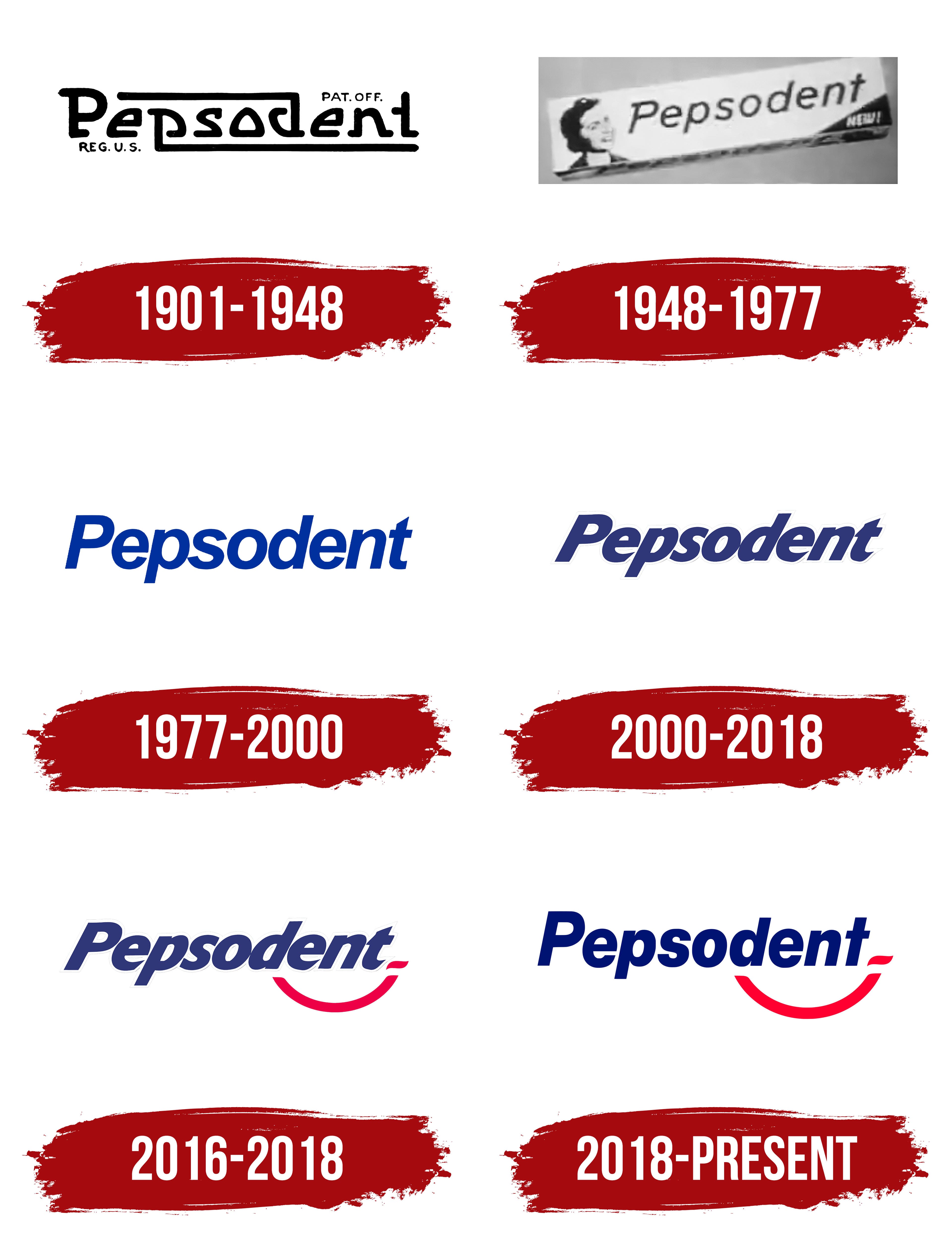
The brand name is shown on the corporate logo. Moreover, the word “Pepsodent” is used in all variations of the logo. It is a key element formed from two bases: “pepsin” and “dent.” Throughout its existence, the trademark has had six basic emblems and several additional versions.
What is Pepsodent?
Pepsodent is a toothpaste line that was introduced in 1915. Church & Dwight owns it, except in Canada and the United States, where Unilever owns the brand. A distinctive feature of this product is sassafras extract, which gives it a strong minty taste.
1901 – 1948
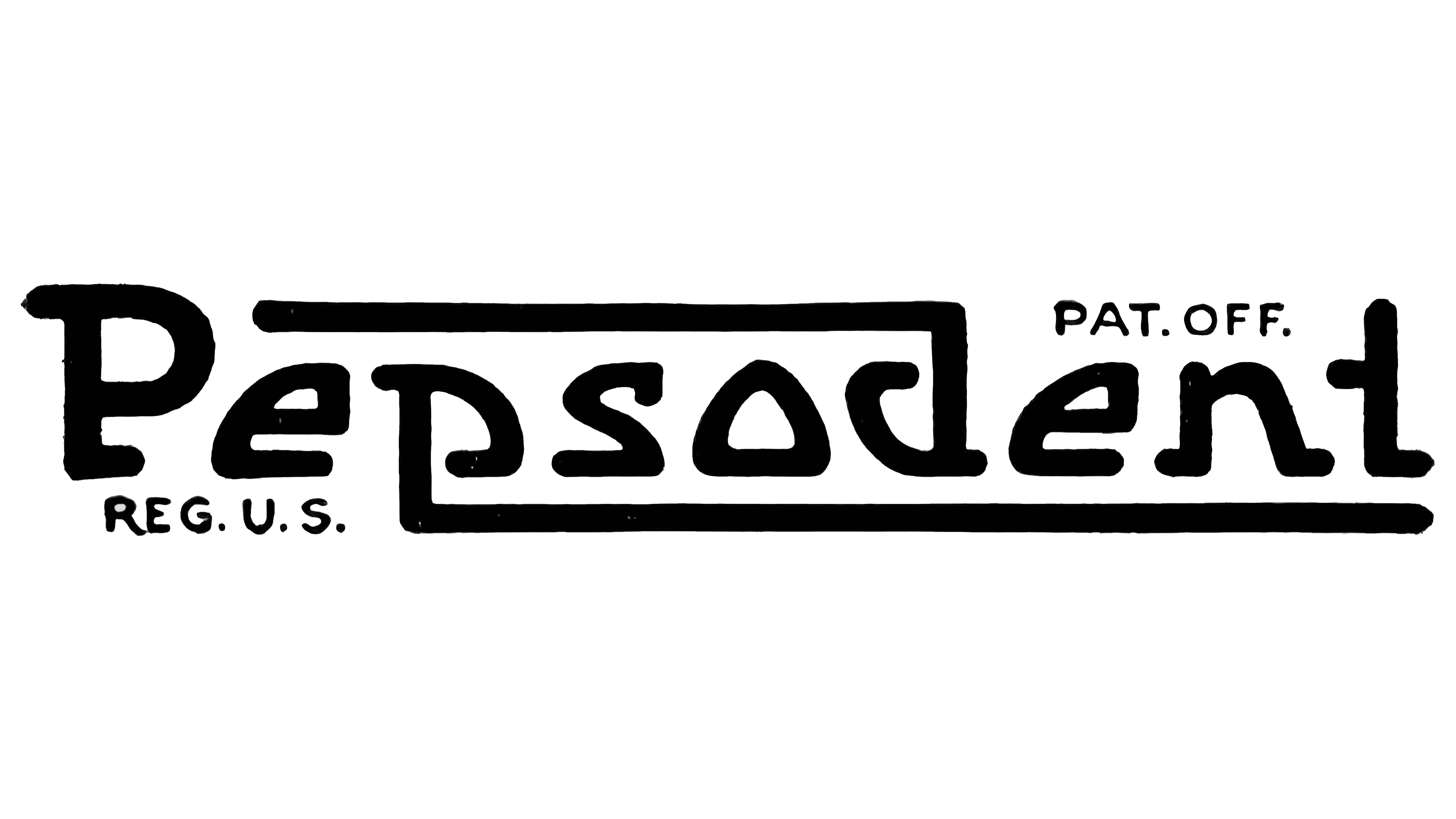
The debut version was the most creative. The letters “p” and “d” have elongated legs, an original way to extend beyond the borders of the inscription “Pepsodent” and surround it from above and below.
1948 – 1977
This logo removes the serifs. The emphasis is on the “t” without the bottom, so the letter looks like a straight stick with a top bar.
1977 – 2000
The designers offered a standard version of the lettering, where there are no additional elements, only the brand name. The letters are classic, with a capital “P.”
2000 – 2018
During this period, the word “Pepsodent” became dark blue and tilted to the right.
2016 – 2018
Management approved a new emblem, complemented by a graphic sign shaped like a welcoming smile. It’s an inverted arch with a miniature stroke on the right.
2018 – today
The developers removed the italics and replaced the standard letter “t” with the original character in the 1948 version.
Font and Colors
Each logo option contains a product name in a recognizable style. The corporate version is a strict inscription with smooth symbols. Recently, it has been supplemented with a curved line resembling a smiling emoticon.
If the early emblems had serifs, the typeface no longer does. The font is grotesque, with evenly spaced characters. The first letter is uppercase; the rest are lowercase. The palette consists of several shades of white, red, and blue.