 Stern Logo PNG
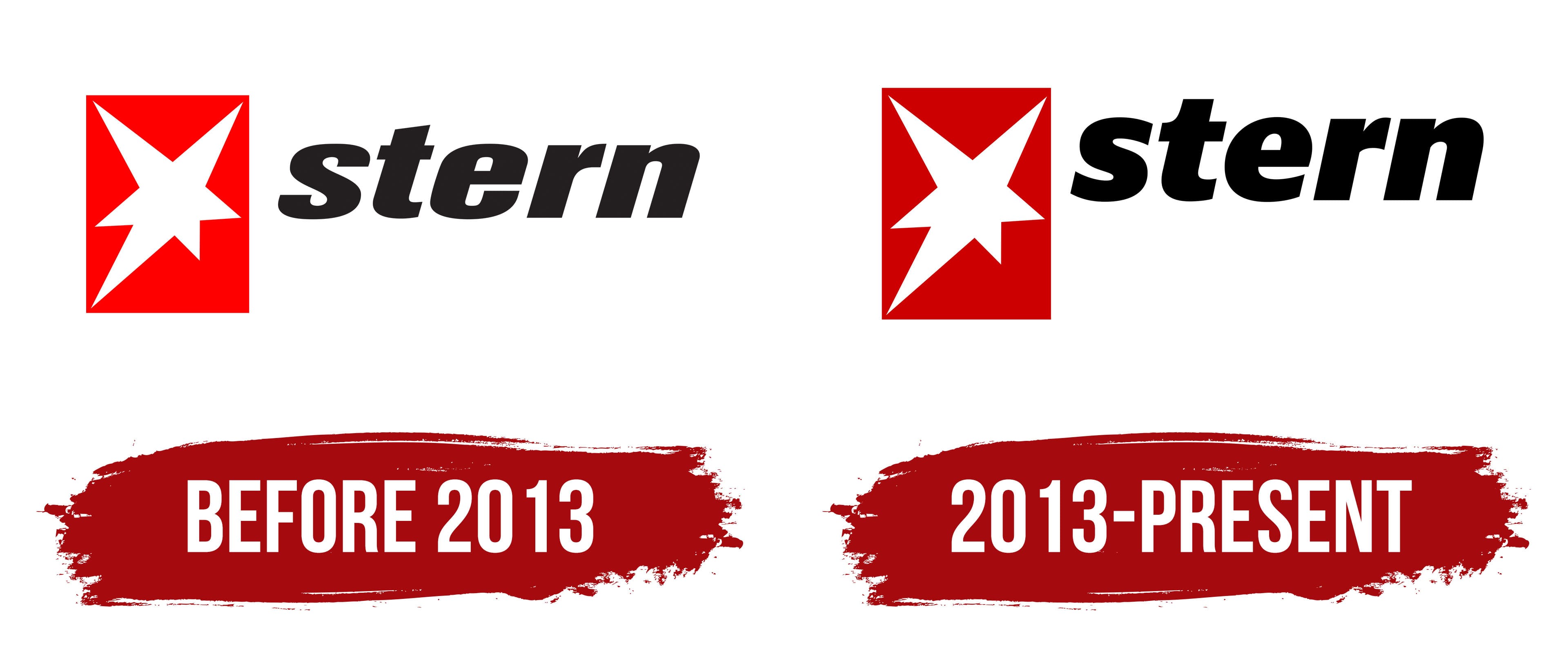
The Stern Logo, a familiar sight, features an asymmetric six-pointed white star set against a red rectangular background. The symbol has withstood the test of time, maintaining its original form over the years, contrary to the logo’s text element.
Employing black for its textual component, Stern presents a bold and compelling tricolor scheme comprising red, white, and black. The logo effectively mirrors the brand’s appeal to a contemporary demographic while honoring its deep-seated roots.
The significance of the Stern emblem lies in its simplicity and its contrasting color scheme. The asymmetrical star serves as a beacon of distinction and originality, underlining the brand’s commitment to standing out in the industry. Using black for the wordmark signifies strength and authority, indicating the brand’s unwavering stance in its sector. The tricolor palette encapsulates passion (red), purity (white), and power (black), beautifully reflecting Stern’s ethos. The persistent design over the years further attests to the brand’s dependability and steadfastness.
Stern was founded in 1948 in Hanover by journalist and publisher Henri Nannen. Postwar Germany was still dealing with physical damage, economic hardship, and moral questions, and Nannen built the weekly magazine around accessible writing and strong photojournalism. The name Stern, meaning “star” in German, reflected the magazine’s aim to become a guide for a broad readership.
From its early years, Stern gave photography a major role and worked with leading photographers of the period. In the 1950s, its circulation grew quickly, and it became one of West Germany’s most widely read magazines, competing with Der Spiegel. In 1965, the magazine moved to Hamburg, then a major center of West German media.
In 1969, Stern came under Gruner + Jahr, later part of Bertelsmann. During the 1970s, its weekly circulation exceeded eight million copies. In 1971, the magazine published a major article in which 374 women publicly said they had had abortions, then illegal in West Germany. The publication became an important event in the country’s debate on women’s rights and legal reform.
The worst crisis came in 1983, when Stern paid about nine million Deutsche marks for supposed Hitler diaries. The documents were soon exposed as forgeries made by Konrad Kujau, leading to resignations and long reputational damage. In later decades, Stern rebuilt through reporting and investigations while competing with Der Spiegel. In the 2000s, stern.de became a major digital outlet, and in 2019 Gruner + Jahr merged Stern’s newsroom with other titles in a multi-brand structure.
Meaning and History
Moving on to the visual elements that comprise the brand’s identity, Stern’s approach to design is firmly rooted in the marriage of imagery and text. Accompanying its articles with thought-provoking illustrations and photographs, Stern seamlessly blends the lines between a news magazine and an art exhibit. This fusion of vivid imagery and compelling stories offers readers an immersive, multisensory experience.
The Stern logo, a minimalist, stylized representation of a star, beautifully mirrors the brand’s identity. It serves as a beacon, a guiding light in the often convoluted world of current affairs, symbolizing the magazine’s mission to help readers navigate its complexities. The simplicity of the logo is a testament to the brand’s direct and unadorned approach to news delivery.
The typography and color palette of Stern also contribute to its brand identity. The magazine uses a simple, clean typeface, emphasizing readability and sophistication. The color scheme primarily contrasts black and white, further enhancing simplicity and focus, with occasional bold colors for emphasis and visual appeal.
What is Stern?
Stern is a well-established weekly news magazine based in Hamburg, Germany. It was founded on August 1, 1948, by Gruner + Jahr, a major publishing firm. The magazine covers a broad spectrum of topics, including politics, economics, culture, science, technology, and lifestyle. Stern is known for its in-depth reporting, insightful feature articles, and striking photography. Its substantial readership and influence make it one of Germany’s leading general-interest magazines.
before 2013

2013 – today