


Grammarly has announced a major rebrand and a transition to the new name Superhuman. Additionally, the company introduced a unified platform that integrates several products. The ecosystem now includes Grammarly, Superhuman Mail, and the Coda app. The entire lineup of services now operates under the Superhuman brand and uses artificial intelligence tools to boost personal and team productivity.
Previously, Grammarly was perceived as a service for checking text and improving writing. The situation began to change after the acquisitions of Superhuman Mail, an AI-powered email client, and Coda, a collaboration platform. Under the new brand, all products are integrated into a single environment, where working with text, email, and documents becomes part of a shared workflow.
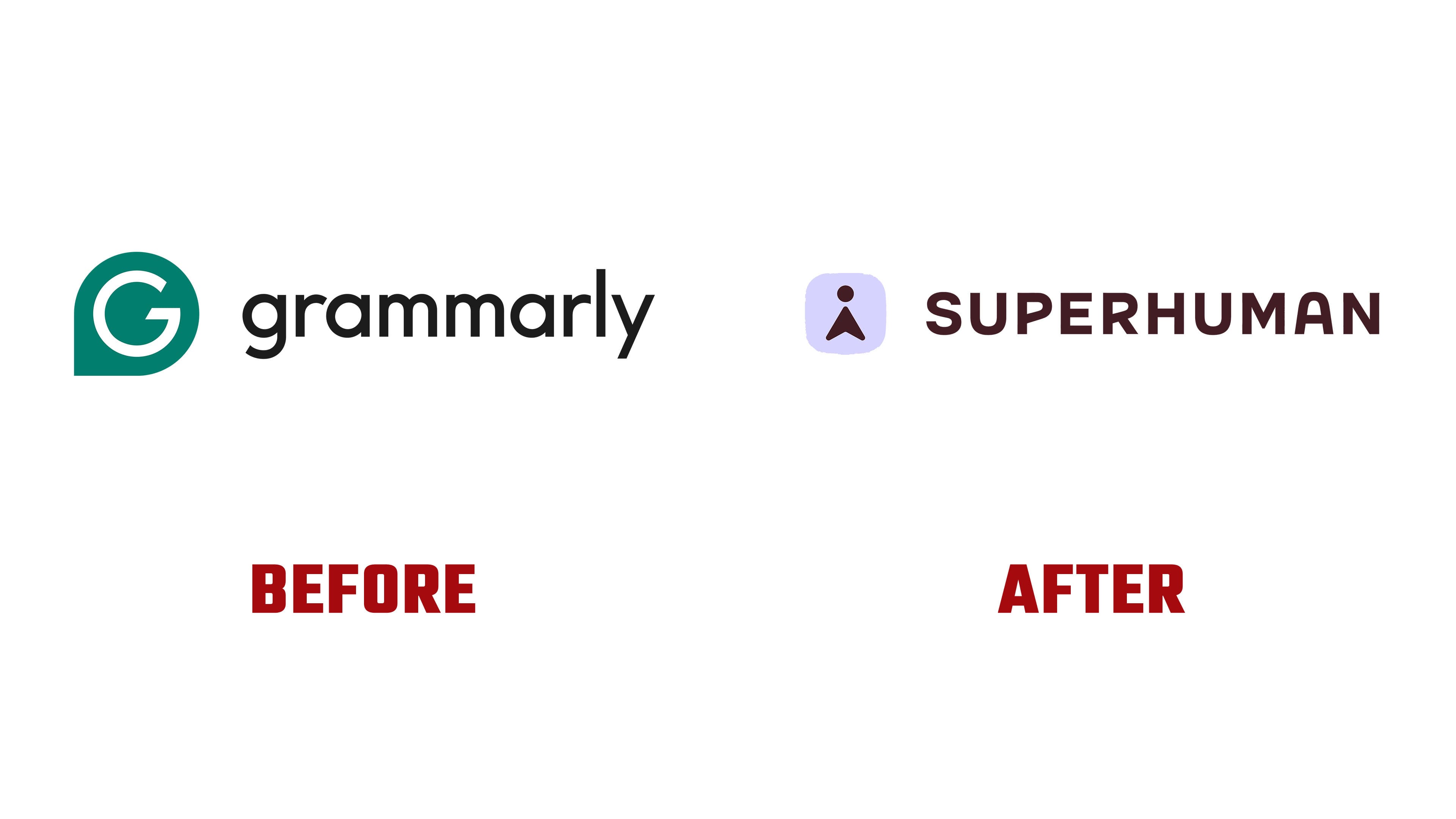
The name Superhuman reflects the company’s updated direction. The goal is to help people work at the limits of their capabilities by leveraging intelligent tools. Grammarly, as a product, continues to exist within the platform, but the brand now serves as a single service within the broader system.
The previous Grammarly logo appeared in 2024. At that time, the circular mark with the letter G was replaced by a symbol resembling a suggestion marker. The move felt logical and clearly conveyed assistance with writing. That symbol continues to be used for the Grammarly product despite the company’s name change.
The new visual identity for Superhuman was developed by the studio Smith & Diction. At the center of the system is a symbol called the Hero. The shape resembles a cursor arrow and the silhouette of a cape-wearing character. The mark combines the letters A and I, pointing to artificial intelligence. The icon is easy to interpret and holds up well across all communication formats.
The Superhuman wordmark is set in the Toroka typeface. The font evokes a science-fiction aesthetic with a subtle retro tone. Associations lean toward classic space-themed TV series without decorative overload.
For the entire system, Smith & Diction commissioned a custom type family based on Messina by Luzi Type. This resulted in Super Sans and Super Serif. Both typefaces are humanist, with character and fluidity. Super Serif resembles a refreshed interpretation of Times Roman, blending academic qualities with a modern rhythm.
The color scheme is built around two key shades. The lilac tone, Mysteria, and the rich burgundy, Heart, establish the emotional foundation. Yellow, blue, and green accents complement the palette. Smith & Diction is known for precise color work, so the scheme appears vibrant while remaining cohesive across the entire ecosystem.
Superhuman positions itself as a new kind of platform that unites different work scenarios and enhances them through artificial intelligence. The new branding communicates this scale and establishes a strong visual foundation for the company’s continued growth.