


 TIME Logo PNG
The TIME logo strengthens the brand through its consistent use on the covers. It has become a symbol of high-quality journalism, authority, reliability, and influence. The emblem’s simplicity and recognizable style make it easy to identify the magazine, a reliable source of information for readers worldwide.
TIME began as an idea in 1918 at Camp Jackson in South Carolina, where Yale Army Reserve officers Briton Hadden and Henry Luce discussed a magazine to summarize the world’s main news for busy readers. After the war, Hadden worked at The Baltimore Sun and Luce at The Chicago Daily News. In 1922, they left their jobs, raised money from Yale contacts, and incorporated Time Inc. on November 28 with $85,675 from about 74 investors.
The first issue of TIME went on sale on March 3, 1923, with former House Speaker Joseph Cannon on the cover. It cost 15 cents, while a yearly subscription was $5. The magazine used fixed sections covering politics, world events, business, science, medicine, education, religion, arts, sports, press, and “Milestones.” Articles were unsigned and presented as the editors’ voice.
Hadden handled style and editorial tone, while Luce focused on business and finance. The magazine lost money in its early years, but by late 1927, circulation had passed 175,000, and advertising revenue had neared half a million dollars. In 1927, TIME introduced its red cover border and named Charles Lindbergh its first Man of the Year, later renamed Person of the Year in 1999.
Hadden died in February 1929 at age 31, leaving Luce in control. He expanded the company with Fortune in 1930, Life in 1936, and later Sports Illustrated and People. In 1989, Time Inc. merged with Warner Communications to form Time Warner, later tied to AOL in 2001. Time Inc. became public again in 2014, was bought by Meredith in 2018, and TIME was sold the same year to Marc and Lynne Benioff.
Meaning and History
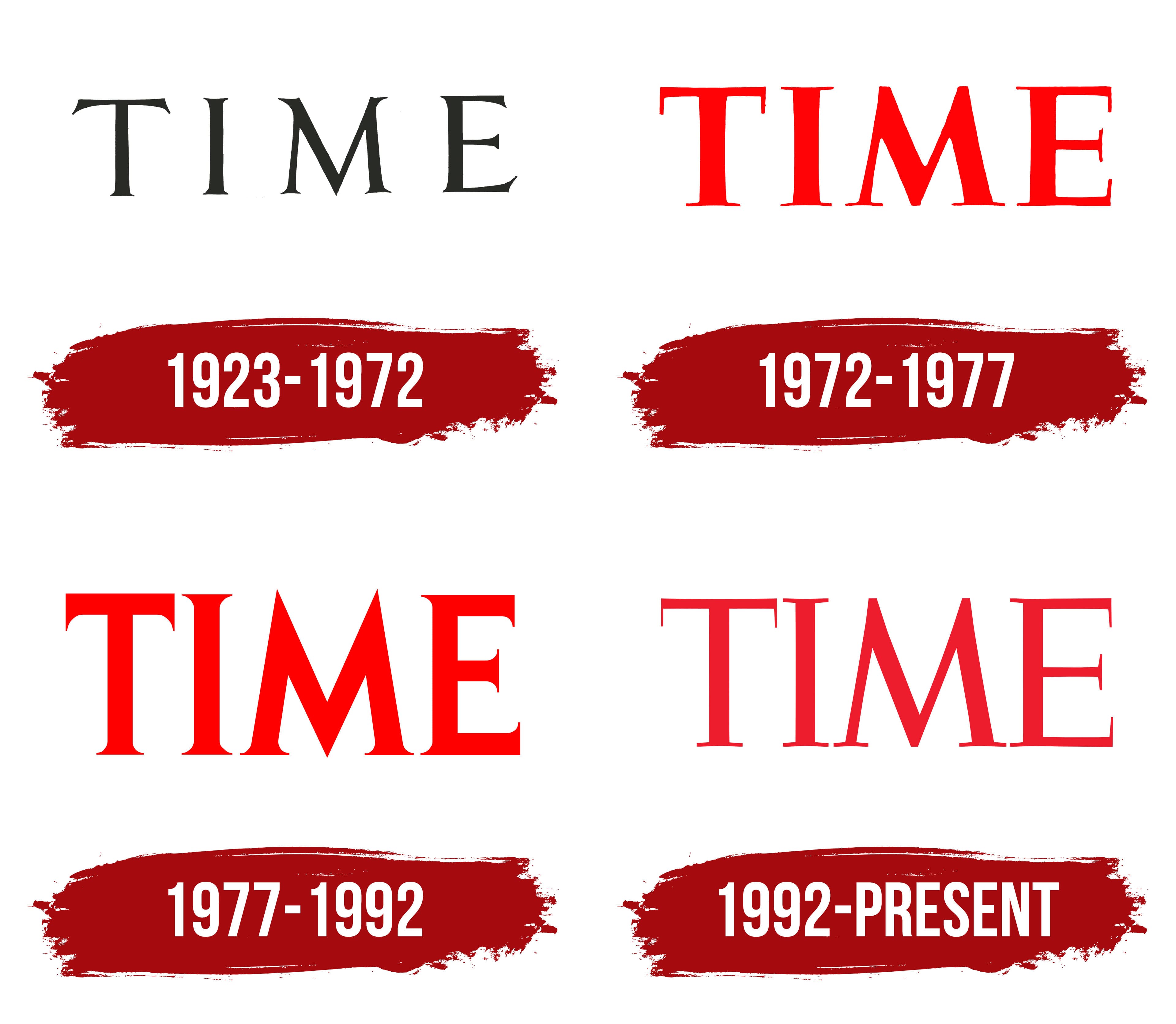
The TIME logo is as old as the magazine itself. It disappeared from the front cover only once, in 2020, on the eve of the US presidential election. It was replaced with the word “VOTE,” which appealed to Americans’ civic consciousness. But even without the iconic emblem, the publication remains recognizable thanks to the red frame added to the cover in 1927. This border emphasizes the importance of what is inside it. Usually, the most influential celebrities and politicians end up there.
The logo is as much a visual value of the brand as the red frame. It has undergone several changes but has maintained its traditional appearance: mandatory uppercase and thin serifs. Despite all the redesigns, TIME magazine has managed to maintain a stable visual identity over many decades.
What is TIME?
TIME is an informational-analytical magazine that covers topics such as entertainment, art, health, technology, science, and politics. It appeared in New York in 1923 and has been based there to this day. At the same time, it has several international versions aimed at residents of Europe, Latin America, Africa, and other regions. TIME is one of the most influential publications in the world. It has become famous for its covers, which feature photographs of significant people or events.
1923 – 1972

On the cover of the first issue, released on March 3, 1923, the black word “TIME” was depicted at the top. It became the magazine’s logo in the years that followed. The inscription is stylized in accordance with the aesthetics and traditions of that time. Letters at the ends have long, sharp serifs, which add decorative appeal. The main feature of the font is the high contrast between thick and thin lines. This creates a visual accent and lends the brand name an elegant quality.
1972 – 1977

On February 7, 1972, a new logotype appeared on the cover. It contains the same “TIME” inscription but with a different font. Now, the glyphs are bolder and more expressive, with thin, even serifs. The magazine also transitioned to using red, which added brightness and energy to its emblem.
1977 – 1992

A redesigned TIME logo debuted in the July 6, 1977 issue. It differs from the previous version by the angular form of the letters. This change gave the brand name a modern and dynamic look because the angles create a sharp visual contrast. The serifs became shorter but remain clearly visible, as they are the main distinguishing element of the design.
1992 – today

The new emblem, first used on the cover of the issue dated April 28, 1992, contains the red word “TIME” with long serifs. The publication softened the sharp angles to make the inscription look softer and friendlier. The red color has become muted, slightly resembling a light raspberry. Preserving the logo’s key characteristics keeps the brand recognizable.
Font and Colors
The news-analysis magazine has always adhered to a uniform typographic style. The modern TIME logotype consists of capital letters with serifs. The font resembles Proforma, developed in the mid-1980s by the Dutchman Petr van Blokland and nominated for the Rotterdam Design Award.
The red color of the logo was chosen as part of the branding strategy. It helps to attract attention because it is associated with energy, importance, and recognizability. This fits the publication’s concept, which is known for its reports on current events and influential personalities.