


 Uzbekistan Airways Logo PNG
The Uzbekistan Airways logo depicts a swift boat sailing through the sky, connecting the country with the rest of the world. The emblem is a seal of reliability and quality service, making the brand a leading carrier in Uzbekistan.
Uzbekistan Airways was founded on January 28, 1992, after Uzbekistan became independent from the Soviet Union. The airline was formed from the Uzbek Civil Aviation Administration, which had previously been part of Aeroflot. Its creation gave the country a national carrier and a separate aviation structure for building direct links with foreign markets.
By 1993, Uzbekistan Airways had launched its first international routes to Moscow, London, and Frankfurt. These flights connected Tashkent with major political and economic centers. In 1996, the airline began a fleet modernization program, adding Western aircraft such as the Boeing 757 and Airbus A310 to improve long-haul service, flight safety, and passenger comfort.
In the 2000s, the carrier expanded its network across Europe, Asia, and the Middle East, strengthening Tashkent’s role as a regional hub. In 2004, Uzbekistan Airways passed the IATA Operational Safety Audit. In 2008, it ordered new long-haul aircraft, including the Boeing 787 Dreamliner, as part of a wider fleet renewal program aimed at more efficient international operations.
In 2013, a new terminal opened at Tashkent International Airport, improving the country’s main aviation gateway. In 2016, Uzbekistan Airways received its first Boeing 787 Dreamliner, becoming the first Central Asian airline to operate the type. In 2018, the government split the aviation sector into separate airline, airport, and navigation entities. In 2019, the airline introduced a new logo, livery, and development strategy. In 2020, it adjusted its routes and passenger safety measures amid changes in the global aviation market.
Meaning and History
What is Uzbekistan Airways?
This is the national carrier of Uzbekistan, based in Tashkent. It is known for connecting Central Asia with key global destinations. The company operates a diverse fleet, including Boeing 787 Dreamliner and Airbus A320neo, serving routes to Europe, Asia, and North America. A distinctive feature is its program to modernize Uzbekistan’s airport infrastructure, including the construction of a new terminal in Tashkent.
1992 – today
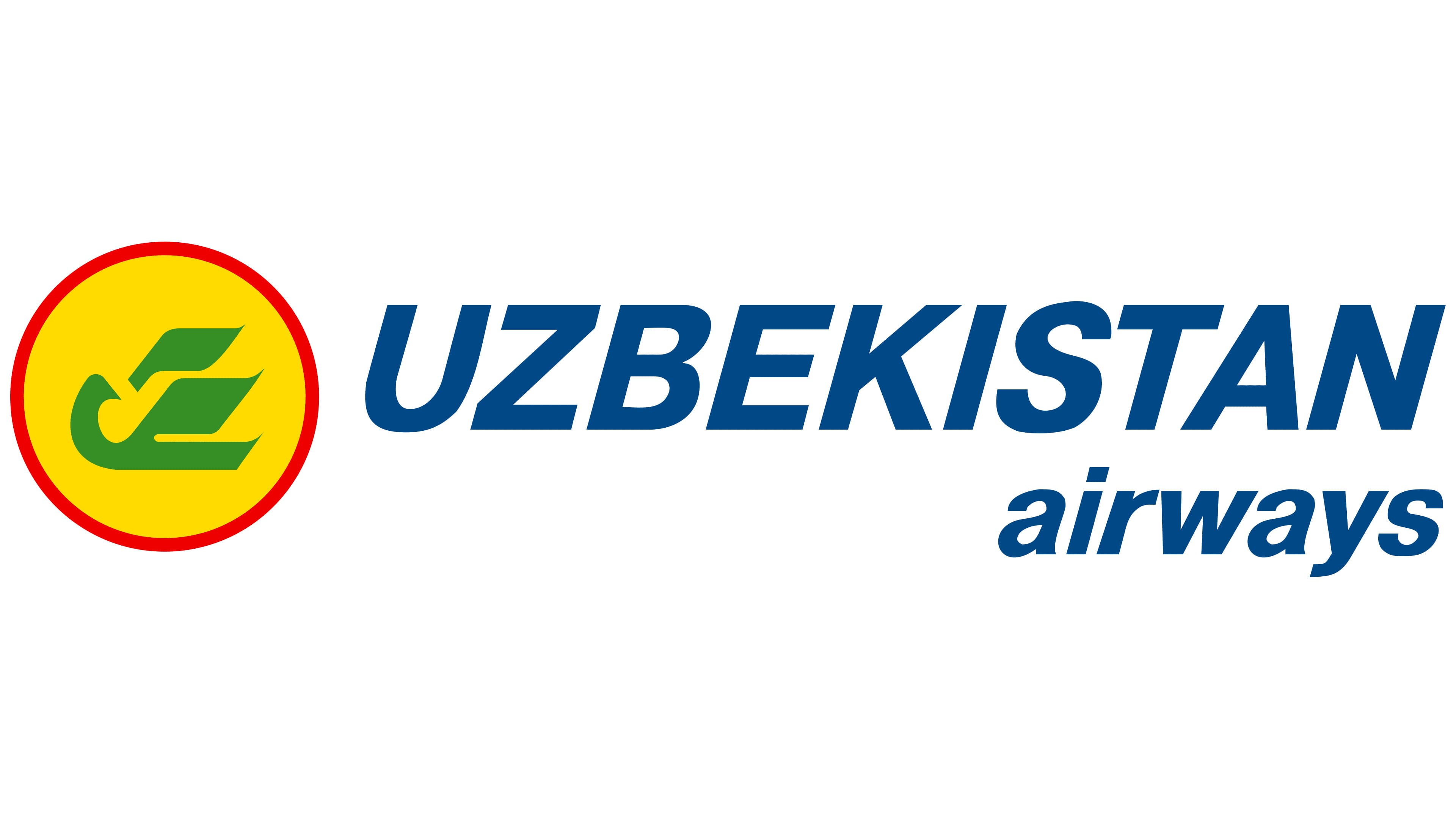
Uzbekistan’s national airline logo features the magical bird Khumo, derived from the country’s coat of arms. In Central Asian mythology, this bird symbolizes happiness. The designers chose an atypical shade of green for the bird, reflecting the green of Uzbekistan’s flag. The bird is depicted with pointed wings, a tail, and a beak. One wing detaches from the body and hangs down from the top. The silhouette is set against a yellow circle with a red outline. The blue name “Uzbekistan Airways” spans two lines in bold italics, with all letters in the first word capitalized and the second word lowercase.
The Humo bird is associated with Uzbek mythology and serves as a patriotic symbol in the state coat of arms. The green color aligns with the flag of Uzbekistan, linking the national identity to the airline’s branding. The typography, with bold italic letters, imparts a dynamic and modern feel to the logo. Using different colors – yellow, red, and blue – adds brightness and visual appeal, ensuring the logo is easily recognizable.
The magical bird Khumo, with its pointed wings, tail, and beak, stands out in green. This color choice reflects the flag and adds a unique touch. The yellow circle with a red outline provides a striking background, enhancing the bird’s silhouette. The logo’s design captures the essence of happiness and national pride, strongly representing Uzbekistan’s identity.
The bold, italicized name “Uzbekistan Airways” reinforces the logo’s modern, dynamic feel. Capitalizing the first word and using lowercase letters in the second create balanced and visually appealing typography. The blue text contrasts beautifully with the yellow, red, and green elements, enhancing the logo’s overall brightness and appeal.