 Vikings Logo PNG
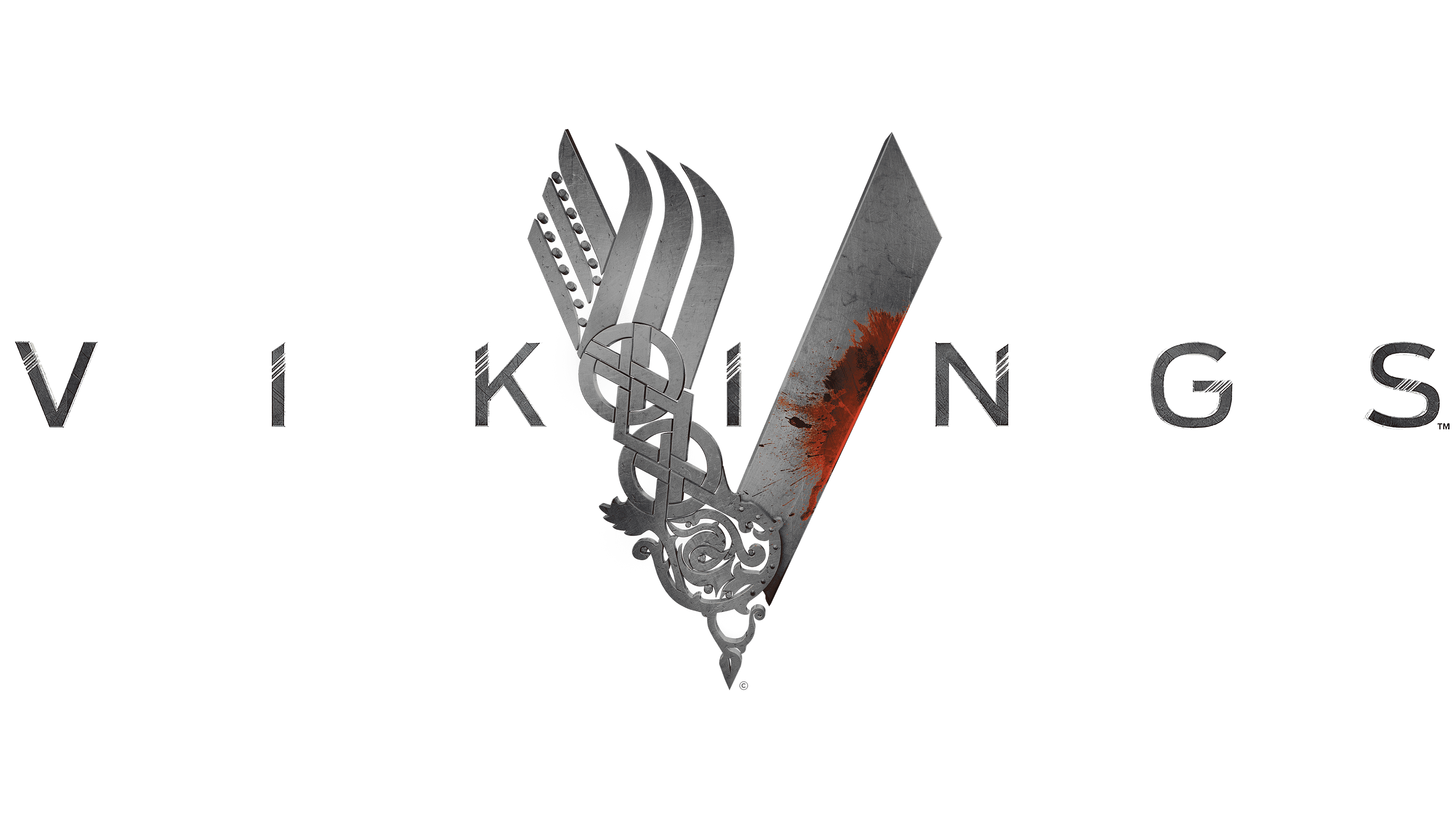
The Vikings’ logo encases sturdy blades, sharp arrows, and precious jewelry. The emblem symbolizes the courage and strength of the heroes of the TV epic. The desire for wealth and fame drives the Vikings, but love and beauty are not foreign to them, despite their barbarian beginnings.
The historical television series Vikings, a History Channel project, premiered in 2013, marking the network’s first fully scripted drama after years of focusing on documentaries and reality shows. Produced and written by Michael Hirst, the series follows the legendary Norse hero Ragnar Lothbrok, portrayed by Travis Fimmel, as he rises to kingship alongside key figures like Lagertha, Floki, and Ragnar’s sons. Filmed primarily in Ireland, the series balanced historical accuracy with dramatic storytelling, captivating audiences with intense battles, compelling characters, and intricate depictions of Viking culture.
The show earned widespread acclaim, consistently drew millions of viewers, and became available on major streaming services, including Amazon Prime Video. Following its conclusion in 2020, the series inspired Netflix to commission the spin-off Vikings: Valhalla, which extends the saga into the next century. Vikings significantly impacted popular culture, reshaping modern perceptions of Scandinavian warriors and influencing subsequent historical dramas.
According to IMDb, the series *Vikings* ranks among the top 250 television projects in recent years and has gained widespread popularity.
Meaning and History
What is Vikings?
It is a historical television series created for the History Channel, known for its documentary and educational projects. The series tells the story of the Vikings, their conquests, cultural traditions, and struggle for power. The plot follows the legendary warrior Ragnar Lothbrok and his descendants. The project combines drama, action, and historical reconstruction to depict events inspired by Scandinavian sagas and chronicles.
2013 – 2020
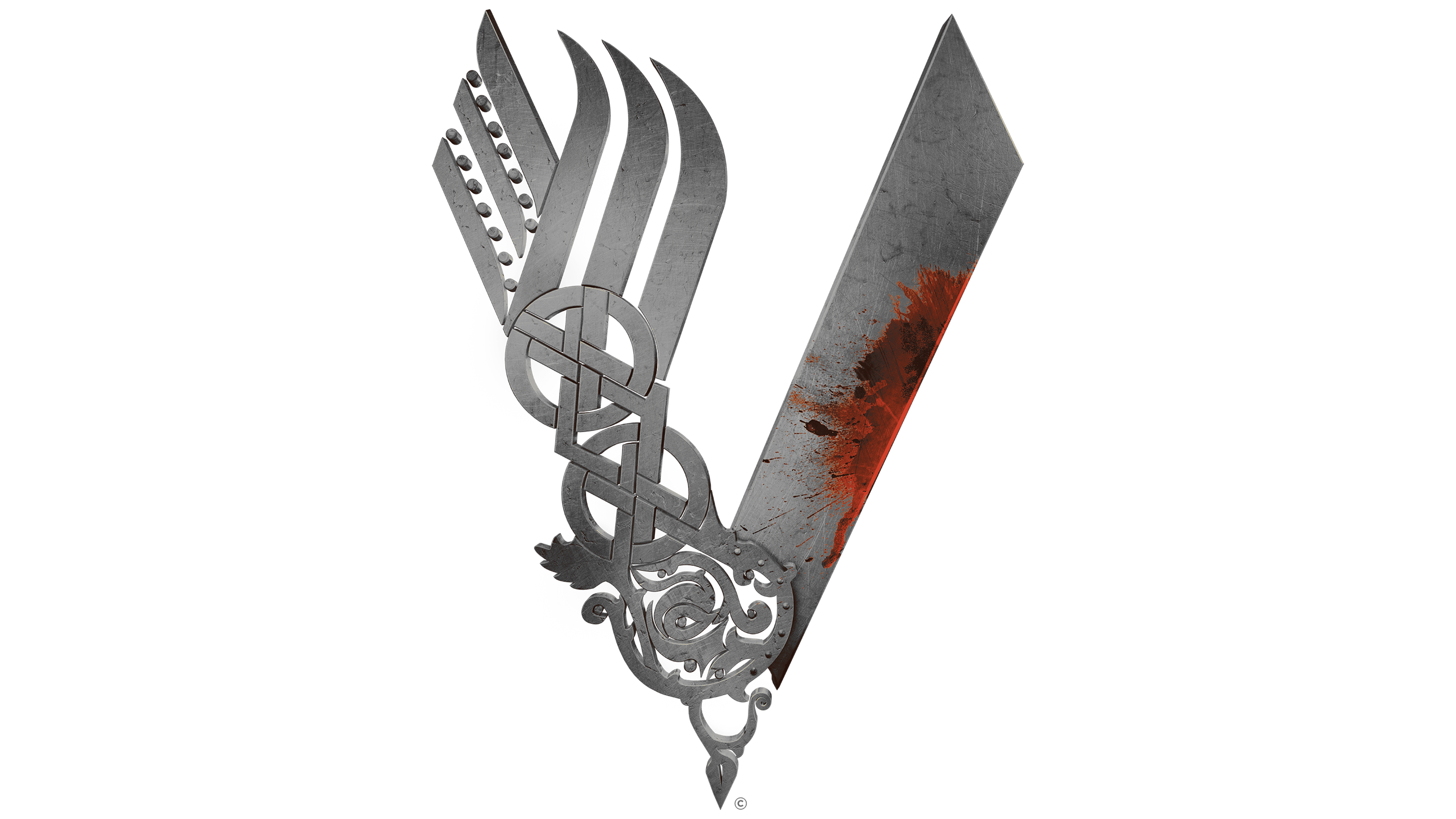
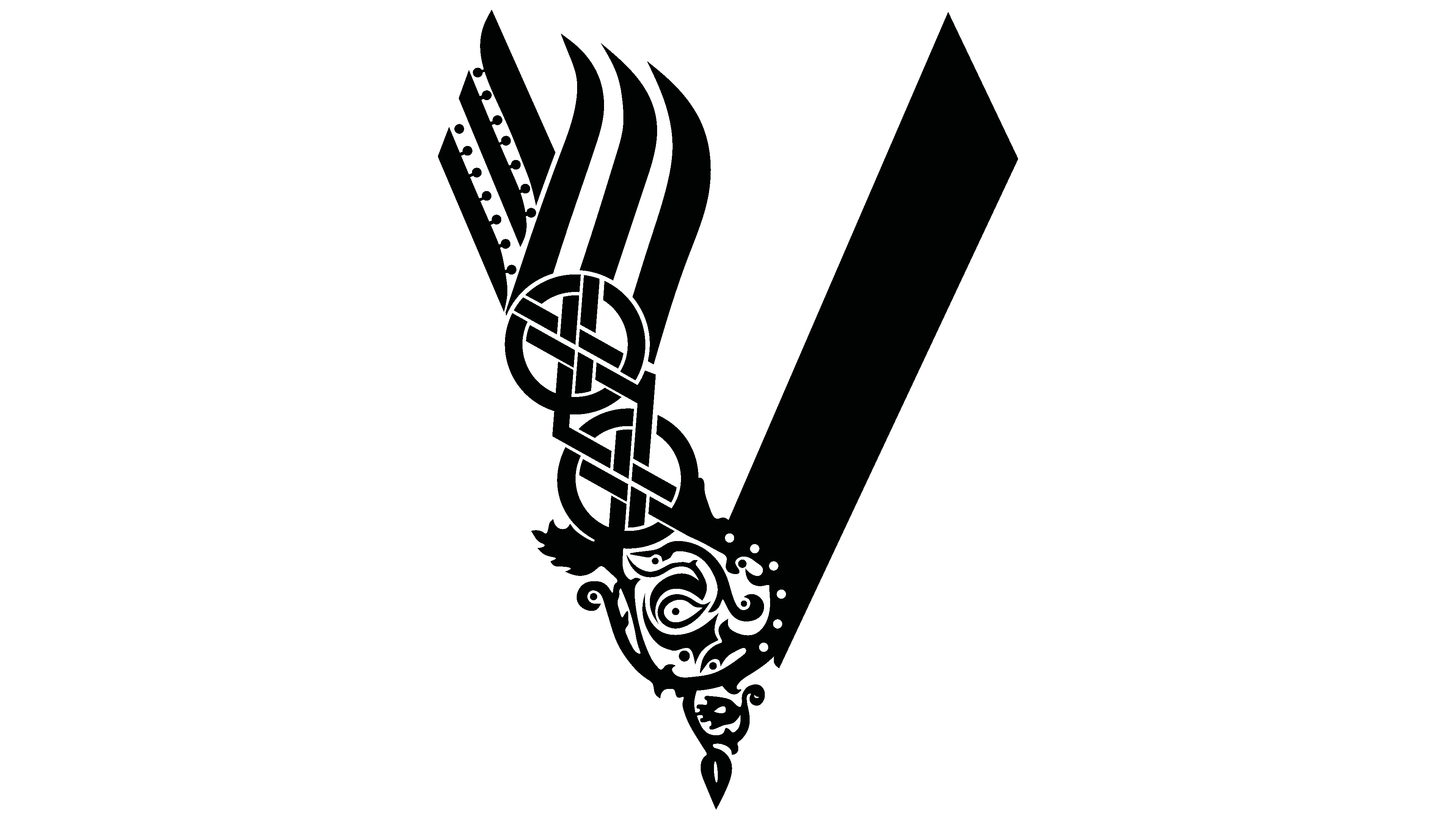
Although the fictional series is filled with armed conflict and bloody battles, it also makes room for family values and profound philosophy. A striking reflection of this is the logo, first shown to the public in an exclusive trailer for Vikings in 2013. Its main element is a large “V,” the first letter of the series’ title. It appears metallic and multifaceted: in one hand, shiny steel has become a work of art; in the other, a cold, deadly weapon.
Artists create this impression through computer graphics that achieve the highest level of realism. Overall, the complex structure reflects Viking culture’s versatility and ambiguity. After all, these medieval Scandinavian sailors were not only warlike aggressors but also deeply spiritual.
Their family values, art, talents, and progress are reflected on the left side of the letter “V.” Its top consists of six stripes that diverge in two directions. This represents the Vikings’ technological advancements. Below is a round ornament with interlacing lines, a symbol of the inextricable connection between blood relatives and brotherhood. At the base of the “V,” a circle with a leaf pattern also appears. It denotes the spiritual side of life, the desire for continuous growth and development, and the birth of something new.
A completely different meaning is embedded in the right side of the letter. It resembles a sharpened blade and represents the tribe’s cruel customs. It is the epitome of armed conflict, death, violence, and hostility. To avoid misunderstandings, the designers painted the blade’s center crimson. With this palette, it becomes clear we are talking about the Vikings’ bloody customs, not their ability to make edged weapons.
The ‘VIKINGS’ lettering complements the V-badge in the same style. Each letter in the series title also consists of blades with thin white edges. They match the overall concept and resemble blacksmithing work.
All the symbols used to design the emblem were drawn from everyday Viking life, reflecting a whole layer of medieval culture. For example, the left “V” (forked stripes) segment was inspired by images of actual ships used by Scandinavian sailors.
Brotherhood symbols also existed in reality. The logo utilizes modified runic elements, which the designers stylized to complement other design elements. This is important to the plot because the main character tries to do everything for his people, educate his son, and love his family.
The lowest symbol is called the Tree of Life. It is the central figure in Scandinavian mythology. The Vikings identified the Yggdrasil ash with the universe and believed it held the past, present, and future. Evil forces dwelled between the roots, while the world of people surrounded the trunk, and the gods resided on the branches. The Tree of Life was contrasted with the right side, “V”, a sword blade with bloodstains. Abrasions, cracks, and scratches hint that the weapon has already been used in battle. It is the epitome of discord and physical abuse.
Font and Colors
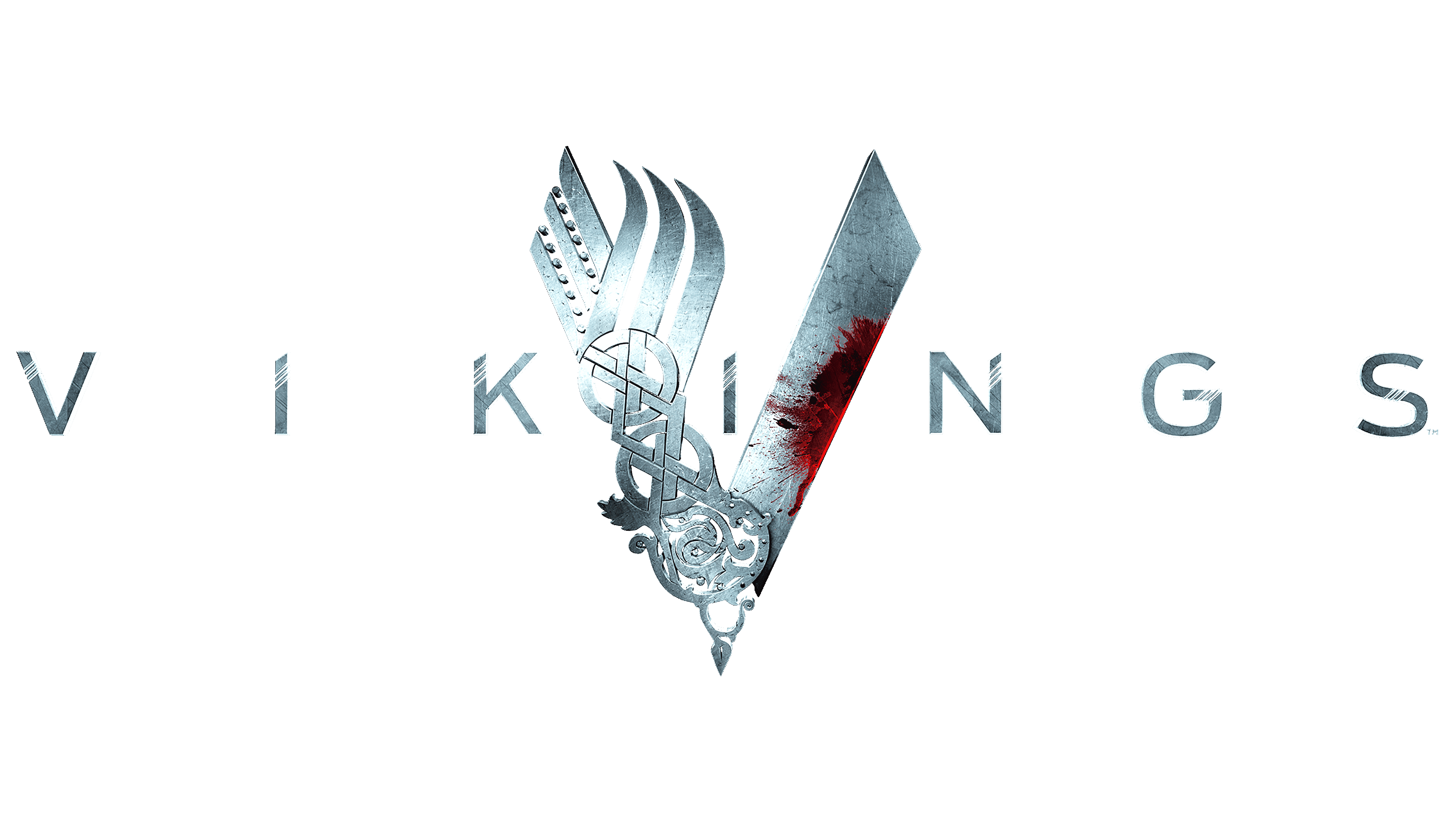
The designers created the “VIKINGS” lettering from scratch. Each symbol features three diagonal lines and oblique cuts at the ends. Based on the logo, user RamaelK created a stylized sans-serif typeface called Vikings.
The “Vikings” emblem is often presented as a stylized “V” with graphic elements, paired with bold, all-caps text. The lettering typeface has a modern sans-serif design, with white diagonal slashes resembling scratches. The closest matching typefaces include EFCO Overhold Expanded, Moister Regular, and FS Industrie Extended, with minor character-shape modifications.
Both the show’s logo and wordmark are gray. The color palette creates a steel sheen, as if all the elements were made of metal. The gray and silver tones soften the red splashes, which resemble blood stains. The red scale also ranges widely, from bright scarlet to maroon.