 Agribank Logo PNG
Agribank was established on March 26, 1988, following the issuance of Decree No. 53-HĐBT by Vietnam’s Council of Ministers. The bank first operated as the Bank for Agricultural Development of Vietnam. Its launch followed the Đổi Mới reforms of 1986, when Vietnam began moving from a planned economy toward a market-oriented model and started separating central banking from commercial lending.
The young institution inherited regional branches from the State Bank of Vietnam, giving it a nationwide reach from Hanoi to remote rural districts. Its early work centered on farmers, agricultural cooperatives, and village households. On November 14, 1990, Decision No. 400/CT transformed it into the Vietnam Agricultural Bank and gave it broader commercial banking authority while keeping agriculture and rural finance at the core.
In July 1994, the State Bank approved a restructuring model for Agribank’s organization and operations. In 1996, it was officially renamed Vietnam Bank for Agriculture and Rural Development, while Agribank became the common abbreviation. The 1997-1998 Asian financial crisis later put pressure on Vietnam’s state banks, and Agribank, like VietinBank, underwent debt portfolio restructuring.
In 2005, Agribank opened its first overseas office in Phnom Penh, Cambodia, supporting cross-border trade between the two countries. In 2010, it entered the VNR 500 list of Vietnam’s ten largest enterprises. In 2011, the bank became a single-member limited liability company fully owned by the state. In 2013, it received the Third-Class Labor Medal, and in 2016, its total assets exceeded 1 quadrillion Vietnamese dong.
Meaning and History
What is Agribank?
This state-owned commercial bank in Vietnam is key in supporting the country’s agricultural and rural economy. With the largest asset base in Vietnam, the bank provides loans and financial products focused on farmers, agricultural cooperatives, and rural businesses. With its extensive network of branches, the bank is an important financial resource for rural communities. Alongside traditional agricultural services, the bank offers modern and international financial solutions and plays a significant role in Vietnam’s economic development.
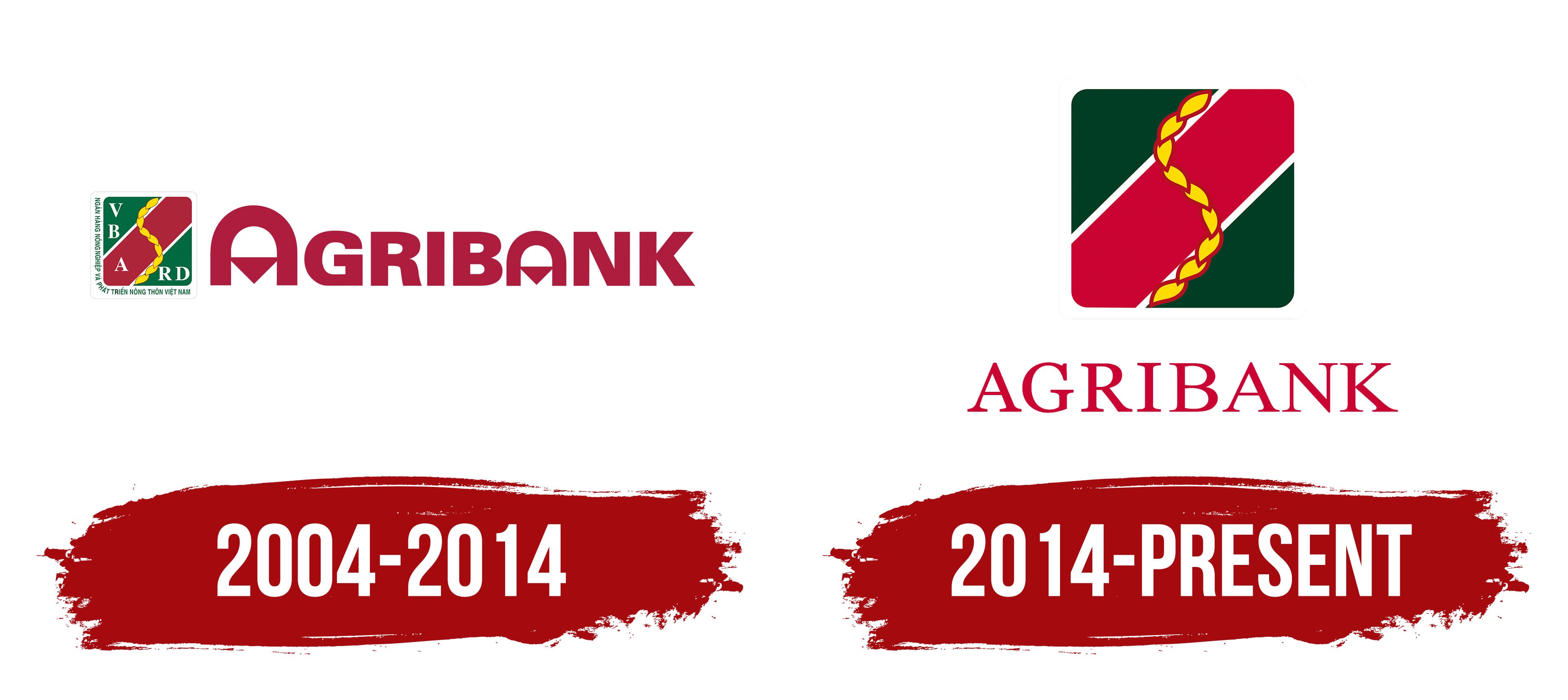
2004 – 2014
2014 – today