


 Atlanta Braves Logo PNG
The Atlanta Braves logo is associated with Native American roots. Although the image of the Indian has been removed from the emblem, this attribute best conveys the team’s unyielding will, its readiness to move towards the set goal, and its determination to make every effort. Victory is what matters most to the athletes. And this is exactly what the original symbolism reflects.
The franchise began in 1871 as the Boston Red Stockings, a founding club of the National Association that later shaped Major League Baseball (MLB). It quickly became competitive, winning four titles between 1872 and 1875, and joined the National League in 1876.
In 1883, the team adopted the name Boston Beaneaters and remained among league leaders through the 1890s and early 1900s. After a difficult 1912 season, it became the Boston Braves. In 1914, the club produced a dramatic turnaround, moving from last place in July to a World Series win over the Oakland Athletics.
In 1935, Babe Ruth played his final season with the Braves. Financial pressure led to relocation in 1953, when the team became the Milwaukee Braves. The peak came in 1957 with a World Series win against the New York Yankees, led by players like Hank Aaron.
The franchise moved again in 1966, settling in Atlanta as the Atlanta Braves. In 1974, Hank Aaron broke Ruth’s home run record, bringing national attention. In 1976, Ted Turner acquired the club and expanded its reach through TBS broadcasts.
From 1991 to 2005, the team dominated its division, winning 14 titles and the 1995 World Series against the Cleveland Indians. After a rebuilding phase from 2007 to 2017, young players drove a resurgence in 2018 and 2019, culminating in division titles.
In 2021, Atlanta won the World Series, defeating the Houston Astros. In the following seasons, the team stayed competitive despite roster changes, including Freddie Freeman’s move to the Los Angeles Dodgers and a key trade with the Oakland Athletics for Sean Murphy.
Meaning and History
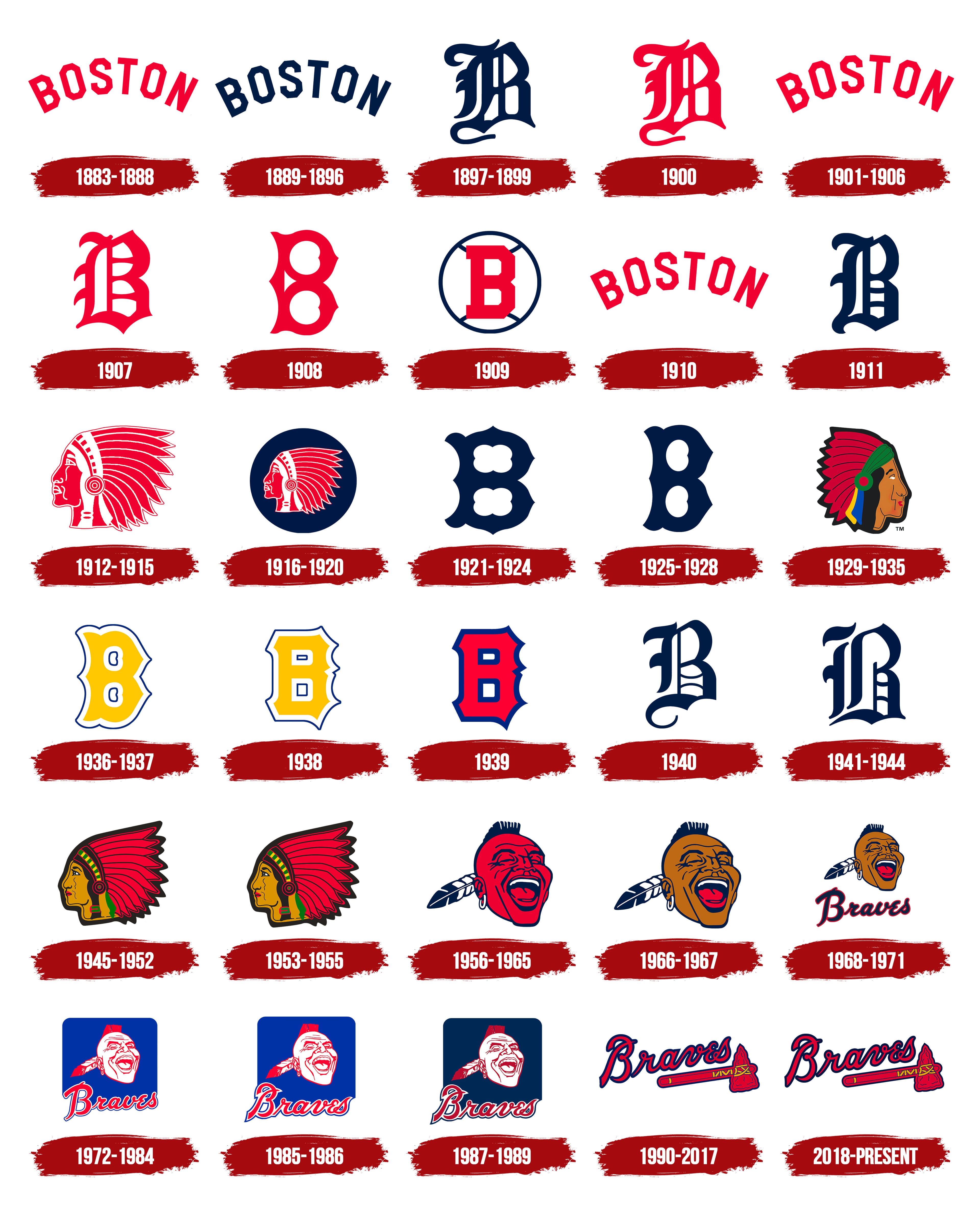
The club’s logo has been ambiguous, changing 29 times. Reasons include the team’s relocation, franchise renaming, addressing ethnic issues, ownership changes, adaptation to modernity, updates, etc. Over the club’s long history (founded in 1883), many factors drove this process.
Additionally, several thematic blocks of versions exist: for example, versions with a letter designation, with text, and with an image of a Native American holding a prehistoric axe. They appear as monograms, arched inscriptions, brass knuckles, portraits, and round signs.
What is the Atlanta Braves?
The “Atlanta Braves” is a baseball team based in counties within the metro Atlanta area of Georgia. It calls itself the oldest franchise, having begun in 1871 as the Boston Red Stockings. The club plays in the National League East and competes in Major League Baseball.
1883 – 1888
The team’s first name was the “Boston Beaneaters.” Like most clubs before the 1900s, the emblem was simply a sign of Boston.
In baseball’s early years, teams’ identities were often closely tied to the cities they represented, reflecting civic pride and local traditions. One example was the team’s original name, the “Boston Beaneaters.” The name reflected local culture and honored a classic regional dish.
Branding was still emerging in that era, which lasted until the early 1900s, and logos were usually minimalistic and simple. The Beaneaters’ team emblem was no exception. Instead of elaborate patterns or flashy illustrations, the emblem was a simple and unadorned representation of Boston’s calling card.
1889 – 1896
Because of major changes in visual branding, the team replaced the red in its name with a dark blue shade. This change wasn’t just aesthetic; it reflected something deeper within the organization.
Red, often associated with energy, passion, and intensity, defined the team’s identity. It resonated with fans and was synonymous with the team’s spirit and determination on the field. However, as the team evolved, so did its brand, leading it to choose dark blue over red.
Though less aggressive than red, dark blue conveys stability, wisdom, and depth. This color is often associated with maturity and sophistication, reflecting a more measured and thoughtful approach. The team signaled a transformation in its philosophy and aspirations with this transition.
1897 – 1899
Seeking renewal and reconnection with the city’s rich history and culture, the well-known sports team introduced a new logo featuring a large Old English letter “B” in a bright shade of blue.
Boston’s deep roots in American history and its vibrant cultural fabric have always been a source of pride for its residents. Choosing the Old English font reflects respect for tradition, evoking the city’s colonial past and enduring connection to heritage. This classic style lends timeless elegance and links to the city’s rich history.
1900

In the early 1900s, the brand’s visual identity shifted significantly. Retaining the main design of the 1897 logo while changing its color shows respect for tradition, even as the brand seeks evolution. This combination of past and present resonated with both long-standing supporters and newcomers. The changes were subtle enough to maintain continuity with the previous logo but striking enough to attract attention and symbolize progress.
1901 – 1906
For five years, the club consciously reconnected with its past by reverting to the 1889 logo, which featured the name of Boston. This move was both an aesthetic change and a statement reflecting the club’s enduring connection to the city and its fans.
1907
The new emblem was not just a cosmetic change. The red color and Old English font reflected both tradition and modernity, combining the club’s historical ties to Boston with a fresh, distinctive look. The name “Doves” and the accompanying logo symbolized a new era for the club, honoring its heritage while laying the foundation for a new sense of purpose and direction.
1908

The logo’s foundation is also a red letter “B,” but this time in a different font.
1909

The classic red letter “B” was placed inside a black circle, resembling a baseball.
1910
The logo returns to Boston Dawz, with only the inscription “Boston” highlighted in red.
1911
The club changes its name to Boston Rustlers. The city of Boston is symbolized by a large dark-blue Old English letter “B”.
1912 – 1915
A year later, the team changed its name again, this time to the Boston Braves. For the first time, the logo featured a Native American in profile wearing a feathered headdress. The design’s primary colors are white and red.
The logo emphasized the team’s connection to history and culture, as well as their pursuit of victory and excellence. Choosing a Native American warrior as the team symbol reflected the name and conveyed strength and determination to fans and opponents alike.
The feathered headdress symbolizes courage, bravery, and dignity, qualities of tribal warriors. The profile view highlights strength and resolve, traits important for a team aiming to showcase competitiveness and determination on the field.
Red symbolizes passion, energy, and aggression. White adds purity and clarity, underscoring the team’s transparency and openness.
1916 – 1920
The logo from 1916 to 1920 features a profile image of a Native American head against a dark blue background. The head is depicted in red with white lines highlighting the facial details and feathered headdress.
The logo has clear contours and a detailed image, giving it a sense of expressiveness. The red of the Native American’s head contrasts sharply with the dark blue background, making the logo more noticeable and vibrant. The red-and-white feathered headdress adds uniqueness and recognizability.
1921 – 1924
The logo from 1921 to 1924 features a stylized letter “B.” The logo’s primary color is dark blue. The letter “B” is rendered in a large, expressive font with rounded elements, giving it visual strength and stability. The letter has rounded indentations, creating a unique, memorable look.
1925 – 1928

This logo used the same large dark blue “B” but in a different font.
1929 – 1935
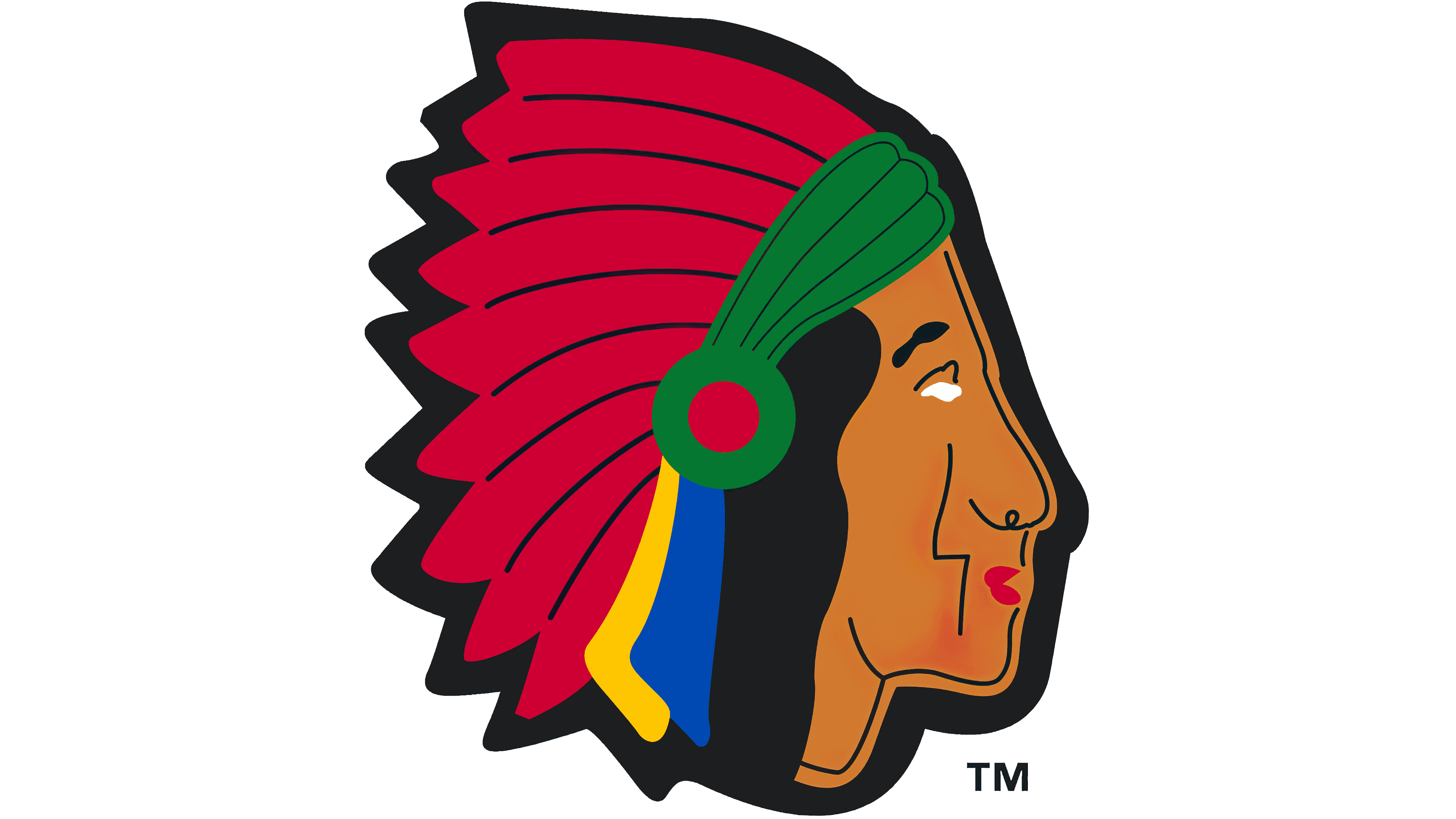
On the fifteenth logo, the team again uses an image of an Indian on its emblem, but this time, it is colorful and cartoonish. The Native American has bronze skin, black hair, and a red, green, yellow, and blue feathered headdress.
1936 – 1937
The logo also changed when the team renamed itself the Boston Bees. The club’s primary color became yellow, and the logo featured a large yellow letter “B” outlined in blue and white.
The large “B” logo symbolizes the team’s name, “Bees.” Yellow is associated with bees and honey, reinforcing the new team name and its aim to foster cohesion and teamwork, much like a hive. The blue-and-white outline adds clarity and contrast.
Yellow symbolizes energy, optimism, and activity, ideal for a sports team. The outline adds depth and expressiveness to the emblem.
1938
In the 1938 season, the emblem saw no significant changes. The yellow letter “B” also symbolizes Boston.
1939

After another year, the team’s primary color changed from yellow to red. Accordingly, the letter “B” became red, and a dark blue contour was added.
1940

The final “Boston Bees” logo featured an Old English letter “B.” The Old English font adds historical depth and respect for tradition, underscoring the team’s roots and heritage. The dark blue color symbolizes reliability, stability, and determination. Combined with the Old English font, the dark blue gives the logo solidity and gravitas.
1941 – 1944

The Boston Braves continue experimenting with fonts for the dark-blue letter “B.”
1945 – 1952
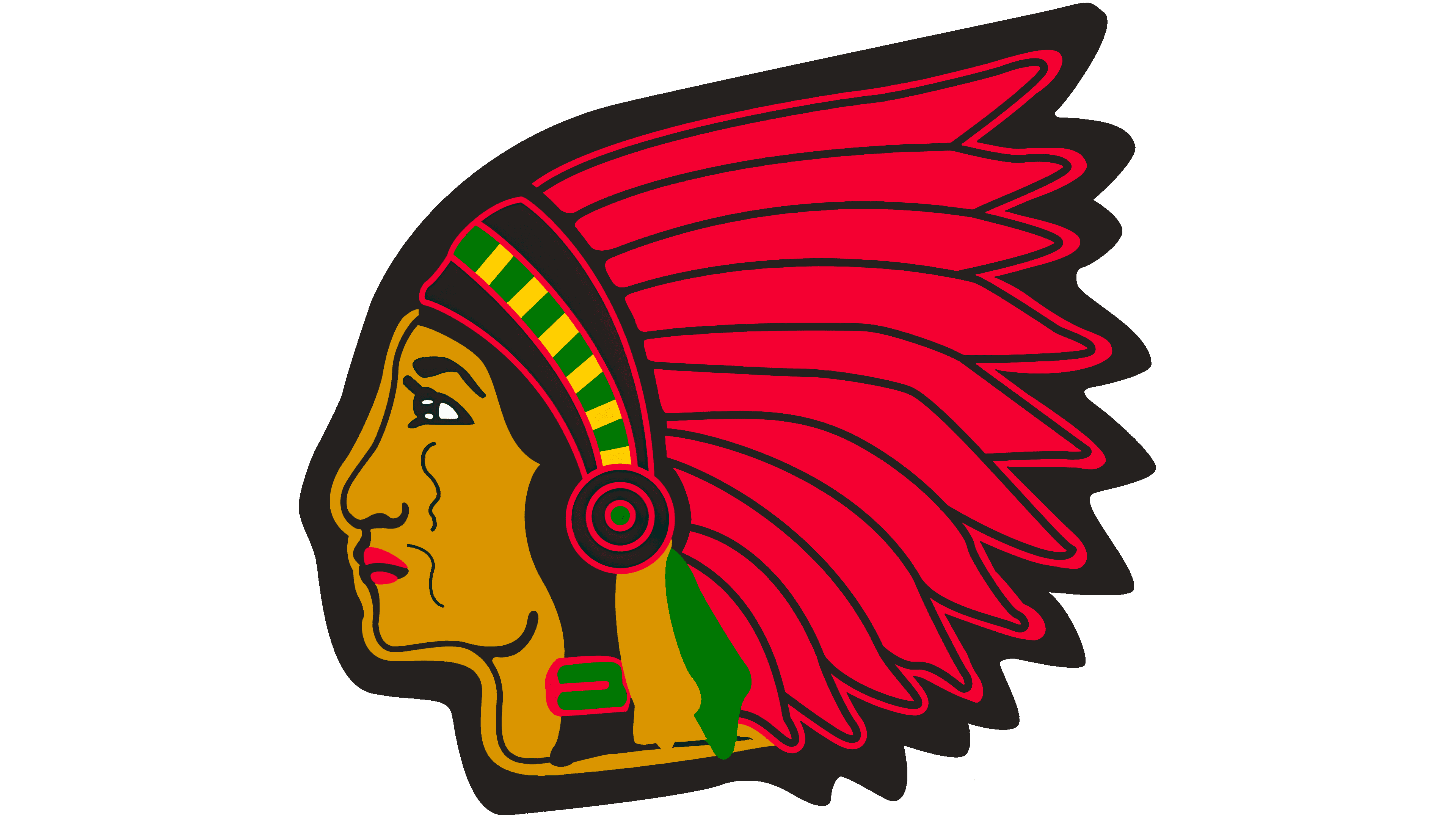
In 1945, the Boston Braves returned to using a Native American image on their logo. This decision came in the post-war period, when American society sought to return to its roots and traditions. The logo’s Native American symbol conveyed respect for the history and culture of Indigenous peoples, as well as the team’s commitment to preserving those traditions and strengthening its image.
The emblem resembles previous versions:
- The Native Americans have bronze skin
- Dark hair
- A headdress with red feathers
- The drawing has a thin black outline.
The bronze skin color symbolizes the traditions and heritage of indigenous peoples. The red feathers represent strength and courage. The black outline adds clarity and expressiveness to the image.
1953 – 1955
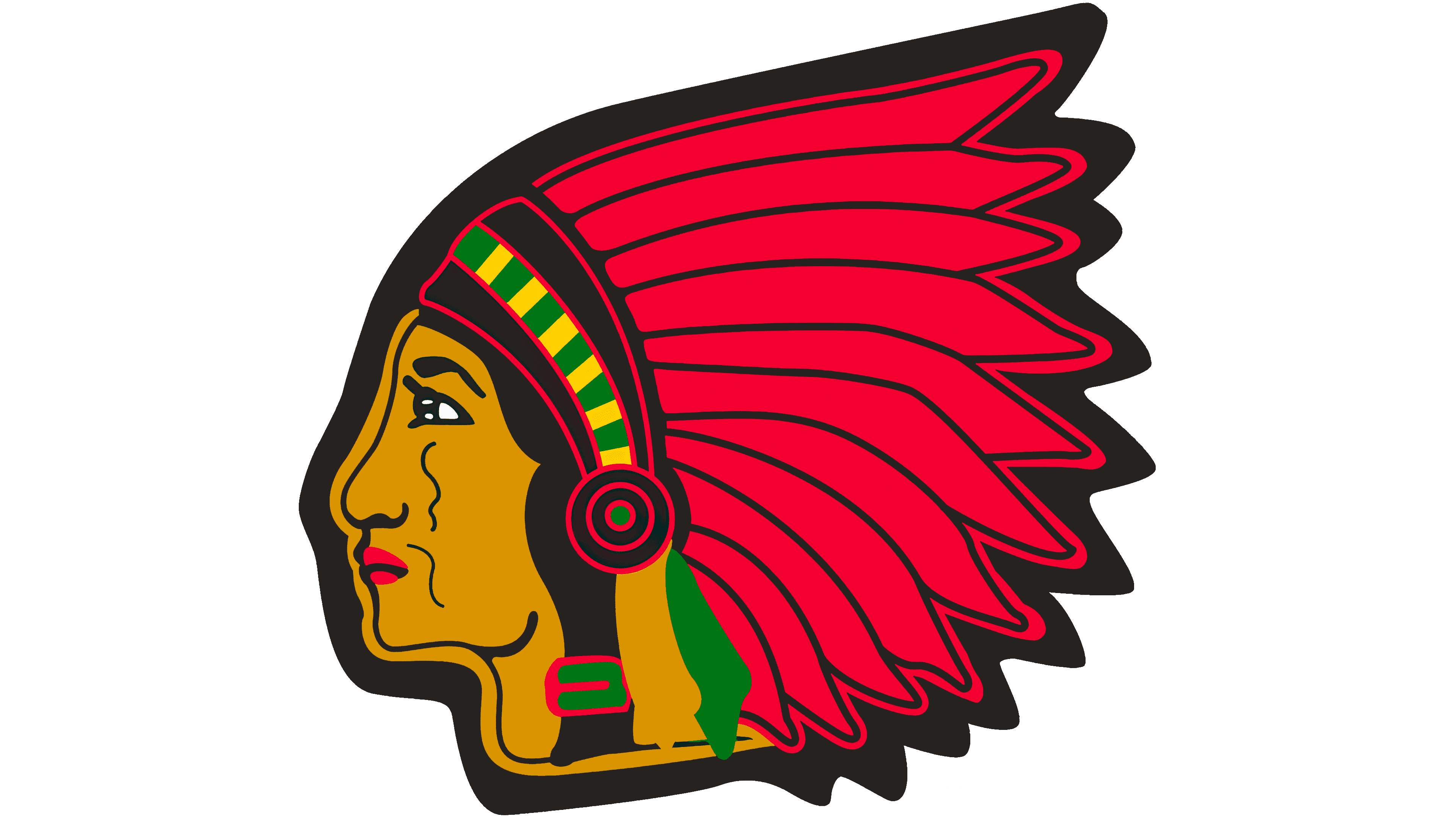
The team moved to Milwaukee and renamed itself the Milwaukee Braves. The emblem with the Indian image is identical to the 1945 emblem.
1956 – 1965
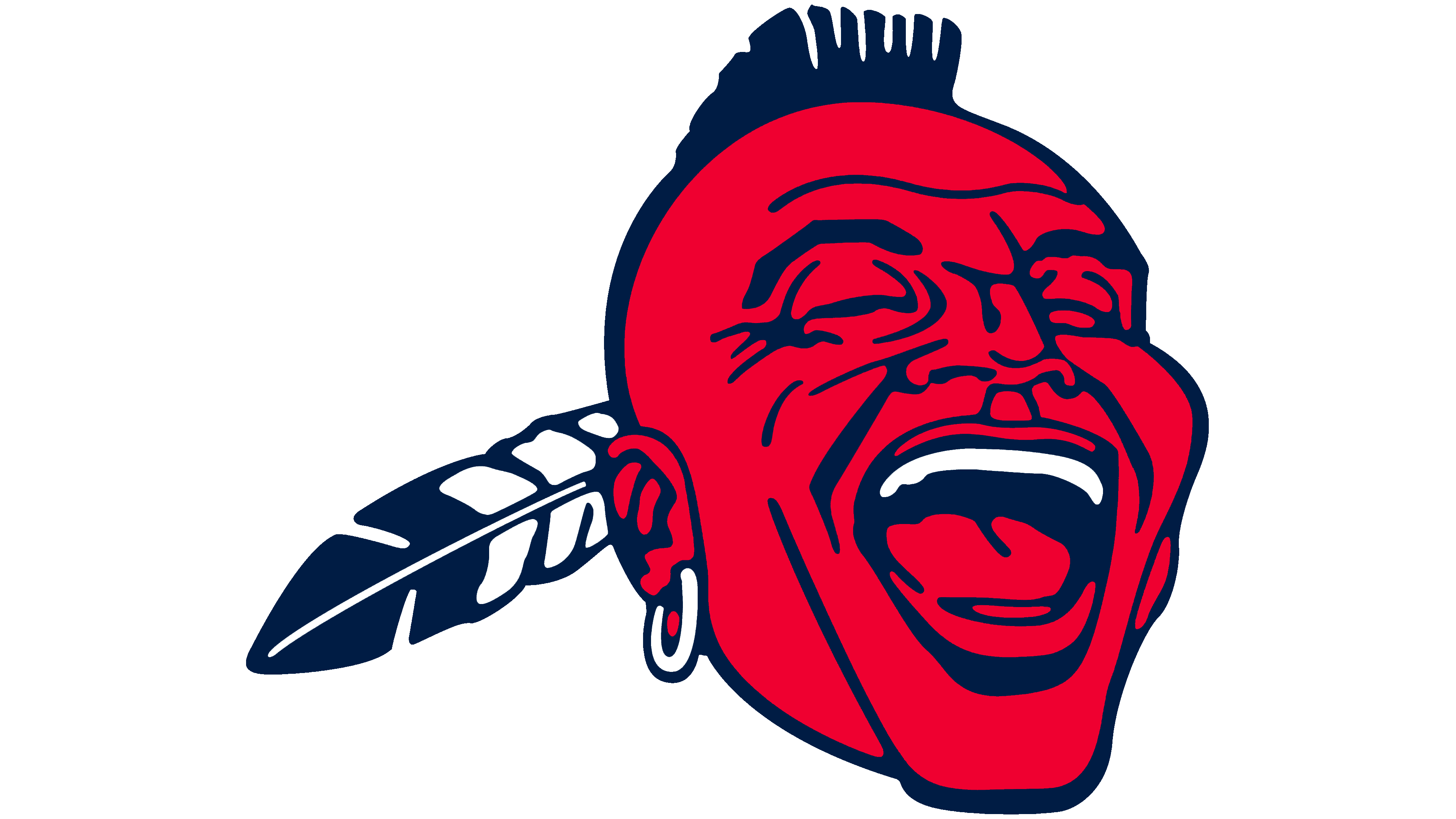
This is the club’s 23rd logo, featuring a cartoonish depiction of a laughing Native American head with a mohawk and a white feather in his hair. The Native American’s head is rendered in red with black-and-white details for contrast and clarity. This logo served as the basis for several subsequent team emblems over the next 35 years, underscoring its popularity and significance.
The red face symbolizes energy, passion, and strength. The white feather in the Native American’s hair symbolizes honor and respect. The laughter and smile on the Native American’s face reflect the fun, carefree spirit that defined the team and the era in which the logo was created.
1966 – 1967
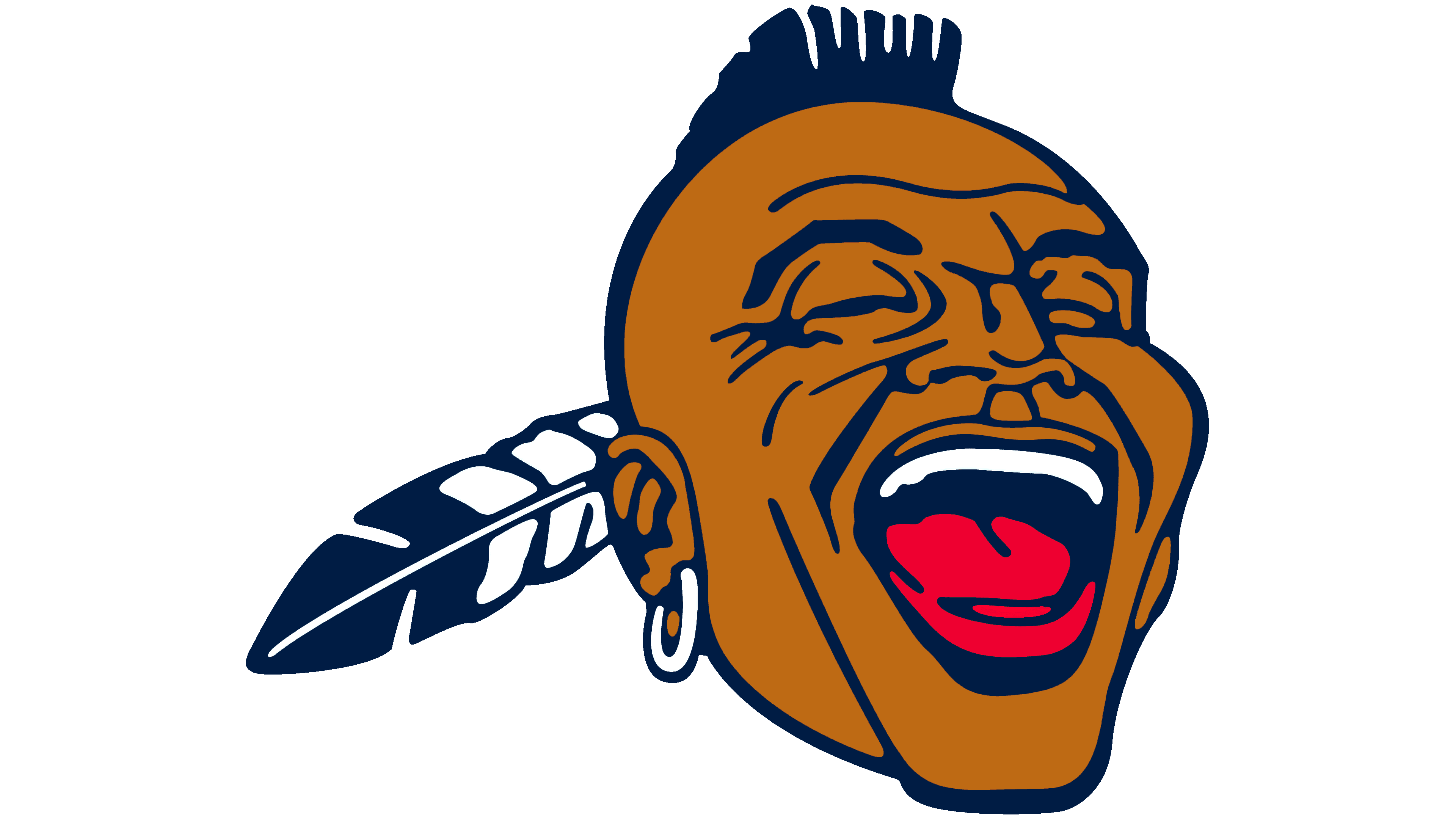
Despite the club’s move to Atlanta and the name change to the Atlanta Braves, the main logo remained the same; only the Indian’s skin color changed from red to light brown. Minor details, such as the mohawk and feather, were also edited.
1968 – 1971
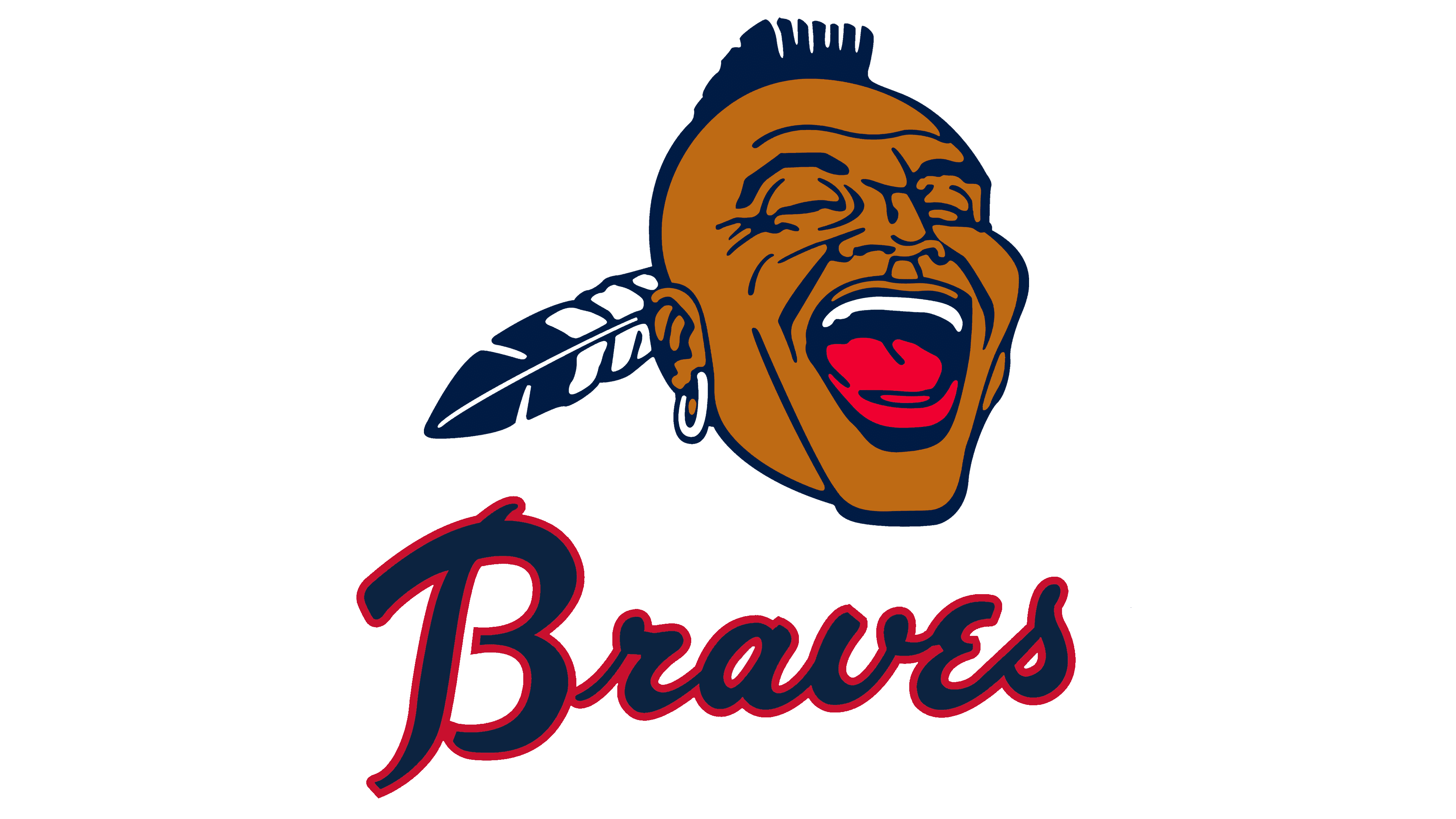
The image of the Indian, identical to the 1966 logo, has the word “Braves” added in dark blue. The name is outlined in a thin red line, and the drawing is reduced to make room for the word.
1972 – 1984
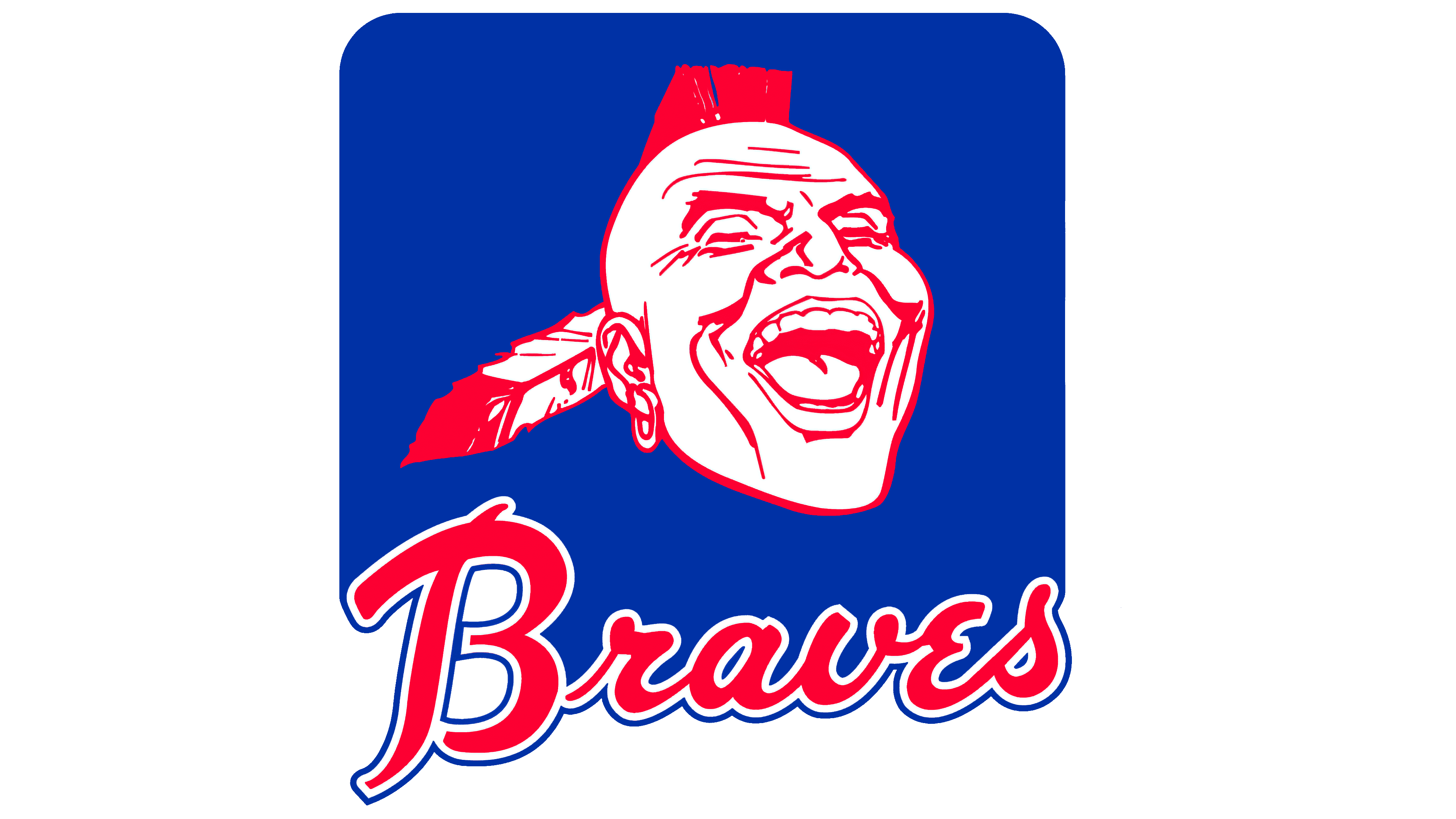
In 1972, the Atlanta Braves radically changed their logo, coinciding with significant changes and developments in baseball and the sports industry. This period also saw the rise in sports popularity in the USA and increased competition among teams. The logo features a profile image of a Native American head with a Mohawk and a feather. The head is white, with details like the mohawk and the red feather. The Native American head sits on a dark blue square. At the bottom of the logo is the inscription “Braves” in red, outlined in white. The new team logo symbolizes renewal and a drive for success, reflecting the spirit of the time and the team’s aspirations to reach new heights.
The “Braves” inscription is rendered in an italic font with smooth lines, giving the logo a dynamic, energetic feel. The white outline around the red inscription makes it noticeable and easy to read, even against the dark blue square.
1985 – 1986
In 1985, the club updated the previous logo. The Indian’s head grew, and the name shifted slightly higher onto a blue background.
1987 – 1989
The “Atlanta Braves” logo still contains a red-and-white image of the Indian and the team’s name. The only change was a darker blue background.
1990 – 2017
The club returns to using the team name based on its logo. The word “Braves” in red fills most of the logo and is outlined in dark blue. Below it is an ancient red axe, symbolizing the team’s strength and its persistent efforts to improve its game.
2018 – today
The Atlanta Braves’ current logo continues the traditions established in 1990. It consists of two equal parts: textual and graphic. The textual part features a large, italicized “Braves” inscription set diagonally, with an upward tilt at the end of the word. The graphic part includes an image of an ancient tool used by ancestors.
The ancient tool in the logo symbolizes strength and perseverance in achieving high goals. As a symbol, the tool represents the labor and effort required to transform ordinary material into something useful. The “Braves” inscription symbolizes the team’s bravery and determination.
The logo emphasizes strength and persistence in sports and life. It reminds us that achieving goals requires effort and hard work. The tool and inscription create an image of a team ready to overcome challenges and succeed.
The italicized inscription font gives the logo dynamism and energy. The diagonal positioning and upward tilt at the end of the word highlight forward movement and the pursuit of excellence. The italic style creates a sense of lightness and grace.
The logo’s primary colors are red, blue, and yellow. Red symbolizes energy and passion, blue represents stability and trust, and yellow signifies optimism and joy.
Font and Colors
A signature element is the prehistoric hammer-wielder. It is located on the right side of the logo, under the word “Braves.” It consists of three parts. The first is the handle. It’s flat, with an oval curvature at the end and a yellow stripe at the base. The second is the stone blade or edge with a point and a “cutting” part. It features distinctive carved spots rendered as small strokes. The third is the rope connecting these elements. Each twist of it forms a specific pattern.
Text is another significant part of the logo. The inscription “Braves” is at the top and occupies half of the logo. It’s done in a handwritten style with sleek lines and curved transitions. All letters are connected except for the first, the capital one. A distinctive feature of the font is the absence of an upper gap at the “s.” That is, it doesn’t have a specific loop. The “E” is also distinctive: although it’s lowercase, it’s executed like a capital “E.” The brand palette includes dark blue, dark red, and white.