


 Babolat Logo PNG
The Babolat logo symbolizes a blend of tradition and technology in tennis equipment manufacturing, expressing the game’s dynamic nature and the continuous product development that professional athletes trust.
Babolat was founded in Lyon in 1875 by Pierre Babolat, who first made natural gut strings for musical instruments and later for tennis rackets. Lyon’s textile tradition supported the skilled manual work required for string production. The family business grew as tennis spread across Europe. In 1925, it introduced VS cow-gut strings, which leading French players and competitors at Roland Garros widely used.
In 1955, Babolat added Elascord, its first synthetic string, giving players a cheaper and easier-to-maintain alternative to natural gut. The company remained focused on strings for decades. Meanwhile, Wilson and Head already sold full ranges of rackets, bags, shoes, and accessories. In 1981, Babolat adopted the double-line emblem later associated with its tennis equipment.
Under fifth-generation leader Eric Babolat, the company entered the racket market in 1994. Early models received limited attention, but Carlos Moya changed that in 1998 by winning Roland Garros with a Pure Drive. Andre Agassi joined the brand in 2001, while Rafael Nadal began using its rackets at age 15 and later won 22 Grand Slam titles. Andy Roddick was another prominent player linked to the company.
A 2000 partnership with Michelin brought rubber and traction expertise to Babolat tennis shoes. In 2014, the Play Pure Drive introduced built-in sensors that measured shot count, power, spin, and ball contact, then sent the data to a smartphone through Bluetooth. The model was new to tennis.
Meaning and History
What is Babolat?
The oldest European manufacturer of sports equipment for tennis and badminton. Its products, including rackets, strings, and accessories, are popular among professionals for their reliability and quality. The brand specializes exclusively in these sports, offering equipment balancing power and precision. The company’s French roots are reflected in stylish design and high-quality craftsmanship.
1930 – 1970s
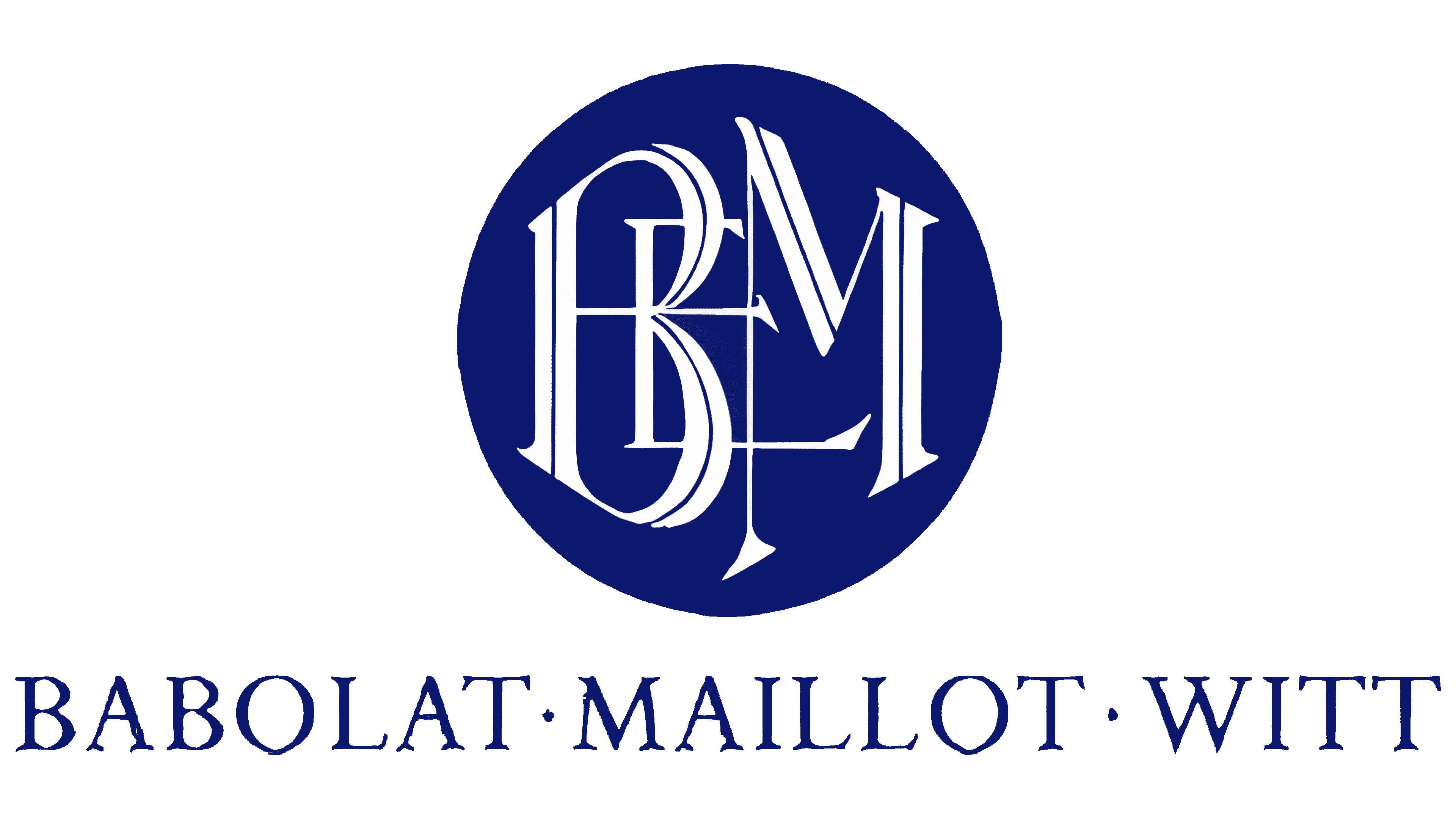
The first Babolat logo appeared in the 1930s, combining traditional French style with classic elements. Inside a round, blue medallion is a monogram featuring the letters “B,” “M,” and “F,” skillfully intertwined into a unified composition. The letters correspond to the surnames of the company’s founders: Babolat, Maillot, and Witt.
The complexity of the monogram’s letter lines resembles elegant calligraphy, emphasizing the company’s high standards. Under the medallion, the inscription BABOLAT-MAILLOT-WITT is written in an elegant serif typeface. Laconic dots between surnames add strict order to the brand’s name.
A dark blue color is used to express the company’s roots and its affiliation with a high level of sports culture. The style suits the tennis accessories manufacturer, reflecting the subtlety of handcrafted mastery.
1970s – 1985
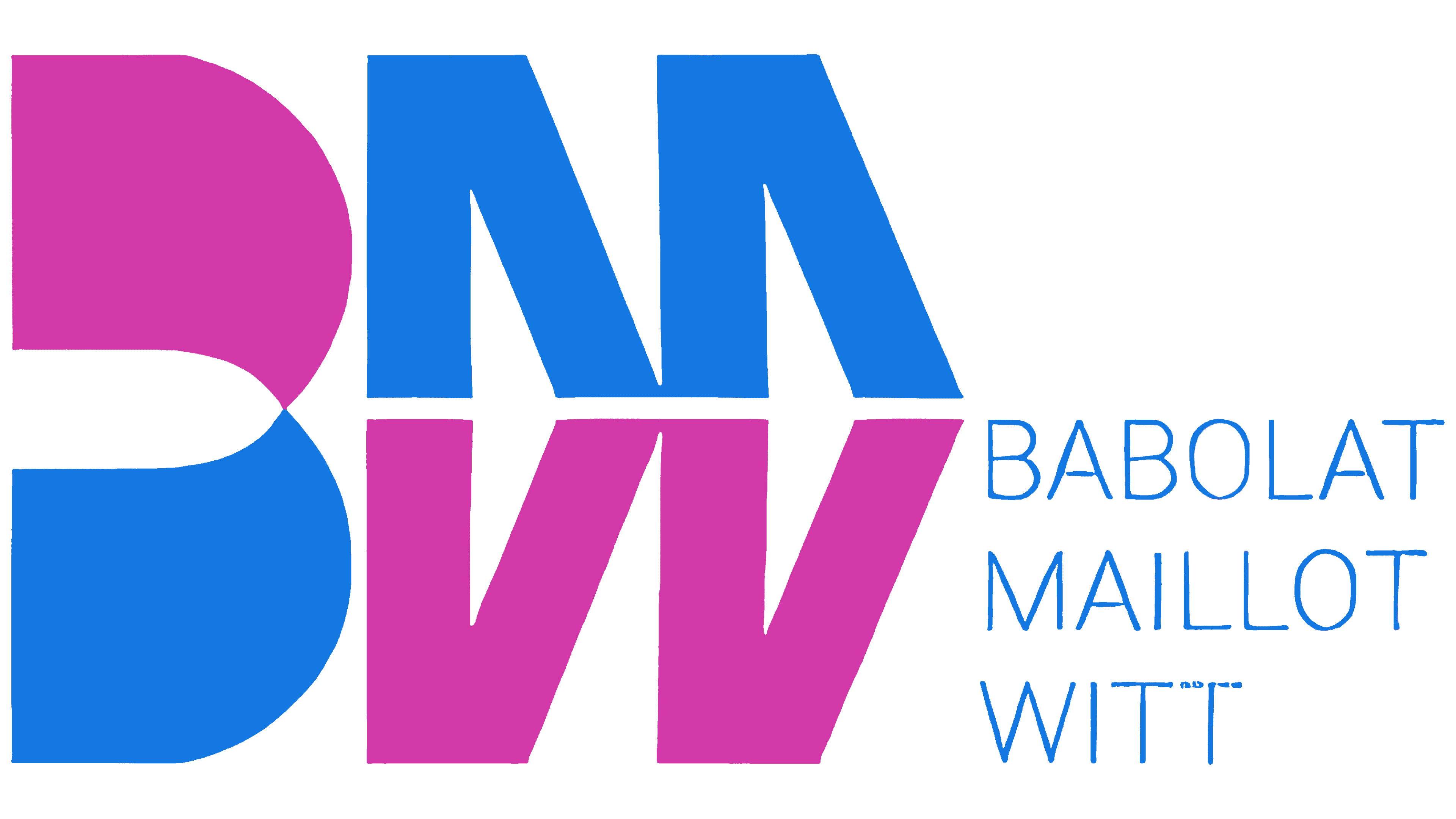
In the second half of the 20th century, Babolat abandoned historical canons in favor of experiments. A new BMW monogram appeared, composed of letters from the founders’ surnames. The letter “B” is enlarged in a two-color form; the upper half is painted pink, and the lower half is blue. The neighboring letters “M” (top) and “W” (bottom) have reversed colors, with the upper part in blue and the lower part in pink.
The letters became large with trimmed edges. This gave the company the technological capabilities necessary to produce tennis accessories.
To the right of the monogram is the full name in three lines, executed in thin geometric lettering. It features neat capital letters in blue.
The logo reflects the era’s changes: the brightness of the 1970s is evident in expressive colors, and the sharp geometry conveys the company’s technical approach.
1985 – 1990s
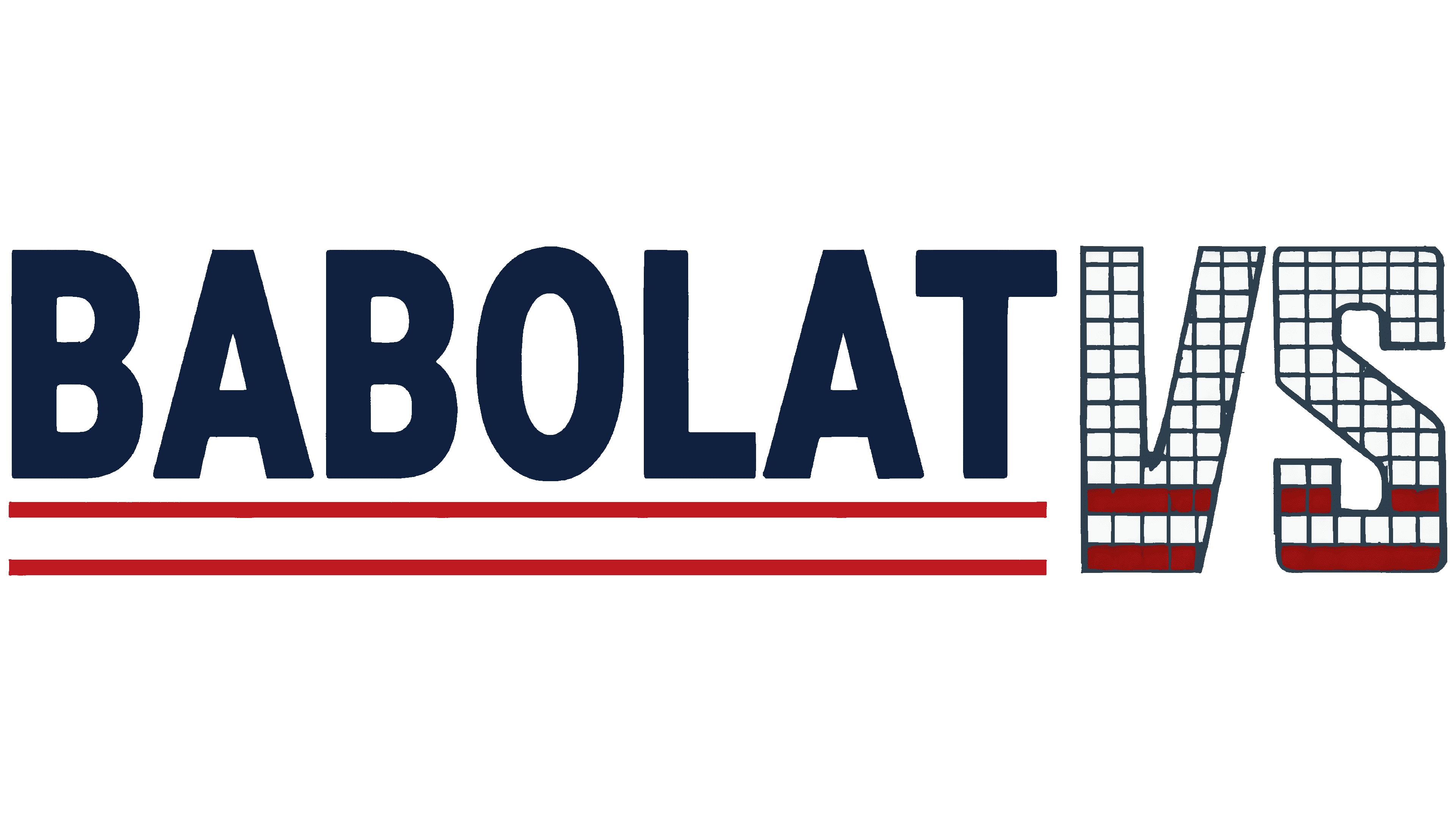
In 1985, the brand introduced a new version of the logo that emphasized the company’s connection with tennis. The name was rendered in large, dark-blue letters. The letters’ proportions were precise; the symbols appeared balanced due to uniform line thickness. Below the name are two red stripes resembling tennis court markings, reinforcing the association with the sport.
The logo is based on the original design of the letters “VS.” The symbols appear as large, wide letters enclosed within a square mesh structure. The stylization refers to the strings of a tennis racket, emphasizing the professional orientation of a company producing sports equipment and accessories. The lower third of the letters “V” and “S” is painted in saturated red, harmoniously echoing the stripes below the name.
The colors used, blue and red, create a contrast that ensures easy perception, highlighting the company’s focus on manufacturing professional tennis equipment.
The typeface is classic, ensuring readability and conveying a serious brand image.
1990s – 1995
In the early ’90s, Babolat presented a new brand format with a concise name. The name is written in uppercase red letters of unusual sans-serif shapes. The letter “O” is enlarged relative to other characters. Two horizontal blue lines cross the letter “O.” These lines symbolize key features of the brand’s tennis strings. Below is the slogan “Double Line,” executed in blue lettering with wide letter spacing.
The red lettering enhances the brand’s sporty character and energy. The blue color of the lines highlights the distinctiveness of the company’s tennis accessories. The inclination of the letters and unusual typeface convey the dynamics of sports competition.
The letters in the name are spaced evenly, with neat intervals. A lower red line emphasizes the overall composition and balances the name from above. The curved lines of the letters reflect the ease and speed of tennis movement.
The solution, featuring the slogan and lines, became the brand’s hallmark in the 1990s. The company decided to emphasize the logo’s connection with innovative technologies in tennis gear.
1995 – 2002

In the update, the Babolat logo took on a stricter character. The slogan disappeared, leaving only a red inscription with altered detailing on the letter “O.” Instead of blue lines, black-and-white stripes appeared. The change of shades added depth and expressiveness to the emblem.
Red letters became thinner and more elegant. Horizontal lines on the letter “O” changed to black and white. The contrasting colors made the letter the central part of the composition. Two thin red lines complement the lower part of the logo, connecting the letters.
The updated symbol conveys the company’s focus on professional solutions in the tennis industry. Simplicity and restraint became the basis for the new image in the second half of the nineties.
The company focused on developing technological products and experimenting with materials for tennis equipment. The logo reflected the brand’s aspiration toward high results and quality in professional sports.
2002 – 2012

Once again, Babolat radically rethought the emblem and introduced a completely different style. Their name became the central composition element, written in large letters and tilted to the right. The font became massive and rounded, with no sharp angles or serifs.
Nearby is a red emblem that repeats the outline of a tennis racket. On both sides of the shape are two white strokes, referencing the double line in previous logo versions. The color is executed with a gradient transition of red shades.
The logo represents the company’s shift toward innovation, with an emphasis on manufacturing high-tech tennis equipment from modern materials. The emblem reflects an international level and orientation toward professional tennis players.
2012 – today
The current Babolat logo was introduced in 2012 as part of a major update to the company’s visual identity, coinciding with the brand’s active international expansion and the broadening of its product lines beyond professional tennis equipment. The new emblem reflects the company’s technological profile and its ambition to highlight the dynamics and versatility of the sports brand.
The logo consists of two interconnected components: a symbol on the left and a typographic element on the right. The symbol features a pair of parallel, slightly inclined horizontal lines with smooth, rounded corners. Their positioning and proportions create direct associations with the dynamic motion of a tennis racket or the graphic representation of a ball’s trajectory after a hit. The imagery and tilted elements evoke ideas of speed, power, and aerodynamics. This symbol has become integral to the physical design of rackets, particularly in series like Pure Drive and Pure Aero, enhancing brand recognition on tennis courts and during televised ATP and WTA matches.
The typographic portion is represented by the brand name “Babolat,” displayed in a bold, aerodynamic sans-serif font featuring rounded glyph corners and a slight forward slant. A distinctive detail is the final letter “T,” enlarged and with a raised horizontal stroke, creating a visual emphasis on the right side of the composition. This type style evokes associations with technology-oriented sports typefaces such as Eurostile Extended and Bank Gothic, yet with a clearly distinctive individual style.
The logo’s palette is built around a single rich blue color traditionally associated with professional sports, reliability, and high technological standards. The shade serves as the company’s primary corporate color, consistently appearing across branded products, from clothing and accessories to packaging materials.
The logo redesign accompanied a strategic transformation of the company, including market expansion in Asia and North America, as well as a broader product assortment that now includes not only rackets but also footwear, clothing, and digital accessories. The new emblem became an important tool for integrating the brand with digital platforms such as Babolat Play, the world’s first racket with integrated sensors, developed in collaboration with PIQ and IBM.
Font and Colors

The Babolat logo is now perceived as the embodiment of professionalism in tennis. The company, which designs tennis accessories, conveys energy through its corporate colors and letterforms.
The dark blue shade of the letters associates the brand with prestige, depth of knowledge, and high-quality products. An alternative variant, with added light-blue details, creates an atmosphere of outdoor sports, emphasizing freshness.
The typeface features smooth lines. Letters appear massive, and their arrangement is compact. Two letters, “B” and “T,” stand out, forming a visual frame for the name. The elongated forms emphasize dynamics associated with sports themes.
The emblem, consisting of two stripes, does not resemble an abstract symbol but refers to the strings of a tennis racket. The solution effectively highlights the company’s established profile.