 Bojangles Logo PNG
The Bojangles logo has become the signature of an establishment where juicy fried chicken and flavorful biscuits are part of a warm, welcoming atmosphere. It’s where guests experience Southern hospitality while enjoying flavors reminiscent of family dinners and home-cooked comfort.
The first Bojangles restaurant opened on July 6, 1977, in Charlotte, North Carolina, founded by Jack Fulk and Richard Thomas. The brand combined quick service with traditional Southern cooking, notably spiced fried chicken and handmade biscuits.
Rapid growth followed, prompting the franchise to expand in 1979. By 1983, Bojangles operated over 100 restaurants in the Southeastern U.S. In 1984, Horn & Hardart acquired Bojangles for $20 million, accelerating national expansion.
The company underwent restructuring in 1990, when former Pizza Hut executives took control, resulting in improved brand strength and operational processes. By 2007, Bojangles had grown to nearly 300 restaurants and celebrated its 30th anniversary.
In 2011, Advent International made a significant investment, resulting in updated restaurant designs and a broader market presence. Bojangles went public on NASDAQ in 2015, enhancing its funding and growth capacity.
However, in 2018, private equity firms The Jordan Company and Durational Capital Management purchased the chain for $594 million, reverting it to private ownership. From 2019 to 2024, Bojangles continued to expand, introducing modern services such as mobile ordering and loyalty programs, while preserving its commitment to classic Southern recipes.
Meaning and History
What is Bojangles?
This is a fast-food restaurant chain specializing in Southern cuisine. The menu includes spicy fried chicken, freshly baked biscuits, hash browns, and sweet tea. The restaurants operate in a quick-service format, offering dine-in meals and takeout through drive-thru windows. The chain has a strong presence in the Southeastern United States, where Southern-style food is most popular. In addition to the main menu, customers can order sandwiches, side dishes, and all-day breakfast options.
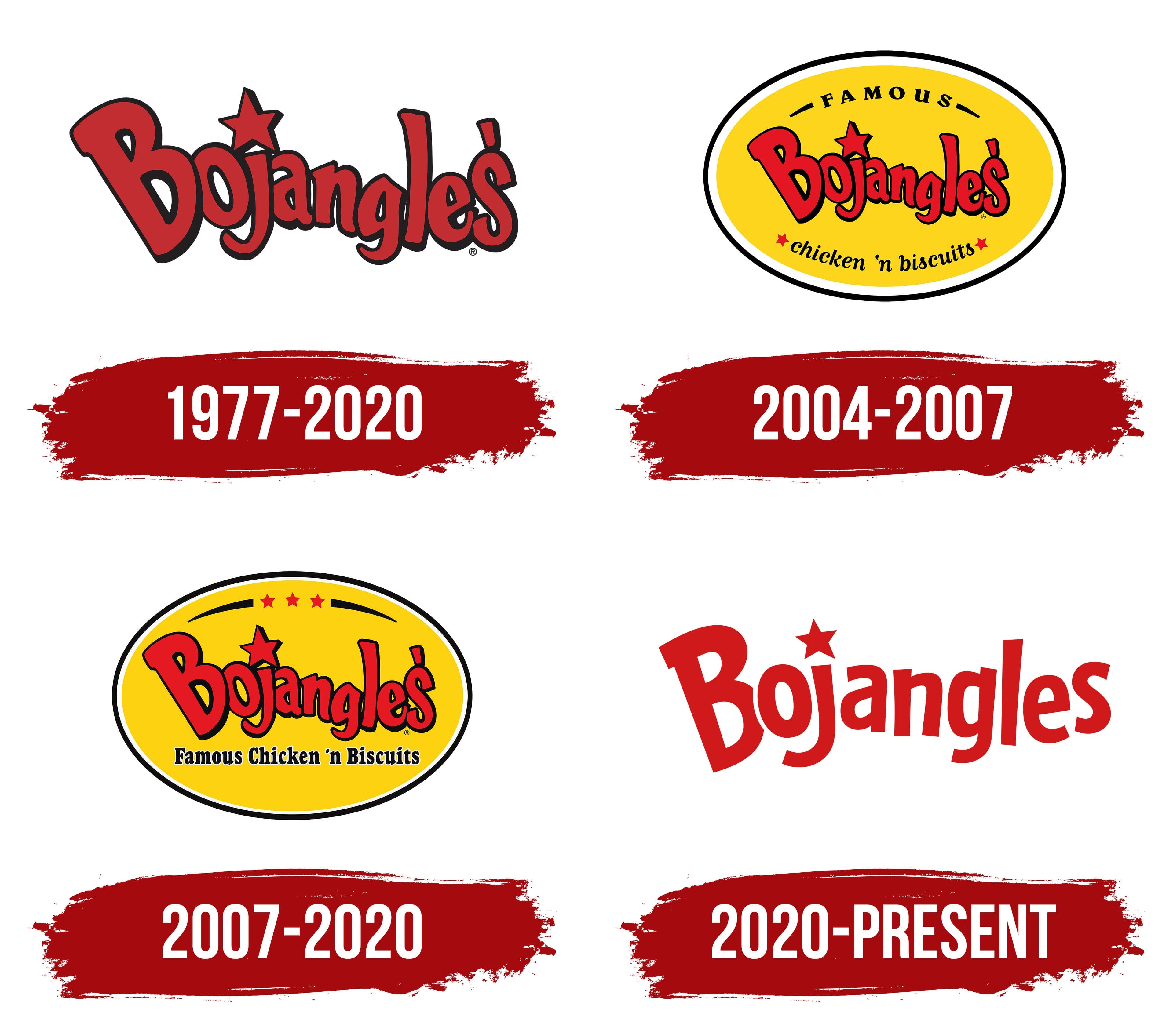
1977 – 2020
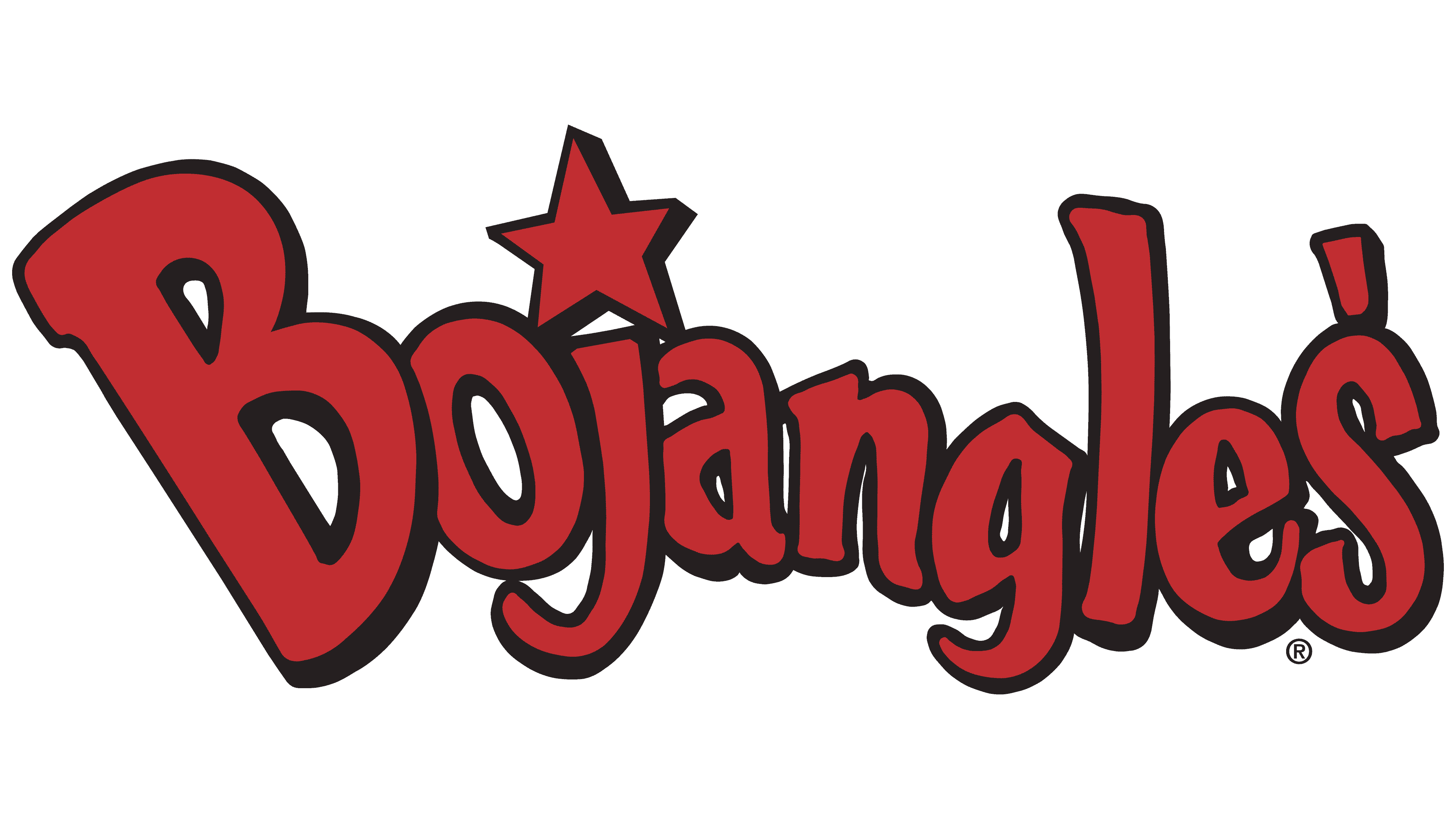
The Bojangles logo became a reflection of the chain’s character, rooted in the culture of the American South and the traditions of local cuisine. For over four decades, the emblem has been a recognizable symbol of fast food, embodying simplicity, hospitality, and the ambiance of a family establishment.
The basis of the logo’s composition is the handwritten inscription “Bojangle’s,” executed in an ascending diagonal from left to right. The typeface is characterized by deliberate irregularity, with slight wave-like deviations and asymmetrical spacing between characters, imitating casual handwriting. It created a sense of playfulness and a certain freedom from the formal restrictions typically found in fast food establishments in the United States.
The first letter, “B,” is enlarged, establishing the compositional accent and directing the viewer’s gaze to the beginning of the name. The following letters are arranged in a cascade, slightly smaller and uneven, but smoothly flowing into one another. The star, instead of the dot above the letter “j”, serves as an additional decorative element, symbolizing a festive atmosphere and visitors’ emotional engagement, aligning with the establishment’s spirit.
The color palette includes a red shade, which, by association, increases appetite and emphasizes the warm, hospitable style of Southern cuisine. A black outline visually highlights the letters. The thick outline emphasizes the playful star, making it a key accent in the composition.
The logo design emphasized Bojangles’ image as a hospitable brand with a pronounced regional identity. The visual concept successfully conveyed an atmosphere of informality and highlighted the difference from standard fast food chains.
2004 – 2007
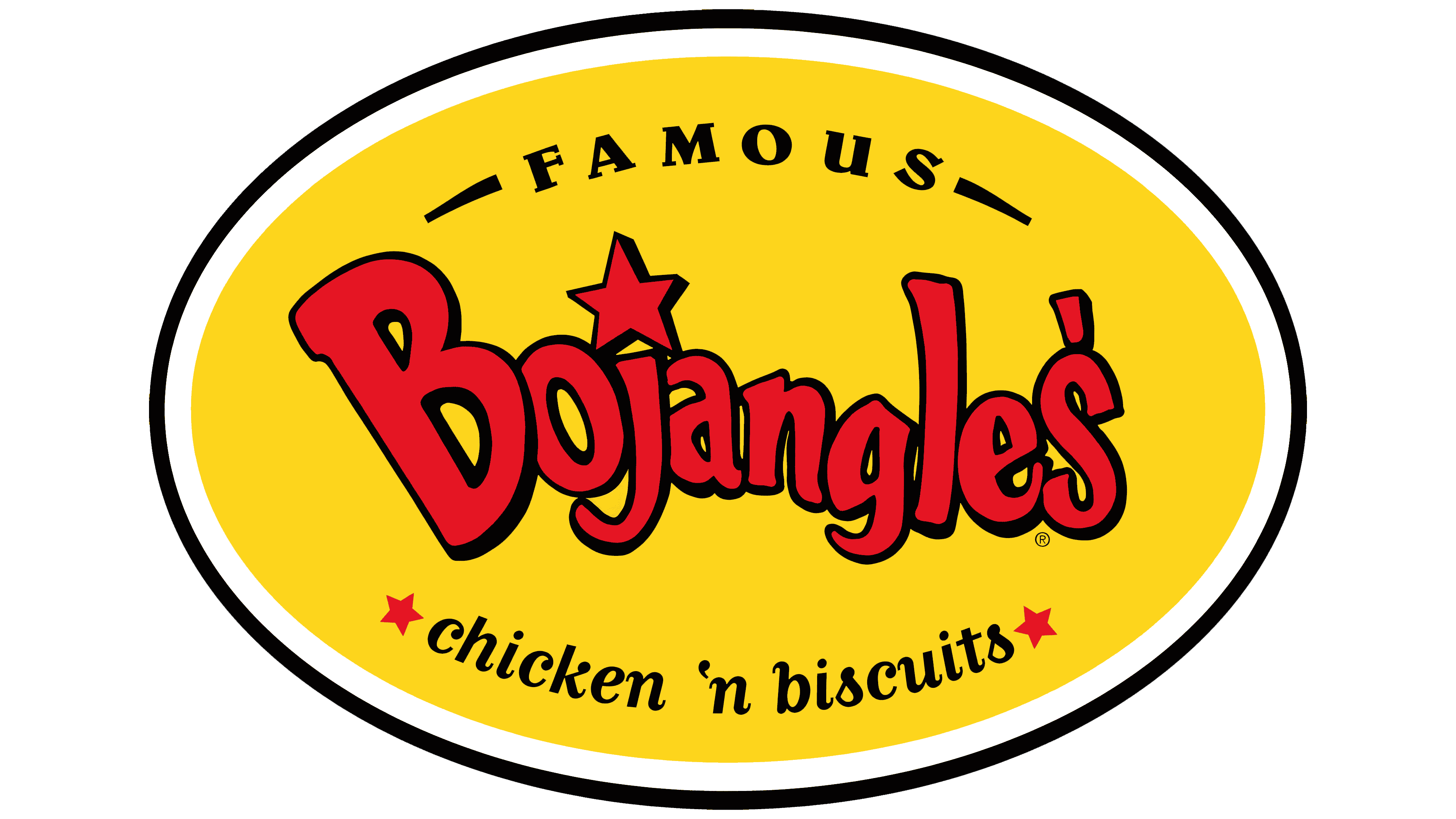
The update of the Bojangles mark was perceived as a development rather than a radical change of image. The basic part, with the handwritten inscription and the star above the letter “J”, remained, preserving continuity with the previous style. However, new accents were added to the familiar composition, making the emblem more expressive and better suited to marketing tasks.
The main change was the introduction of a bright yellow oval outlined in black and white. The background enhanced the perception of the mark on restaurant facades and packaging, highlighting the brand name in a saturated visual environment.
The upper part of the oval received an additional element in the form of the word “Famous,” placed along an arc and executed in a serif style close to classical capitals. It gave the composition the character of a traditional signboard, emphasizing the brand’s authority and its long-standing reputation. In the lower zone, the slogan “chicken ‘n biscuits” was placed. It was set in the massive Cooper Black typeface, with rounded shapes that referred to the chain’s main product. Two additional red stars on the sides balanced the lower block and linked it to the star inside the name.
The new logo preserved the handwritten text’s expressiveness and the original’s lightness, while expanding its associations and shifting the focus from a homely Southern style to a broader restaurant culture. The yellow background made the image warmer, and the additional inscriptions emphasized both product specialization and the “landmark” brand image.
The emblem combined historical foundations with new elements, making the mark a more expressive promotional tool.
2007 – 2020
The transition from the previous Bojangles logo to the new design demonstrated the company’s intent to enhance the mark’s symmetry and order while preserving its recognizable features. The handwritten inscription with the signature star remained the basis of the composition, but the changes to the additional elements within the oval made the image more complete.
The upper part of the background, where the arc-shaped inscription had previously been, was reworked. In its place appeared three red stars arranged in a row, complemented by curved black lines along the sides. They reinforced the composition’s rhythm and became a symbolic designation for three key menu items: chicken, biscuits, and sweet tea. The new structure of the upper block created an impression of stability and gave the logo a more orderly character.
Instead of the former short slogan “chicken ‘n biscuits,” an extended version appeared: “Famous Chicken ‘n Biscuits.” It was set in a Clarendon typeface with soft serifs. The font added formality and solidity to the composition, and the choice of black with a white outline enhanced contrast, making the text maximally expressive on the yellow background. The updated inscription emphasized both product specialization and the brand’s status.
The color scheme otherwise remained the same: a warm yellow oval, black-and-white contour lines, and red accents.
2020 – today
The revision of the Bojangles logo, created in collaboration between the BooneOakley agency and designer John A. Norman, differed sharply from previous versions. Whereas the earlier emblem was based on a complex composition with an oval, frames, a slogan, and several additional elements, the new concept relied on minimalism.
All decorative components were removed from the visual structure. The oval, contour lines, additional stars, and inscriptions disappeared, leaving only the name “Bojangles” and the star above the letter “j” in the center. This detail became the only direct link to the historical versions. The focus shifted to conciseness and digital universality.
Unlike the handwritten style of the old logo, the new mark was executed in a custom digital typeface. Its structure relies on geometric orderliness, but inside the letters, there remain small variations in height and placement.
The palette underwent a slight adjustment. The red became brighter and more saturated than in previous versions, increasing its emotional impact. Removing the outline made the letters cleaner.
The rebranding reflected the company’s new orientation. The visual identity no longer conveyed the image of Southern cuisine through decorative symbols, as it had before, but concentrated on simplicity and the modern digital context.