


 Chicago Logo PNG
The Chicago logo reflects the journey of a band that boldly blended rock, jazz, pop, and intricate arrangements to create a unique sound. Their music tells stories where emotion intertwines with virtuosity, and soft melodies coexist with powerful instrumental sections, achieving a perfect balance of expression and harmony.
Chicago was founded in 1967 by saxophonist Walter Parazaider, guitarist Terry Kath, and trumpeter James Pankow, students at DePaul College of Music. Initially named The Big Thing, the lineup soon expanded to include bassist Peter Cetera, drummer Danny Seraphine, and keyboardist Robert Lamm.
In 1968, at the recommendation of manager James William Guercio, the group relocated to Los Angeles and adopted the name Chicago Transit Authority. Columbia Records released their debut album in 1969, notable for blending rock music with prominent brass instrumentation. Due to legal issues, the name was shortened to simply “Chicago.”
Between 1970 and 1975, Chicago achieved commercial success with albums like Chicago II, Chicago III, Chicago V, and Chicago VI, each featuring a numeric title. Popular hits during this period included “25 or 6 to 4,” “Saturday in the Park,” and “Feelin’ Stronger Every Day.”
In 1976, Chicago earned their first Grammy for Peter Cetera’s ballad “If You Leave Me Now,” which topped international charts. A tragedy occurred in 1978 when Terry Kath died, after which guitarist Donnie Dacus joined the band.
The band returned to prominence in the 1980s with hits like “Hard to Say I’m Sorry” from Chicago 16 (1982), followed by successful albums Chicago 17 (1984) and Chicago 18 (1986). Jason Scheff replaced Cetera in 1985 when he left for a solo career.
Chicago was inducted into the Rock & Roll Hall of Fame in 1995 and received additional honors in 2016, recognizing its long-term impact. As of 2024, the group continues to tour, performing their distinctive fusion of jazz, classical, and rock.
Meaning and History
What is Chicago?
This band combined a brass section with elements of rock, jazz, and classical music, creating a distinctive sound. Starting in Chicago, they developed a style that blends melody with intricate musical arrangements. Hits like “If You Leave Me Now,” “Hard to Say I’m Sorry,” and “You’re the Inspiration” became classics and continue to be played on radio stations worldwide. The musicians are renowned for their exceptional skill and ability to craft songs that resonate with audiences across generations, as evidenced by numerous positive reviews from fans and critics.
1969
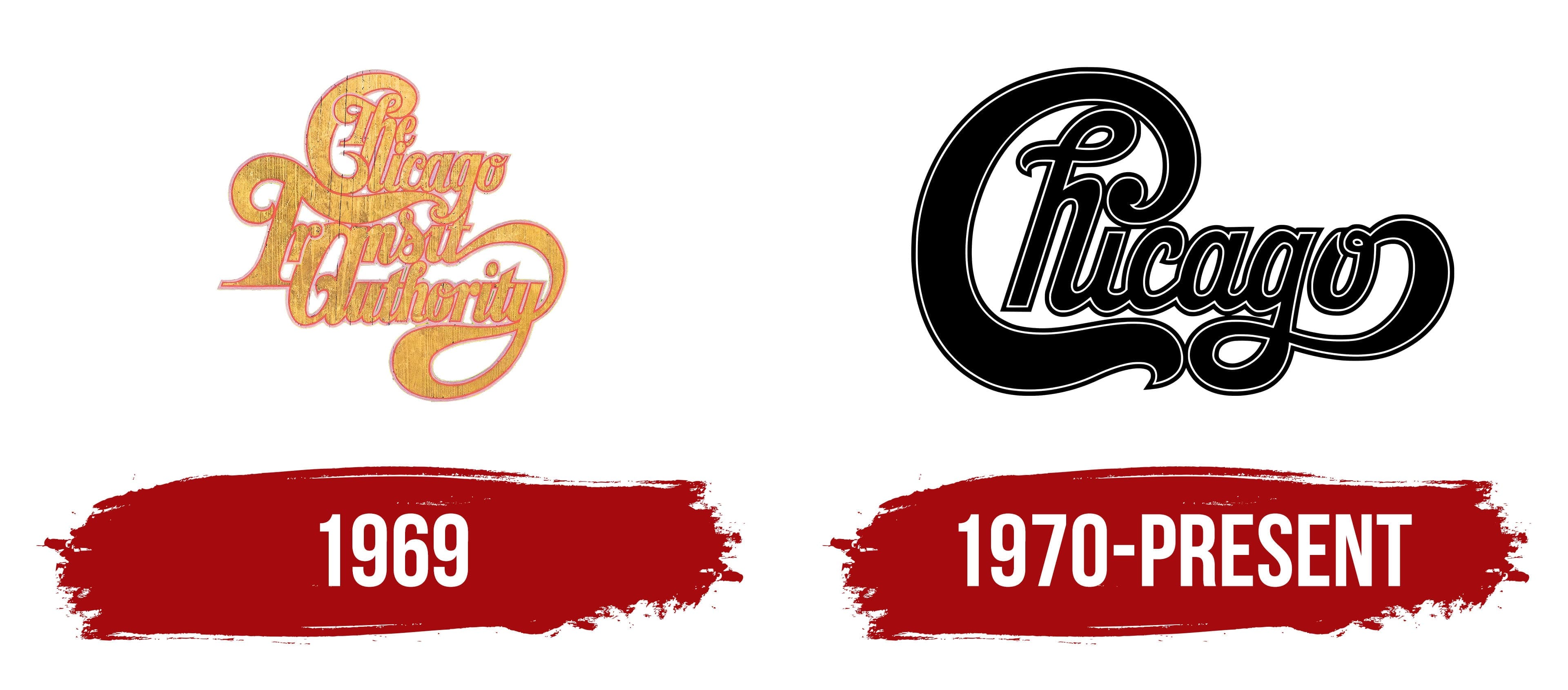
The work on the visual identity of The Chicago Transit Authority informed the design concept for the debut album. Columbia Records art director John Berg proposed using decorative typography as the key element, and designer Nick Fasciano implemented the graphic design. Against the backdrop of the then-dominant strict modernism and psychedelic motifs, the new mark looked fresh and unusual, setting the visual style for the group’s future legacy in Chicago.
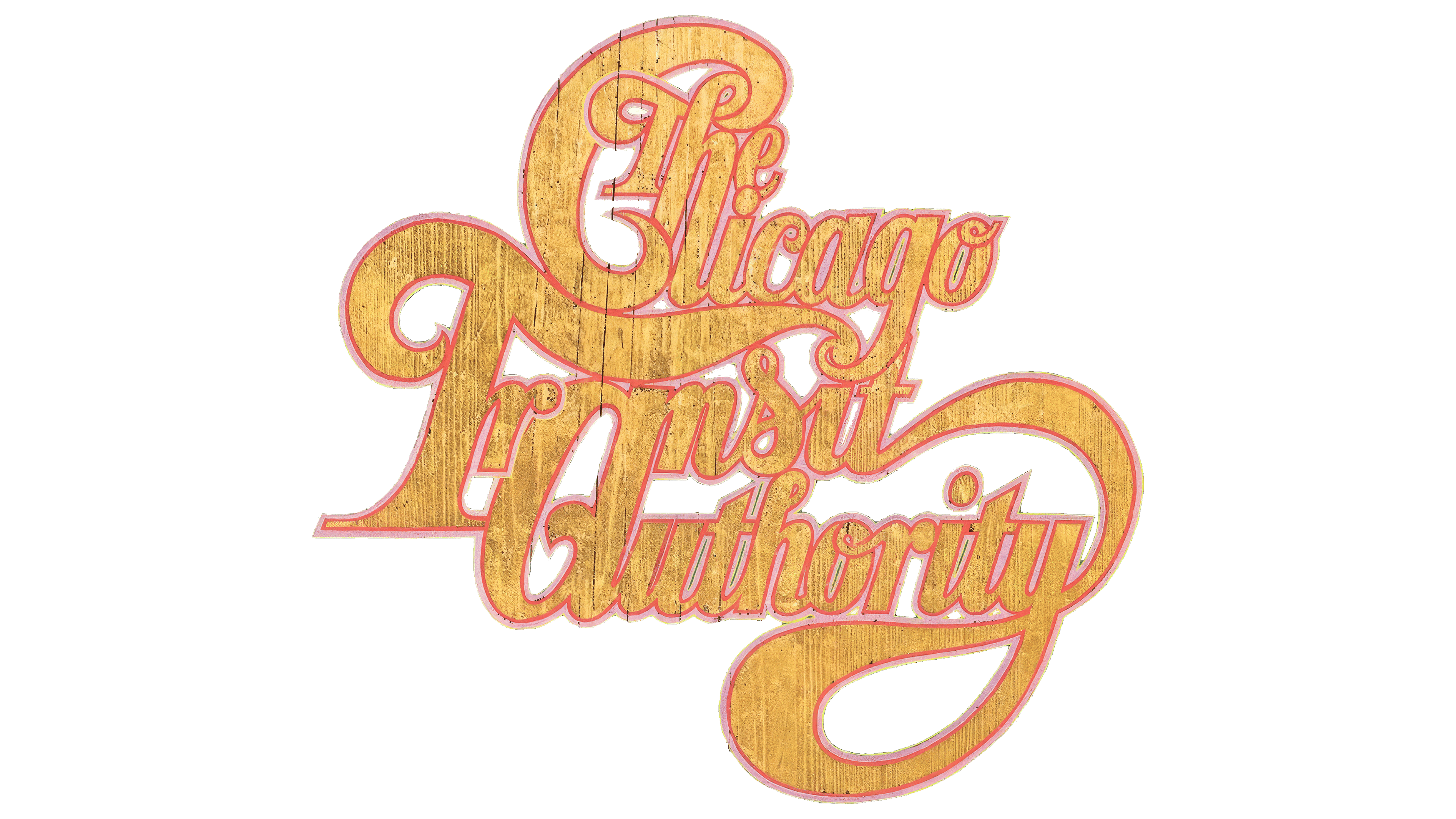
The logo’s composition was built on three levels of text. The top line read “The Chicago,” the second line read “Transit,” and the bottom line read “Authority.” The blocks intertwined organically, forming an ornamental structure. In the word “Authority,” a lowercase “a” was used; it retained the shape of the small letter, was enlarged to the size of a capital, and gave the entire inscription individuality and rhythm.
The basis of the artistic execution was a handwritten font stylized as Victorian and vintage American calligraphy. The lines of the letters flowed into one another, creating a dense ornament reminiscent of early-20th-century signs and billboards. The stroke thickness varied from thin lines to broader segments, reflecting the manual execution method and enhancing the decorative perception of the form.
The logo was executed in a warm golden-yellow tone, stylized as a wooden surface with scuffs and irregularities. An aging and material texture effect was created. An additional red outline enhanced the volume, making the image even more expressive.
Another distinctive aspect was the method used to produce the emblem. It was handmade on a wooden panel, then photographed for transfer to the cover. The process enabled the reflection of the physical sensation of texture and the emphasis on the vintage character.
In the Chicago Transit Authority logo, decorative typography, retro textures, and an original composition came together to create an iconic symbol.
1970 – today
The redesign of the Chicago logo was the result of a collaboration between designer Nick Fasciano and John Berg, the art director of Columbia Records. The band’s name was shortened to a single word, and the new mark preserved the original’s decorative nature while adopting a more universal, concise form suitable for long-term use.
The composition is built around the word “Chicago,” executed by hand in a calligraphic style. The style refers to the traditions of American sign calligraphy of the late 19th and early 20th centuries. The letter “C” begins the inscription and serves as a frame surrounding almost the entire mark. The word resembles a solid, enclosed figure, where each line contributes to the rhythm and smoothness of the composition.
The letters are joined into a single ornamental contour. The stroke thickness changes. At the curves, the lines widen and then narrow again, adding volume and making the inscription livelier and more expressive.
Despite the decorative and intricate forms, the composition is balanced. All symbols are aligned in size and proportion, and the final letter “o” smoothly completes the pattern. Black and white together create clarity of perception and make the image monolithic.
This version of the logo served as the basis for the group’s long-term identity. Later, only the textures and finishes changed, but the structure and shape of the letters remained the same. The Chicago logo became a symbol of the band, securing its visual identity in mass culture.