


 Chuck E. Cheese Logo PNG
The cartoon character in the emblem offers fun and a rich entertainment program. The sign conveys a large selection of delicious food and good cheer. “Everyone will walk away from us fed and satisfied,” the revived Chuck E. Cheese logo informs.
Chuck E. Cheese began in 1977, when Nolan Bushnell, co-founder of Atari, opened the first location in San Jose, California. The idea combined pizza, arcade games, cartoons, and family entertainment under one roof. The brand’s main character was Chuck E. Cheese, a mouse mascot built for a restaurant where children could play while parents stayed for food. The format aligned with the late-1970s arcade boom and gave the chain a clear place in American family dining.
In the 1980s, Chuck E. Cheese expanded quickly, but growth brought financial pressure and strong competition from ShowBiz Pizza Place. In 1984, the company went through bankruptcy, after which ShowBiz Pizza acquired Chuck E. Cheese and kept the stronger name.
The new owner updated the restaurants with newer games, redesigned interiors, and revised animatronic shows. Over time, Chuck E. Cheese became known for its mix of pizza, birthday parties, arcade games, and robotic stage entertainment. By the 2000s, the chain began modernizing its model. Card-based payment systems gradually replaced tokens and paper tickets, and the menu added lighter options.
The brand still faced falling traffic, tougher competition, and safety concerns. In 2020, the COVID-19 pandemic forced the parent company, CEC Entertainment, into bankruptcy again and led to store closures. Even after that setback, Chuck E. Cheese continued operating, with more than 600 locations worldwide and a business model still centered on family visits, games, food, and children’s parties.
Meaning and History
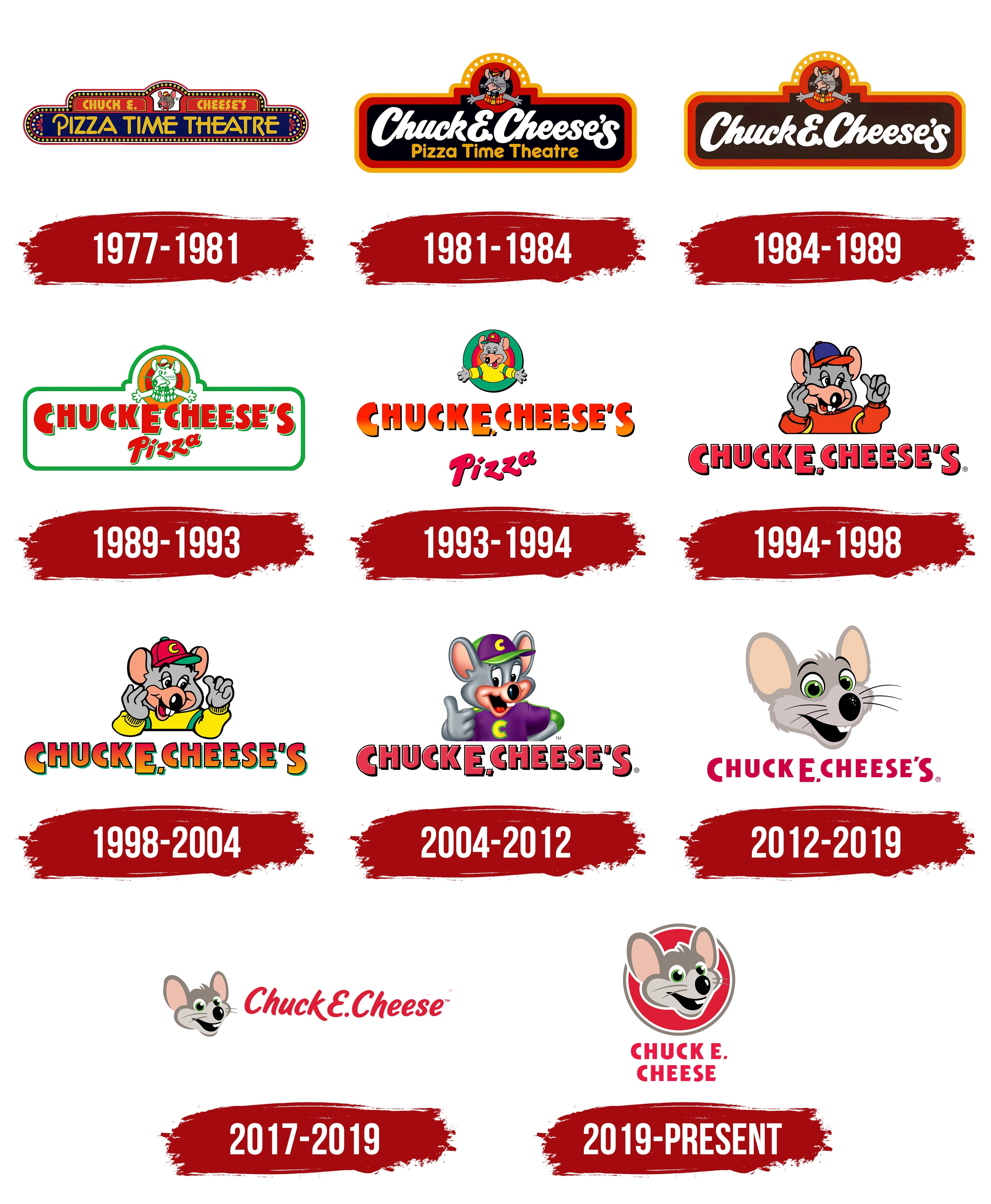
Developing a business concept from a simple family restaurant to an entire entertainment chain meant improving the quality of service and forming a new and improved position in the market, offering what people expect and strive for. The surge in product demand and the idea of a versatile family vacation resulted from the management team’s detailed work and a well-written business plan.
What is Chuck E. Cheese?
Chuck E. Cheese is a chain of restaurants and family entertainment centers. The company is headquartered in Texas and has locations in America, India, and the Middle East. In each location, you can eat delicious food, play, and watch a show.
1977 – 1981

The first logo was born in San Jose (California), even though the first establishment opened in 1977. The logo is a plate with a rodent in the middle; however, it is difficult to determine whether it is a mouse or a rat. Nevertheless, this is the hero around whom the compositional line will be built in subsequent logo versions. The red background, outlined with yellow dots, and the yellow letters reading “Chuck E. Cheese” were supported at the bottom by an enlarged blue insert reading “Pizza Time Theater.” Interestingly, the institution’s name is tempting, but it is not yet clear what is offered in the “Theater.” The organizers wanted to maintain the intrigue and, with a joke, described the restaurant as a place where pizzas measure time.
1981 – 1984

Another commercial version, reminiscent of the film’s opening, was used for advertising. This is a mouse in a red circle, below the inscription in italics and capital letters “Chuck E. Cheese,” and below the phrase in capital letters, which was already there. The combination of the two fonts and the red-and-orange edging of the black logo plate is both visible and simple. Nevertheless, it looks beautiful, as if to say this is a place for great pastimes; performances and incredible stories await visitors.
1984 – 1989
The defining inscription “Pizza Time Theater” was removed during this period, leaving only the brand’s name. Visually, the logo’s font and design appear unchanged; however, the overall image looks stretched and scaled. The rodent hero does not change; it remains a favorite mascot, featured in advertising.
1989 – 1993
During this period, the logo underwent major changes, reflecting a new era in the brand’s development. The logo has changed a lot:
- A green outline
- A white background
- A mouse with a white fill in a red and yellow circle
- The three words “ChuckECheese’s Pizza” start a new concept
It felt empty because of the white background, and the mouse, outlined in thin green, looked ridiculous and isolated. The general idea is there, but the execution is poor and poorly thought out. The name has also been modified because pizza is the only connecting word left.
1993 – 1994
The minimalistic, cartoonish, playful logo once again pleases visitors to this chain of establishments. It looks lively, bright, and easy to remember. There are no contours or shadows, but a mouse in a cap (now you can see it is a mouse) opens her arms in an inviting gesture and looks out of the green circle. Below is “Chuck E. Cheese’s Pizza” (the company name is decorated with a reddish-yellow gradient, a dot appears after the E, and the word “pizza” is cherry-colored).
1994 – 1998
The new logo and business expansion are already available. The mouse image is used for small branded shops. The rodent has acquired a red athlete’s uniform and a blue-and-red baseball cap. He shows “super” with one hand and rests his chubby cheek with the other; his dreamy expression shows how delicious the pizza is. The inscription remains; the red letters are underlined in shadow, and only the word “pizza” has been removed from the logo. The mouse image suited the target audience, so the need to emphasize the main dish on the menu disappeared.
1998 – 2004
The second version of the previous logo: the rodent is yellow with green stripes, and it wears a green-and-red cap with the letter C. That year, a subsidiary of CEC Entertainment, the former ShowBiz Pizza Time, appeared. This logo is still used in some places.
2004 – 2012

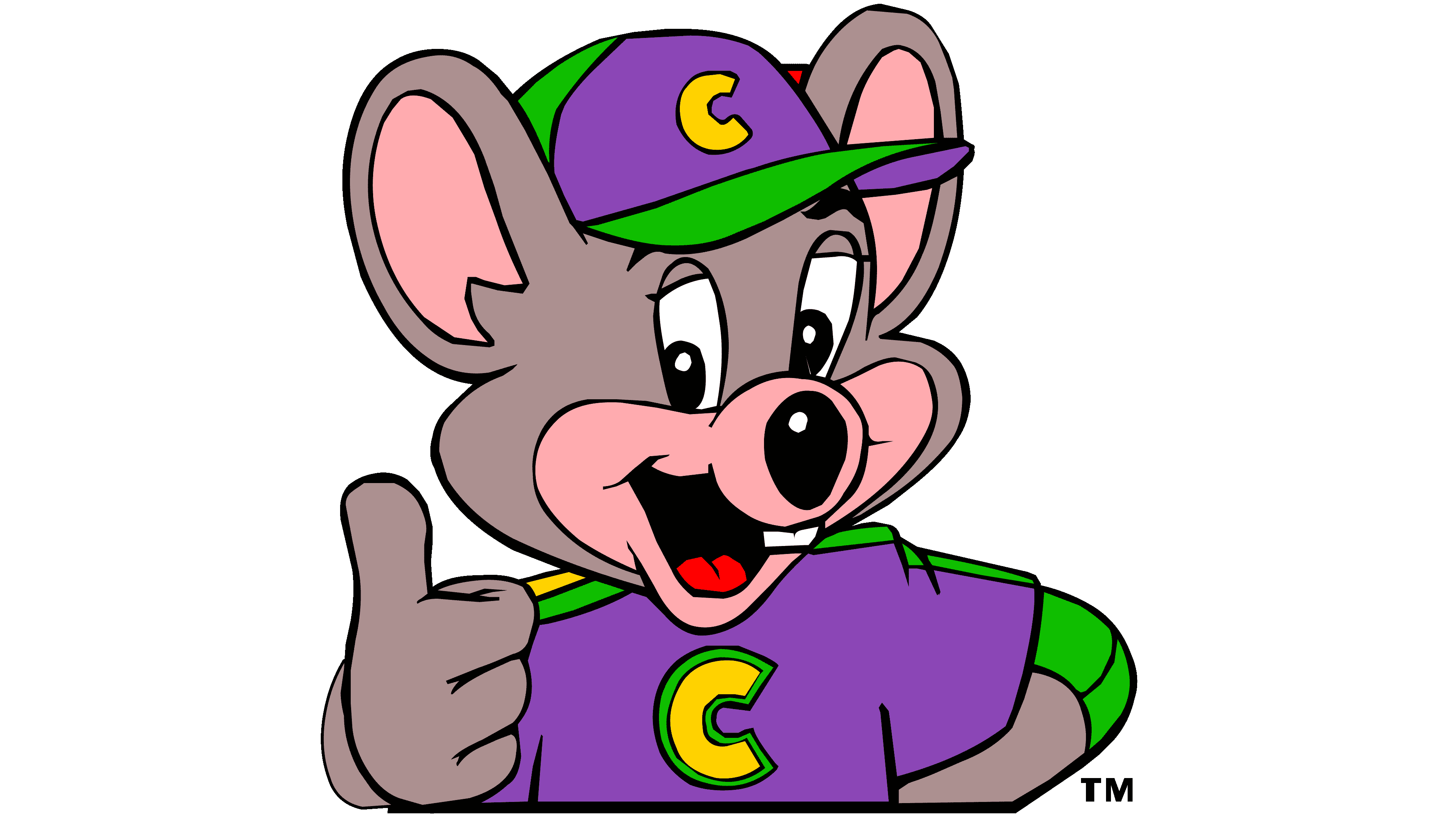
The new mouse expression, the new purple C-shape, and the thumbs-up suggest the update reflects the times and adds modernity to the earlier designs. It’s a strong color combination with a clear concept, and the rodent looks like a comic-book superhero. The letters of the brand name have become dark red with a shadow.
2012 – 2019
During this period, the company underwent a major rebranding. The logo began to resemble the first options, with a rodent’s head and red letters in the name. Below, they added a brand characteristic. The rodent began to smile more widely; now, only the head was depicted less anthropomorphically, closer to nature.
2017 – 2019

In 2018, Chuck E. Cheese revamped its logo and rebranded it as”Chuck E. Cheese Pizzeria & Games.” The update made the iconic mouse-head emblem smaller and shifted it to the left to improve the logo’s balance. The redesign featured “Chuck E. Cheese” in bold red cursive at the top of the logo, while “Pizzeria & Games” appeared below in a strong black uppercase sans-serif font. This change aimed to modernize the brand’s look and better showcase its dining and gaming offerings, making it more attractive to a wider audience.
2019 – today
The original logo features a mouse in a red circle. The lettering has become more concise and centered, split into two lines: “Chuck E. and Cheese,” without the apostrophe and the branded “S”.
Unfortunately, in June 2020, the company was forced to declare bankruptcy due to the coronavirus pandemic. Several establishments and locations were closed. Nevertheless, the company stayed afloat after reviving in January 2021, thanks to a new management structure and new locations.
Font and Colors

The closest typeface used in the logo is called Kabel Black. Rudolf Koch designed it, and Linotype first published it. It is a geometric sans-serif with straight lines. In some variations, it is shaded or in italics.
The official palette consists of six colors. These include Standard Black, Vivid Red (#F3001C), Cinereous (#8F8178), Desert Sand Beige (#EEBFAF), Timberwolf (#DAD1CA), and Kelly Green (#5DA313).
FAQ
Which American children’s restaurant chain has a mouse as its emblem?
Chuck E. Cheese, an American children’s restaurant chain, features a mouse as its symbol. The name comes from its mascot, Chuck E. Cheese, a mouse known for bringing fun, games, and entertainment to families. Nolan Bushnell, who also co-founded Atari, started Chuck E. Cheese. He wanted to create a place where families could enjoy arcade games, pizza, and live shows. The first Chuck E. Cheese’s Pizza Time Theatre opened in 1977 in San Jose, California. This blend of food, games, and animated performances quickly became a go-to spot for family fun, birthdays, and celebrations, making Chuck E. Cheese a key part of American childhood.
What are Chuck E. Cheese’s rules?
Chuck E. Cheese has a clear rule for kids visiting: anyone under 18 must be accompanied by an adult. This ensures every guest, especially the younger ones, has a safe and fun time. When minors visit, they must be accompanied by a parent or guardian throughout the visit. This policy helps keep Chuck E. Cheese a secure place where families can enjoy games, food, and shows together. It’s all about ensuring kids are safe while having fun, which is a big part of what Chuck E. Cheese stands for.
Can you eat at Chuck E. Cheese without a kid?
Yes, adults can visit Chuck E. Cheese even without kids. While Chuck E. Cheese is designed for kids to have fun, play games, and enjoy parties with their families, it’s also a place where adults can enjoy themselves. You’re welcome to come in, whether you want to revisit childhood memories, play arcade games, or just eat pizza. Chuck E. Cheese invites everyone looking for fun or a taste of nostalgia to come experience what they offer. So, if you want pizza or arcade games, Chuck E. Cheese is a good place to visit.
What does Chuck E. Cheese stand for?
Charles Entertainment Cheese, or Chuck E. Cheese, is the mascot for the Chuck E. Cheese family entertainment centers run by CEC Entertainment Concepts L.P. First introduced in 1977 as a rat, Chuck E. Cheese became a mouse in 1993, and this image has stuck around. He’s the face of the brand, embodying the fun and family-oriented atmosphere the centers offer. The place gives families and kids a space to play games, enjoy rides, and eat pizza while keeping everything safe and welcoming. Chuck E. Cheese often takes center stage at these centers’ performances and birthday parties.
Changing Chuck E. Cheese from a rat to a mouse was a strategic move to make him more attractive and relatable to the brand’s main audience: kids and their families. This shift supports the company’s goal to be a top choice for family entertainment and celebrations. Over the years, Chuck E. Cheese has become a go-to for fun, birthdays, and arcade games, thanks largely to the charm and appeal of Charles Entertainment Cheese.
When did Chuck E. Cheese change its logo?
Chuck E. Cheese has changed its logo over 10 times to keep up with new branding strategies and what families expect. The latest change was in 2019, and it looks much like the 2013 logo, with minor tweaks. These updates help Chuck E. Cheese stay current and appealing to its main customers: families and kids. Each logo change aims to keep Chuck E. Cheese’s image fresh and modern without losing the fun, kid-friendly vibe it’s known for. All these changes over the years show how Chuck E. Cheese is growing and staying a favorite spot for family fun.
Who owns Chuck E. Cheese?
Since 2020, Monarch Alternative Capital has owned Chuck E. Cheese, officially known as CEC Entertainment Holdings, LLC. This American investment fund stepped in to save Chuck E. Cheese from bankruptcy. Monarch focuses on helping troubled companies, and its purchase of Chuck E. Cheese signals an interest in turning around businesses with growth potential. Monarch’s role at Chuck E. Cheese is crucial, helping keep the well-known family entertainment chain stable and fresh so it remains a favorite place for family enjoyment.
Why did Chuck E. Cheese change their mascot?
Chuck E. Cheese originally used a rat as its mascot, which fit the brand’s playful theme. But having a rat as a mascot, especially for a restaurant focused on kids and families, didn’t sit well because rats are often associated with cleanliness concerns, a big deal in places where people eat.
So the company switched the mascot from a rat to a mouse, a similar-looking creature often seen as cuter and friendlier. This made more sense for Chuck E. Cheese, a place about family fun and safety.
In 2012, to keep up with the times and appeal to a new generation, Chuck E. Cheese updated its mascot again. This time, they made the mouse mascot look more modern and relatable to today’s kids and their families, without losing the essence that made Chuck E. Cheese special. This change shows the brand’s effort to stay current and remain a favorite spot for family entertainment.
What does the E in Chuck E. Cheese stand for?
A few years ago, Chuck E. Cheese’s creative director revealed a fun fact about the brand’s mascot: the ‘E’ in Chuck E. Cheese stands for ‘Entertainment.’ So, the mascot’s full name is Charles Entertainment Cheese. This name perfectly captures what the brand is about:n ot just a pizza place, but a center for family fun. It highlights Chuck E. Cheese’s goal of offering a place where kids and their families can have fun with games, shows, and parties while enjoying its food. This ID bit has become well-loved by fans, underscoring the brand’s unique, playful spirit.
What does the Chuck E. Cheese logo symbolize?
The Chuck E. Cheese logo combines active fun with a love of cheese, perfectly aligning with the brand’s theme of entertainment and pizza. This logo aligns with the brand’s aim to blend enjoyment and food in a place where families can enjoy together. The mascot’s creation story is quite interesting. Initially, the brand wanted a coyote as its mascot, but mistakenly purchased a rat costume. Instead of sticking with the rat, the founder switched to a friendlier, happier mouse character. This decision changed the brand’s direction, moving from Coyote Pizza to Rick Rat’s Pizza and finally to Chuck E. Cheese. This unexpected mascot change added a special touch to the brand, showing how a simple mistake could create a beloved, iconic identity.
What was the first Chuck E. Cheese logo?
The first Chuck E. Cheese logo featured a sophisticated rat wearing a red bow tie and a small gentleman’s hat, giving it a distinguished look that matched the brand’s entertainment value. The logo had “Chuck E. Cheese” written on both sides of the mascot, with “Pizza Time Theater” below, highlighting the brand’s mix of food and fun. Yellow dots, like theater lights, accented the design and added a festive touch. This setup effectively showcased Chuck E. Cheese as a place for family entertainment and dining, capturing the essence of what would become a lasting attraction for kids and parents.
What does Chuck E. Cheese mean?
The Chuck E. Cheese logo means more than just its fun look. It highlights the brand’s main attractions: games and shows. The mascot, Charles Entertainment Cheese, shows how well the brand blends entertainment with eating for families and kids.
Chuck E. Cheese combines active fun, good food, and family time. The “Entertainment” in the mascot’s name points to the games, shows, and parties that make Chuck E. Cheese special. It suggests that Chuck E. Cheese isn’t just a regular restaurant; it’s a place where families can have fun, eat together, and make lasting memories.
The logo represents the brand’s promise: a joy-filled place where families can play and eat. It’s meant to ensure a visit packed with fun, with something for everyone from arcade games to a menu that pleases both kids and adults. Chuck E. Cheese aims to be the top choice for family fun, blending the thrill of playing with the joy of eating together.
What is the Chuck E. Cheese slogan?
Chuck E. Cheese’s first slogan, “Pizza Time Theater,” introduced a unique concept that mixed pizza with entertainment, drawing families in with its promise of a special dining and fun experience. This catchy phrase was part of the original logo and set the stage for a brand built around a place where eating and entertainment meet, especially for families and kids.
In 2014, the brand embraced a new slogan: “Where a kid can be a kid.” This line gets right to the heart of Chuck E. Cheese’s mission. It’s all about creating a place bursting with joy, where the magic of childhood can thrive through play, positive experiences, and laughter. It shows the brand’s commitment to helping kids enjoy their youth in a safe, fun environment. This slogan reflects the brand’s ongoing promise to make every visit a chance for kids to revel in the freedom and happiness of being young.
Is Chuck E. Cheese a rat or a mouse?
Nolan Bushnell, who founded Chuck E. Cheese, originally planned to call it Coyote Pizza and use a coyote mascot. However, he bought a rat costume for the first performance because of a mix-up. Initially, Bushnell considered naming it Rick Rat’s Pizza, but his team suggested Chuck E. Cheese instead.
From 1977 to 1993, Chuck E. Cheese was represented by a rat. In 1993, the mascot changed from a rat to a mouse to make the character friendlier and more appealing to families and kids, the brand’s main audience. This shift from a rat to a mouse better aligned the mascot with Chuck E. Cheese’s goal of providing a welcoming, entertaining space for family fun and dining.