CIMB Logo PNG
CIMB traces its roots to April 1974, when Pertanian Baring Sanwa Multinational Bank was established in Kuala Lumpur with the involvement of Malaysian Prime Minister Tun Abdul Razak Hussein. The bank was formed by Bank Pertanian, Britain’s Baring Brothers, and Japan’s Sanwa Bank. Under Baring Brothers, it focused on corporate finance, advisory work for multinational companies, restructurings, and mergers and acquisitions.
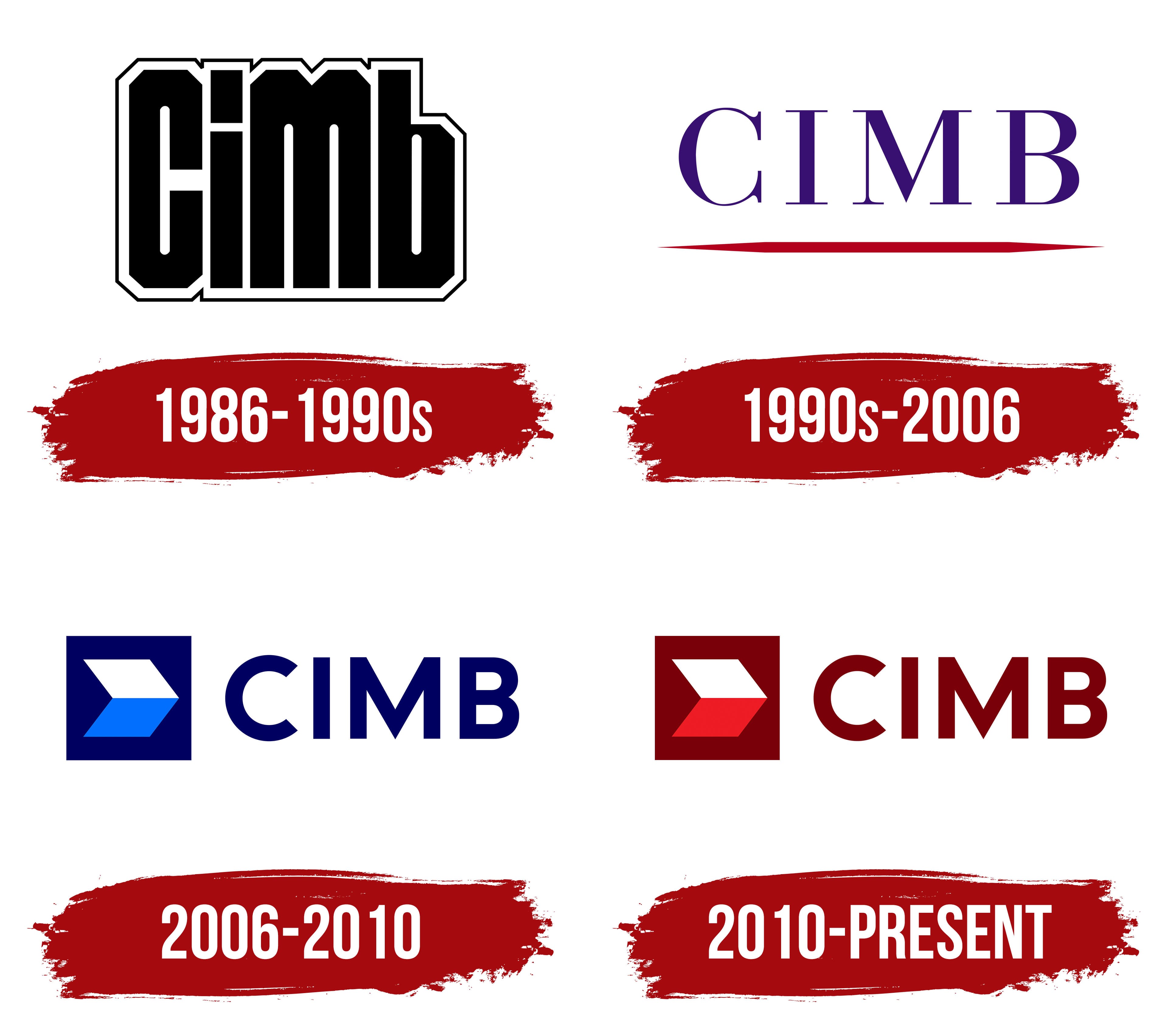
In 1986, Bank of Commerce Berhad acquired control and renamed it Commerce International Merchant Bankers Berhad, creating the CIMB abbreviation. The bank expanded into corporate finance, securities offerings, and brokerage. In 1991, Bank of Commerce acquired United Asian Bank, increasing its branch network nearly fourfold, while the holding company became Commerce-Asset Holdings Berhad.
The 1997–1998 Asian financial crisis pushed Malaysia toward banking consolidation. In October 1999, Bank Bumiputra Malaysia Berhad merged with Bank of Commerce to form Bumiputra-Commerce Bank under CAHB. In 2002, CAHB became the majority shareholder of Indonesia’s Bank Niaga. In January 2003, CIMB Bhd listed on the Kuala Lumpur Stock Exchange, and CIMB Islamic was launched for sharia-compliant financial products.
In 2005, CAHB bought Singapore broker G.K. Goh Securities and acquired Bumiputra-Commerce Bank. In 2006, CIMB Group was created after the merger of Commerce International Merchant Bankers, Bumiputra-Commerce Bank, and Southern Bank, with Khazanah Nasional as the backer. In 2008, Bank Niaga and Bank Lippo merged into CIMB Niaga. In 2009, CIMB bought BankThai, expanding across four major ASEAN markets and competing with regional banks such as DBS.
Meaning and History
What is CIMB?
This is a banking group based in Malaysia, with a significant presence across ASEAN countries. The bank offers a range of services, including asset management, insurance, commercial banking, investment banking, and consumer banking. The bank is known for facilitating cross-border transactions and investments in the region and for offering Sharia-compliant banking products, making it a key player in Islamic finance. With its achievements in digital banking and fintech innovations, the company attracts a tech-savvy audience. The bank is also one of the largest investment banks in Asia, playing a crucial role in the region’s corporate finance and capital markets.
1986 – 1990s

1990s – 2006

2006 – 2010

2010 – today