


 Debian Logo PNG
The Debian logo symbolizes openness, reliability, and stability of the free operating system. Its minimalist style emphasizes simplicity, functionality, and technical precision, which makes it popular among IT professionals.
Debian began in 1993, when Purdue University student Ian Murdock set out to build a better-organized and openly developed Linux distribution. He combined his name with Debra Lynn’s, his girlfriend and later wife. Early releases appeared late that year, accompanied by a package-management system for standardized installation, updating, and removal of software. The package model later influenced the wider free-software ecosystem.
In 1994, Murdock published the Debian Manifesto, defining the project’s commitment to open development and free software. The Free Software Foundation provided funding and support. At the same time, a decentralized developer community maintained control through democratic procedures rather than a commercial owner. The model differed from the corporate structure behind Red Hat.
Through the late 1990s and 2000s, Debian expanded its software repositories and added support for numerous processor architectures. Maintainers took responsibility for individual package groups, allowing the distribution to run on personal computers, servers, and embedded systems. In 2004, Ubuntu was created from Debian and reached a broader desktop audience by focusing on user accessibility.
Debian 8 adopted systemd in 2015, replacing SysV init and provoking intense debate among developers who considered the new system too complex and monolithic. In 2019, Debian 10 enabled AppArmor by default, adding a mechanism for controlling application access within the operating system.
Meaning and History
What is Debian?
It is one of the oldest Linux-based operating systems, developed by Ian Murdock, a programmer. A volunteer community manages its non-commercial development, ensuring high stability. It forms the basis for many other popular Linux distributions, including Ubuntu. The OS is widely used on servers and in research institutions due to its reliability and strict update controls.
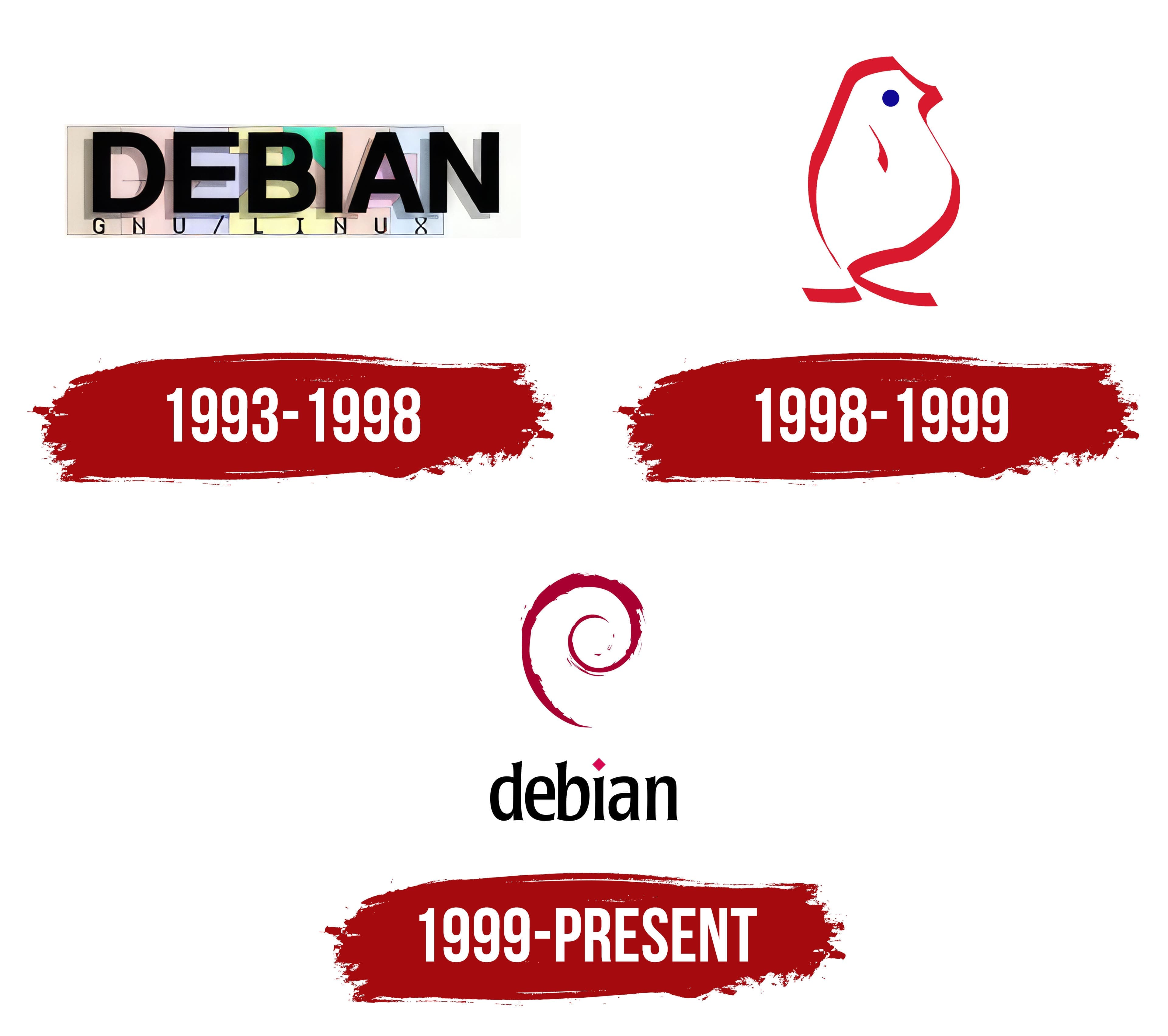
1993 – 1998
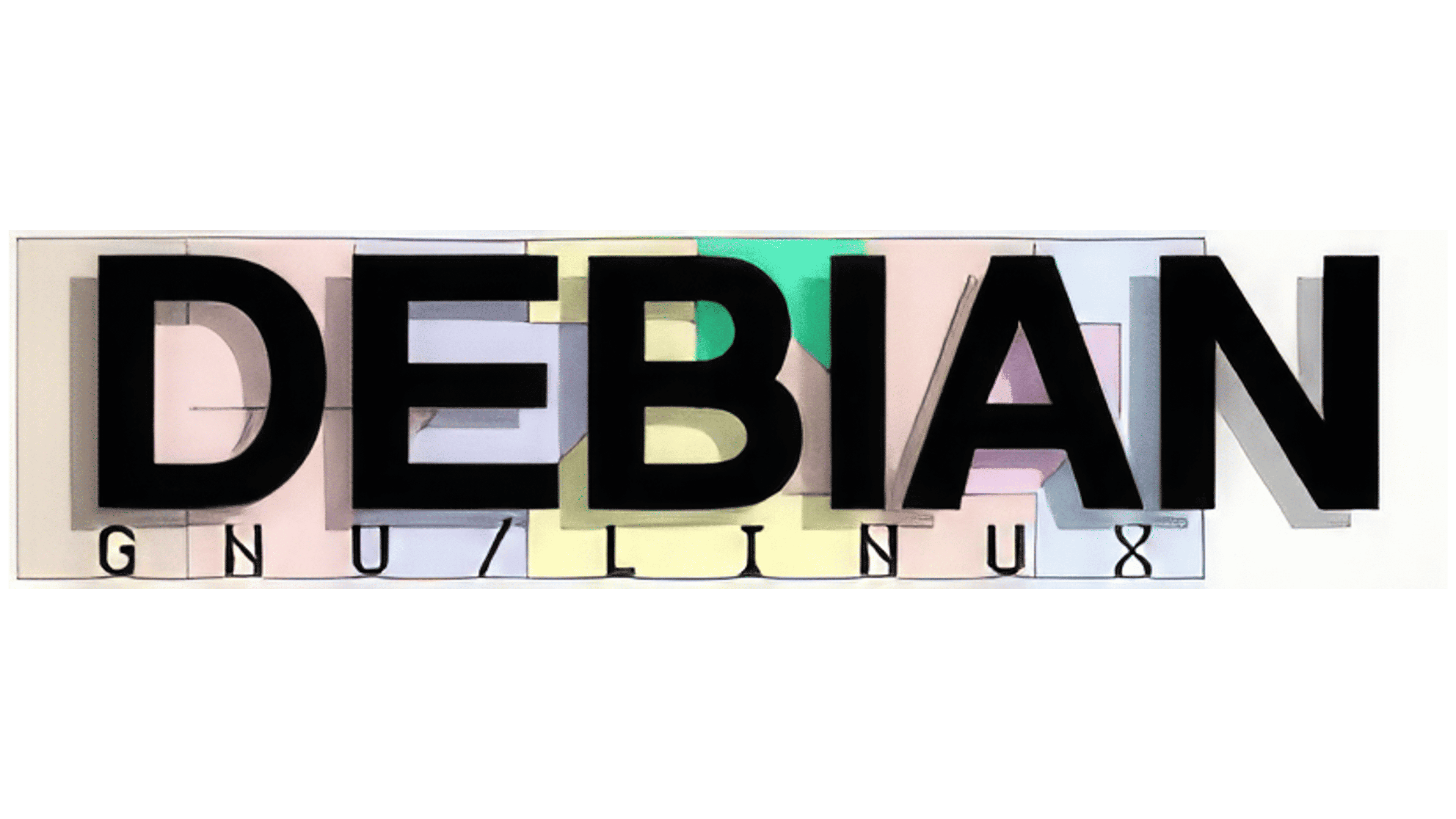
This was the earliest visual identifier for the Debian GNU/Linux project, which Ian Murdock initiated. The original Debian logo, which preceded the well-known spiral, featured a completely different style.
The large word “Debian” was centered in the composition, set in a bold, geometrically precise sans-serif typeface. The font featured smooth, even strokes with minimal line-width variation and rectangular proportions similar to those of Helvetica Black or Futura Bold. This choice emphasized the brand’s seriousness, simplicity, and technical nature, particularly in its association with software.
Beneath the name was a smaller “GNU/LINUX” inscription in a thin, monospaced font with extended letter spacing, adding a sense of technical rigor and an engineering feel to the overall composition.
The background design featured abstract colored blocks and geometric elements in soft, muted tones, forming a subtle pastel mosaic. This approach reflected the aesthetic of the early Linux community, where the free and open-source nature of software was often visualized through simple design.
The mark appeared in early documentation, presentation materials, and the first CD distributions. With no standardized usage guidelines, minor variations of the logo appeared across different builds, which was typical for a developing volunteer project.
The name Debian is derived from the names of the project’s founder and his wife (Debra and Ian), reflecting the project’s personal, informal beginnings and its ties to the GNU/Linux movement. The logo conveyed simplicity and straightforwardness in free software, emphasizing the community’s original ideological focus on transparency and technological accessibility.
1998 – 1999
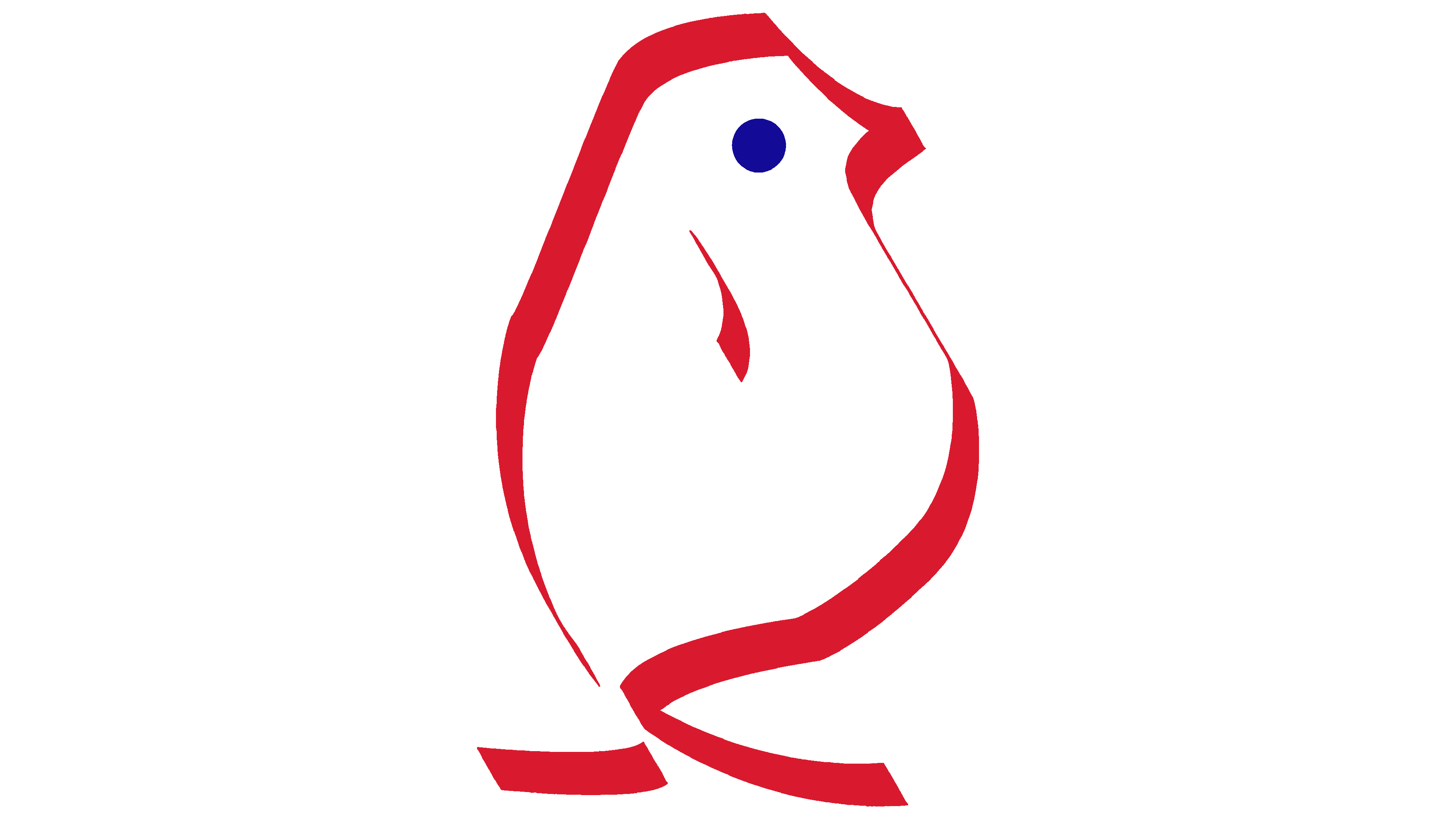
The new Debian logo featured a stylized penguin rendered in an unusual, abstract style, distinct from the familiar Linux mascot, Tux. This unofficial visual symbol gained popularity in the community during the transition from the old text-based logo to the Debian spiral.
The image was formed from a thin red line that created the illusion of a single, continuous stroke, outlining the bird’s body and wing. The line had fluidity and elegance, resembling a ribbon, which gave the logo a sense of lightness and motion. The only color accent beyond the red line was a small blue circle representing the penguin’s eye.
The red color symbolized energy, initiative, and enthusiasm, reflecting the community’s activity and innovation. The blue eye provided a point of contrast, bringing the figure to life and enhancing its emotional expressiveness.
In terms of execution, the logo resembled graphics created with popular vector tools of the time, such as XFig or CorelDRAW. Its simplicity and minimalism reflected the late 20th-century Linux community’s approach to design, prioritizing functionality and clarity over visual complexity and elaborate detail.
1999 – today

The Debian logo in use today was created by Brazilian designer Raul Silva and features a stylized spiral in deep crimson (#D70751). The spiral is rendered in an artistic style that mimics a brushstroke, with uneven edges and variable line thickness, giving it a hand-painted appearance. This execution emphasizes the project’s creative and informal character.
The logo’s symbolism is not officially defined, but several interpretations are common within the community. Some see it as a metaphor for open and free forward movement. In contrast, others view it as an image of steam rising from a cup of coffee, symbolizing stability and the comfort of the Debian environment. It can also be interpreted abstractly, highlighting the project’s freedom, creativity, and flexibility.
The word “debian” is written in lowercase letters using a typeface based on Poppl Laudatio. Distinctive features include moderate stroke contrast, small serifs, and smoothly flaring letter endings, which give the typography a dynamic and lively character. An important detail is the diamond-shaped dot above the “i,” rendered in the same crimson shade as the spiral, visually linking the two elements of the logo.
The combination of red and black conveys professionalism, boldness, and the energy of the developer community. This palette helps position the brand as an innovative and reliable member of the free software movement.
The logo is used across all major communication points: on official websites, within software interfaces and installers, and in event branding for gatherings such as DebConf and FOSDEM. Since its introduction, it has become an integral part of Debian’s identity, strengthening the project’s recognition and reputation in the global IT community.
