 GNOME Logo PNG
The GNOME logo symbolizes the convenience and simplicity of the user interface. Its minimalist style reflects functionality, stability, and a user-friendly orientation.
Mexican developers Miguel de Icaza and Federico Mena created GNOME in 1997 as a fully free desktop environment for GNU systems based on Linux. The project emerged because KDE depended on Qt, whose license at the time did not meet strict open-source principles. GNOME used GTK, a toolkit first developed for GIMP, and its name originally stood for Network Object Model Environment.
GNOME 1.0 arrived in March 1999. Red Hat support helped the young project reach professional users and gain technical backing. In 2000, the nonprofit GNOME Foundation was formed with participation from companies including Sun Microsystems and Eazel, giving development a more organized structure and formal methods for coordinating contributors.
GNOME 2 followed in 2002 with the Metacity window manager, revised menus, improved accessibility, and formal Human Interface Guidelines. It became the default desktop in many distributions for almost a decade. GNOME 3, released in 2011, replaced the traditional layout with GNOME Shell and shifted toward full-screen workflows. The change divided users and encouraged the creation of MATE and Cinnamon.
Later releases added Wayland support as a successor to X11 and continued redesigning the interface. GNOME 48 appeared in March 2025 with further desktop updates. The environment remained standard in Debian, Fedora, and Ubuntu. Meanwhile, its long development history continued to shape free desktop software for users, developers, and corporate systems.
Meaning and History

What is GNOME?
It is a popular, free graphical interface for Unix-like operating systems, primarily Linux. Its design is minimalistic and user-friendly, avoiding unnecessary elements. The system includes an application menu, taskbar, and notifications. It is regularly updated by an international team of developers and designers, constantly enhancing usability.
1998 – 2002
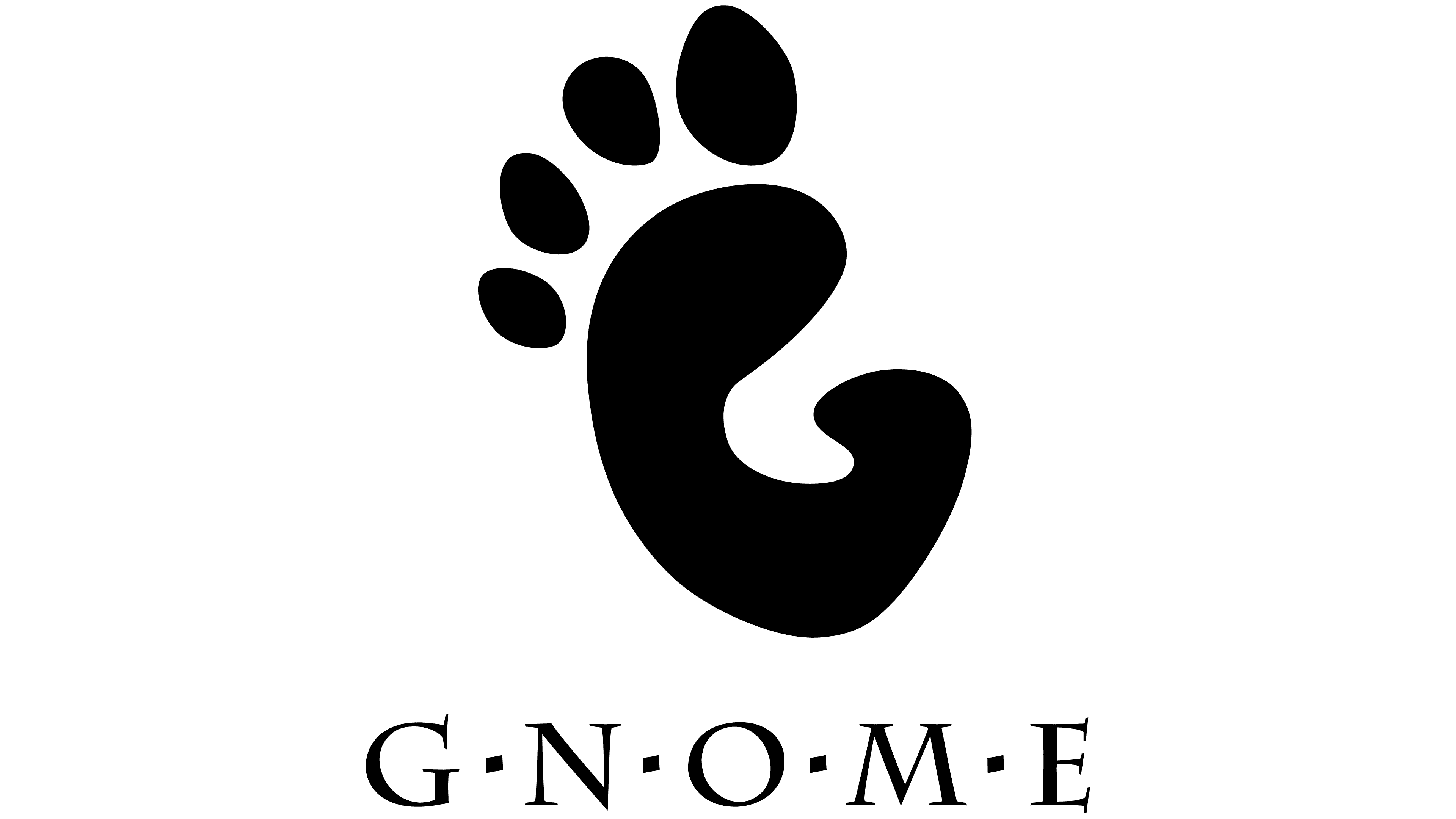
The first GNOME logo was created through a contest organized by Red Hat, with the requirement that entries be made using the GIMP raster editor. The winning design came from Tuomas Kuosmanen (also known as Tigert), a friend of Miguel de Icaza and a graphic contributor to GIMP.
The visual concept was a stylized human footprint shaped like the letter “G.” It had a distinctive curved silhouette, with three oval shapes at the top representing toes. Below the main symbol was the name “GNOME” in uppercase letters with classic, expressive serifs. Between each letter were square dashes or dots, emphasizing the composition’s modular, structured nature.
The typeface belonged to a traditional serif family characterized by its horizontal and vertical strokes. Each letter had straight, clean outlines, reinforcing a sense of seriousness and stability that suited the product’s positioning at the time.
The footprint design originated spontaneously as part of a desktop background image, depicting a print left in sand. It was later adapted into a menu panel icon and gradually became GNOME’s recognizable symbol. Although it did not originate from a profound semantic concept, the footprint gained symbolic meaning as a metaphor for individuality and for personalizing the user’s workspace.
The logo’s palette was monochrome, featuring a black symbol and lettering on a white background, emphasizing simplicity, functionality, and usability. This color scheme supported the project’s official, professional image, which was important to GNOME’s positioning in the professional community.
Within the GNOME community, the logo sparked debate: some saw it as an original and charismatic emblem, while others found it difficult to adapt for use in icons or to interpret across different cultural contexts. Nevertheless, it remained the project’s primary mark until the release of GNOME 2.0 in 2002, after which the visual system was updated, though the old version continued to be used for some time.
2002 – today
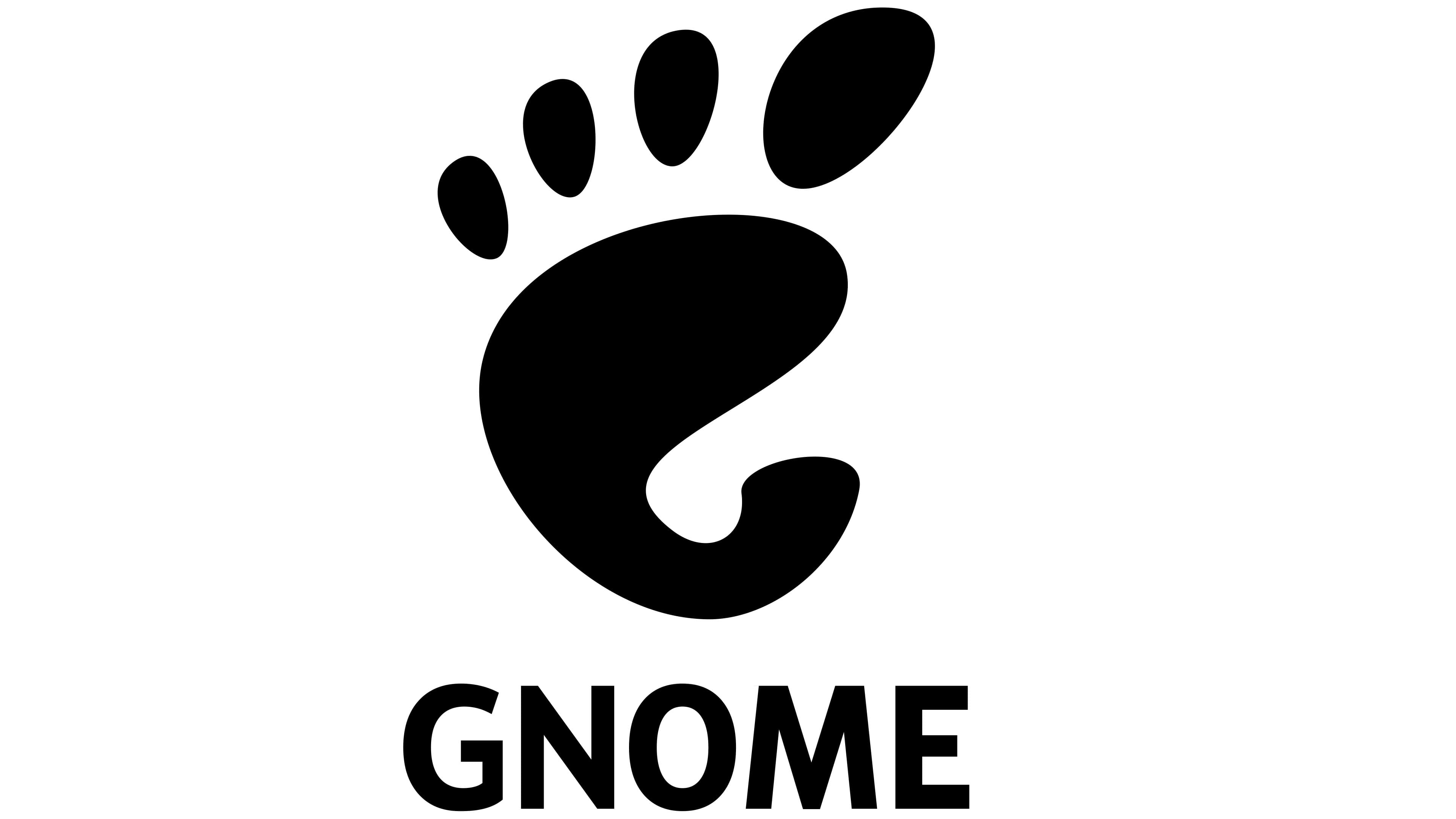
The updated GNOME logo became more streamlined and polished. While retaining continuity and recognizability, both the symbol and the typography underwent significant changes, resulting in a more modern logo.
The emblem kept the footprint form but with refined contours and proportionally simplified details. The main curve of the foot still formed the letter “G,” but the lines were smoother, and the silhouette became less bulky and more organic. Four oval toe shapes sat above the main print, decreasing in size from left to right, reinforcing the natural footprint association and adding a friendly tone to the visual image.
A key change was the reimagining of the wordmark. The new “GNOME” lettering was rendered in a bold sans-serif font with confident, straight strokes and strict, geometric glyph shapes. The letters gained a monolithic weight, balancing the lighter, more dynamic emblem. The use of a strong sans-serif typeface underscored the brand’s professionalism in the technology space.
The monochrome palette was retained, still limited to pure black and white. This minimalism emphasized the project’s universality and functionality, ensuring the logo’s easy recognition across all media and scales.
The footprint continues to carry symbolic meaning, serving as a metaphor for a user’s first step into the GNOME environment and adding emotional appeal and historical depth to the emblem. The developer community places special value on this symbol, seeing it as a marker of the “starting journey.” Despite ongoing discussions about its aesthetics and relevance, attachment to the logo remains strong, making replacement unlikely.